

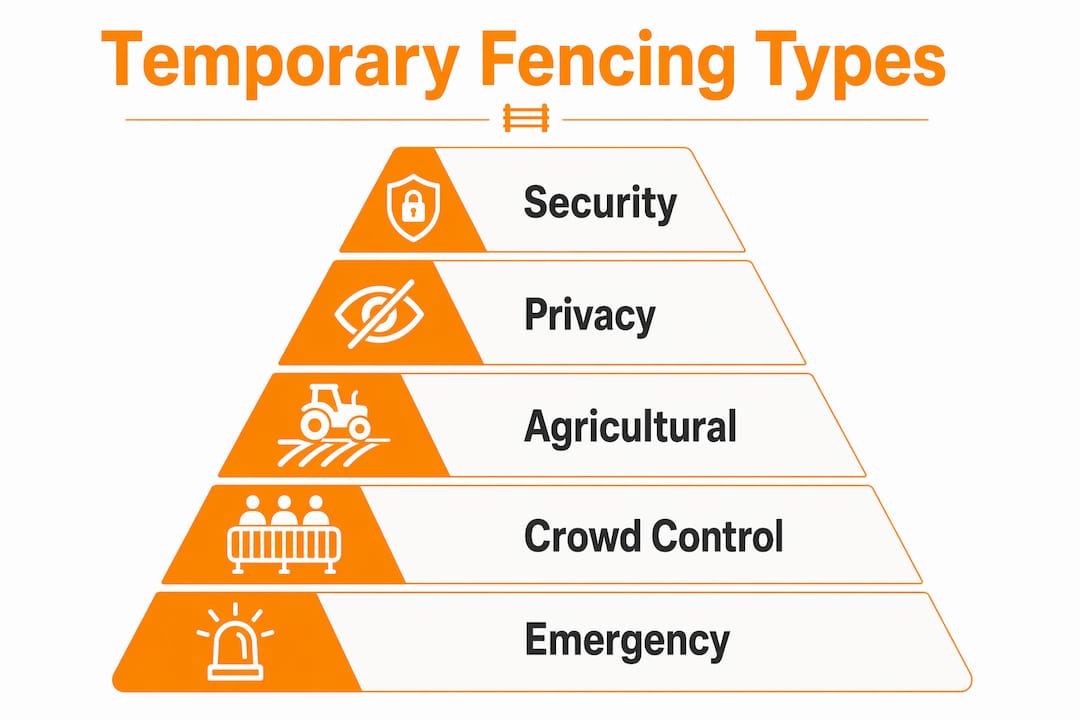
Temporary fencing is one of those tools that shows up everywhere once you know what to look for: wrapped around a downtown construction site, lining the perimeter of a music festival, or dividing a pasture for rotational grazing. As a short-term barrier system, it covers four primary industries: construction, events, public works, and agricultural and residential use. The panels are freestanding, self-supporting, and held together with couplers, which means a crew can set up or tear down a full perimeter in hours rather than days.
Here is a quick look at where temporary fencing gets used most:
- Construction sites: access control, theft deterrence, OSHA compliance
- Events and festivals: crowd flow management, VIP enclosures, entry and exit control
- Public works and road construction: pedestrian detours, hazard zone marking
- Agriculture: rotational grazing, livestock containment, crop protection
- Emergency and disaster response: rapid hazard demarcation after floods, fires, or structural failures
- Residential: pool safety barriers, renovation site protection, pet enclosures
The common thread across all of these is speed and flexibility. You get a real barrier without the commitment or cost of a permanent structure.
How temporary fencing keeps construction sites safe and secure
Construction sites are the most common place you will find temporary fencing, and the reason is straightforward: temporary fencing is a risk mitigation tool that prevents costly liability claims and theft incidents. An unsecured site is an open invitation for unauthorized entry, equipment theft, and injury claims from trespassers. None of those outcomes are cheap.
Beyond theft deterrence, OSHA regulations require contractors to restrict access to active hazard zones. Temporary chain-link panels create a clear physical boundary that satisfies both insurance requirements and regulatory compliance. Lockable access gates let contractors move freely while keeping the public out.
Privacy screens are worth adding even when they are not required. They block sightlines into the site, which reduces opportunistic theft, and they reduce wind load on panels, which keeps the fence standing during storms rather than becoming a projectile hazard.
Pro Tip: For long-term construction projects, choose plus-braced panels with both vertical and horizontal supports. They resist sagging and handle wind forces far better than standard single-brace panels, which matters when a fence needs to stay up for months.
Key construction site benefits at a glance:
- Deters theft of tools, materials, and heavy equipment
- Prevents unauthorized entry into active hazard zones
- Supports OSHA and insurance compliance
- Blocks dust and debris during demolition or steel panel installation
- Privacy screens reduce wind load and improve panel stability
- Weighted stands work on concrete and asphalt; T-posts work in soil
How event planners use temporary fencing for crowd control and organization
Events are where temporary fencing applications get more nuanced. A music festival, a marathon, and a county fair all need barriers, but they need different kinds. Event fencing requires careful planning to designate entrances, exits, VIP areas, and foot traffic flow before the first attendee arrives.
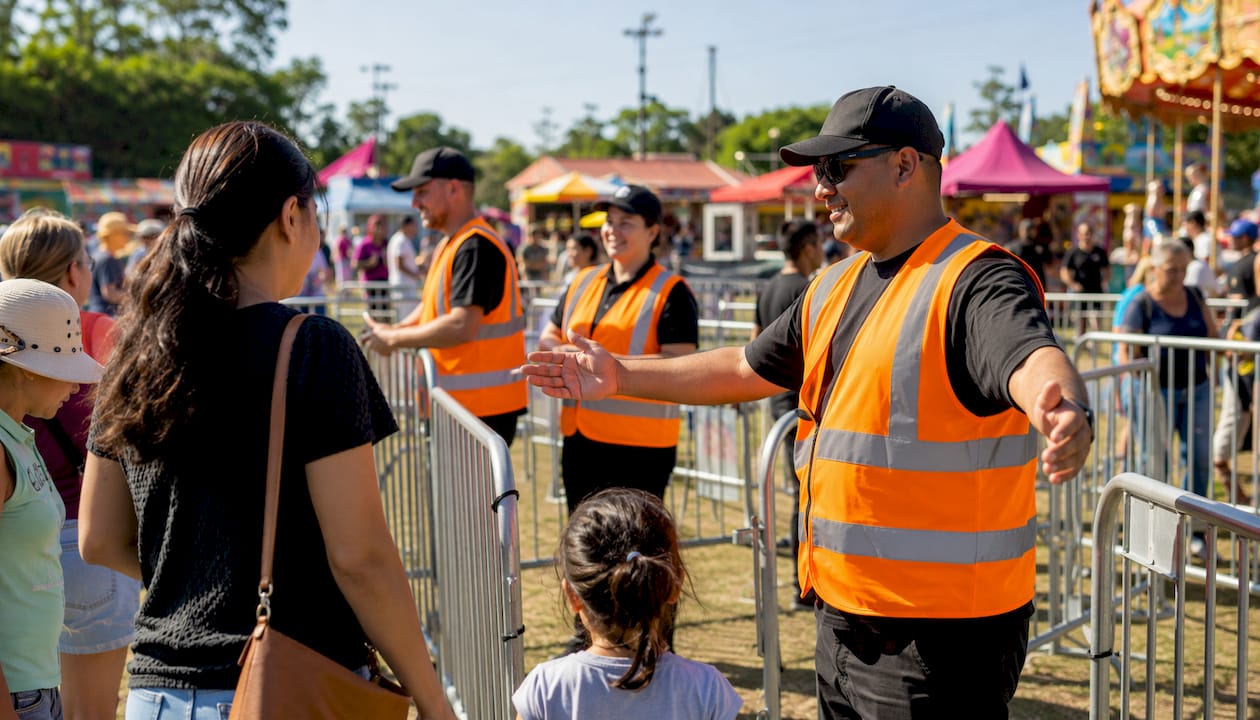
The most important distinction event planners need to understand is the difference between security fencing and crowd control barricades. Security fences and crowd barricades serve distinct purposes: barricades are designed to resist horizontal pressure from a crowd pushing forward, while security fencing is built to prevent climbing and unauthorized access. Using the wrong type in the wrong spot creates both a safety risk and a logistical headache.
| Fencing Type | Best Event Use | Key Feature |
|---|---|---|
| Chain-link panels | Perimeter security, backstage enclosures | Durable, hard to climb |
| Steel barricades | Stage fronts, crowd queuing lanes | Resists horizontal crowd pressure |
| Orange safety mesh | Pedestrian detours, parking lot dividers | Lightweight, highly visible |
| Privacy screen panels | VIP areas, sponsor zones | Blocks sightlines, improves aesthetics |
| Wooden panels | High-security backstage, sound barriers | Strong, customizable |
Event-specific uses and tips:
- Use steel barricades at stage fronts where crowd surge is a real risk
- Chain-link panels work best for backstage and ticketed area perimeters
- Mark all entrances and exits clearly before gates open
- Privacy screens on VIP enclosures serve double duty: they block views and reduce wind load on the panels themselves
- Plan for emergency egress routes before finalizing any fence layout
Lesser-known applications: residential, agricultural, and emergency uses
Most people associate temporary fencing with construction or concerts. The reality is that some of the most practical temporary fencing applications happen on farms, in backyards, and in the aftermath of natural disasters.
Residential uses are more common than you might expect. Pool safety barriers are a straightforward example: a temporary fence around a pool during a backyard renovation keeps children and pets away from the water without requiring a permanent structure. Homeowners also use temporary panels during landscaping projects to protect newly seeded areas, and landlords use them to secure properties during renovation work.
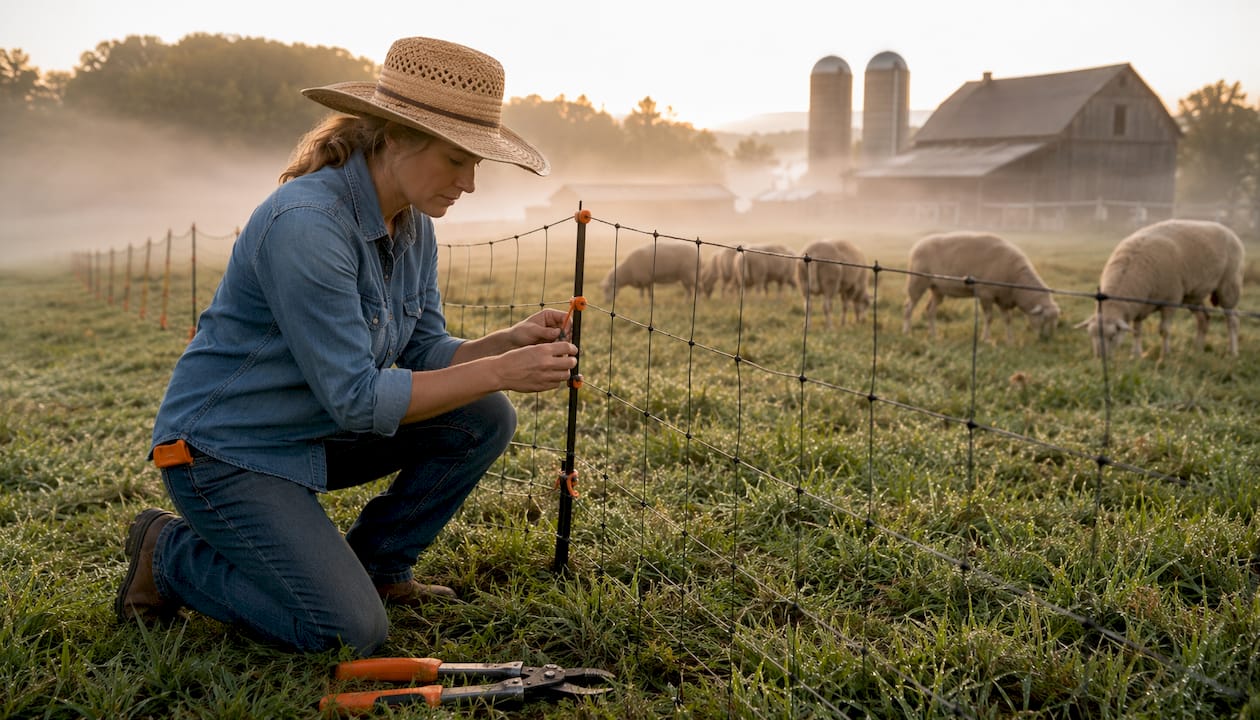
Agricultural uses are where temporary fencing really earns its keep. Rotational grazing depends on the ability to move livestock between pasture sections on a regular schedule, and temporary electric or wire fencing makes that practical without rebuilding permanent infrastructure every season. Farmers also use temporary barriers to protect crops from deer and other wildlife, and to create short-term containment areas during livestock handling or veterinary work. For a deeper look at options suited to farming operations, Fencefast covers temporary fencing for agriculture in detail.
Emergency and disaster response is a use case that rarely gets mentioned but matters enormously. After a flood, fire, or structural collapse, temporary fencing can be deployed quickly to establish hazard perimeters and keep the public away from unsafe areas. Speed of installation is the critical factor here, and freestanding panel systems deliver exactly that.
Additional lesser-known uses:
- Temporary pet enclosures for outdoor events or yard work
- Garden protection from deer, rabbits, and other wildlife
- Privacy screens during outdoor home improvement projects
- Securing vacant lots or properties between tenants
- Marking off hazardous areas at public parks or trails after storm damage
What types of temporary fencing are available in the US market?
The right fence for a job depends on the level of security needed, the surface it will sit on, and how long it needs to stay up. Common temporary fence types include chain-link panels, polyethylene mesh rolls, and interlocking steel barricades, each designed for different conditions.
| Material | Typical Use | Approx. Cost |
|---|---|---|
| Chain-link panels (standard) | Construction, demolition sites | — |
| Chain-link panels (with bracing) | High-security zones | — |
| Orange polyethylene mesh | Road work, landscaping, pedestrian detours | — |
| Privacy screen add-on | Events, urban construction | — |
| Steel barricades | Concerts, parades, crowd queuing | — |
A few things worth knowing about each type:
- Chain-link panels are the workhorse of the industry. Galvanized steel mesh, freestanding, and scalable to any site size. They accept add-ons like barbed wire, privacy screens, and lockable gates.
- Polyethylene mesh rolls are lightweight and cheap, but they sag over time and offer minimal security. They are the right call for pedestrian detours and low-risk landscaping perimeters, not for anything that needs to stop a determined person.
- Steel barricades interlock horizontally and sit at waist height. They are built for crowd flow, not for keeping people out of a restricted area.
- Privacy screen panels are almost always an add-on to chain-link rather than a standalone product. The fabric mesh blocks dust and sightlines while also cutting wind load on the panel itself.
- Wooden panels offer the best sound barrier and the most customizable appearance, but they are heavier and more labor-intensive to install and remove.
Stabilization method matters as much as panel type. T-posts driven into soil handle high-wind conditions well. On concrete or asphalt, weighted stands are the only practical option. Choosing the wrong base for the surface is one of the most common installation mistakes.
What permits and legal requirements apply to temporary fencing?
Temporary does not mean unregulated. Many municipalities require permits for temporary fencing that stays in place for an extended period or crosses a public right-of-way. The specific threshold varies by city and county, so checking local codes before installation is not optional.
Typical permitting requirements include:
- Proof of liability insurance covering the installation period
- A site survey or plot plan showing fence placement relative to property lines and public paths
- Permit application submitted to the local building or public works department
- Compliance with height restrictions, which vary by zoning district
- Removal timeline specified in the permit, with extensions available in some jurisdictions
Noncompliance carries real consequences. Fines, mandatory removal orders, and work stoppages are all on the table, and a work stoppage on a construction project is expensive fast. Some jurisdictions also require that fencing along public sidewalks meet ADA accessibility standards, meaning the barrier cannot reduce the usable sidewalk width below a minimum threshold.
Geographic variability is significant. A fence that requires no permit in a rural county might trigger a full permit process in a dense urban area. Austin, Texas, for example, has specific right-of-way permit requirements for any temporary fencing that crosses or abuts a public path. New York City’s 311 guidance addresses temporary fence placement in detail, including height and bracing standards. Always consult the local authority having jurisdiction before installation.
Why experts treat temporary fencing as a risk management tool, not an expense
The framing matters here. Temporary fencing is fundamentally a cost-saving risk management tool, not a line item to minimize. A single liability claim from an injury on an unsecured site, or a single theft of equipment left unprotected overnight, will cost far more than a full season of fence rental.
Privacy screens illustrate this well. Their obvious function is visual: they block sightlines and improve the appearance of a construction site. Their less obvious function is structural: privacy screens reduce wind load on fencing panels, which prevents the fence from toppling during storms. A toppled fence is both a safety hazard and a liability event.
The security-versus-barricade distinction matters in the same way. Using crowd barricades where security fencing is needed, or vice versa, creates gaps in protection that translate directly into incident risk. Barricades resist horizontal crowd pressure at events; they do not stop someone from climbing over. Security fencing stops climbing; it does not flex with crowd movement. Matching the tool to the threat is the core of any sound temporary fencing strategy.
Key expert insights:
- Temporary fencing prevents costly site incidents, including theft, injury claims, and regulatory fines
- Privacy screens serve a structural function by reducing wind load, not just an aesthetic one
- Security fences and crowd barricades are not interchangeable; using the wrong type increases risk
- Temporary fencing is critical for maintaining safety, legal compliance, and asset protection on any site with meaningful theft or injury exposure
- Permit awareness prevents project delays; a work stoppage costs more than the permit ever would
Key Takeaways
Temporary fencing covers construction, events, agriculture, and emergency response, and the right panel type, stabilization method, and permit compliance determine whether it actually does its job.
| Point | Details |
|---|---|
| Four core industries | Construction, events, public works, and agriculture are the primary sectors that rely on temporary fencing. |
| Permit thresholds vary | Many municipalities require permits for installations lasting more than 30–90 days or crossing public rights-of-way. |
| Chain-link panel costs | Standard chain-link panels have a typical rental cost per linear foot per month, with braced security panels costing somewhat more. |
| Stabilization by surface | T-posts work in soil; weighted stands are required on concrete or asphalt. |
| Risk management framing | Temporary fencing prevents liability claims and theft losses that far exceed the cost of the fence itself. |
Fencefast carries a full range of temporary fencing products and supplies for agricultural, rural, and livestock applications, backed by over 26 years of fencing expertise. Whether you need temporary livestock fencing for rotational grazing or a complete fencing solution for your property, Fencefast has the products and knowledge to get the job done right. Visit Fencefast to explore the full catalog and get expert guidance for your next project.

