

Selecting temporary fencing for your farm or ranch often feels like walking a tightrope between cost and performance. You need something affordable that won’t fail when your cattle test boundaries or when unpredictable weather hits. Canadian farmers face unique challenges with terrain, climate, and livestock behavior that demand practical, budget-friendly solutions. This guide cuts through the confusion by examining the most cost-effective temporary fencing options available in Canada, comparing their real-world performance, and sharing expert strategies to maximize your investment while keeping your animals secure and your pastures healthy.
Table of Contents
- Key takeaways
- How to choose inexpensive temporary fencing: key criteria to consider
- Top inexpensive temporary fencing options for Canadian farmers
- Comparing temporary fencing options: a cost and use case overview
- Tips for effective use and maintenance of inexpensive temporary fencing
- Explore affordable fencing products at FenceFast Ltd.
- FAQ
Key Takeaways
| Point | Details |
|---|---|
| Most affordable fencing option | Portable electric fencing is the most affordable option for large perimeters, with polywire available around 1.50 per linear foot, polytape offering better visibility for horses, electric netting providing full barrier coverage for sheep and goats, and energy sources ranging from about 400 battery energizers to 800 to 1200 solar units before rebates. |
| Funding cuts costs | Government funding can cover up to 85 percent of solar fencing costs, making premium solar electric fencing more budget friendly. |
| Rotational grazing benefits | Flexible temporary fencing supports rotational grazing by letting you reconfigure paddocks in under an hour. |
| Match fencing to animals | Match fencing strength and type to your livestock temperament and terrain to maximize effectiveness. |
How to choose inexpensive temporary fencing: key criteria to consider
Before you invest in any fencing system, understanding what drives cost and performance helps you avoid expensive mistakes. Upfront expenses matter, but long-term maintenance costs often surprise farmers who choose the cheapest initial option. A $200 fence that requires constant repairs quickly becomes more expensive than a $400 system that runs reliably for years.
Your livestock’s behavior shapes fencing requirements more than most farmers realize. Cattle push and test boundaries differently than sheep or horses. High-pressure animals like bulls need stronger deterrents, while flighty horses respond well to visible barriers. Match your fencing strength to animal temperament, not just species.
Terrain dramatically affects installation ease and cost. Rocky ground makes driving posts nearly impossible, favoring step-in posts or surface mounts. Uneven slopes challenge wire tension, while flat pastures allow quick setup. Consider whether you’ll move fencing frequently or leave it semi-permanent, as this influences material durability requirements.
Maintenance needs vary wildly between fencing types. Electric systems require regular voltage testing and vegetation control to prevent shorts. Physical barriers need periodic inspection for damage and rust. Calculate time and labor costs realistically when comparing options.
Pro Tip: Check government funding programs before purchasing solar-powered electric fencing systems. Canadian agricultural support can cover up to 85% of costs, transforming premium systems into budget-friendly solutions.
Key selection criteria include:
- Initial purchase price per linear foot
- Installation time and labor requirements
- Compatibility with your specific livestock species and behavior
- Portability and ease of relocation
- Expected lifespan and replacement frequency
- Maintenance time and technical skill needed
- Power source availability and costs
- Terrain adaptability and ground conditions
For comprehensive guidance on portable systems, explore this portable electric livestock fence guide that covers installation through maintenance.
Top inexpensive temporary fencing options for Canadian farmers
Portable electric fencing dominates the affordable temporary fencing market for good reason. Polywire systems cost as little as $1.50 per linear foot, making them the cheapest option for large perimeters. Polytape offers better visibility for horses and nervous livestock, while electric netting provides complete barrier coverage ideal for sheep and goats. Battery energizers start around $400, while solar units range from $800 to $1200 before government rebates. These systems shine for rotational grazing, allowing you to reconfigure paddocks in under an hour.
Livestock panels provide sturdy, reusable barriers perfect for cattle and horses. Standard 16-foot cattle panels cost approximately $69 CAD, constructed from heavy-duty galvanized steel that withstands aggressive animals. While heavier and less portable than wire systems, panels excel on uneven terrain where wire sags. They require no power source and minimal maintenance beyond occasional rust treatment. Panels work exceptionally well for creating temporary pens, loading chutes, or dividing pastures for weeks or months.
Field fence rolls offer semi-permanent woven wire solutions when you need longer-term temporary fencing. These provide physical barriers without electricity, suitable for areas where power is impractical or livestock haven’t been trained to electric systems. Costs vary by height and wire gauge, typically ranging from $0.80 to $2.00 per foot installed. Setup takes longer than electric systems but requires less ongoing maintenance.
Each option serves different scenarios effectively:
- Polywire electric fencing for large rotational grazing operations
- Polytape systems where visibility matters for horse safety
- Electric netting for sheep containment and predator deterrence
- Livestock panels for cattle handling areas and rough terrain
- Field fence rolls for extended seasonal use
Your choice depends on balancing initial investment against your specific livestock needs, terrain challenges, and how frequently you’ll relocate fencing. For detailed comparisons of electric options, review this portable electric fence Canada resource.
Comparing temporary fencing options: a cost and use case overview
| Fencing type | Cost per foot | Installation time | Best livestock | Durability | Maintenance | Portability |
|---|---|---|---|---|---|---|
| Polywire electric | $1.50-$2.50 | 30-60 min/acre | Cattle, horses | 3-5 years | Weekly voltage checks | Excellent |
| Polytape electric | $2.00-$3.50 | 45-75 min/acre | Horses, cattle | 3-5 years | Weekly voltage checks | Excellent |
| Electric netting | $3.00-$4.50 | 60-90 min/acre | Sheep, goats, poultry | 5-7 years | Bi-weekly checks | Good |
| Livestock panels | $4.00-$6.00 | 2-3 hours/acre | Cattle, horses | 15-20 years | Minimal | Fair |
| Field fence rolls | $0.80-$2.00 | 4-6 hours/acre | All livestock | 10-15 years | Low | Poor |
Electric fencing delivers unmatched value for operations requiring frequent moves. Setup takes under 1 hour for two people, and you can relocate paddocks every 1 to 3 days without significant labor. The key limitation is power dependency and the need for consistent voltage monitoring. Vegetation touching wires creates shorts that drain power and reduce effectiveness.
Solar-powered energizers transform electric fencing economics. While initial costs run higher, government funding covering up to 85% reduces net five-year costs to around $430 for systems managing 10 kilometers of fence. This makes solar systems cheaper than battery units over time, especially for remote pastures.
Livestock panels suit operations prioritizing durability over portability. Their weight makes frequent moves impractical, but they excel for semi-permanent paddock divisions or high-traffic areas like feeding stations. Panels handle aggressive cattle that would damage wire systems, and they work reliably regardless of vegetation or weather conditions.
Pro Tip: Calculate total cost of ownership over five years, not just purchase price. Include energizer batteries, replacement wires, labor for maintenance, and potential livestock losses from fence failures. Solar electric systems often win this analysis despite higher upfront costs.
Rotation frequency heavily influences optimal fencing choice:
- Daily or every-other-day moves: polywire electric
- Weekly rotations: polytape or electric netting
- Monthly changes: livestock panels or field fence
- Seasonal adjustments: field fence rolls
For cattle-specific rotational strategies, explore temporary cow fence rotational grazing techniques that maximize pasture health while minimizing fencing costs.
Tips for effective use and maintenance of inexpensive temporary fencing
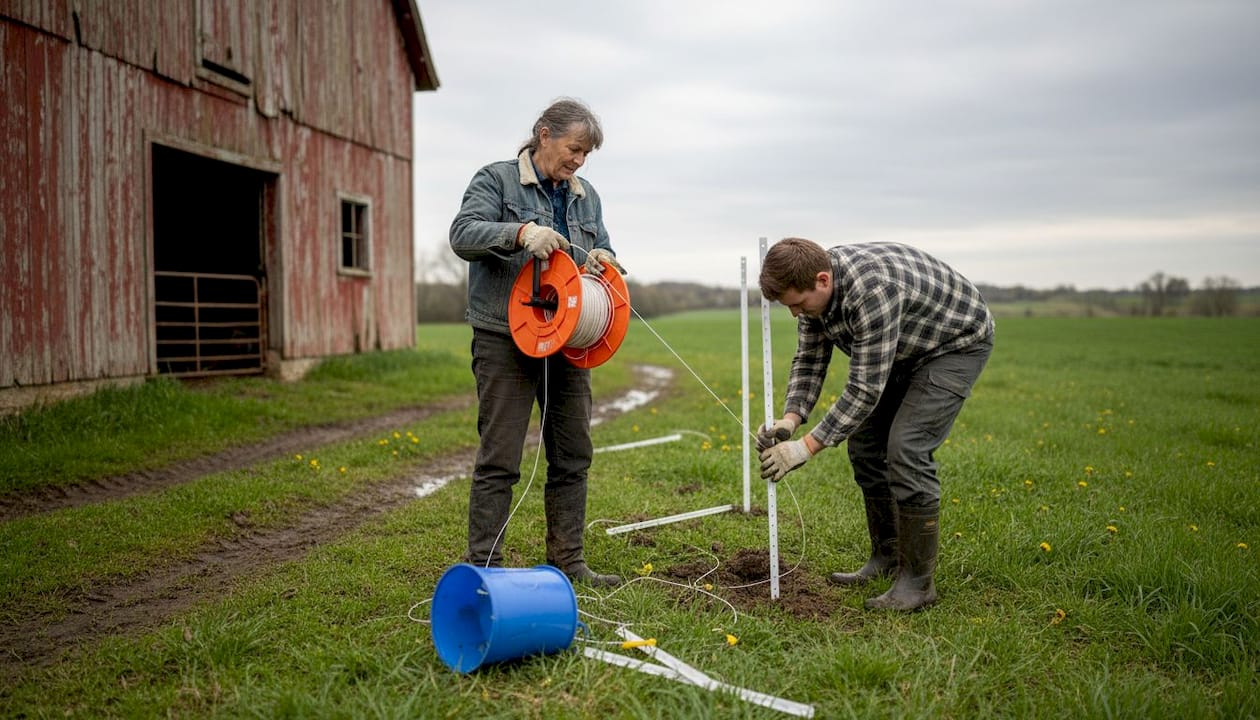
Proper installation makes the difference between fencing that works and fencing that fails. Start with step-in posts for electric systems, spacing them 10 to 15 feet apart depending on wire tension and terrain. Ensure your energizer has adequate grounding with at least three 6-foot ground rods driven into moist soil. Poor grounding causes more fence failures than any other factor, yet many farmers skimp here to save $50.
Voltage testing should become weekly routine. Aim for readings above 4000 volts at the farthest point from your energizer. Anything below 3000 volts won’t reliably deter livestock. Invest in a quality voltage tester for $30 rather than guessing whether your fence works. Low voltage usually indicates vegetation shorts, damaged insulators, or ground rod problems.
Training livestock to respect electric fencing prevents escapes and builds long-term effectiveness. Place bait or feed near the fence line when first introducing animals to a new paddock. Curious animals investigate, receive a memorable shock, and learn boundaries quickly. This initial training investment pays dividends for years.
Vegetation control requires consistent attention. Grass and weeds touching wires drain power and create weak spots animals exploit. Walk your fence line weekly, clearing growth within 6 inches of wires. Some farmers use herbicide strips beneath fence lines, while others prefer mechanical trimming. Either approach works if done consistently.
Follow this maintenance sequence for best results:
- Check energizer operation and battery charge every 3 to 4 days
- Walk fence lines weekly, clearing vegetation and inspecting connections
- Test voltage at multiple points, especially after storms or high winds
- Tighten sagging wires and replace damaged insulators immediately
- Rotate paddocks every 1 to 3 days to prevent overgrazing
- Document problem areas and upgrade materials in those spots
Pro Tip: Mark fence posts with colored tape indicating installation date and voltage readings. This simple system helps you track which sections need attention and identify patterns in fence performance.
“Rotational grazing with temporary fencing can boost pasture productivity up to 35% while reducing feed costs. The key is moving livestock before they graze plants below 3 inches, allowing proper regrowth time.”
Energizer selection impacts long-term costs significantly. Battery units require replacement every 4 to 6 weeks during active grazing season, costing $15 to $25 per battery. Solar energizers eliminate this recurring expense while providing consistent power. For remote pastures or large operations, explore portable electric fence energizer options that balance power output with portability.
Explore affordable fencing products at FenceFast Ltd.
Putting these strategies into action becomes easier when you have access to quality products designed for Canadian conditions. FenceFast Ltd. specializes in temporary fencing solutions that balance affordability with reliability, offering everything from basic polywire kits to complete solar-powered systems.

Their product range includes portable electric fencing kits that bundle energizers, wire, posts, and accessories into ready-to-deploy packages. Whether you need a simple Patriot pet and garden electric fence accessory kit for small paddocks or comprehensive systems for large cattle operations, you’ll find options matching your budget and livestock requirements. The positive/negative electric fence netting works exceptionally well for sheep and goat operations, providing complete barrier coverage with easy setup.
Shopping with FenceFast gives you access to expert advice tailored to Canadian farming conditions, helping you select components that work together effectively. Their focus on agricultural customers means products are tested for real-world ranch and farm applications, not just residential hobby use.
FAQ
What is the most cost-effective temporary fencing for livestock?
Portable electric fencing represents the most inexpensive option, with costs starting at $1.50 per linear foot plus energizer expenses. When you factor in government funding programs that can cover up to 85% of solar system costs, electric fencing becomes even more economical. The combination of low material costs, quick installation, and minimal maintenance makes it ideal for budget-conscious operations.
How quickly can temporary fencing be installed and moved?
Two people can set up portable electric fencing in under an hour for typical paddock sizes. Moving fences takes even less time once you develop efficient routines. For effective rotational grazing, plan to relocate fencing every 1 to 3 days, which sounds demanding but becomes quick work with practice. This frequent rotation maximizes pasture health and livestock nutrition while preventing overgrazing damage.
What maintenance does temporary electric fencing require?
Regular voltage testing, vegetation control, and animal training form the core maintenance requirements. Check voltage weekly to ensure readings stay above 4000 volts for reliable livestock deterrence. Clear grass and weeds touching wires to prevent power shorts. Train new animals to respect boundaries by introducing them carefully with bait near fence lines. These simple practices take minimal time but dramatically improve fence effectiveness and reduce escape incidents.
Are there government supports for temporary fencing in Canada?
Canadian government funding programs can cover up to 85% of solar electric fencing system costs through various agricultural support initiatives. These programs aim to promote sustainable farming practices and reduce environmental impact. Check with your provincial agriculture department about current eligibility requirements and application processes. The substantial cost reduction makes advanced solar systems accessible to operations that couldn’t otherwise afford them, improving both economics and sustainability.

