

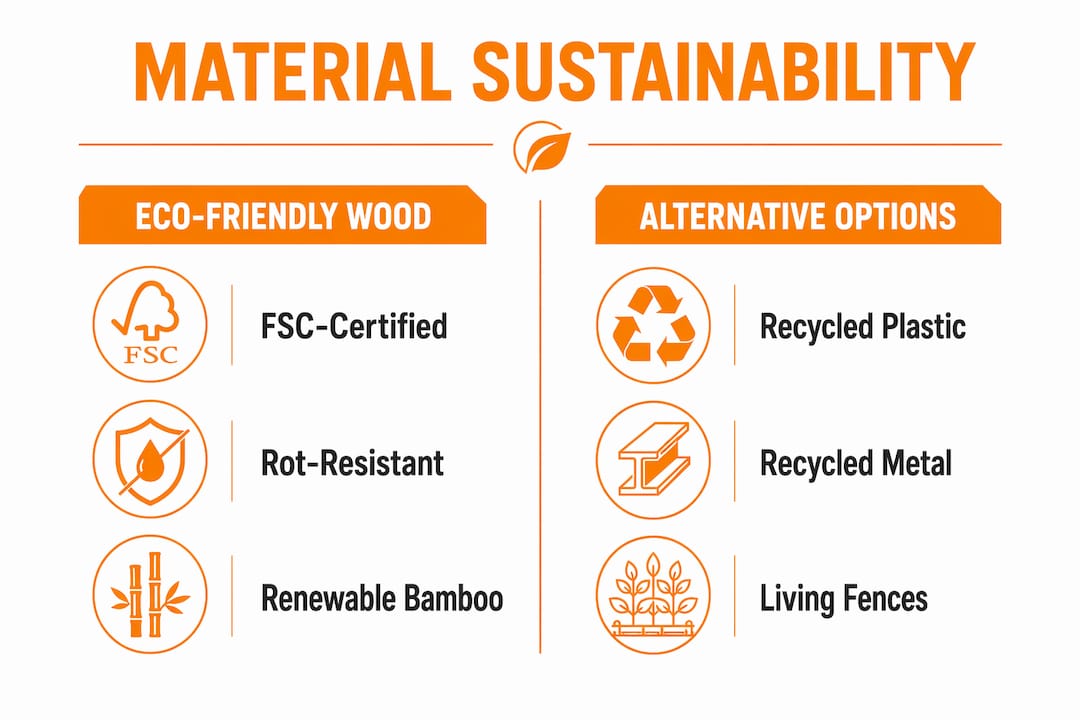
The best sustainable fencing materials for agricultural use share three qualities: they come from renewable or recycled sources, they last long enough to avoid frequent replacement, and they can be responsibly disposed of at end of life. For Canadian farmers and ranchers, that definition has real teeth. A fence that rots quickly and ends up in a landfill is not sustainable, regardless of what it was made from. The materials that genuinely qualify include FSC-certified wood species like cedar and redwood, bamboo, recycled metal, living hedgerows, and locally sourced stone. Each carries a different tradeoff between upfront cost, maintenance, and ecological impact.
Key characteristics of genuinely eco-friendly fencing materials:
- Renewability: The source material regenerates faster than it is consumed.
- Durability: A longer lifespan means fewer replacement cycles and less total material use.
- Recyclability: The material can re-enter a production cycle rather than going to landfill.
- Low processing impact: Manufacturing and transport emissions are minimized, especially when materials are sourced locally.
- Wildlife compatibility: The fence design allows safe movement for local fauna.
Table of Contents
- 1. FSC-certified wood: the most trusted sustainable option
- 2. Why vinyl fencing has no place in a sustainable plan
- 3. Alternative materials worth knowing about
- 4. How to choose the right materials for your farm
- 5. Sustainable fencing in practice: US agricultural examples
- Fencefast carries the materials and expertise to get it right
- Key takeaways
1. FSC-certified wood: the most trusted sustainable option
FSC certification signals that timber was harvested from forests managed to protect ecosystems and wildlife habitat. For farmers buying wood fencing, that seal is the clearest third-party verification available. Without it, “natural wood” is a marketing claim, not a guarantee.
Cedar and redwood are the top choices under this category. Both are naturally rot-resistant, which reduces the need for chemical treatments that can leach into soil near pastures. Reclaimed wood from old barns or buildings is even better on a lifecycle basis: no new trees are cut, and the material often arrives already cured and chemical-free.
Bamboo is FSC-certifiable and renews far faster than any timber species, making it one of the most genuinely renewable fencing materials available. Its natural waxy coating provides a few years of weather protection before any sealing is needed.
Pro Tip: When buying wood fencing, ask your supplier for the FSC chain-of-custody number. Any legitimate FSC product has one. If they cannot produce it, the certification claim is unverified.
For a deeper look at how wood species compare on farms, Fencefast’s guide to eco-friendly farm fencing covers agricultural-specific considerations.
2. Why vinyl fencing has no place in a sustainable plan
Vinyl (PVC) fencing is the one material that environmental experts consistently advise against. Production releases hazardous dioxins, and the material continues leaching into surrounding soil and water throughout its lifespan. Near vegetable gardens or livestock water sources, that is a genuine risk, not a theoretical one.
The durability argument for vinyl is real but incomplete. A fence that lasts decades while contaminating the ground around it trades one problem for another. Experts recommend avoiding vinyl entirely in any fencing plan that prioritizes environmental responsibility.
Practical alternatives that match vinyl’s low-maintenance appeal without the toxicity:
- Composite fencing made from recycled plastic and wood fiber
- Powder-coated recycled aluminum
- Naturally rot-resistant cedar or redwood with eco-friendly sealants
3. Alternative materials worth knowing about
Composite fencing blends recycled plastic with wood fiber, diverting waste from landfills and producing a fence that resists rot, insects, and weather without painting or staining. The catch: composite materials are rarely recyclable at end of life because the fused components cannot be separated. It is a strong mid-lifecycle choice but not a full-circle solution.
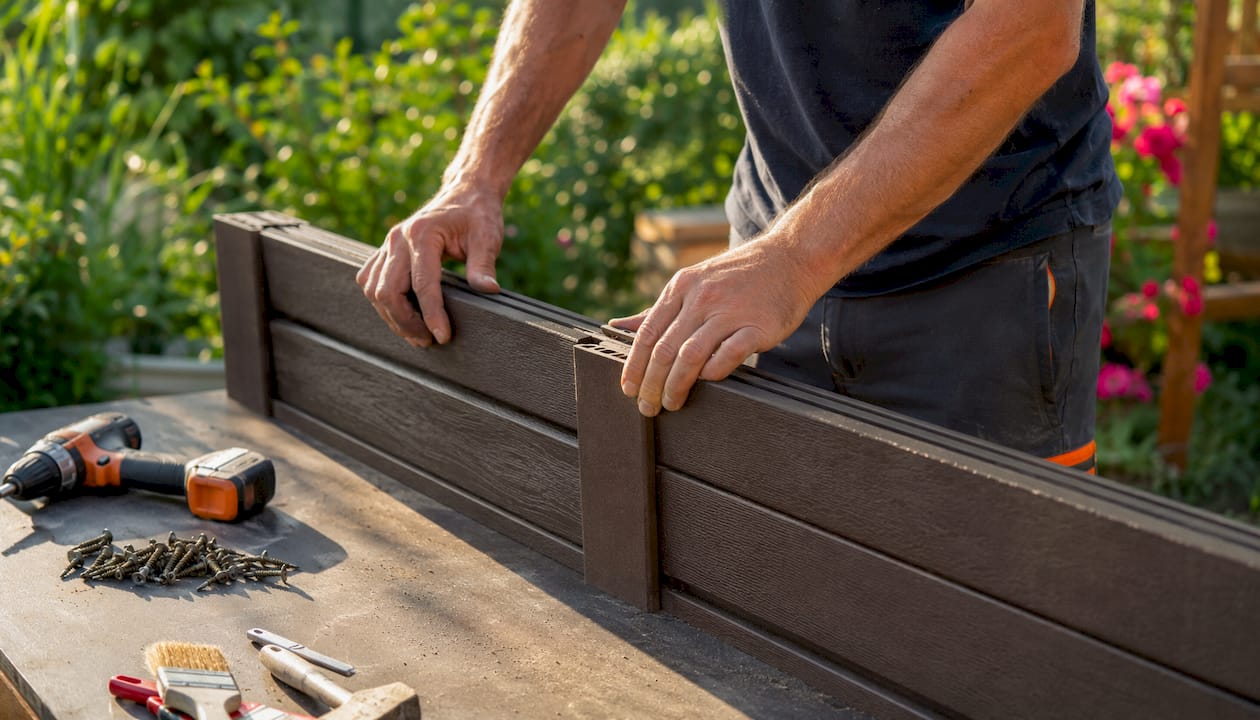
Recycled plastic fencing uses post-consumer plastics like milk jugs and shampoo bottles. It diverts plastic waste from landfills and requires virtually no maintenance. End-of-life recyclability varies by product, so ask manufacturers directly before purchasing.
Living fences and hedgerows are the most ecologically generous option. Plant-based boundaries filter CO2, support insect and bird habitat, and require no synthetic materials at all. The tradeoff is time: a hedgerow takes years to fill in densely enough to contain livestock.
Recycled metal fencing made from steel or aluminum offers a different kind of sustainability. Steel and aluminum can be recycled indefinitely without losing structural integrity, making them genuinely circular materials. Mining and smelting carry environmental costs, so sourcing recycled content rather than virgin metal matters.
Virtual fencing technology, such as GPS-enabled collar systems, eliminates physical fencing entirely in some grazing scenarios. No posts, no wire, no land disturbance. For rotational grazing management, this is one of the lowest-impact boundary solutions available.
4. How to choose the right materials for your farm
Durability relative to your climate is the first filter. Stone fences can last centuries with no maintenance. Cedar and recycled metal hold up well through freeze-thaw cycles. Bamboo performs well in moderate climates but may need more attention in regions with extreme cold.
Wildlife impact deserves more attention than most farmers give it. Solid fences block small animal movement across your property. Designs with gaps at the base, or living fence components alongside physical barriers, allow passage for ground-nesting birds and small mammals without compromising livestock containment.
Maintenance over the fence’s lifetime affects total environmental cost. A cedar fence treated annually with petroleum-based sealant accumulates a different footprint than one left to weather naturally or treated with linseed oil. Composite and recycled metal require almost no ongoing treatment.
Cost and long-term value often favor sustainable options when calculated over a full lifespan. Cedar outlasts pressure-treated pine. Recycled aluminum never rusts. The higher upfront price of quality materials typically pays back in avoided replacement costs within ten to fifteen years.
Pro Tip: Locally sourced timber or stone almost always beats factory-manufactured composites on total carbon footprint once you account for shipping weight and distance. A cedar post from a regional mill beats a composite panel shipped across the continent.
For climate-specific guidance on Canadian farms, Fencefast’s resource on durable fencing solutions breaks down material performance by region.
5. Sustainable fencing in practice: US agricultural examples
Ranchers in the American West have used dry-stacked stone walls along property boundaries for generations. These walls require no mortar, no chemical treatment, and no replacement. They also create microhabitats for reptiles and small mammals along fence lines.
In the Pacific Northwest, FSC-certified Western Red cedar is the dominant choice for farm perimeter fencing. Its natural oils resist moisture without any treatment, and regional mills keep transport emissions low. Several Oregon and Washington operations have shifted entirely to reclaimed barn wood for interior paddock dividers, sourcing material from demolition projects rather than new-cut timber.
Rotational grazing operations in the Midwest have adopted virtual fencing systems to manage cattle movement across large acreages. By eliminating wire and posts from interior grazing boundaries, these farms have reduced material use and allowed more natural vegetation patterns to develop between paddock rotations.
Fencefast carries the materials and expertise to get it right
Choosing the right fence for your land is not just a purchasing decision. It is a long-term commitment to your soil, your livestock, and the land around you. Fencefast supplies Canadian farmers and ranchers with fencing solutions built for agricultural realities, from traditional electric and wire systems to Gallagher eShepherd virtual fencing technology that eliminates physical infrastructure entirely in eligible grazing scenarios.
With 26 years as an authorized Gallagher dealer and direct access to government funding programs like OFCAF and BMP grants for virtual fencing adoption, Fencefast connects you with options that reduce both environmental impact and out-of-pocket cost. Visit fencefast.ca to explore the full product catalog or reach out for a design consultation tailored to your operation.
Key takeaways
FSC-certified wood, recycled metal, and virtual fencing technology are the strongest sustainable choices for agricultural operations that need durability, low maintenance, and genuine environmental accountability.
| Point | Details |
|---|---|
| FSC certification matters | It is the only third-party verification that timber was harvested without damaging ecosystems or habitats. |
| Avoid vinyl entirely | Vinyl production releases hazardous dioxins and causes persistent leaching into soil and water. |
| Composite has a lifecycle gap | Composite fencing blends recycled content but cannot be recycled at end of life due to fused materials. |
| Local sourcing cuts carbon | Locally sourced timber or stone typically carries a lower carbon footprint than composites shipped long distances. |
| Fencefast for agricultural needs | Fencefast supplies certified fencing materials and Gallagher virtual fencing technology with grant access for Canadian farms. |

