

TL;DR:
- Combining multiple sensory deterrents with physical barriers creates the most effective wildlife control plan. Regular maintenance, including reapplying repellents and inspecting fences, prevents animals from habituating and finding new entry points. Technology like AI-driven systems enhances large-scale management, but proper assessment and consistent habits are essential for all properties.
Wildlife deterrent strategies are methods and tools used to prevent animals from damaging property, crops, and livestock effectively and humanely. The most effective approach combines multiple sensory deterrents with physical exclusion barriers, targeting animal behavior through smell, sound, and sight simultaneously. Oregon State University’s Integrated Pest Management program identifies removing attractants as the foundation of any lasting deterrent plan. Field trials show that AI-driven multisensor systems reduce crop losses by up to 97.5% compared to static methods. No single deterrent holds up forever. The animals adapt. The farms that win are the ones running layered, maintained systems.
1. What are the most effective sensory-based wildlife deterrent strategies?
Sensory deterrents work by making your property feel dangerous or unpleasant to wildlife without physical contact. They target three channels: sound, smell, and sight. The key is combining all three, because multi-sensory deterrents outperform single-method approaches by making the area appear genuinely risky to animals.
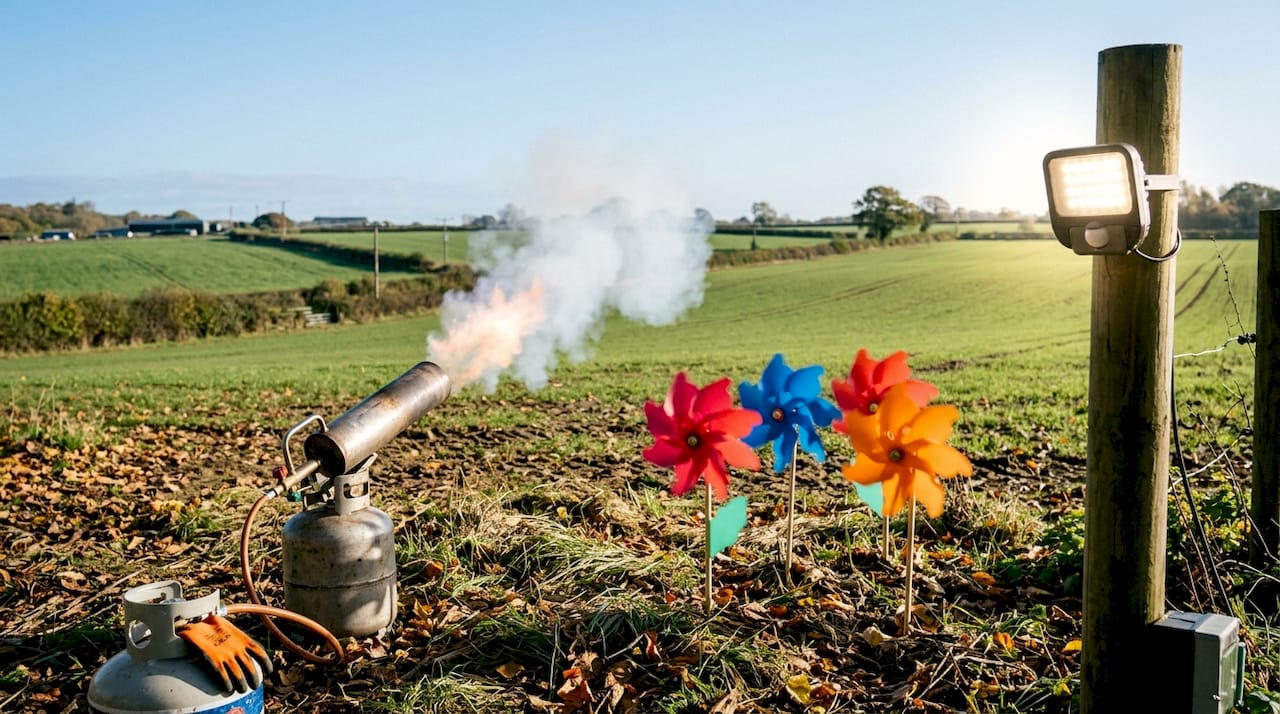
Sound-based deterrents
Ultrasonic emitters, propane cannons, bells, and air horns all create auditory discomfort or alarm signals. The problem is habituation. Mechanical scare devices lose effectiveness quickly unless you randomize the stimulus type, timing, and location. A propane cannon firing at the same time every morning trains deer to avoid the area for about two weeks, then ignore it entirely.
Pro Tip: Rotate sound devices to different positions every 3–4 days and vary the firing intervals. Unpredictability is what keeps animals wary.
Odor-based deterrents
Predator urine, chemical repellents, cayenne pepper spray, and vinegar are the most common olfactory tools. They work by triggering a fear response or creating an unpleasant sensory experience. Chemical repellents must be reapplied every 5–7 days and after every rainfall to stay effective. That reapplication schedule is non-negotiable if you want consistent results.
Visual deterrents
Reflective tape, pinwheels, predator decoys, and motion-activated lights all exploit an animal’s visual threat response. Like sound devices, visual deterrents suffer from habituation when left static. Moving them weekly and combining them with odor deterrents extends their useful life considerably.
2. How do physical exclusion methods protect farms and property from wildlife?
Physical exclusion is the most reliable long-term animal repellent technique available. A properly built fence or sealed structure does not rely on an animal’s fear response. It creates a hard barrier that wildlife cannot cross, regardless of how habituated they become to other deterrents.
Effective physical exclusion covers several key elements:
- Fence height: Deer require fencing at least 8 feet tall to prevent jumping. Smaller animals like rabbits need fencing buried 6–12 inches underground to stop burrowing.
- Voltage and energizers: Electric fencing adds a behavioral deterrent on top of the physical barrier. A properly energized fence teaches animals to avoid contact through a single unpleasant experience.
- Structural sealing: Buildings require inspection of every gap larger than a quarter inch. Raccoons, squirrels, and rodents exploit surprisingly small openings.
- Underground barriers: Hardware cloth or galvanized mesh buried at a 90-degree outward angle stops burrowing animals like groundhogs and voles.
Humane exclusion requires confirming the space is unoccupied before sealing. One-way exit devices let animals leave but not return. Sealing an occupied space traps animals inside, which creates health risks and causes more structural damage.
Pro Tip: Install one-way exit devices for at least one week before permanently sealing any entry point. Check for activity signs daily before closing the gap.
Physical exclusion barriers also require regular inspection after weather events. Frost heave, wind damage, and seasonal ground shifts create new gaps that wildlife find quickly. A fence that worked perfectly in october may have three new entry points by april. Scheduling quarterly inspections is the minimum standard for any serious exclusion program. Fencefast’s guide on building wildlife exclusion fences covers construction details worth reviewing before you break ground.
For woodpeckers and cavity-nesting birds, physical exclusion takes a different form. Installing alternative nesting boxes nearby redirects the behavior rather than simply blocking it. Blocking without offering an alternative often causes birds to find a new spot on the same structure.
3. What role does technology play in modern wildlife management practices?
AI-driven multisensor systems represent the most significant shift in effective wildlife control in the past decade. These systems integrate detection sensors, cameras, and automated deterrent responses into a single coordinated platform. When a sensor detects movement, the system identifies the species and triggers a targeted response: a specific sound frequency, a directed light pulse, or a physical deterrent activation.
The results are measurable. Field trials on roe deer recorded a 97.5% reduction in crop damage when AI-driven multisensor arrays replaced static deterrent methods. That figure reflects what happens when deterrents adapt in real time rather than firing on a fixed schedule.
Key advantages of technology-driven systems include:
- Adaptive response: The system changes its deterrent type based on which species triggered the sensor, making habituation far slower.
- Coverage scale: A single networked system can monitor hundreds of acres simultaneously, which no static deterrent array can match.
- Data logging: Managers can review detection records to identify peak activity windows and adjust deterrent intensity accordingly.
The practical barrier for most property owners is cost and setup complexity. These systems suit large agricultural operations better than small hobby farms. For properties where crop losses are significant, the return on investment is clear. For smaller operations, combining well-maintained sensory deterrents with solid physical exclusion delivers most of the same protection at a fraction of the cost. Fencefast’s resources on farm security ideas cover how technology integrates with traditional fencing for livestock protection.
4. How to implement integrated wildlife deterrent strategies for your property
The most effective wildlife management practices start with assessment, not purchases. Walk your property and document where damage occurs, what species are responsible, and what attractants are present. Integrated Pest Management recommends removing attractants like accessible trash, fallen fruit, and unsecured feed as the first step. Deterrents work harder when the property offers fewer rewards.
Follow this sequence when building your deterrent plan:
- Remove attractants first. Secure compost bins, move feed storage indoors, and clear brush piles that provide cover near structures.
- Identify the target species. Deer, coyotes, raccoons, and rodents each respond to different deterrents. A plan built for deer will not stop a determined raccoon.
- Install physical exclusion at high-value zones. Protect gardens, poultry enclosures, and grain storage with hard barriers before adding sensory deterrents.
- Layer sensory deterrents around the perimeter. Combine odor repellents with motion-activated lights and randomized sound devices for the outer boundary.
- Schedule maintenance rotations. Reapply chemical repellents every 5–7 days. Move sound and visual devices weekly. Inspect fencing quarterly.
- Adjust based on results. If damage continues in a specific zone, add a deterrent layer rather than replacing what is already working.
Integrated deterrent strategies consistently outperform single-method approaches in both urban fringe and rural agricultural settings. The reason is simple: no single deterrent covers every animal behavior or every access point. Layering creates redundancy, and redundancy is what makes a system durable.
Pro Tip: Keep a damage log with dates, locations, and species. After 60 days, patterns emerge that tell you exactly where your deterrent gaps are.
Budget-conscious property owners should prioritize physical exclusion at the highest-risk zones first, then expand sensory deterrents outward. A well-built fence around a chicken coop costs less than replacing a flock. Understanding animal behavior and fencing helps you make smarter decisions about where to invest first.
Key Takeaways
The most durable wildlife deterrent plan combines physical exclusion with layered sensory deterrents, maintained on a consistent schedule to prevent habituation and close new entry points as they appear.
| Point | Details |
|---|---|
| Remove attractants first | Securing food, trash, and cover eliminates the reward that draws wildlife to your property. |
| Layer multiple deterrents | Combining smell, sound, and sight outperforms any single method by making the area appear genuinely risky. |
| Maintain a reapplication schedule | Chemical repellents require reapplication every 5–7 days and after rain to stay effective. |
| Inspect physical barriers regularly | Seasonal changes create new gaps in fencing and structures that wildlife exploit quickly. |
| Use technology for large-scale operations | AI-driven multisensor systems reduce crop losses by up to 97.5% on large agricultural properties. |
What I’ve learned after years of watching deterrent plans fail
The most common mistake property owners make is buying one product and expecting it to solve everything. A single ultrasonic emitter, a bottle of coyote urine, or a strand of electric wire rarely holds up against determined wildlife. Animals are not stupid. They test boundaries, and when a deterrent stops changing, they stop respecting it.
The second mistake is treating exclusion as a one-time project. I have seen well-built fences develop entry points within a single winter because nobody walked the perimeter after the ground thawed. Wildlife finds those gaps faster than most farmers do. The farms with the lowest damage rates are the ones where someone walks the fence line on a schedule, not just when something goes wrong.
Humane methods matter beyond ethics. One-way exit devices and proper eviction protocols protect you from the legal and practical consequences of trapping animals inside structures. A raccoon trapped in an attic causes more damage in three days than it would have in three months of free access. Professional exclusion services are worth the cost when a structure is actively occupied.
The farms and properties that manage wildlife well are not the ones with the most expensive equipment. They are the ones with the most consistent habits. Rotate your deterrents. Reapply your repellents. Walk your fence. That discipline is what separates a property that loses 5% of its crop to wildlife from one that loses 40%.
— Juiced
Fencefast has the fencing solutions your property needs
Protecting your property from wildlife starts with a physical barrier that holds up through every season. Fencefast carries electric fencing systems, fencing components, and exclusion supplies built for Canadian agricultural conditions.

Whether you are building a new perimeter or reinforcing an existing one, Fencefast’s product catalog covers everything from energizers and wire to gates and connectors. The team also provides design consulting to help you match the right system to your specific wildlife pressure. Visit Fencefast to find fencing solutions that work alongside your sensory deterrents for full-property protection. If you are managing predator pressure specifically, the predator defense guide is a practical starting point.
FAQ
What are wildlife deterrent strategies?
Wildlife deterrent strategies are methods used to prevent animals from damaging property, crops, and livestock. Effective plans combine physical exclusion barriers with sensory deterrents targeting smell, sound, and sight.
How often should I reapply chemical wildlife repellents?
Chemical repellents require reapplication every 5–7 days and after every rainfall. Skipping reapplication after rain is the most common reason chemical deterrents stop working.
Why do scare devices stop working over time?
Wildlife habituates to static stimuli quickly. Randomizing the type, timing, and location of scare devices every few days significantly slows habituation and extends effectiveness.
What is the most effective physical barrier for deer?
Fencing at least 8 feet tall is the standard for deer exclusion. Electric fencing adds a behavioral deterrent that reinforces the physical barrier through a single unpleasant contact experience.
Do I need to check for animals before sealing entry points?
Yes. Humane exclusion requires confirming the space is unoccupied and using one-way exit devices before permanently sealing any gap. Sealing an occupied space traps animals and causes additional structural damage.

