

TL;DR:
- Proper farm fencing matches the specific livestock behavior, terrain, and management goals to prevent escapes and damage.
- Regular inspection, corner bracing, and advanced technologies like solar energizers and virtual fencing improve safety and efficiency.
Agricultural fencing is the physical or electric barrier system used on farms and ranches to contain livestock, protect crops, and mark property boundaries. Whether you’re managing cattle on 500 acres or keeping goats on a small hobby farm, the fence you choose directly determines how well your operation runs. Get it wrong and you’re chasing escaped animals, repairing broken wire, and dealing with predator losses. Get it right and your fence works quietly in the background for decades. This guide covers the core principles of farm fencing: types, selection criteria, installation steps, maintenance habits, and the technologies changing what’s possible.
What are the main types of agricultural fences?
Understanding the types of agricultural fencing available is the first step toward making a smart investment. Each material and design serves a different purpose, and no single fence type works for every situation.
Wire fencing: the backbone of most farm operations
Woven wire, barbed wire, and smooth wire are the three most common wire fencing options in North American agriculture. Woven wire, sometimes called field fence or stock fence, creates a grid pattern that physically blocks animals from pushing through. It works well for sheep, goats, and hogs because the tight spacing prevents smaller animals from squeezing out. Barbed wire is better suited for cattle perimeter fencing where a psychological deterrent combined with a physical barrier is enough. Smooth wire is typically used in multi-strand electric systems.
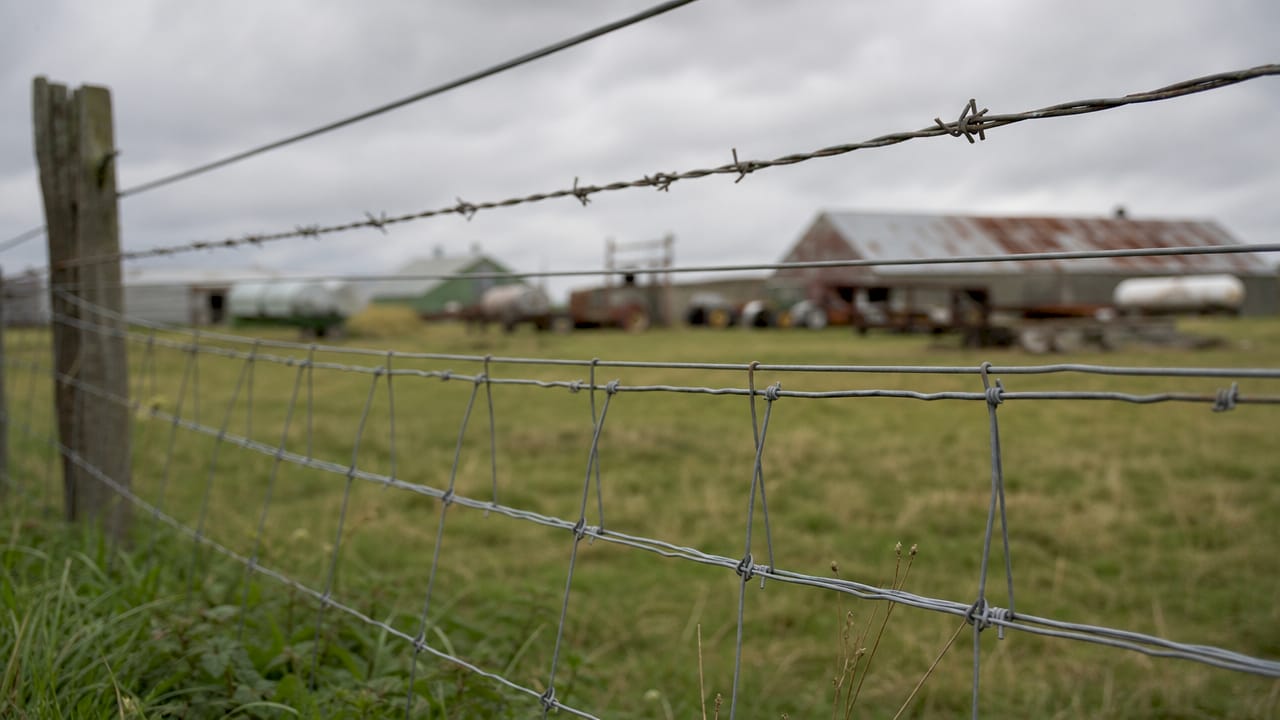
Fence materials cost between $200 and $1,500 per quarter mile depending on the type, with woven wire sitting at the higher end due to material volume. That cost difference reflects durability. Woven wire, installed correctly with proper bracing, can last 20 to 30 years with minimal intervention.
Electric fencing: cost-effective and flexible
Electric fencing uses a low-impedance energizer to deliver a brief, memorable shock that teaches animals to respect the fence line. Solar-powered energizers have made electric fencing practical in remote pastures where grid power is unavailable. The system requires an energizer, conductive wire or tape, insulators, and ground rods. Electric fence grounding requires at least two metal ground rods per energizer, with more needed in dry or sandy soil. Inadequate grounding is the single most common reason electric fences underperform.
Comparing common fence types at a glance
| Fence Type | Best Use | Relative Cost | Lifespan |
|---|---|---|---|
| Woven wire | Sheep, goats, hogs | Higher upfront | 20-30 years |
| Barbed wire | Cattle perimeter | Moderate | 15-25 years |
| Electric wire/tape | Rotational grazing, cross-fencing | Low to moderate | Varies by setup |
| Wood/rail | Horses, high-visibility areas | High | 15-20 years |
| Plastic/vinyl | Crop borders, horse paddocks | Moderate | 20+ years |
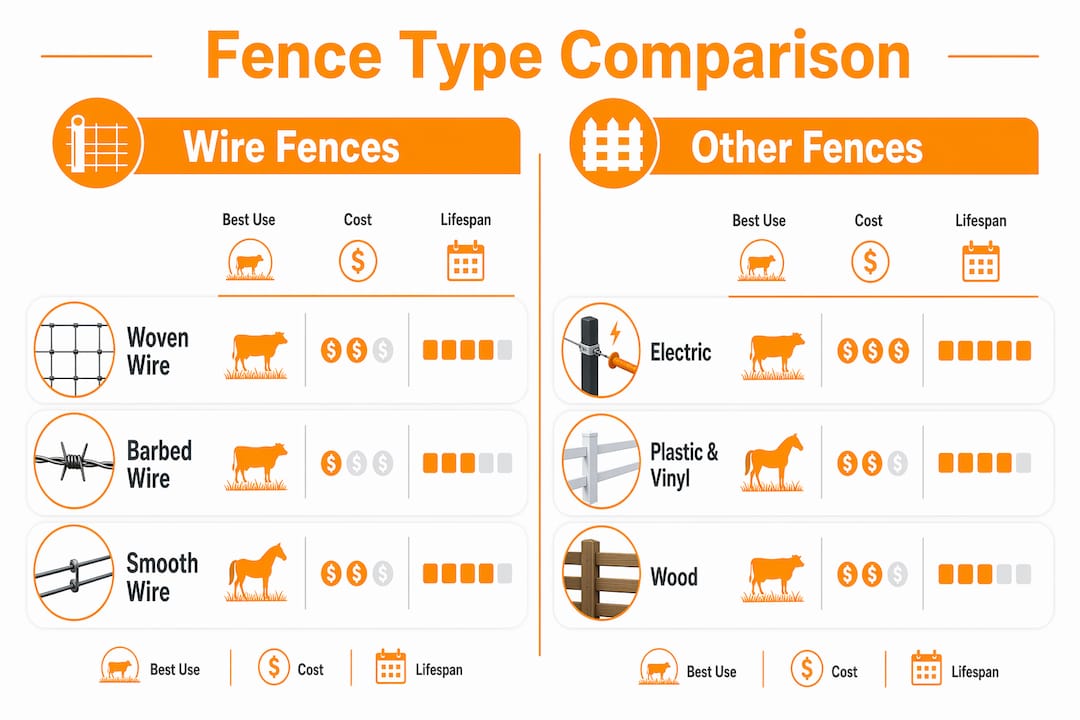
Plastic and vinyl fencing resist corrosion and require no painting, making them practical near fields where fertilizers and pesticides are regularly applied. Wood rail fencing costs between $6.50 and $12.00 per unit and is the preferred choice for horse operations where aesthetics and safety both matter. Electric netting and poly wire offer flexible rotational grazing options but typically last only one to three years under normal field conditions, making them better suited for temporary cross-fencing than permanent perimeters.
How to choose the right fence for your livestock and land
Matching fence design to animal behavior is the most critical decision in any fencing project. The most common fencing error is a mismatch between fence design and the specific behaviors of the animals it contains, which leads directly to escapes and fence damage.
The key factors to evaluate before purchasing any materials:
- Animal species and behavior. Cattle push and rub. Horses spook and run through fences. Goats test every gap. Pigs root under. Each behavior demands a different response in fence height, wire spacing, and material strength.
- Predator pressure. If coyotes, wolves, or bears are active in your area, a standard barbed wire perimeter is not enough. Woven wire with an outward-angled electric offset wire is the standard solution. Fencefast’s guide on anti-predator fencing covers this in detail for Canadian operations.
- Terrain type. Rocky ground makes post driving difficult and may require rock anchors or surface-mounted post systems. Wet or flood-prone areas demand pressure-treated or steel posts to prevent rot and heaving. Uneven ground requires more frequent line posts to follow the contour and maintain consistent wire height.
- Permanent vs. temporary needs. Permanent perimeter fences justify higher material costs because they carry the full load of containment year-round. Temporary electric netting or poly wire is ideal for rotational grazing paddocks where you move animals every few days.
- Budget and farm size. Larger operations benefit from lower cost-per-foot materials like barbed wire or single-strand electric for interior cross-fencing, reserving woven wire for high-risk perimeters.
Pro Tip: Before buying any materials, walk your entire fence line and map the terrain, note where water pools, identify high-traffic animal zones, and mark corner post locations. This 30-minute exercise prevents expensive material mismatches and post placement errors.
For a structured approach to narrowing your options, the Fencefast resource on choosing the best livestock fence walks through 10 practical criteria that apply to most farm setups.
What are best practices for building and maintaining farm fences?
Strong fence installation follows a clear sequence. Skipping steps or cutting corners at any stage compounds into bigger problems within the first season. Here is the core process:
- Plan and mark the layout. Use stakes and string to define your fence line before digging a single hole. Identify corner and end post locations first, since these carry the most structural load.
- Build corner and end assemblies first. Most fence failures originate at corners and gates. An H-brace assembly, using two vertical posts connected by a horizontal brace and diagonal wire, distributes tension across the structure and prevents the corner post from pulling inward as wire is tightened.
- Set line posts at consistent intervals. For woven wire, 8 to 12 feet between line posts is standard on flat ground. Tighter spacing is needed on slopes or in high-pressure animal zones.
- Attach and tension the wire. Use a wire stretcher to pull wire tight before stapling or clipping. Proper hardware and tensioning directly reduces repair frequency and extends fence lifespan. Loose wire sags, catches debris, and invites animals to push through.
- Install gates at logical access points. Gates should swing freely, latch securely, and be wide enough for your equipment. A gate that’s difficult to open gets left open.
For a detailed walkthrough of each phase, Fencefast’s guide on how to build farm fence covers post setting, wire attachment, and bracing in step-by-step format.
Pro Tip: For electric fences, train animals in a small, secure pen before releasing them into a large pasture. Animals learn fence respect through mild shocks in a controlled setting. Skipping this step leads to panicked animals crashing through the wire the first time they contact it in open ground.
Maintenance is where most farmers underinvest. Fence inspections every one to two months catch weak points before they become escape routes. Walk the line, check wire tension, look for broken staples, and clear vegetation from electric fence lines. Overgrown grass and brush contact the wire and bleed voltage, reducing the shock that keeps animals in. A fence that reads below 3,000 volts on a fence tester is not doing its job.
What modern tools and technologies are improving farm fencing?
The agricultural fencing industry has moved well beyond wire and wood posts. Several technologies are changing how farmers monitor, manage, and maintain their fences.
- IoT fence monitoring sensors. Smart sensors integrated into fence lines detect impacts, cuts, or voltage drops and send real-time alerts to a farmer’s phone. This matters most for large operations where walking the full perimeter daily is impractical.
- Solar-powered energizers. Modern solar energizers from manufacturers like Gallagher store enough charge to power a fence through multiple cloudy days. They eliminate the need for grid power in remote paddocks and reduce operating costs over time.
- GPS-based virtual fencing. Gallagher’s eShepherd system uses GPS-enabled solar-powered neckbands to create virtual boundaries for cattle without physical wire. The system delivers audio cues and mild stimulation to steer animals away from virtual fence lines, managed entirely through a smartphone app. Fencefast is an authorized Gallagher dealer with a 26-year partnership and carries the full eShepherd product line.
- Automated wire tensioners and protective coatings. Galvanized and polymer-coated wire products resist rust significantly longer than bare steel, reducing replacement cycles in wet climates.
- Recycled and living fence materials. Recycled plastic lumber posts and living hedgerows made from hawthorn or osage orange provide sustainable alternatives that reduce long-term material costs and support biodiversity on the farm.
For farmers interested in smart livestock fencing ideas that blend traditional and modern approaches, the combination of physical perimeter fencing with interior virtual fencing is becoming the standard on progressive operations.
Key takeaways
Effective agricultural fencing requires matching the right materials and design to your specific animals, terrain, and management goals, then maintaining that system consistently.
| Point | Details |
|---|---|
| Match fence to animal behavior | Design for how your specific livestock push, jump, dig, or rub to prevent escapes. |
| Prioritize corner bracing | Most fence failures start at corners; H-brace assemblies are non-negotiable for wire fences. |
| Inspect every one to two months | Regular walkthroughs catch tension loss, broken hardware, and vegetation shorts before they cause problems. |
| Electric fences need proper grounding | Use at least two ground rods per energizer and clear vegetation from the wire line regularly. |
| Modern tech extends what’s possible | Solar energizers, IoT sensors, and GPS virtual fencing reduce labor and improve livestock security. |
What I’ve learned from watching fences fail
Most fencing mistakes I’ve seen come down to two things: underestimating the animal and overestimating the fence. Farmers buy good wire, set decent posts, and then discover their cattle have figured out the weakest corner within a week. Animals are not random. They test the same spots repeatedly, and they remember where the fence gave way before.
The second pattern I’ve noticed is that people treat installation as the finish line. They build the fence, move on, and don’t look at it again until something escapes. A fence is infrastructure, not a one-time project. The farms with the fewest problems are the ones with a regular inspection habit, a fence tester in the truck, and a roll of wire always on hand.
If I had one piece of advice for anyone starting a fencing project: spend more on the corners and the hardware than you think you need to. Cheap staples, undersized brace posts, and skipped ground rods will cost you far more in repairs and escaped animals than the upfront savings are worth. The wire in the middle is almost never where the fence fails.
— Juiced
Build your fence right with Fencefast
Whether you’re starting from scratch or upgrading an existing perimeter, Fencefast carries everything you need for the job.

From woven wire and barbed wire to solar energizers, Gallagher electric fence systems, and the full eShepherd virtual fencing line, Fencefast stocks products built for Canadian farms and ranches. The site also offers design consulting, installation guides, and access to government funding programs like OFCAF and BMP grants for virtual fencing adoption. If you’re not sure where to start, the Fencefast product catalog covers the full range with expert guidance built in. Nationwide shipping is available across Canada, excluding PO Boxes.
FAQ
What is agricultural fencing?
Agricultural fencing is any physical or electric barrier system used on farms and ranches to contain livestock, protect crops, and define property boundaries. Common types include woven wire, barbed wire, electric fencing, wood rail, and vinyl fencing.
How often should farm fences be inspected?
Fence inspections should be performed every one to two months to identify weak points, loose wire, and broken hardware before they cause livestock escapes or fence failures.
What is the most common agricultural fencing mistake?
The most common error is a mismatch between fence design and livestock behavior. Fences built without accounting for how specific animals push, jump, or dig fail faster and require more frequent repairs.
How many ground rods does an electric fence need?
An electric fence energizer requires at least two metal ground rods, with additional rods needed in dry or sandy soil conditions to maintain consistent voltage and effective livestock containment.
What is virtual fencing and how does it work?
Virtual fencing uses GPS-enabled neckbands, such as the Gallagher eShepherd system, to create digital boundaries for livestock without physical wire. The system delivers audio and mild stimulation cues to steer animals away from virtual fence lines, managed through a smartphone app.
Recommended
- Fence installation steps for Canadian farms: A practical guide – FenceFast Ltd.
- Animal fencing basics: Essential solutions for Canadian farms – FenceFast Ltd.
- 7 Best Fencing for Small Farms: Essential Tips for Success – FenceFast Ltd.
- How to Build Farm Fence: Step-by-Step for Strong Results – FenceFast Ltd.

