

TL;DR:
- A layered predator-proof system combines physical barriers, secure hardware, active deterrents, and regular maintenance for effective livestock protection. Proper fencing, secure entry points, deterrents like lights and guardian animals, and ongoing inspections are essential, as no single method guarantees complete safety. Consistent, comprehensive efforts tailored to specific predator threats significantly reduce livestock losses on farms.
Keeping predators out of your livestock areas is defined as building a layered security system that combines physical barriers, secure hardware, active deterrents, and consistent property management. No single fence or latch does the job alone. Coyotes, raccoons, foxes, weasels, and bears each exploit different weaknesses, which means your defense must address digging, climbing, squeezing, and forced entry simultaneously. This guide walks you through the proven tools and methods that wildlife managers and agricultural authorities recommend, from galvanized hardware cloth and predator aprons to motion-activated lighting and sentinel animals.
What are the best physical barriers for keeping predators out?
Physical exclusion fencing is the foundation of any predator control system. Without a solid perimeter, every other deterrent you add is just a backup. The materials you choose and how you install them determine whether your barrier holds against a determined coyote or a persistent weasel.
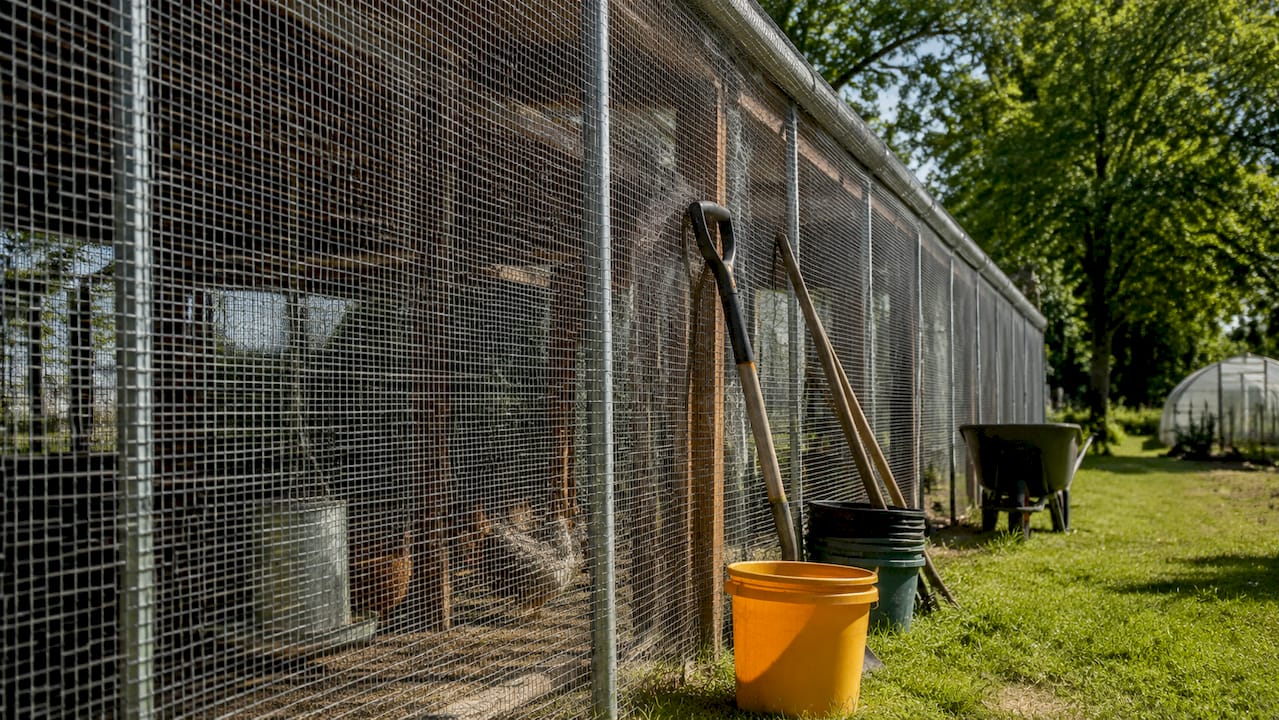
Galvanized hardware cloth is the standard material for predator-proof enclosures. 1/4-inch mesh is the critical size for blocking small predators like weasels, mink, and rats, which can compress their bodies through surprisingly tight openings. For larger perimeter fencing where small predators are less of a concern, 1/2-inch mesh provides adequate protection while reducing material cost. Both sizes should be galvanized after welding, not before, to prevent rust at cut edges.
Fence height matters as much as mesh size. Coyote-proof fencing requires a minimum of 6 to 8 feet in height, combined with coyote rollers or outward-angled toppers that prevent animals from getting a grip at the top. A coyote roller is a spinning tube mounted along the fence top that collapses under the animal’s weight, sending it back to the ground. Without this addition, a motivated coyote will clear a standard 6-foot fence.
Digging is the most underestimated attack vector on farms. Foxes, coyotes, and skunks routinely tunnel under fences that look solid above ground. A predator apron extending 12 to 24 inches outward from the base of the fence, laid flat on the ground and secured with landscape staples, exploits the predator’s instinct to dig straight down at the fence line. When the animal hits the apron, it cannot figure out to back up and dig further out. This method is faster to install and more practical than burying fencing 18 inches deep, which is the traditional alternative.
Pro Tip: Overlap hardware cloth panels by at least 6 inches and secure every overlap with hog rings or fencing staples every 4 inches. A single missed fastener creates a pry point that a raccoon will find within days.
Comparing barrier methods by predator type
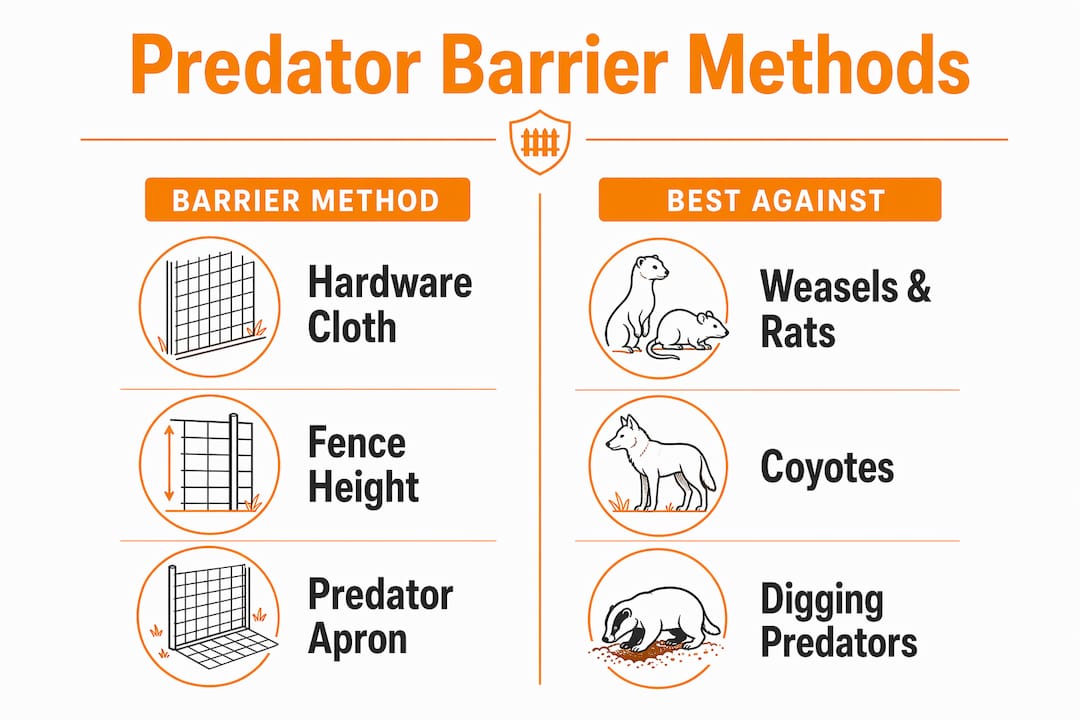
| Barrier method | Best against | Key specification |
|---|---|---|
| 1/4-inch hardware cloth | Weasels, rats, snakes | Galvanized after welding |
| 6 to 8 ft fence with coyote rollers | Coyotes, foxes | Rollers or 45-degree outward topper |
| Predator apron (flat ground extension) | Foxes, coyotes, skunks | 12 to 24 inches outward |
| Electric wire at 6 and 12 inches | Bears, dogs, raccoons | Pulsed energizer, properly grounded |
How do secure entry points and closures enhance predator defense?
A fence is only as strong as its weakest gate. Raccoons, in particular, are capable of opening simple hook-and-eye latches, sliding bolts, and single-action closures. The entry points of any enclosure, including doors, gates, vents, and access panels, are where most predator breaches actually occur.
Two-step latches that require a twist-and-pull or lift-and-slide motion are the industry standard for predator-proof closures. These coordinated motions outsmart even highly dexterous animals like raccoons, which can manipulate simple mechanisms with their front paws. Lockable carabiner clips added as a secondary measure on coop doors provide an extra layer of security at minimal cost.
Beyond latches, the structural integrity of the enclosure itself requires attention. Predators test fence weaknesses by targeting small gaps and secondary entry points like vents, pipe penetrations, and unsealed construction seams. Any gap larger than 1/4 inch is a potential entry point for a determined small predator. Here is where most farmers lose ground:
- Seal all ventilation openings with 1/4-inch hardware cloth screwed directly to framing, not stapled.
- Cover pipe penetrations with metal flashing and caulk the perimeter with a polyurethane sealant.
- Inspect all corners and seams where two materials meet, since these joints tend to separate over time.
- Replace any wood framing that shows chew damage immediately. Predators return to spots where they have made progress.
- Check door frames for warping each spring and fall. A warped door creates a gap that did not exist when you built the structure.
Pro Tip: Walk your enclosure at night with a flashlight held at ground level. Light shining through gaps you cannot see in daylight will reveal every vulnerability a predator could exploit.
Which deterrents and environmental strategies help keep wildlife away?
Physical barriers stop predators that reach your perimeter. Deterrents reduce how often predators approach in the first place. The most effective predator control solutions combine both, since a hard target that also lacks appeal is far less likely to be tested repeatedly.
Motion-activated lighting is one of the most cost-effective deterrents available. A system rated at 1,000 to 2,000 lumens with a 30 to 40 foot detection range covers the approach zones around most farm structures and startles nocturnal predators before they reach the fence line. Position lights at the corners of enclosures and along known travel corridors, such as fence lines, creek edges, and tree lines. Predators that are repeatedly startled by lights at a specific location will eventually reroute.
Sentinel animals provide a biological deterrent that no hardware can replicate. The three most effective options for Canadian farms are livestock guardian dogs (LGDs), donkeys, and geese. LGDs like Great Pyrenees or Anatolian Shepherds patrol actively and confront predators directly. A single donkey in a pasture will chase and kick coyotes and foxes with surprising effectiveness. Geese are loud, territorial, and alert to movement at night, making them a low-cost early warning system for poultry operations.
Vegetation management is a deterrent strategy most farmers overlook. Dense brush, tall grass, and wood piles within 30 feet of livestock enclosures give predators cover to approach undetected. Keeping a clear, mowed buffer around coops, pens, and barns removes that cover and forces predators into open ground where they feel exposed. Combine this with securing feed in lockable, scent-blocking containers to eliminate the food attractants that draw predators to your property in the first place.
- Install motion-activated lights at all four corners of each enclosure, angled outward at 45 degrees.
- Introduce a livestock guardian dog or donkey to pastures with recurring predator pressure.
- Mow a 30-foot buffer zone around all livestock structures twice per season.
- Store all feed in metal, lockable bins and remove spilled grain daily.
- Use commercial predator deterrent sprays along fence lines, reapplying after rain.
What are common pitfalls in predator-proofing?
The most common reason predator-proofing fails is not poor materials. It is incomplete installation and deferred maintenance. A system that was solid in May can have three exploitable gaps by October after a summer of ground movement, wood swelling, and hardware fatigue.
Farmers frequently focus on the obvious perimeter and ignore secondary entry points. Attic vents on barns, gaps where electrical conduit enters a coop wall, and spaces under sliding doors are all documented predator entry routes. Predators systematically test every surface of a structure until they find a weakness. If you only secured the main door and the fence, you have left the rest of the structure uninspected.
Over-reliance on a single method is the other major failure pattern. The USDA APHIS is explicit that predator management requires a layered approach combining fencing, husbandry, and scare tactics, since single devices rarely provide complete protection. A farmer who installs one motion-activated light and considers the job done will face a breach the first time the light’s battery dies or a predator learns to approach from the unlit side.
- Schedule a full perimeter inspection every 60 days, not just after a breach.
- Check all latch mechanisms for corrosion or loosening after freeze-thaw cycles.
- Replace any hardware cloth showing rust spots before the mesh weakens.
- Document where breaches or attempted entries occur to identify patterns.
- Never assume a deterrent that worked last season will work indefinitely. Predators adapt.
How to build a complete, layered predator-proof system
Integrated predator management works because it forces a predator to overcome multiple independent obstacles simultaneously. A coyote that clears the fence still faces the apron. One that bypasses the apron still faces the two-step latch. One that gets through the latch still faces the guardian dog. Each layer compensates for the potential failure of the others.
The design of your system should reflect the specific predators active on your property and the size of the area you are protecting. A small poultry operation in Ontario faces different threats than a cattle ranch in Alberta. The table below outlines practical system configurations based on property scale and primary predator pressure.
| Property type | Primary threats | Recommended system |
|---|---|---|
| Small poultry coop (under 200 sq ft) | Raccoons, weasels, foxes | 1/4-inch hardware cloth, two-step latches, predator apron, motion light |
| Mid-size livestock pen (200 to 2,000 sq ft) | Coyotes, foxes, dogs | 6 to 8 ft welded wire with coyote rollers, electric wire at base, LGD |
| Large pasture (2+ acres) | Coyotes, bears, wolves | High-tensile electric fence, guardian animals, vegetation management |
| Mixed farm with multiple species | All of the above | Full layered system with species-specific fencing requirements |
Visibility and layout planning matter at the design stage. Position enclosures away from tree lines and dense brush where possible. Orient motion-activated lights to cover the most likely approach corridors based on the terrain. Consult resources like Fencefast’s guide on anti-predator fence options when selecting materials for your specific predator profile. The goal is to create what wildlife managers call a “hard target,” a property where the effort required to breach the defenses exceeds the reward a predator expects to gain.
Key takeaways
Effective predator exclusion requires a layered system of physical barriers, secure hardware, active deterrents, and consistent maintenance, since no single method reliably stops all predator types.
| Point | Details |
|---|---|
| Physical barriers are the foundation | Use 1/4-inch hardware cloth, 6 to 8 ft fencing with coyote rollers, and predator aprons at the base. |
| Entry points are the most common breach site | Install two-step latches and seal all gaps over 1/4 inch, including vents and pipe penetrations. |
| Deterrents reduce approach frequency | Motion lights rated 1,000 to 2,000 lumens and sentinel animals lower predator pressure before it reaches the fence. |
| Single-method defense fails | USDA APHIS confirms layered approaches outperform any single device or technique. |
| Maintenance determines long-term success | Inspect the full perimeter every 60 days and replace corroded or damaged hardware before a breach occurs. |
What I’ve learned after years of watching predator-proof systems succeed and fail
Most farmers who lose livestock to predators did not have a bad fence. They had a good fence with one overlooked gap, one latch that loosened over winter, or one night they forgot to close the coop door. The predator did not outsmart the system. The system had a gap in the routine.
The detail that separates farms with consistent losses from farms that go years without an incident is almost never the quality of the materials. It is the discipline of the inspection schedule. I have seen operations running basic welded wire and simple electric fence go years without a loss because the farmer walked the perimeter every week. I have also seen expensive hardware cloth installations fail within a season because nobody checked whether the ground had shifted under the apron after spring thaw.
The other thing worth saying plainly: sentinel animals are underused on Canadian farms. A well-bonded Great Pyrenees or a territorial donkey provides a level of adaptive, real-time response that no motion light or noise device can match. Hardware deters. Animals defend. The best systems use both.
If you are starting from scratch, do not try to build the perfect system in one season. Start with the physical barrier, get the latches right, and add deterrent layers as your budget allows. A solid fence with a predator apron and a two-step latch will stop the majority of predator pressure on most Canadian farms. Build from there.
— Juiced
How Fencefast can help you build a stronger defense
Fencefast carries the fencing components, hardware cloth, electric fencing systems, and accessories that Canadian farmers need to build a complete predator exclusion system. Whether you are reinforcing a poultry coop or fencing a multi-acre pasture, the product catalog covers everything from galvanized wire and staples to solar-powered electric fence energizers. The team also offers design consulting to help you match materials to your specific predator pressure and property layout. Explore the full range of predator control fencing solutions, or visit FenceFast.ca to order and get expert guidance for your operation.
FAQ
What mesh size hardware cloth keeps predators out?
Use 1/4-inch mesh hardware cloth to block small predators like weasels and rats, which can compress through any larger opening. For larger perimeter fencing, 1/2-inch mesh is adequate against foxes, coyotes, and raccoons.
How high does a fence need to be to stop coyotes?
Coyote-proof fencing requires a minimum height of 6 to 8 feet, combined with coyote rollers or an outward-angled topper to prevent climbing. Without a roller or topper, a motivated coyote will clear a standard 6-foot fence.
What is a predator apron and does it work?
A predator apron is a section of hardware cloth or welded wire laid flat on the ground extending 12 to 24 inches outward from the base of a fence. It works by exploiting the predator’s instinct to dig straight down at the fence line, where it hits the buried apron and cannot proceed.
What type of latch prevents raccoons from opening doors?
Two-step latches that require a twist-and-pull or lift-and-slide motion are the standard for raccoon-proof closures. Simple hook-and-eye or single-action sliding bolts can be opened by raccoons using their front paws.
Is one deterrent method enough to protect livestock?
No. The USDA APHIS confirms that single devices rarely provide complete protection against predators. An integrated system combining physical fencing, secure hardware, motion-activated lighting, and sentinel animals is the only approach that reliably reduces livestock losses over time.
Recommended
- How to Repair Fences: Practical Steps for Farmers and Landowners 2025 – FenceFast Ltd.
- Animal fencing basics: Essential solutions for Canadian farms – FenceFast Ltd.
- Predator control fencing: proven solutions for farmers – FenceFast Ltd.
- Predator Proof Chicken Coops: 2025 Guide for Safe Flocks – FenceFast Ltd.

