

For most U.S. livestock operations, permanent high-tensile electric fencing is the right default. It’s durable, cost-efficient over a 20-plus-year lifespan, and works for cattle, horses, and hogs once animals are trained to respect the wire. Your two best secondary options:
- Portable electric fencing (polywire or polytape on step-in posts): ideal for rotational grazing, temporary paddocks, and short-term moves where you need flexibility without permanent infrastructure.
- Virtual (GPS) fencing: best suited for rotational and regenerative grazing on large acreage where cell or satellite coverage is reliable. Not recommended for very young calves, and topography can limit effectiveness.
If you’re on rough terrain with spotty connectivity, start with high-tensile and add virtual fencing as a complement later.
Key Takeaways
Permanent high-tensile electric fencing is the right default for most U.S. livestock operations; virtual fencing and portable electric systems are the best complements for rotational grazing and flexible management.
| Point | Details |
|---|---|
| Default system | Permanent high-tensile electric fencing suits most cattle and horse operations for perimeter and boundary use. |
| Virtual fencing role | Best as a rotational grazing tool on large acreage; pilot one pasture before full deployment. |
| Wire and energizer specs | Specify Class 3 galvanized wire and oversize your energizer beyond your planned fence length. |
| NRCS/EQIP funding | Contact your local NRCS conservationist to check whether your fencing project qualifies for EQIP cost-share. |
| Fencefast | Authorized Gallagher dealer offering electric fencing components, eShepherd virtual fencing systems, and sizing consultations. |
Table of Contents
- Which fencing system fits your operation?
- What are the main farm fence types you should know?
- How do electric fencing components actually work?
- What can virtual fencing actually do for your operation?
- How should you place gates and lay out your farm lanes?
- Installation checklist and seasonal maintenance schedule
- Training livestock to electric and virtual fences
- What do farm fencing systems actually cost, and where can you get help paying?
- What to ask a gate fence company or authorized dealer
- A practitioner’s perspective on getting started
- Fencefast: farm-grade fencing and virtual fence systems for U.S. producers
- Sources
Which fencing system fits your operation?
Run through this before you call any gate fence company or authorized dealer:
Perimeter boundary: Permanent high-tensile electric or woven wire with a hot wire on top. Prioritize at least three strands and H-brace corners.
Interior subdivision for rotational grazing: Portable electric (polywire on step-in posts) for maximum flexibility, or virtual fencing if you have reliable coverage and a trained herd.
Short-term moves and temporary paddocks: Portable electric wins every time. Fast to set up, easy to reposition, low cost per move.
Predator control or wildlife exclusion: Woven wire with a hot wire offset at nose height. Barbed wire adds a deterrent layer on the outside for large predators.
Conservation or riparian exclusion: Virtual fencing is gaining traction here, especially on rented or public land where you can’t install permanent infrastructure. Confirm cellular or satellite coverage first.
Pilot test? Split one paddock, run a small group, and document behavior for two to three weeks before committing to a full system.
What are the main farm fence types you should know?
Fixed fencing goes in the ground and stays there. Portable fencing moves with your management plan. Knowing which category you’re buying into changes every downstream decision.
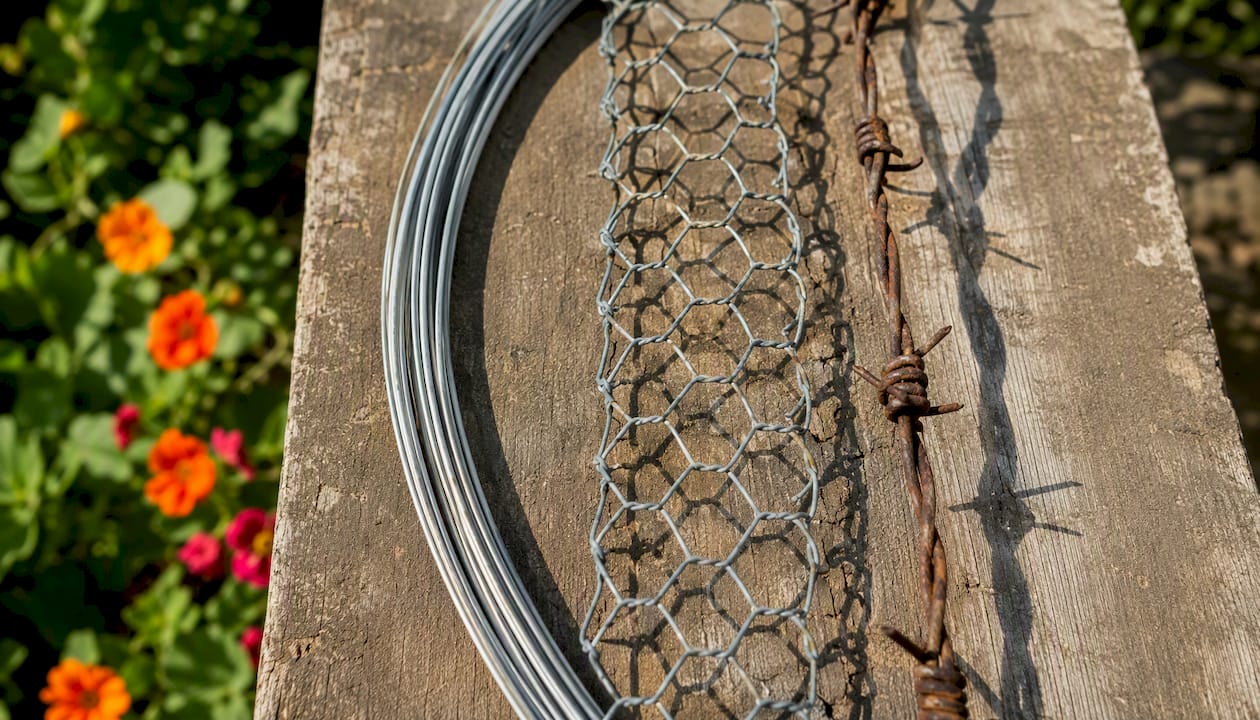
Fixed systems include high-tensile smooth wire, woven wire (field fence), and barbed wire. High-tensile is the workhorse for cattle and horses on perimeter runs. Woven wire suits sheep, goats, and hogs where animals push against the fence. Barbed wire is common in the West for cattle but requires careful handling and isn’t suitable for horses.
Portable systems use polywire, polytape, or light-gauge wire on reels with step-in posts or pigtail stakes. They’re fast to move and inexpensive per linear foot, but they demand more frequent inspection and aren’t built for long-term perimeter duty. For a deeper look at portable fencing trade-offs, the options are broader than most producers realize.
Farm gates need proper bracing regardless of material. A steel or wood gate hung on an under-braced post will sag within a season. H-brace assemblies with a diagonal brace wire are the standard for corner and gate posts; double-brace on gates wider than 16 feet.
| Feature | High-Tensile Electric | Woven Wire | Portable Electric |
|---|---|---|---|
| Permanence | High | High | Low |
| Upfront cost | Moderate | High | Low |
| Labor to install | Moderate | High | Very low |
| Durability | multiple years of service life | 15 years | 3–7 years |
| Best for | Cattle, horses | Sheep, goats, hogs | Rotational grazing |
How do electric fencing components actually work?
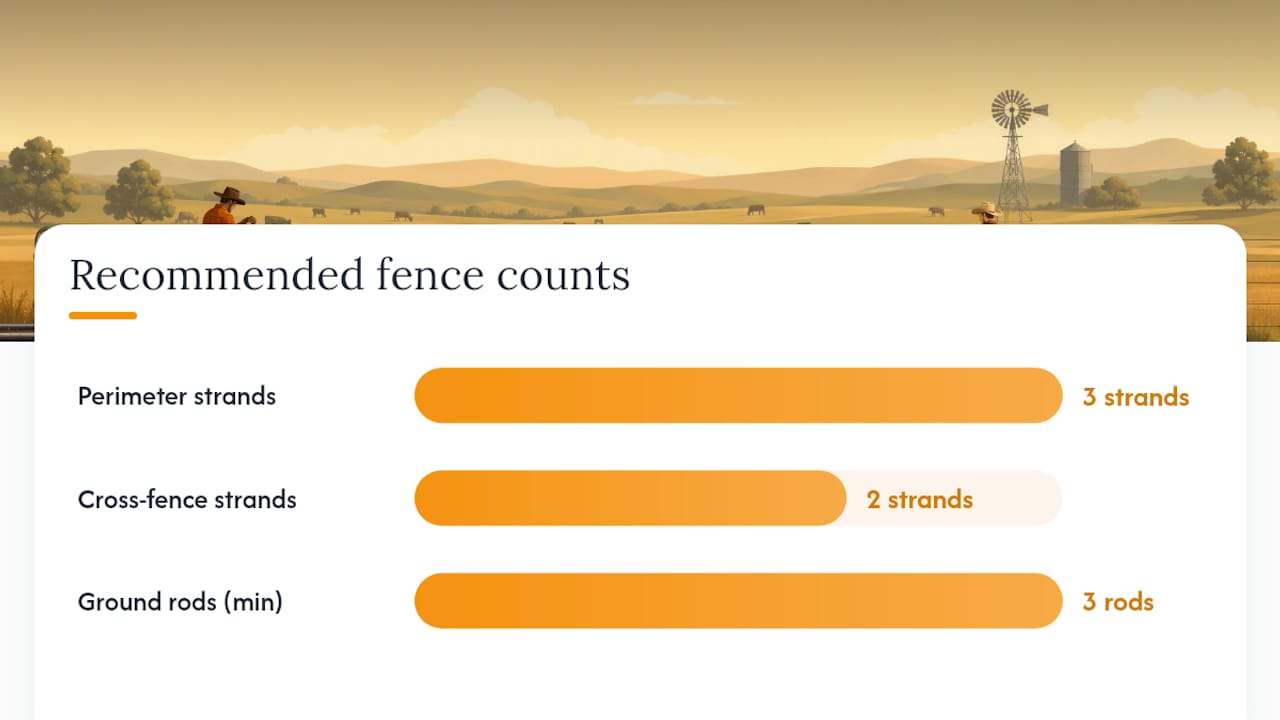
Electric fencing is often the fastest and most economical way to contain livestock, and Mississippi State University Extension recommends at least three strands on perimeter fences and two on cross fences. The wire, the energizer, and the ground system all have to work together; a weak link in any one of them drops the whole fence’s effectiveness.
Wire options:
- Polywire and polytape: Highly visible, easy to handle, good for temporary setups. Lower conductivity than solid wire, so keep runs short.
- 12½-gauge high-tensile smooth wire: The standard for permanent electric fences. High conductivity, long runs, and decades of service life when properly tensioned.
Class 3 galvanizing matters more than most buyers realize. Not all “galvanized” wire carries the same coating weight. Class 3 galvanized coatings significantly improve longevity, and cheap wire without a confirmed class rating corrodes faster, especially in humid or coastal climates. Ask your supplier for the class rating before you buy.
Energizer selection: Low-impedance energizers are the modern standard. They push a short, high-voltage pulse that cuts through vegetation contact better than older high-impedance models. Match the energizer’s miles rating to your planned fence length and then oversize it. Manufacturer ratings assume ideal conditions; real fences have weeds, wet soil, and long runs.
Pro Tip: Always buy an energizer rated with extra capacity beyond your planned fence length. Vegetation contact and long wire runs eat capacity fast, and undersized energizers are the single most common reason a fence stops working.
Grounding: A poor ground system is the most overlooked failure point. Drive at least three 6-foot ground rods spaced 10 feet apart. In dry climates, use a hot/ground return system with alternating hot and ground wires so the return path doesn’t depend on dry soil.
Installation essentials: Set corner and gate posts securely, build proper H-brace assemblies, use inline tighteners to maintain tension on high-tensile wire, and space line posts at regular intervals appropriate for your terrain.
What can virtual fencing actually do for your operation?
Virtual fencing replaces physical wire with GPS-enabled collars, a cloud or mobile interface, and a network connection. You draw boundaries on a map; the collar delivers an audio warning when an animal approaches the line, then a mild electrical stimulus if it crosses. Systems vary by infrastructure: some use cellular-only collars, others require LoRaWAN base stations, and some use direct-to-satellite links. That choice affects deployment cost, permitting needs for base stations, and how well the system works in remote terrain.
What virtual fencing does well:
- Enables rotational grazing without cross-fencing infrastructure
- Allows grazing on rented or public land where permanent fencing isn’t permitted
- Reduces labor for moving animals between paddocks
- Supports exclusion zones around riparian areas or sensitive vegetation
Real limits to plan around:
- Cellular dead zones and steep topography reduce reliability
- Not recommended for very young calves; most systems specify minimum animal weight thresholds
- Animals need a training period before the system works reliably
- Ongoing subscription or lease fees add to total cost
Major North American providers include Vence (Merck Animal Health), Nofence, Corral Technologies, and Gallagher’s eShepherd platform. Each uses a different network architecture and cost model, so compare infrastructure requirements for your specific location before committing.
Cost model: Collar purchase prices run near $300 per unit from some vendors; lease models bundle software access and battery service into a monthly or annual fee. The Noble Research Institute recommends treating virtual fencing as a facilitation tool for rotational grazing and starting with a single pasture rather than a full-scale rollout. That pilot approach also lets you verify connectivity before you’re committed.
How should you place gates and lay out your farm lanes?
Gate placement drives how hard you work every single day. Place gates in paddock corners near central water and handling facilities, and design lanes so animals walk into an alley when the gate opens rather than running alongside the fence line. That one layout decision cuts escape incidents dramatically.
- Corner gates reduce wear on gate hardware because animals don’t crowd the center of a fence line.
- Lanes should be wide enough for your largest equipment plus a comfortable animal flow: 12–14 feet minimum for cattle lanes.
- Cattle guards work well at road crossings with high traffic; coordinate gates on opposite sides of a road so animals don’t have to cross traffic to reach water.
- Size gates to your largest equipment. A 16-foot gate that fits your tractor now saves a rebuild later.
Pro Tip: Run your lane toward the water source. Cattle move toward water naturally, so a lane pointed at the tank is a lane that works with animal behavior instead of against it.
Installation checklist and seasonal maintenance schedule
Installation steps (in order):
- Survey the site: mark corners, gate locations, and any obstacles.
- Stake gate and corner post positions before digging.
- Set corner and gate posts in concrete; build H-brace assemblies.
- String high-tensile wire from corner to corner; use inline tighteners to achieve proper tension.
- Install line posts at 40–60-foot intervals (closer on slopes or curves).
- Connect energizer, ground rods, and lead-out wire.
- Test voltage at the far end of the fence before releasing animals.
Seasonal inspection checklist:
- Spring: Check tension after freeze-thaw cycles; inspect ground rods and connections; clear vegetation from wire.
- Summer: Monthly voltage checks; mow or spray under fence lines; inspect gate hinges and latches.
- Fall: Re-tension wire; check energizer output; inspect H-braces for movement.
- Winter: Verify energizer is protected from moisture; check that snow load hasn’t pushed posts.
Keep a simple log: date, voltage reading, repairs made. That record helps you catch a slow decline before it becomes an escape.
Training livestock to electric and virtual fences
Electric fence training takes days, not weeks, when done right. Confine animals in a small area with the fence energized and let them discover it on their own. Most cattle and horses make contact once or twice and learn the boundary within 48–72 hours. For a step-by-step livestock training guide, the process is straightforward when you control the environment.
Virtual fence training takes longer. Many ranchers underestimate the initial training period; most providers recommend running a temporary physical fence alongside the virtual boundary for the first week so animals associate the audio cue with a real barrier before the physical wire comes down.
- Modern virtual collars deliver an audio warning first, then a brief electrical stimulus. Built-in cue limits prevent repeated stimulation in a short window.
- Virtual fence systems are not recommended for very young calves; confirm minimum weight requirements with your provider.
- On the legal side: you’re responsible for your animals. Check your state’s fence law and talk to your neighbor before you change a shared boundary. “Good fences make good neighbors” applies whether the fence is wire or GPS.
Pro Tip: Train a small group first. If five animals learn the virtual boundary cleanly, the rest of the herd tends to follow their lead.
What do farm fencing systems actually cost, and where can you get help paying?
Cost ranges vary by vendor, region, and system complexity. These are realistic starting points, not guarantees:
- High-tensile wire: roughly $150–$300 per mile for wire alone, depending on gauge and class rating.
- Energizers: entry-level units for small pastures start under $200; commercial low-impedance units for long runs run $500–$1,500 or more.
- Virtual fence collars: purchase prices near $300 per collar from some vendors; lease models bundle software and service into annual fees.
- Gate hardware: a quality 16-foot steel gate with proper post and bracing runs $300–$600 installed, depending on your region.
Energy options: AC-powered energizers are the most reliable for permanent setups near a power source. Deep-cycle battery units work for remote locations but need regular recharging. Solar-charged battery systems are the practical choice for remote paddocks with no grid access.
NRCS/EQIP funding: The Natural Resources Conservation Service’s Environmental Quality Incentives Program (EQIP) provides cost-share payments for fencing practices that improve pasture and water quality. Virtual fencing has been added to eligible practices in several states. Contact your local NRCS conservationist to find out what’s available in your county and whether your planned system qualifies.
What to ask a gate fence company or authorized dealer
The right supplier saves you money on materials and prevents expensive mistakes. Here’s what to verify before you commit:
Questions to ask:
- What is the Class rating on your galvanized high-tensile wire?
- What is the energizer’s rated miles, and how is that calculated?
- Do you carry low-impedance energizers for long runs?
- What warranty and service turnaround do you offer on energizers and collars?
- Can you support a virtual fencing pilot, including connectivity verification?
- Are replacement parts stocked locally or shipped?
Vendor evaluation checklist:
- Confirm authorized dealer status for the brands you’re buying (especially for virtual fencing systems like Gallagher eShepherd).
- Ask for references from producers with similar operations and acreage.
- Request installation photos or wiring diagrams for comparable projects.
- Check whether the supplier offers on-site consultation or remote sizing support.
- Confirm whether a maintenance plan or service contract is available.
For virtual fencing specifically, request a connectivity assessment for your property before purchasing collars. A reputable dealer will help you verify coverage rather than sell you hardware that won’t work on your terrain.
A practitioner’s perspective on getting started
The producers who get the most out of their fencing investment share one habit: they start smaller than they think they need to. Survey one paddock, run a pilot with a small group, and document what you learn before scaling. That’s not timidity; it’s how you avoid a $15,000 mistake.
Two things I’d tell any rancher calling a gate fence company for the first time: ask specifically about Class 3 galvanized wire (not just “galvanized”), and ask the dealer to walk you through energizer sizing based on your actual planned fence length, not a catalog spec sheet. Those two conversations will tell you quickly whether you’re talking to someone who knows agricultural fencing or someone who sells fence as a sideline.
Virtual fencing is worth a serious look if you’re doing rotational grazing on large acreage or managing land where permanent cross-fencing isn’t practical. But pilot it on one pasture first. The Noble Research Institute’s guidance on starting small before scaling is the right call, and it’s consistent with what producers who’ve adopted these systems successfully report.
Fencefast: farm-grade fencing and virtual fence systems for U.S. producers
Fencefast carries the full range of farm-grade fencing components, from high-tensile electric wire and low-impedance energizers to Gallagher eShepherd virtual fencing collars and base stations. As an authorized Gallagher dealer with a 26-year partnership, Fencefast offers product expertise that goes beyond a catalog: sizing consultations, virtual fencing setup guidance, and access to information on available funding programs. Whether you’re building a permanent perimeter, setting up a rotational grazing system, or exploring GPS collar technology for the first time, browse the full product catalog and request a consultation at Fencefast.
Sources
- Virtual fencing: where it makes sense and where it doesn’t — Noble Research Institute
- Livestock fencing systems for pasture management — Mississippi State University Extension
- Grazing with virtual fence — NDSU Agriculture Extension
- Planning and building fences on the farm — UTIA (PB1541)
- Virtual fencing systems and their components — ScienceDirect article
- Planning and building fences on the farm (C-774) — University of Georgia Extension
Recommended
- Agricultural Fencing Basics: A Practical Farm Guide – FenceFast Ltd.
- Fence installation steps for Canadian farms: A practical guide – FenceFast Ltd.
- Cattle Fencing Options for Ranchers: Choose the Right System – FenceFast Ltd.
- How to Build Farm Fence: Step-by-Step for Strong Results – FenceFast Ltd.

