

No single method holds every animal on every farm. The most reliable results come from a well-built physical fence sized to the species, paired with electric or virtual containment where it makes sense, and backed by good habitat placement and welfare-minded management. This guide walks through fencing design, electric and virtual systems, temporary capture, placement, maintenance, and how to pick the right combination for your land and livestock.
TL;DR:
- Physical fences should be at least 40 inches high with specific mesh and overhang features to prevent wildlife injuries and predator escapes effectively.
- Electric and virtual fencing require proper training and maintenance, as they condition animals to respect boundaries but do not block physical threats or aggressive predators.
- Combining multiple methods, such as physical perimeter fences, virtual paddock divisions, and guardian animals, provides the most reliable containment.
- Regular fence inspection and prompt repairs are crucial, especially after snow or storms, to prevent silent failures that compromise containment.
- Start fencing projects by prioritizing high-risk areas like calving paddocks or roads and consider grant programs to offset costs for virtual fencing adaptations.
Table of Contents
- What are the main animal containment methods?
- How should you design a physical fence for livestock and wildlife?
- Do electric and virtual fences actually keep animals contained?
- How do you safely capture and hold animals temporarily?
- How do you choose the right containment method for your situation?
- What maintenance keeps a containment system from failing?
- What does Fencefast recommend for your containment setup?
- What the research actually tells farmers about fencing
- Ready to Build a Containment System That Actually Holds?
- Sources
What are the main animal containment methods?
Every containment strategy on a working farm falls into one of five categories, and most successful setups blend two or three of them rather than leaning on just one.
- Physical fences (woven wire, high-tensile, wood rail) offer the most permanent barrier but cost more upfront and need real maintenance.
- Electric fencing trains animals to respect a boundary using a mild shock, cheap to install but dependent on consistent power and animal learning.
- Virtual/GPS containment (like collar-based systems) gives flexible, moveable boundaries without wire, but it relies entirely on the animal’s prior training and won’t stop a predator or a determined escape.
- Guardian animals and deterrents (dogs, donkeys, motion-activated lights) reduce predation pressure but don’t replace a perimeter.
- Temporary or soft containment (traps, crates, holding pens) handles capture, treatment, and transport, not day-to-day grazing control.
Mixing methods is standard practice, not a compromise. A rancher might run permanent woven wire on the outer perimeter, virtual fencing to rotate cattle through interior paddocks, and a livestock guardian dog to discourage coyotes. Each layer covers a gap the others leave open.
How should you design a physical fence for livestock and wildlife?
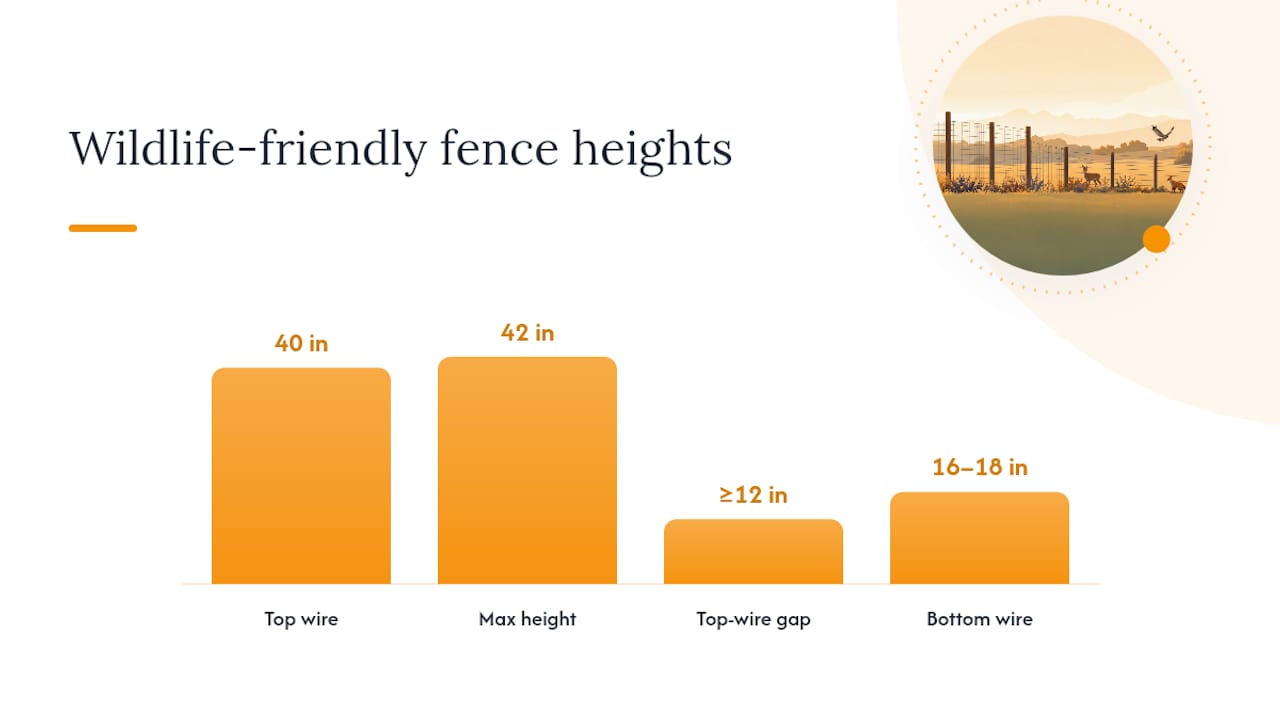
Height, spacing, and material choice determine whether a fence works or becomes a hazard. For wildlife-friendly design, the top wire should sit at 40 inches and never exceed 42 inches, with at least 12 inches of gap between the top two wires and a bottom wire set no lower than 16 to 18 inches off the ground. That spacing lets deer and elk clear the top or slip under the bottom instead of getting hung up mid-jump, which is where most wildlife fence injuries happen.
Material matters as much as height. Fences with a lot of open mesh area increase the odds of pacing, climbing, and entanglement, while solid or low-open-area barriers cut those behaviors down considerably. For predator exclusion specifically, a woven-wire fence with small mesh, a top overhang, and a buried apron along the base has been shown in controlled research to be the most effective barrier against coyotes, since it defeats both climbing and digging at once.
Here’s a basic build sequence that works for most livestock perimeters:
- Survey the terrain first and mark low spots where snow or water could reduce effective fence height.
- Set corner and line posts to depth, bracing corners for tension.
- Bury an apron of mesh or wire 6 to 12 inches below grade at points prone to burrowing.
- String wires at the wildlife-friendly spacing if deer or elk cross the property.
- Add drop-down sections or seasonal gates where migration routes intersect the fence line.
Slope changes the math. When a fence climbs a hillside, measure effective height from the animal’s approach side, because snow depth and slope both add to how tall a fence effectively becomes during winter, sometimes trapping wildlife that could clear the same fence in summer.
Pro Tip: Walk your fence line after the first big snow of the season. A fence that reads 42 inches in July can effectively become a 30 inch fence in January once drift builds up on the approach side.
Suspension fences and flexible electric wire give you a middle option: properly tensioned, they contain cattle while still allowing elk and other ungulates to push through, and some ranchers lower them seasonally to open migration corridors entirely. For a deeper dive on species-specific material choices, our livestock containment methods guide breaks down wire gauge and post spacing by animal type.
Do electric and virtual fences actually keep animals contained?
Electric fencing works by conditioning, not brute force. The animal touches the wire once or twice, feels a brief shock, and learns to avoid the boundary. Virtual containment, including GPS collar systems, works the same way but swaps the wire for a signal, letting you redraw the paddock boundary from an app instead of moving posts.
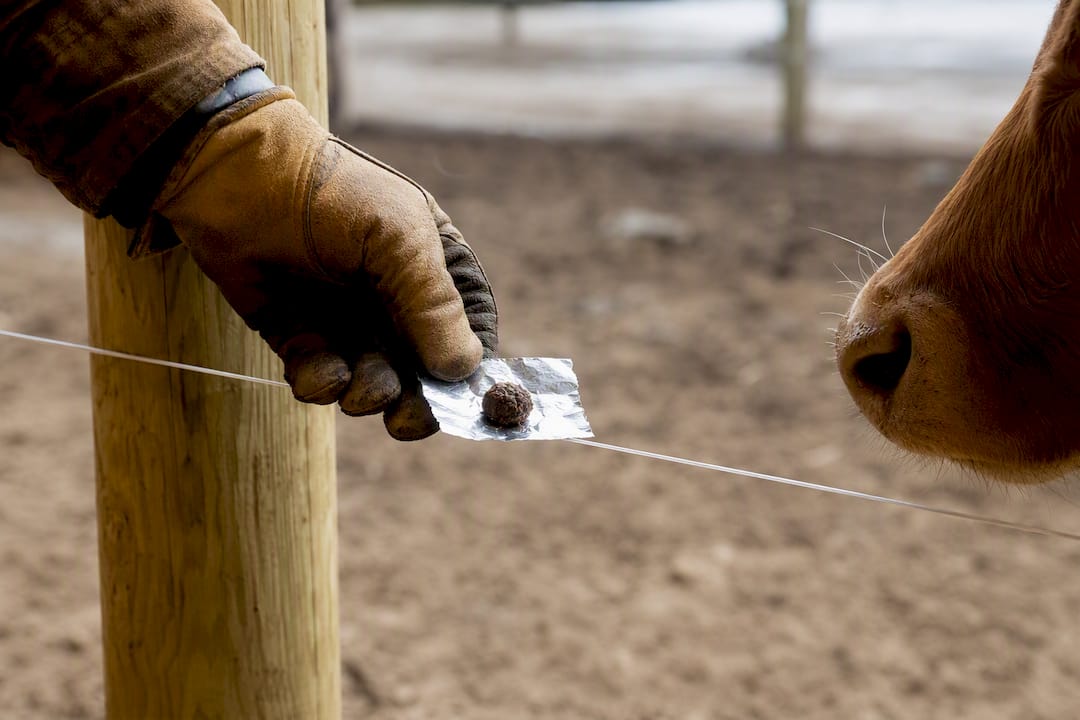
Both systems demand training before they earn your trust. A common introduction method involves placing a scent lure, such as peanut butter on foil, directly on the wire so the animal makes brief nose contact and links the mild aversive stimulus to that specific line rather than to the whole pasture. Skip that step and you’ll get animals that break through the first time they’re spooked, because they never learned what the boundary meant.
The limits matter as much as the mechanics. Electronic containment systems do not stop physical contact with outside threats. The MSPCA-Angell cautions that these systems should only be deployed after a behavioral assessment, and use should stop if an animal shows fear or keeps attempting to escape despite training. That guidance applies just as much to virtual cattle collars facing a predator threat as it does to a dog facing a delivery truck. If your animals face aggressive predators or frequent contact with the public, an electronic boundary should back up a physical fence, not replace it.
Watch for these signs a system isn’t working:
- Repeated breakouts at the same point in the boundary
- Visible anxiety, pacing, or reluctance to move near the fence line
- Collar battery or solar charge dropping faster than expected in shaded terrain
- Signal gaps near dense tree cover or steep drainage
Roughly 80% or more of animal-vehicle collisions drop off when fencing is combined with dedicated crossing structures, a number worth remembering if your property borders a road corridor where escaped livestock could end up. Our electric fence systems comparison covers energizer sizing and solar placement in more detail.
How do you safely capture and hold animals temporarily?
Trap and crate size has to match the species, not just the general size class. A raccoon-sized live trap will injure a smaller animal that panics inside it, and an oversized crate lets a large animal build enough momentum to hurt itself against the walls.
- Choose a trap or bag rated for the specific species and weight range, not just “small mammal” or “large mammal.”
- Limit holding time to the minimum needed. Field SOPs recommend short holding durations, often just minutes for small species during processing, to cut down on stress hormones and injury risk.
- Provide shade, ventilation, and a visual barrier (a towel over a crate works) so the animal isn’t staring at handlers.
- Check local wildlife and livestock regulations before transporting or processing any captured animal, since rules vary by species and jurisdiction.
- Move the animal directly to its release or transfer point. Don’t stage it in a holding area longer than necessary.
How do you choose the right containment method for your situation?
Species and motivation drive the decision more than budget does, though budget usually decides how fast you can act on it. A coyote that’s already learned to associate your pasture with an easy meal takes more fence than one that hasn’t found you yet. Cattle rotating through interior paddocks need a different setup than the outer perimeter facing a public road.
Run through these questions before you buy materials:
- What species, and how motivated is it to cross the line (hungry predator vs. content grazer)?
- What does the terrain do to effective fence height (slopes, snow load, water)?
- What’s on the other side of the fence (neighbor’s crop, highway, wildlife corridor)?
- Does the season change the requirement (calving, migration, snow accumulation)?
- Can a lower-cost electric or virtual layer handle interior divisions while the perimeter stays physical?
Red flags that mean it’s time to call in a professional: repeated predator breaches despite a solid fence, animals showing signs of chronic stress near the boundary, or a containment failure that’s already caused a public safety incident. Experts generally favor a “less is better” approach to fencing, meaning you target exclusion where it truly matters, calving pastures, orchards, kennels, and leave wildlife corridors open elsewhere rather than fencing every acre.
Pro Tip: Prioritize your highest-risk area first. A calving paddock or a fence line next to a highway deserves your best materials before you spend budget on interior cross-fencing.
What maintenance keeps a containment system from failing?
Fences fail quietly for weeks before they fail visibly, so a fixed inspection routine catches problems while they’re still cheap to fix.
- Walk the fence line monthly and check wire tension, post lean, and gate fit.
- Test energizer output with a voltage meter, since a weak charge is often the first sign of a short or bad ground rod.
- Clear vegetation that’s grown into the wire, since wet brush against a hot wire drains voltage fast.
- Check for sagging wires and loose staples after any major storm, and re-tension before the next one.
- Inspect for signs of animals testing or tangling in the fence, torn hair, disturbed ground, bent wire, which often points to a design problem rather than bad luck.
- Reassess fence height after heavy snow, since drift buildup can quietly turn a compliant fence into a low one.
Keep a simple log of repairs and dates. If the same section keeps failing despite fixes, that’s a signal to redesign that stretch rather than patch it again. Our guide on preventing fence escapes walks through the most common failure points we see reported by farm customers.
What does Fencefast recommend for your containment setup?
The electric and virtual fencing hardware sold through the site, including GPS collars and base stations, comes from a manufacturer with decades of field data behind its designs. That partnership shapes how Fencefast approaches every containment project, whether it’s a straightforward wire perimeter or a full virtual fencing rollout.
The practical path for most farms looks like this:
- Start with a site assessment that flags your highest-risk zones (calving areas, road-adjacent boundaries, predator hot spots).
- Match materials to the species and terrain, not a generic fence spec.
- Layer in virtual fencing for interior paddock rotation where a physical fence isn’t cost-effective.
- Ask about grant programs. Canadian producers adopting virtual fencing may qualify for funding through OFCAF or provincial BMP programs, which can offset a meaningful share of setup cost.
If you’re staring at a property map trying to figure out where to spend limited fencing budget first, that’s exactly the kind of question a design consultation is built to answer. Prioritizing the calving paddock or the boundary next to a highway before the interior cross-fencing is usually the right call, and getting that sequence right the first time saves money on rework later.
What the research actually tells farmers about fencing
Most fencing advice online treats height and wire gauge as the whole story. It isn’t. The research backing this article points somewhere less obvious: material choice and placement decide whether a fence works long-term, not just whether it’s tall enough on installation day.
A woven-wire fence with the right mesh size and a buried apron beats a taller fence with the wrong material, because coyotes and other predators exploit gaps and dig points, not height alone. And a fence built without regard to snow load or slope is a fence that quietly stops meeting spec every winter, whether or not anyone notices.
The bigger blind spot is treating electric and virtual fencing as a cheaper substitute for physical fencing rather than a different tool entirely. They excel at interior paddock management and cost control. They fail, sometimes dangerously, when asked to hold a boundary against a motivated predator or a determined escape attempt. Farmers who get the best results treat these systems as one layer in a stack, not a replacement for the fence itself. Start with your highest-risk ground, build that section right, and let the rest of the property follow from there.
— Juiced
Ready to Build a Containment System That Actually Holds?
The fencing hardware, electric systems, and virtual fencing equipment can turn the guidance above into an actual working setup on your land, with design consulting available to assist with material specs.
If you’re starting with your perimeter, browse the fence equipment collection for wire, posts, and energizers sized to your species. Already have a fence line and just need fasteners or repair tools for the maintenance routine above, the fence tools and fasteners category covers that ground. And if interior paddock rotation is the next project, a conversation about virtual fencing setup and available grant programs is worth having before you buy anything. Reach out through Fencefast’s site to start a design consultation and get a materials list built around your actual terrain, not a generic spec sheet.
Sources
- Animal Vehicle Collision Reduction and Habitat Connectivity Cost Effective Solutions - Final Report
- Oregon State Extension publication on fence designs (PNW 617)
- Electronic dog containment systems - MSPCA-Angell
- The Wildlife Fencing Guide - Animex International
- SOPs for temporary holding and field processing (Department of Biodiversity, Conservation and Attractions WA)

