

TL;DR:
- Effective poultry containment combines predator-resistant fencing with layered biosecurity measures. Proper management practices and routine inspections enhance system reliability and reduce disease risk. Human interaction with containment points often creates weaknesses that require careful design and maintenance to address.
Poultry containment strategies are the combined physical and biosecurity measures that keep flocks secure, healthy, and productive. The industry term for this integrated approach is “flock biosecurity management,” and it covers everything from fence material selection to disease control protocols. Predator attacks, disease outbreaks, and escape losses are all preventable when farmers apply multi-layered avian containment methods. The sections below break down the most effective techniques, materials, and management practices that experienced poultry producers rely on to protect their birds year-round.
1. What are the most effective physical barriers for poultry containment?
Physical barriers are the first line of defense in any poultry containment strategy. The material you choose determines how well your enclosure holds up against both escape attempts and predator pressure.
Hardware cloth with 1/2-inch mesh is the gold standard for predator resistance. Standard chicken wire cannot stop raccoons, which can tear through lighter-gauge wire with ease. Hardware cloth resists those breaches and blocks weasels and other small predators that slip through wider openings.
For larger runs and perimeter fencing, 9- or 11-gauge galvanized steel chain link offers stronger structural integrity than standard poultry netting. That extra gauge thickness matters when a determined coyote or dog tests the fence repeatedly. Galvanized coating also resists rust, which extends the service life of your investment significantly.
Proper fence tensioning is non-negotiable. Hand-pulling chain link leads to gaps that predators exploit quickly. Corner and end posts bear the primary tension load, so they require professional-grade tensioning tools and solid concrete footings.
Pro Tip: Install two door types on every run: a large service door for equipment and cleaning access, and a smaller daily-use door for feeding and egg collection. This reduces the number of times you open the main gate, which cuts the risk of accidental gaps.
Burying your fencing 12 to 18 inches deep stops digging predators like foxes and skunks. An L-shaped wire apron extending outward from the fence base works just as well when full burial is not practical. The apron frustrates diggers by placing a physical barrier directly where they start to tunnel.
Check out Fencefast’s poultry fencing requirements for a detailed breakdown of burial depths and hardware specifications suited to Canadian farm conditions.
2. How can biosecurity measures complement physical containment in poultry management?
Physical fencing keeps predators out, but biosecurity measures for poultry stop disease from getting in. The two systems work together, and neglecting either one creates a gap that costs you birds.
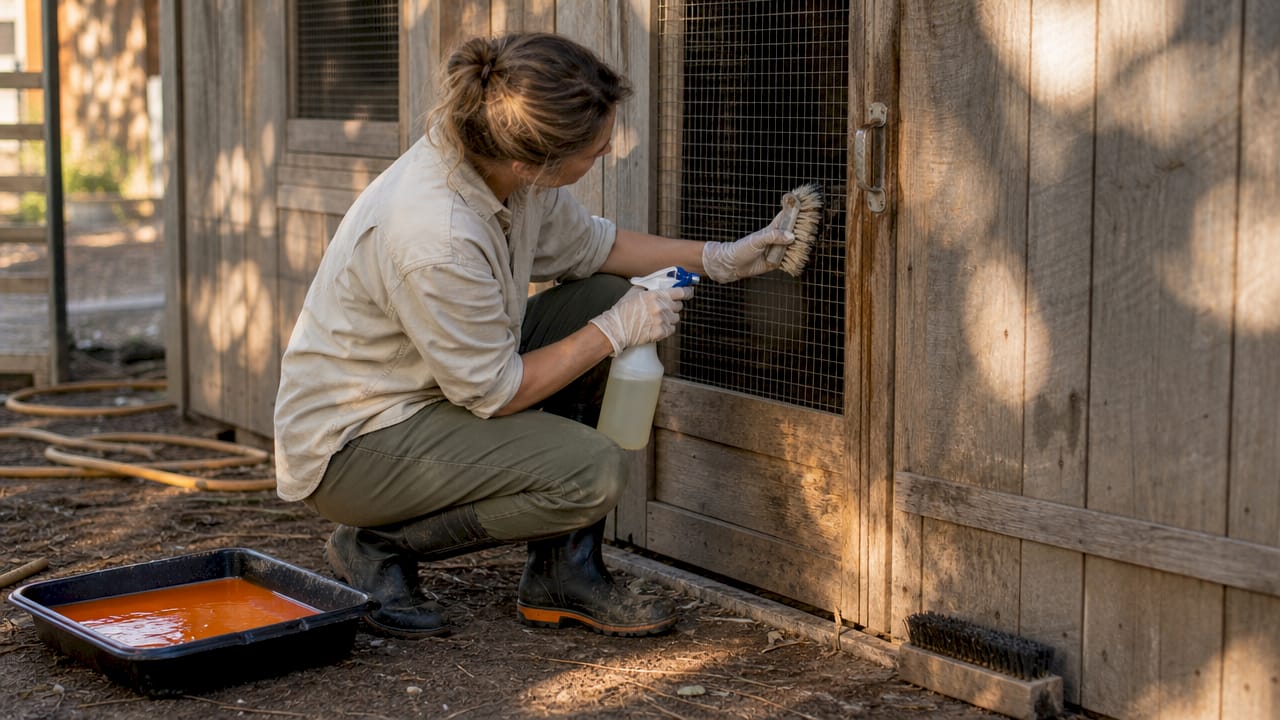
High-risk contamination hotspots include doorknobs, floor mats, vehicle tires, and ventilation inlets. These surfaces transfer pathogens consistently even when birds are fully contained. Targeting them first gives you the highest return on your biosecurity effort.
The cleaning sequence matters as much as the products you use. Surfaces must be physically cleaned before any disinfectant is applied. Disinfectants fail when applied to dirty surfaces because organic debris neutralizes their active ingredients.
Powdered disinfectants outperform liquids in dirty conditions because they maintain antimicrobial activity in organic debris longer. That extended active time reduces both labor and product costs in routine biosecurity programs. Liquid disinfectants are better suited to pre-cleaned, smooth surfaces.
Key biosecurity practices to build into your daily routine:
- Use footbaths at every entry point and change the solution daily
- Wash vehicle tires before they enter the farm perimeter
- Restrict visitor access to non-bird areas whenever possible
- Dedicate separate footwear and clothing for the poultry area
- Log all bird movements and visitor entries for traceability
Pro Tip: Place a footbath and a boot brush at every coop door, not just the main farm entrance. Most contamination happens at the last point of contact before entering the bird area.
Movement restrictions reducing bird movement by 90% during early outbreak phases critically contain diseases such as Highly Pathogenic Avian Influenza. Acting fast on movement control during the first days of a suspected outbreak is the single most effective epidemiological tool available to producers.
3. What are design considerations for predator-proof chicken runs and coops?
Good coop and run design prevents problems that no amount of maintenance can fix after the fact. Layout, materials, and hardware all contribute to long-term containment effectiveness.
Overhead protection prevents hawk strikes and stops climbing predators like raccoons from dropping into the run from above. A solid roof also keeps the run drier, which reduces flies and foot problems in the flock. Netting works for aerial protection, but welded wire or metal roofing panels are more durable in areas with heavy snow loads.
Run layout affects bird behavior as much as predator resistance. Dead-end zones and narrow corridors allow dominant birds to trap and bully subordinates. A rectangular run with clear sightlines and multiple exit points reduces stress and injury from pecking order conflicts.
Design features that consistently improve containment outcomes:
- Double latches on all doors, with a secondary carabiner clip in high-predator areas
- Smooth door frames with no gaps at thresholds or corners
- Shade structures and dust bath areas to reduce heat stress and behavioral problems
- Perches and elevated platforms to give birds vertical space and reduce floor crowding
- Dry, well-ventilated floor areas to minimize respiratory disease and bumblefoot
Predators target corners and door gaps first. A primary latch plus a secondary clip or carabiner increases security at every door. Inspect all corners and thresholds monthly for signs of digging, chewing, or rust that weakens the barrier.
Pro Tip: Walk your run perimeter at dusk once a week. Predators are most active at dawn and dusk, and fresh digging or bent wire is easiest to spot in low-angle light.
For a complete breakdown of coop security upgrades, Fencefast’s predator-proof coop guide covers hardware specifications and design layouts proven in Canadian farm conditions.
4. What are the best strategies for integrating containment and management?
Physical barriers and biosecurity protocols only reach their full potential when paired with sound day-to-day flock management. The two systems reinforce each other.
Maintaining optimal stocking density, clean dry bedding, and good ventilation reduces stress and improves poultry immune function. Overcrowded birds under poor ventilation get sick faster and spread disease more efficiently, even inside a perfectly built enclosure. Environmental containment is as critical as physical barriers for flock health.
Routine inspection and maintenance schedules keep your containment system functional. A fence that worked perfectly in spring may have frost-heaved posts or corroded hardware by fall. Weekly visual checks and a monthly hands-on inspection catch problems before they become losses.
Management practices that strengthen your containment system:
- Isolate new birds for at least 30 days before introducing them to the main flock
- Vaccinate according to your veterinarian’s protocol and keep written records
- Remove sick birds immediately to a separate isolation pen
- Maintain a clean, dry bedding layer and replace it on a fixed schedule
- Keep feed and water inside the coop to avoid attracting wildlife near the perimeter
Multi-stage vaccination combined with isolation of symptomatic birds lowers disease prevalence over the long term in commercial poultry operations. Vaccination does not replace containment. It works alongside it to reduce the consequences when a pathogen does breach your perimeter.
Multi-layered biosecurity combining physical exclusion, chemical disinfection, and controlled movement yields the best results against disease spread. No single measure is sufficient on its own. The combination is what makes the system reliable.
Key takeaways
Effective poultry containment requires hardware cloth or galvanized chain link fencing, predator-proof design at corners and doors, layered biosecurity protocols, and consistent flock management practices working together.
| Point | Details |
|---|---|
| Choose the right fencing material | Hardware cloth (1/2-inch mesh) stops raccoons and weasels; 9- or 11-gauge chain link handles larger predators. |
| Bury or apron your fence base | Extend fencing 12–18 inches underground or install an L-shaped apron to stop digging predators. |
| Clean before you disinfect | Organic debris neutralizes disinfectants; physical cleaning must come first for biosecurity to work. |
| Secure corners and doors first | Predators exploit gaps at thresholds and corners; use double latches and monthly hardware inspections. |
| Pair containment with management | Proper stocking density, dry bedding, and isolation protocols multiply the effectiveness of physical barriers. |
What I’ve learned after years of watching containment systems fail
Most containment failures I’ve seen had nothing to do with the main fence panel. The wire was fine. The post spacing was fine. The failure was a door latch that someone stopped using because it was stiff, or a corner post that shifted over winter and left a two-inch gap at the base.
That pattern tells you something important: the weakest point in your system is usually the point that requires the most human interaction. If a latch is hard to operate, people stop using it. If a service door is awkward to open with full hands, it gets propped open. Good containment design accounts for human behavior, not just predator behavior.
The other lesson I keep coming back to is that biosecurity and physical containment are not separate programs. Farmers who treat them as separate checklists tend to excel at one and neglect the other. The producers with the best flock health records treat the fence, the footbath, and the stocking density as parts of one system. When one element slips, the others compensate. When all three are solid, losses drop to near zero.
Enrichment also matters more than most producers expect. Birds in bare, overcrowded runs develop behavioral problems that create secondary health issues. Dust baths, perches, and shade are not luxuries. They reduce stress, which directly supports immune function and makes your biosecurity investment go further.
Start with your weakest point. Fix the latch. Fill the gap. Then build outward from there.
— Juiced
Fencefast has the materials to build it right
Fencefast supplies the hardware cloth, galvanized chain link, and fencing accessories that Canadian poultry producers use to build containment systems that hold up season after season. Every product in the catalog is selected for agricultural durability, not residential use.
Whether you need materials for a new run, replacement hardware for aging corners and gates, or guidance on burial depth and apron installation, Fencefast has the products and the expertise to help. The team understands the specific demands of poultry farm fencing in Canadian conditions, from frost heave to predator pressure. Visit Fencefast to browse the full catalog and get your containment system built to last.
FAQ
What is the best fencing material for poultry containment?
Hardware cloth with 1/2-inch mesh is the most predator-resistant option for chicken runs because raccoons and weasels cannot breach it. For larger perimeter fencing, 9- or 11-gauge galvanized steel chain link provides stronger structural integrity than standard poultry netting.
How deep should poultry fencing be buried?
Experts recommend burying fencing 12–18 inches deep or installing an L-shaped wire apron extending outward from the fence base. Both methods stop digging predators like foxes and skunks from tunneling under the enclosure.
What biosecurity hotspots should poultry farmers prioritize?
Doorknobs, floor mats, vehicle tires, and ventilation inlets are the highest-risk contamination points on a poultry farm. Cleaning and disinfecting these surfaces consistently reduces pathogen transfer even when birds are fully contained.
How does movement control help during a disease outbreak?
Restricting bird movement by 90% during the early phase of an outbreak critically limits the spread of diseases like Highly Pathogenic Avian Influenza. Early movement control is the most effective epidemiological tool available to producers during an active outbreak.
How often should poultry containment systems be inspected?
A weekly visual check of the fence perimeter combined with a monthly hands-on inspection of hardware, corners, and door latches catches problems before they become losses. Pay particular attention after frost, heavy rain, or any period of high predator activity.

