

TL;DR:
- Preventing fence escapes involves applying targeted physical barriers to address digging, climbing, and gap openings while maintaining the fence regularly. Address behavioral factors such as boredom and prey drive to reduce repeated escape attempts by animals. Using a combination of structural fixes and behavioral management creates an effective containment system for farms.
Fence escapes are defined as any breach where livestock or working animals exit an enclosure through digging, climbing, or squeezing through gaps. Knowing how to prevent fence escapes starts with identifying which tactic your animals use most, then applying targeted physical barriers and consistent maintenance to close those routes permanently. The three main escape methods each require a different fix. Buried welded wire mesh stops diggers, inward-angled extensions stop climbers, and reinforced gate hardware stops gap exploiters. This guide covers all three, plus the behavioral factors that drive animals to keep testing your fence line.
How to prevent fence escapes by blocking digging at the base
Digging is the most common escape route for dogs, pigs, and smaller livestock. The ground-level integrity of your fence matters more than its height. A six-foot fence with an unprotected base is easier to escape than a four-foot fence with a properly buried apron.
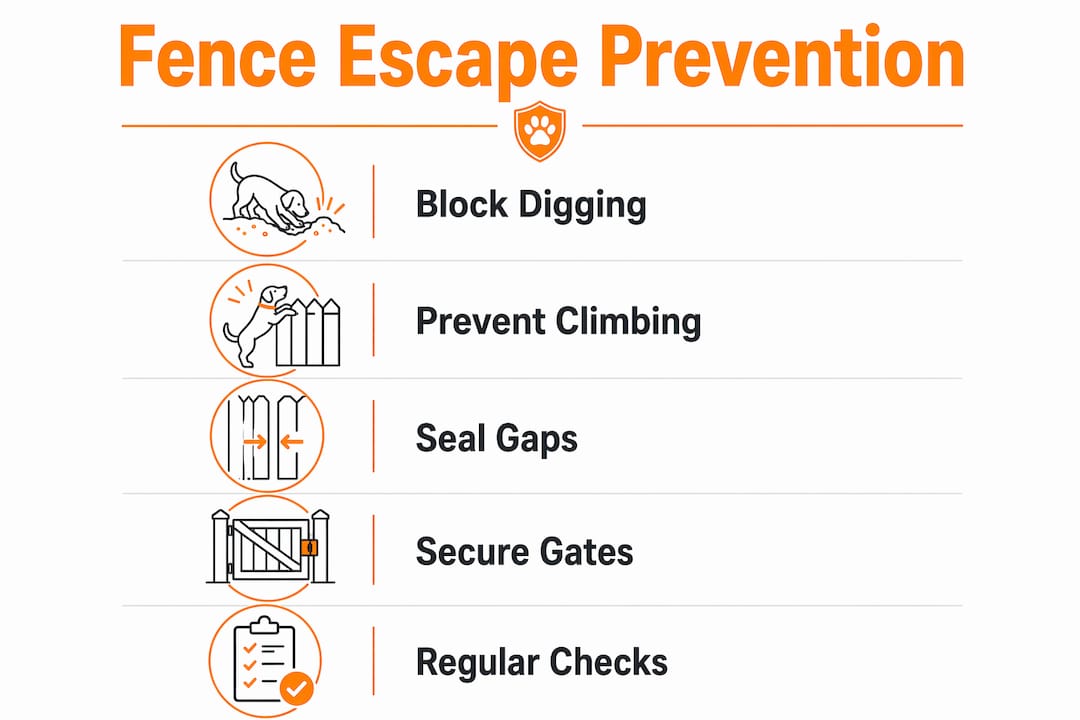
The most reliable fix is burying welded wire mesh 12–18 inches deep along the full fence line. That depth stops even persistent diggers before they reach the other side. An L-shaped apron, where the mesh extends 12 inches inward along the ground, adds a second layer of resistance. Animals that push forward hit the horizontal section and stop. Surface-level deterrents like stacked rocks do not work. Animals can move them, and they create false confidence in a fence that still has a vulnerable base.
Here is a comparison of common digging prevention methods:
| Method | Effectiveness | Best for |
|---|---|---|
| Buried welded wire mesh (12–18 in.) | High | All livestock and dogs |
| L-shaped inward mesh apron | High | Persistent diggers |
| Gravel strip at base | Moderate | Light deterrent only |
| Stacked loose rocks | Low | Not recommended |
| Concrete curb | High | Permanent installations |
Additional steps that close ground-level gaps:
- Install gate sweeps on all gates to eliminate the gap between the gate bottom and the ground.
- Seal fence bottoms with a treated wood kick board or metal base rail.
- Use a gravel strip directly under the fence line to discourage digging attempts before they start.
- Check for soft soil after heavy rain, since wet ground is far easier to dig through and creates new vulnerability.
Pro Tip: When installing buried mesh, fold the bottom of the mesh outward at a 90-degree angle before backfilling. That L-shape means an animal digging straight down hits the horizontal section and stops, even if the vertical section is not deep enough.
Can fence extensions stop animals from jumping and climbing?
Yes. Inward-angled fence extensions set at a 45-degree angle add 18–24 inches of effective containment height without replacing the entire fence. The angle disrupts the grip and leverage an animal needs to pull itself over. This is the most cost-effective upgrade for farms dealing with cattle, horses, or large dogs that clear standard fence heights.
Here are the most practical steps to stop climbing and jumping escapes:
- Install angled fence extensions. Attach bracket arms to the top of existing posts at a 45-degree inward angle. Run wire or mesh along the brackets. This works on wood, metal, and chain-link fences.
- Add roller toppers. Fence rollers spin when an animal grabs the top rail, removing the grip needed to pull over. They work well on smooth-topped fences where animals attempt to hook their front legs.
- Replace chain-link sections with solid panels. Chain-link provides footholds that make climbing easy. Solid wood or vinyl panels remove those footholds entirely.
- Clear a buffer zone. Remove objects within 3–5 feet of the fence line. Stacked lumber, hay bales, water troughs, and dense vegetation all serve as launch points. Clearing this zone often stops jumping attempts without any fence modification.
- Add visual barriers on high-stimulus sides. Animals often jump toward something they can see, such as a road, neighboring herd, or open field. Solid panels or shade cloth on those sides reduce the visual trigger.
Pro Tip: Before spending money on taller fencing, walk the perimeter and remove every object within arm’s reach of the fence. Many jumping escapes stop immediately once the launch points are gone.
What seals gaps and secures gates against squeeze-through escapes?
Gaps are the most overlooked escape route on working farms. A gap as small as four inches is enough for a young pig or lamb to push through. Gates are the most common failure point because they sag, warp, and loosen over time.
A proper gate security setup includes a self-closing hinge, a two-step latch, and a secondary lock. That combination prevents accidental openings and resists animals that have learned to lift standard latches. Anti-sag hardware kits, available for most gate styles, keep the gate frame square and the bottom gap consistent.
For gaps between fence pickets or panels, welded wire mesh or lattice panels attached to the interior face of the fence close openings without replacing the fence structure. This approach works on wood privacy fences, split-rail fences, and older post-and-board designs.
Key gap sealing steps by fence type:
- Wood privacy fence: Attach welded wire mesh to the interior face to close gaps caused by warped or shrinking boards.
- Split-rail or post-and-board: Install wire mesh panels between rails. Use hog rings or fence staples to secure the mesh tightly.
- Chain-link: Check tension and re-stretch sagging sections. Add a bottom tension wire to keep the mesh tight to the ground.
- Gates: Inspect monthly for sag. Adjust hinges before the gap grows. Add a gate sweep to close the bottom gap.
Regular inspection is the most effective gap prevention tool. Walk the fence line after every major weather event. Warping, frost heave, and soil erosion all create new gaps between inspections.
How to maintain fences to prevent long-term structural failures
Fence maintenance is the most underfunded part of farm security. A fence that looked solid two years ago may have three or four escape-ready weak points today. Seasonal staining and sealing every 1–2 years prevents the rot and warping that create gaps in wood fences. This is not optional upkeep. It is the difference between a fence that lasts 20 years and one that fails in eight.
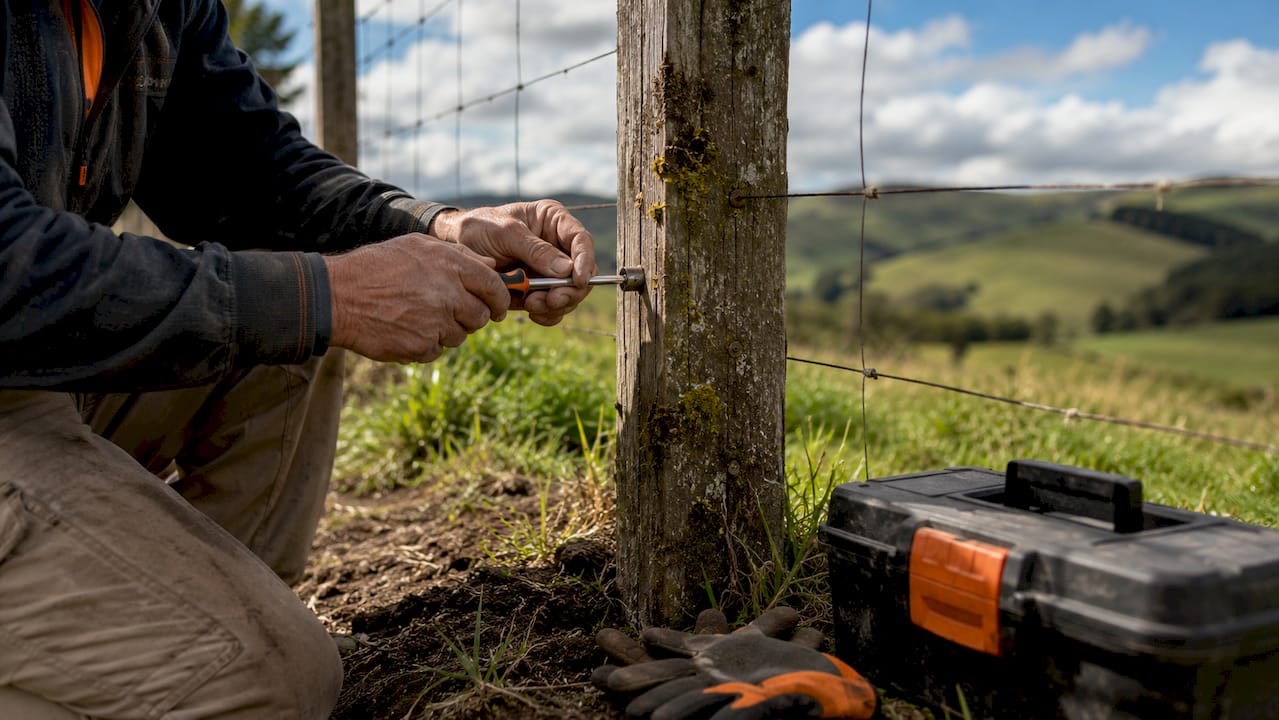
End grain wood absorbs moisture up to 250% faster than face grain. Post tops and cut board ends are the first places rot starts. Seal these areas twice during installation and re-seal annually. Post caps prevent water from pooling on top of posts and dramatically extend post life.
Soil grading matters as much as the wood treatment. A 2% slope away from the fence line prevents moisture from pooling at the base, which is the primary cause of post rot and metal corrosion. Farms that neglect drainage see fence failures years earlier than those that manage it.
Maintenance checklist for seasonal inspections:
- Check all posts for lean or wobble. A leaning post creates a gap at the base and reduces the effective height on that section.
- Inspect all hardware including staples, clips, and wire tensioners for rust or loosening.
- Re-tension wire fencing after winter. Frost heave loosens wire and creates gaps at the base.
- Trim vegetation growing against the fence. Moisture from plants accelerates rot and corrosion.
- Seal any exposed end grain on boards and post tops before the wet season.
Pro Tip: Drive a screwdriver into the base of each wood post during your inspection. If it sinks in more than half an inch without much force, that post is rotting from the inside and needs replacement before it fails.
What role does animal behavior play in fence escapes?
Escape behavior is rarely just physical. Anxiety, boredom, and prey drive are the three most common motivations behind repeated escape attempts. An animal that keeps testing your fence despite reinforcements is telling you something about its environment, not just its strength. Fixing the fence without addressing the motivation produces a cycle of repairs and escapes.
Behavioral factors to address alongside physical barriers:
- Reduce boredom. Animals with adequate space, enrichment, and social contact attempt fewer escapes. Rotating grazing areas and providing environmental stimulation reduces fence-testing behavior in cattle and horses.
- Manage anxiety triggers. Loud roads, neighboring animals, and predator activity near the fence line increase escape attempts. Address the trigger where possible, or use solid visual barriers to block the stimulus.
- Train boundary respect. Electric fencing, used correctly, teaches animals to respect a boundary through consistent feedback. A basic electric fence setup combined with physical barriers is more effective than either method alone.
- Identify the escape artist early. In a herd, one animal often leads escapes and others follow. Identifying and managing that individual prevents group escapes.
- Separate persistent escapers. Animals that repeatedly breach containment despite reinforcement may need a higher-security pen while behavioral management takes effect.
Combining structural fixes with behavioral management is the standard approach recommended by containment specialists. Physical barriers slow escapes. Behavioral management stops the motivation behind them.
Key takeaways
Preventing fence escapes requires targeting digging, climbing, and gap escapes with specific physical barriers, combined with consistent maintenance and behavioral management.
| Point | Details |
|---|---|
| Bury mesh at the base | Install welded wire mesh 12–18 inches deep or as an L-shaped apron to stop digging. |
| Angle extensions inward | Add 45-degree fence extensions to add 18–24 inches of effective height without full replacement. |
| Secure every gate | Use self-closing hinges, two-step latches, and anti-sag hardware to close the most common escape point. |
| Maintain wood fences seasonally | Seal and stain every 1–2 years and seal all end grain to prevent rot-caused gaps. |
| Address behavioral motivation | Combine physical barriers with enrichment and training to stop animals from repeatedly testing the fence. |
The ground level is where most farms lose the fight
Most farmers I talk to focus on fence height when an animal escapes. That instinct is wrong most of the time. The escape almost always started at the ground, not the top. A buried apron or properly tensioned base wire would have stopped it before it started.
The other mistake I see constantly is treating fence maintenance as optional. A fence is not a one-time installation. It is infrastructure that degrades every season. Farms that inspect twice a year and seal wood annually spend far less on emergency repairs than farms that wait for a visible failure. The math is not complicated.
What actually works is a layered approach. Bury the base, angle the top, tighten the gates, and then manage the animal’s environment so it stops wanting to leave in the first place. No single fix covers all three escape tactics. The farms with the fewest escapes are the ones that treat containment as a system, not a single fence line.
If you are dealing with a persistent escaper, check the livestock fencing ideas and fence safety tips from Fencefast. Both resources go deeper on species-specific containment strategies that complement everything covered here.
— Juiced
Fencefast has the hardware to keep your animals contained
Fencefast carries the full range of containment hardware Canadian farmers need to close every escape route on the property. From welded wire mesh and gate hardware to fence extensions and electric fencing components, the product catalog covers every fix described in this guide.
The Fencefast team has 26 years of experience advising farmers and ranchers on containment solutions for cattle, horses, pigs, poultry, and working dogs. Whether you need wire mesh for a buried apron or a complete electric fencing system to reinforce behavioral boundaries, Fencefast ships nationwide across Canada. Browse the full product range and get expert advice at Fencefast.ca.
FAQ
What is the most effective way to stop a dog from digging under a fence?
Burying welded wire mesh 12–18 inches deep or installing an L-shaped mesh apron along the fence base is the most reliable method. Surface deterrents like rocks are not effective because animals can move them.
How do I stop livestock from jumping over fences?
Inward-angled fence extensions at 45 degrees add 18–24 inches of effective height and disrupt the grip needed to climb over. Removing objects within 3–5 feet of the fence line also eliminates launch points that make jumping possible.
How often should I inspect my farm fence for escape risks?
Inspect at least twice a year, once before winter and once after. Check for post lean, loose hardware, wire tension, and gaps caused by frost heave or soil erosion after every major weather event.
Why does my animal keep escaping even after I fix the fence?
Escape behavior is often driven by anxiety, boredom, or prey drive rather than a physical gap. Addressing the behavioral motivation through enrichment, training, and environmental management is required alongside any structural fix.
What is the best way to secure a farm gate against escapes?
Install a self-closing hinge, a two-step latch, and a secondary lock on every gate. Add anti-sag hardware to keep the frame square and a gate sweep to close the bottom gap.
Recommended
- Gate Security Tips for Farms: Protect Your Property – FenceFast Ltd.
- How to Build Farm Fence: Step-by-Step for Strong Results – FenceFast Ltd.
- Top farm security ideas for Canadian livestock safety – FenceFast Ltd.
- How to Repair Fences: Practical Steps for Farmers and Landowners 2025 – FenceFast Ltd.

