

Lock every animal into a predator-resistant enclosure before dark, then layer your defenses: a fence rated for the species you keep, tamper-proof gates, a buried skirt against diggers, a roof or netting against climbers and fliers, and an electric wire as backup. Sonoma County Wildlife Rescue’s guidance and Alberta’s zoo standards both point to the same conclusion: no single barrier holds forever, but stacked barriers do.
TL;DR:
- Ensuring nightly locking of gates and doors is the most effective way to prevent predator breaches, as most attacks occur after dark.
- Fence height and strength should match the animal’s behavior and size, with impact-rated barriers for larger or dangerous species like primates or large livestock.
- Buried wire skirts and a three-foot buffer zone are crucial to stop digging predators from tunneling under fences.
- Using stronger hardware, such as carabiners and double-door access, significantly reduces gate failure risks caused by animals manipulating latches.
- Regular inspection, maintenance, and early detection of signs like soil disturbance or fence damage are essential for long-term predator-proofing success.
Table of Contents
- Quick Checklist: Animal Enclosure Security Tips for This Week
- Perimeter Fence Height, Anchoring, and Buffer Zones
- Gate Hardware and Access Control That Predators Can’t Beat
- When Enclosures Need a Roof or Overhead Netting
- Stopping Diggers: Buried Skirts and Wire Bottoms
- Mesh Size and Materials: What Actually Holds Up
- Electric Fencing as Backup, Not the Whole Plan
- Building a Maintenance and Inspection Routine That Sticks
- Protocols for Handling Large or Dangerous Animals Safely
- FenceFast Guidance: DIY Fixes vs Calling in Help
- Biosecurity: Why Nighttime Lockup Matters More Than Daytime Fencing
- Monitoring Technology: CCTV and Motion Sensors That Actually Help
- Weather and Vegetation: The Environmental Factors That Undermine Fences
- Reading the Warning Signs Before an Escape or Breach Happens
- Species-Specific Risk: Matching Defenses to What You Actually Keep
- The Editorial Take: What Most Predator-Proofing Advice Gets Backward
- Sources
Quick Checklist: Animal Enclosure Security Tips for This Week
Start with what you can fix tonight, then work through the rest over the next few days.
Tonight:
- Close and lock every gate, including feed doors and small access hatches.
- Walk the fence line with a flashlight and patch any obvious gap larger than half an inch.
- Move feed and food scraps out of reach of the enclosure perimeter.
This week:
- Check every latch by hand. If a raccoon could pop it open with a paw, replace it.
- Bury or extend wire skirting at any spot where soil looks disturbed.
- Add or reposition an electric wire at nose height for the predators in your area.
- Schedule a full fence walk, checking every post, staple, and seam.
Coming weeks:
- Add roofing or overhead netting where climbers or aerial predators are a known risk.
- Budget for upgraded mesh or stainless rope mesh on high-traffic panels.
Pro Tip: Clip a carabiner through the latch loop on every feed door and side gate. It costs a few dollars and takes ten seconds to use, but it defeats the paw dexterity that lets raccoons and other opportunists work a simple hook latch loose.
Perimeter Fence Height, Anchoring, and Buffer Zones
Fence height and post strength need to match what you’re actually keeping in, and what you’re trying to keep out. A fence built for goats has to stop climbing and jumping. A fence built for poultry has to stop digging and reaching. There’s no universal number, but there are working baselines:
- Poultry and small livestock: 4 to 6 feet, fully enclosed on top if aerial predators (hawks, owls) are active in your area.
- Goats and sheep: 4 to 5 feet minimum, since goats are notorious climbers and will test any horizontal rail as a foothold.
- Cattle and horses: 5 feet is typical for standard containment, taller if predator pressure is a factor.
- Large or dangerous animals: primary barriers rated to withstand real impact, not just visual containment.
That last point matters more than most people realize. Alberta’s zoo standards specify that enclosure barriers for large primates resist at least 8,000 newtons of impact force, and bear enclosures at least 10,000 newtons. Most farm setups will never face that kind of force, but the underlying principle applies at every scale: match the barrier’s strength to the animal’s actual capability, not to what looks sturdy.
Set posts deep enough to resist frost heave and rated for lateral push, not just vertical load. A buffer zone, even a simple three-foot gap between the outer fence and any tree line or brush, removes cover predators use to stage an approach and gives you a clear sightline for spotting trouble early. Check FenceFast’s livestock fencing ideas for layout options that build buffer space into the design from the start.
Gate Hardware and Access Control That Predators Can’t Beat
Gates fail more often than fences do, and it’s rarely because the gate itself is weak. It’s the latch. A basic gravity hook or spring clip looks secure until a raccoon spends fifteen minutes working it loose, which they will, repeatedly, once they’ve found an easy meal nearby.
- Swap spring hooks for carabiner locks or padlock hasps that require two motions to open.
- Use continuous welded staples on wire attachment points instead of loose fencing nails.
- Recess hasps so there’s no lever point a paw or snout can exploit.
- For dangerous or high-value animals, install a double-door entry or a shift area, so you never share the same space as the animal during feeding or cleanup.
That double-door principle comes straight from formal enclosure standards: zoo regulations in Alberta mandate double-door or secure shift-area access for dangerous species, and it holds up for farm operations too. If you keep a bull, a boar, or anything with the size to hurt someone, build the workflow so the animal is always contained on one side of a barrier while you work the other.
Lock the whole property when no one’s on site, not just the individual pen. Our gate security guide walks through hardware options in more detail.
Pro Tip: Test every latch yourself, in the dark, with gloves on. If you can’t open it quickly and confidently, redesign it. If a coyote or a determined dog can figure it out faster than you can in daylight, it’s not secure hardware, it’s an obstacle.
When Enclosures Need a Roof or Overhead Netting
Any species that climbs, flies, or gets targeted by aerial predators needs something over its head, not just around it. Poultry are the obvious case: hawks and owls hunt from above, and a wide-open run is an invitation regardless of how solid the side fencing is.
- Fine mesh or stainless steel rope netting works well over runs and pens, letting light and rain through while blocking entry.
- For climbers like goats or raccoons targeting a coop from the outside, angle any overhang inward, similar to the inward-tilted barrier design zoos use to stop primates from scaling straight up and over.
- Removable shade cloth or seasonal netting handles temporary risk periods (hatching season, migration windows) without a permanent structure.
- Full permanent roofing makes sense for high-value stock or areas with consistent raptor activity.
Stainless rope mesh in particular holds up well overhead because it resists sagging and corrosion better than standard poultry netting, according to guidance on zoo enclosure construction, while keeping smooth edges that won’t injure birds bumping against it.
Stopping Diggers: Buried Skirts and Wire Bottoms
Digging predators, foxes, coyotes, weasels, and even determined dogs, go under a fence rather than over it, so the fix has to go into the ground, not just along it.
- Dig a trench at least 2 feet deep around the enclosure perimeter, following Sonoma County Wildlife Rescue’s baseline recommendation for effective digging deterrence.
- Bend hardware cloth into an L-shape, running the vertical section up the fence and the horizontal section outward into the trench, away from the enclosure.
- Backfill and compact the soil firmly over the buried wire so there’s no loose ground for a predator to exploit.
- For high-risk pens, skip the skirt approach and run wire mesh across the entire pen floor instead, especially for burrow-happy species like foxes targeting poultry.
- Add a hot wire offset low to the ground on the outside of the fence in areas where digging pressure is heaviest, adding a shock deterrent before an animal ever reaches the buried barrier.
Mesh Size and Materials: What Actually Holds Up
The aperture size on your mesh determines whether a predator can reach through and grab an animal, even when the fence itself never gets breached. Sonoma County Wildlife Rescue’s guidance sets the bar at no larger than half an inch for general predator exclusion, and a quarter inch when rodents are the concern. That quarter-inch gap matters more than people expect. A weasel can slip through openings that look far too small to worry about, and a half-inch gap still lets a raccoon’s paw reach a chicken standing too close to the fence.
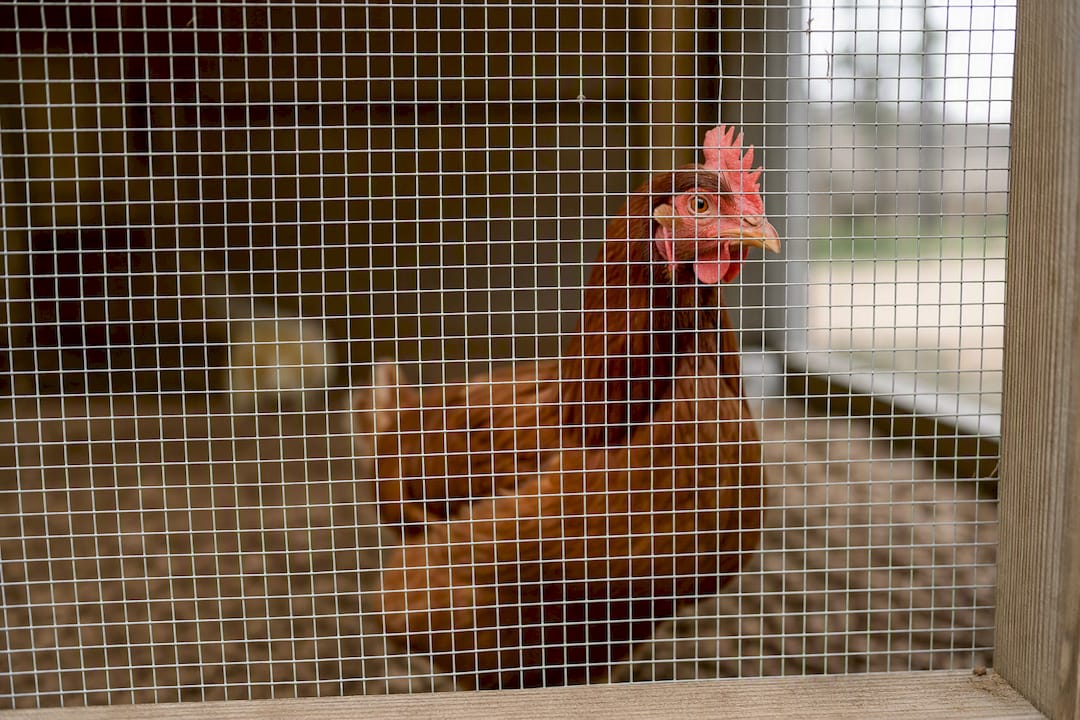
Material choice matters as much as hole size. Standard chain link is fine for many low-risk setups, but it rusts, sags, and eventually opens gaps at weak points. Stainless steel rope mesh costs more upfront but resists corrosion, holds tension longer, and has no sharp wire ends that can injure an animal pressing against it, a real advantage in enclosures where welfare matters as much as containment. Match wire diameter to the size and strength of what you’re containing: light-gauge mesh for poultry runs, heavier woven or welded wire for anything with hooves, horns, or real pushing weight behind it.
Electric Fencing as Backup, Not the Whole Plan
Electric fencing works as a deterrent, not a standalone containment system. It teaches an animal or predator to stay away; it doesn’t physically stop a determined breach the way a solid barrier does. Used correctly alongside a physical fence, it closes gaps a mesh or wire barrier alone can’t.
- Mount hot wires on offset brackets so the wire sits away from the main fence, on the predator’s side. This keeps animals from rubbing against the structure and damaging it while still delivering the deterrent, a setup detailed in Gallagher’s electric fencing guidance.
- Height and strand count depend on species: a single low strand for digging predators, multiple strands spaced for larger animals like coyotes or dogs.
- Size the energizer to the total fence length and expected voltage drop, and ground the system properly, since a poorly grounded fence delivers almost no deterrent at all.
- Post warning signage anywhere the public or farmhands might contact the wire.
Pro Tip: Test voltage at the far end of the fence line, not just near the energizer. A weak ground connection or a shorting weed can drop effective voltage to nearly nothing by the time it reaches the last fifty feet of wire.
Building a Maintenance and Inspection Routine That Sticks
Predator-proofing isn’t a project you finish once. Sonoma County Wildlife Rescue notes that ongoing maintenance and consistent nightly lockup matter more than any single upgrade, because predators adapt fast once they’ve found a food source and will keep testing a weak spot until it gives.
- Daily: Confirm every gate and access door is latched before dark, and glance along the fence line for anything obviously disturbed.
- Weekly: Check staples, wire tension, and latch function by hand, and test electric fence voltage with a meter.
- Monthly: Walk the entire perimeter looking for soil disturbance, sagging panels, or rust starting at wire joints.
- Seasonally: Inspect after freeze/thaw cycles, which loosen posts, and again after heavy wet seasons, which soften ground around buried skirts.
- Annually: Log recurring failures. If the same post keeps loosening or the same panel keeps sagging, replace it rather than patching it again.
Protocols for Handling Large or Dangerous Animals Safely
A double-door workflow keeps you and the animal separated during feeding and cleaning: enter an outer door into a buffer space, confirm the animal is secured or moved to a shift area, then open the inner door to do the work. This is standard in formal zoo enclosure standards precisely because gates and access points cause more incidents than perimeter fences do.
Keep an emergency contact list posted where staff can find it fast: your veterinarian, local wildlife authorities, and anyone else who’d need to respond to an escape. Know your recapture basics ahead of time, not after the fact, including which enclosure or trailer can serve as secure temporary holding. Any off-site holding pen needs the same locked, supervised standard as the main enclosure. An animal moved “just for a day” into an under-secured backup pen is exactly how avoidable escapes happen.
FenceFast Guidance: DIY Fixes vs Calling in Help
Plenty of enclosure security work is straightforward enough to handle yourself: patching mesh, adding a buried skirt, upgrading a latch, or installing an offset electric wire. FenceFast stocks the fence equipment and tools and fasteners for exactly that kind of project.
Bring in a design consultation when you’re dealing with:
- A species new to your operation with containment needs you haven’t handled before.
- Structural upgrades across a large perimeter, not just a single panel repair.
- Virtual fencing installs, where boundary setup and GPS collar configuration benefit from expert sizing.
- Grant-funded projects, where a consultation can help confirm eligibility for government funding programs before you commit to a design.
If your project touches any of those, a short consultation before you buy materials can be worthwhile.
Biosecurity: Why Nighttime Lockup Matters More Than Daytime Fencing
Most predator strikes on small stock happen after dark, which makes nightly lockup the single highest-leverage habit in this entire list. A coop or pen that’s perfectly fenced during the day but left open at dusk is still an easy target, because most predator activity, foxes, raccoons, coyotes, owls, spikes in the hours right after sunset.
Biosecurity here means more than disease control, though that’s part of it too. A locked, enclosed structure at night keeps disease vectors like wild rodents and birds away from your flock’s feed and water, while also removing the access predators need. The two goals reinforce each other: an enclosure tight enough to stop a raccoon is also tight enough to stop most wild birds that carry avian disease into a flock.
Treat lockup as a fixed part of your evening routine, not a maybe. Set an actual time tied to sunset rather than “whenever,” since predators don’t wait for a convenient schedule. If your operation runs multiple pens or a larger acreage, consider a simple end-of-day checklist posted near the barn door so anyone closing up, family member, hired hand, doesn’t skip a step. Poultry operations in particular benefit from this discipline; our poultry containment guide covers nightly practices specific to flock security.
Monitoring Technology: CCTV and Motion Sensors That Actually Help
A camera won’t stop a predator by itself, but it tells you what you’re dealing with, which changes everything about how you respond. Farmers who install a basic motion-activated camera near a pen often discover the culprit isn’t what they assumed. Losses blamed on foxes turn out to be raccoons, or a “predator” problem turns out to be a gate someone forgot to latch.
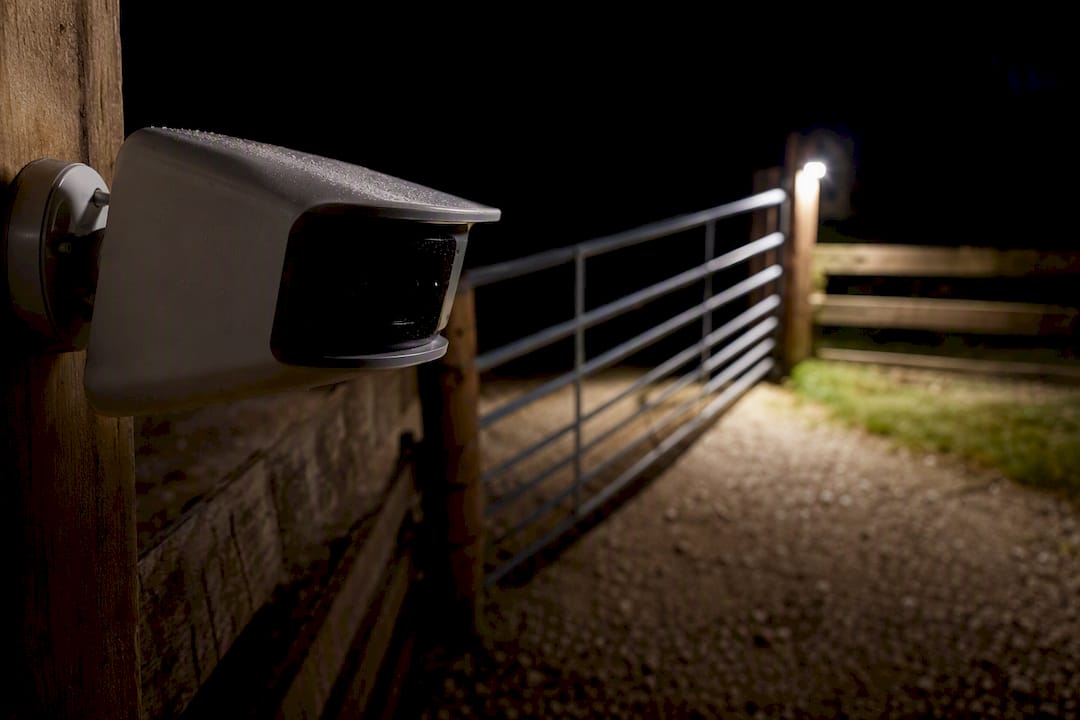
Motion-sensor lighting adds a layer of deterrence on its own, since most nocturnal predators avoid sudden bright light and unfamiliar movement. Pair that with a camera positioned to cover gates and low fence sections, the actual weak points, rather than the middle of an open field, and you get footage that tells you exactly where and when a breach happened.
You don’t need an elaborate system. A single weatherproof camera covering the main access point, paired with a motion light on a timer or sensor, covers most small-operation needs. Larger operations with multiple enclosures benefit from a networked setup that alerts your phone when motion triggers after hours, so you’re not discovering a breach the next morning when the damage is already done.
Weather and Vegetation: The Environmental Factors That Undermine Fences
Fences don’t fail randomly. They fail where weather and vegetation have been quietly working against them for months. Freeze and thaw cycles heave fence posts out of alignment, loosening the entire structure at ground level, exactly where buried skirts and digging deterrents need to be tightest. Heavy rain saturates soil around posts and buried wire, softening the ground predators need to dig through.
Overgrown brush and tree lines do double duty as camouflage and as a highway. Predators use vegetation cover to approach an enclosure undetected, and overhanging branches give climbers a route straight over a fence that’s otherwise solid. Keep a cleared buffer zone, ideally a few feet of open ground, around the entire perimeter, and trim back anything that puts a branch within jumping distance of the top rail.
Snow load is its own problem in colder regions. Drifts against a fence line can raise the effective ground level enough for an animal to simply walk over a barrier that was plenty tall in summer. Check fence height against snow accumulation each winter, not just once when the fence went up.
Reading the Warning Signs Before an Escape or Breach Happens
Animals and predators both leave clues before a full breach happens, and catching those signs early is often the difference between a scare and a real loss. Watch for:
- Disturbed soil along the fence base, especially fresh digging or loosened dirt that wasn’t there the day before.
- Bent or pushed mesh at nose or paw height, a sign something has been testing the barrier repeatedly.
- Unusual animal behavior, like livestock clustering away from one section of fence or poultry refusing to use part of a run, which often means they’ve sensed a predator scouting that spot.
- Tracks or scat near gates and low fence sections, the classic sign of repeated visits rather than a one-time pass-through.
- Latch or gate wear, scratches, bent metal, or a latch that’s suddenly harder to close, pointing to manipulation attempts.
Any one of these on its own might be nothing. Several showing up in the same area, especially near a gate or a low spot in the fence, means it’s time for a full inspection before the animal figures out what you haven’t yet.
Species-Specific Risk: Matching Defenses to What You Actually Keep
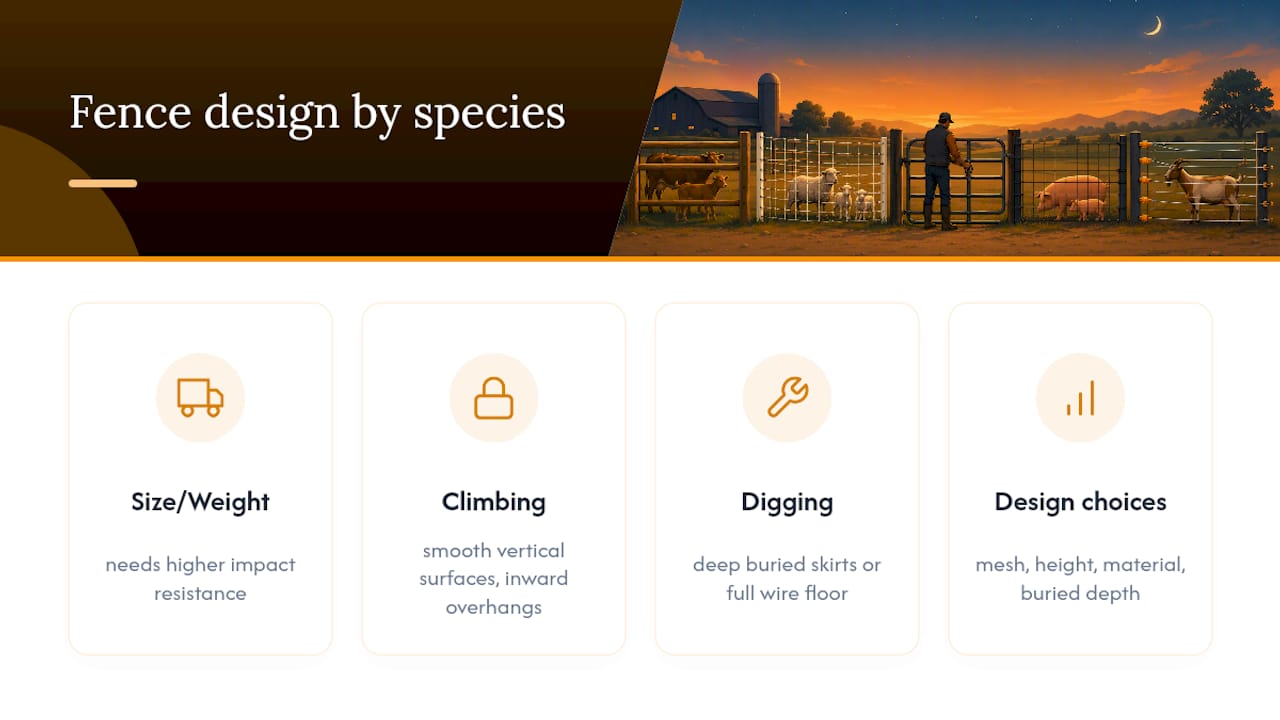
A fence built for chickens will never hold a hog, and a fence built for cattle does nothing against a mink. Security specs have to start with the actual animal, not a generic template.
Size and weight determine impact resistance needs. A goat testing a fence with its shoulder puts far more force into a post than a chicken ever will, and cattle can push through wire that would easily contain sheep.
Climbing ability separates species that need overhead protection from those that don’t. Goats, raccoons, and some primates in captive settings will use any horizontal element as a foothold, which is why smooth vertical surfaces and inward overhangs matter for climbers specifically.
Digging ability varies enormously between predator species. Foxes and coyotes dig efficiently and quickly, which is why buried skirts need real depth in areas where they’re active, while a badger or groundhog might require a full wire floor rather than just a perimeter trench.
Match your material choice, mesh size, fence height, and buried barrier depth to the specific combination of what you’re protecting and what’s hunting it, not to a single one-size-fits-all fence design.
The Editorial Take: What Most Predator-Proofing Advice Gets Backward
Most guides on this topic front-load the exotic stuff, stainless mesh, engineered impact ratings, elaborate camera networks, and bury the one habit that actually prevents the most losses: locking the door every single night, on schedule, without exception. That’s not a glamorous tip. It’s also the one Sonoma County Wildlife Rescue keeps returning to, because the data behind predator loss keeps pointing there.
Where the conventional advice really falls apart is treating security as a one-time build instead of a maintenance habit. A fence installed correctly in April and never checked again is a fence with an unknown failure date, not a solved problem. Frost heave, rot, rust, and a predator’s patience don’t respect the fact that you already did the work once.
If you take one thing from this article, prioritize the boring stuff first: nightly lockup, latch checks, and a buried skirt where digging is even remotely plausible. Add the electric wire and the stainless mesh once those basics are locked down, not before. Upgraded materials help. Consistency is what actually keeps animals alive.
— Juiced
Sources
- Predator Proofing Tips — Sonoma County Wildlife Rescue
- Standards for Zoos in Alberta (2022)
- Electric Fencing Solutions — Gallagher United States

