

Canadian farms lose substantial revenue to deer damage every year, making effective deterrents essential for protecting crops and livestock. Deer can cause up to 28% crop losses on Canadian farms without proper deterrents. Choosing the right solution requires evaluating effectiveness, sustainability, cost, and suitability for your operation. This guide helps you select deer deterrents using clear criteria backed by research and practical experience.
Table of Contents
- How To Choose The Best Deer Deterrent: Key Selection Criteria
- 1. Electric Fencing: High-Efficacy Physical Barrier
- 2. Visual And Audio Deterrents: Temporary And Complementary Use
- 3. Chemical And Herbal Repellents: Eco-Friendly Options
- 4. Integrated Multi-Layered Deer Management Strategies
- 5. Cost And Practicality Considerations Across Methods
- 6. Summary Comparison And Situational Recommendations
Key Takeaways
| Point | Details |
|---|---|
| Electric fencing efficacy | Reduces deer damage by 80-90% with long-term durability and lower habituation risk. |
| Visual and audio deterrents | Best for short-term relief, losing effectiveness after 4-6 weeks due to habituation. |
| Chemical and herbal repellents | Reduce damage 60-70%, ideal for organic farms with lower environmental impact. |
| Multi-layered strategies | Combining methods achieves up to 95% damage reduction for maximum protection. |
| Cost considerations | Plan for installation, maintenance, and farm size when selecting deterrents. |
How to Choose the Best Deer Deterrent: Key Selection Criteria
Selecting the right deer deterrent starts with understanding what matters most for your farm. Effectiveness is the primary consideration, measured by how much crop damage is prevented. Look for solutions with proven damage reduction percentages backed by field studies.
Environmental impact comes next. Sustainable, non-toxic options protect your land and align with organic farming practices. Cost includes both initial installation and ongoing maintenance expenses. Calculate lifetime costs rather than just upfront prices to make informed decisions.
Practicality matters for daily operations. Consider ease of installation, labor requirements, and how much upkeep you can realistically manage. Suitability depends on your specific situation: farm size, crop or livestock type, and regional climate across Canada.
Farm size directly influences which deterrents work best. Large ranches need different solutions than small vegetable gardens. Wildlife fencing considerations for farms vary by scale and terrain. Climate also plays a role, as harsh Canadian winters affect some deterrent types more than others.
Pro Tip: Start by mapping your highest-risk areas where deer damage is concentrated, then allocate your budget to protect those zones first with the most effective deterrents.
Crop type affects deterrent choice too. High-value crops justify more investment in permanent solutions. Livestock operations need different approaches than grain or vegetable farms. Eco-friendly fencing materials provide sustainable options that align with modern agricultural practices.
1. Electric Fencing: High-Efficacy Physical Barrier
Electric fencing stands as the most reliable deer deterrent for Canadian farms. Electric fencing reduces deer damage by 80-90% through safe shock deterrence and proper design. The system delivers an unpleasant but harmless shock that trains deer to avoid your property entirely.
Proper fence design is critical for success. Design guidelines recommend minimum 8-foot fence height and mesh size under 2 inches for effective deer exclusion. Deer can jump lower fences, and small mesh prevents them from squeezing through gaps. Multi-strand configurations work well for larger properties.
Solar-powered electric fencing offers significant advantages for remote locations. These systems eliminate ongoing energy costs and increase sustainability. They work reliably even during Canadian winters with proper battery backup. Installation costs range approximately CAD $0.50-$1.50 per acre including equipment and labor.
Electric fencing has lower habituation risk compared to visual or audio deterrents. Deer learn quickly to avoid the fence after one or two encounters. This creates lasting protection without constant adjustments. Electric fencing for deer advice provides detailed installation guidance.
Pro Tip: Test your electric fence voltage weekly with a fence tester to ensure it maintains sufficient charge for effective deterrence, especially after snow or ice buildup.
Maintenance requirements are moderate but manageable. Regular vegetation clearing prevents grounding issues. Check connections and insulators seasonally. Electric fence system comparison helps identify low-maintenance options. Electric fencing kits for farms simplify the installation process with complete component packages.
For detailed specifications, review deer fencing design guidelines and the electric fencing efficacy study for evidence-based design principles.
2. Visual and Audio Deterrents: Temporary and Complementary Use
Visual and audio deterrents include reflective tape, scare-eye balloons, motion-activated noisemakers, and strobe lights. These methods work by startling deer or making them uncomfortable in the area. Initial effectiveness can be high, but visual and audio deterrents lose effectiveness to less than 50% after 4-6 weeks due to deer habituation.
Deer are intelligent animals that quickly learn when threats are fake. Once they realize the noises or flashing lights pose no real danger, they ignore them. This makes these deterrents best suited for temporary or seasonal protection. They work well during critical growth periods when crops are most vulnerable.
Key advantages include low upfront costs and easy installation. You can deploy these systems quickly without specialized tools or expertise. They require minimal maintenance beyond battery changes or repositioning. However, they perform poorly as standalone solutions for long-term protection.
Best use cases include:
- Protecting newly planted crops during the first month of growth
- Supplementing electric fencing in high-traffic deer corridors
- Temporary coverage while installing permanent barriers
- Small-scale gardens where permanent fencing is impractical
- Rotating locations every few weeks to reduce habituation
Combining visual and audio deterrents with other methods extends their usefulness. When deer encounter multiple deterrent types, they remain cautious longer. This multi-layered approach prevents them from becoming comfortable in any area of your property.
For supporting research, see the study on visual and audio deterrents documenting habituation timelines and effectiveness decline rates.
3. Chemical and Herbal Repellents: Eco-Friendly Options
Chemical and herbal repellents offer environmentally responsible deer deterrence through smell and taste aversion. Common options include predator urine, putrescent egg solids, garlic-based sprays, and capsaicin formulations. These repellents typically reduce deer damage by approximately 60-70% when applied correctly.
Application frequency is the main limitation. Most repellents last only 1-2 weeks per application, requiring regular reapplication for sustained effectiveness. Rain washes away surface treatments, and sunlight degrades active ingredients. Budget for monthly applications during the growing season to maintain protection.
Cost structure differs significantly from physical barriers. Initial investment is low, often under CAD $100 for enough product to treat several acres. However, recurring annual expenses add up quickly with frequent reapplication needs. Calculate total yearly costs when comparing to one-time fencing installations.
These repellents excel on organic farms and in sensitive ecosystems. Many formulations are certified for organic use with no toxic residues. They pose no risk to beneficial insects, soil health, or water quality. This makes them ideal when environmental stewardship is a priority.
Key application guidelines:
- Apply repellents before deer damage begins, not after problems start
- Reapply immediately after heavy rain or irrigation
- Rotate between different repellent types to prevent habituation
- Focus applications on crop perimeters and known deer entry points
- Increase frequency during peak feeding seasons in spring and fall
Integrating repellents with physical deterrents produces best results. Use them to supplement electric fencing or create layered protection zones. Apply repellents between fence lines and crops for redundant coverage. This combination prevents the few deer that bypass fencing from causing significant damage.
4. Integrated Multi-Layered Deer Management Strategies
Combining multiple deterrent types achieves superior results compared to single-method approaches. Integrated strategies can deliver up to 95% damage reduction by addressing deer behavior from multiple angles. This prevents habituation and creates comprehensive protection across your entire property.
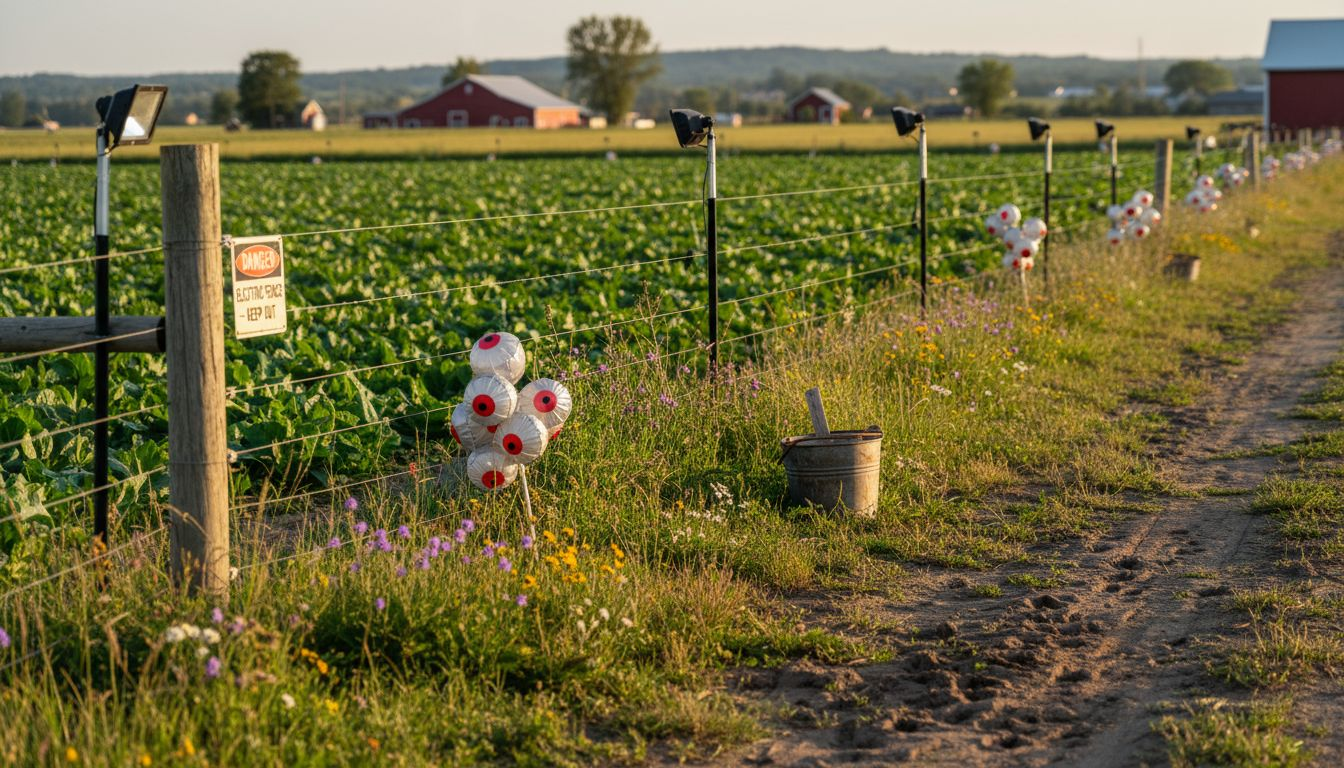
Successful integration requires planning based on your specific farm characteristics. Large ranches benefit from perimeter electric fencing supplemented with repellents in vulnerable crop zones. Smaller operations might combine visual deterrents with herbal sprays and strategic habitat management.
Flexibility is a major advantage of multi-layered systems. You can adjust tactics based on seasonal deer pressure patterns. Increase repellent applications during spring planting when tender shoots attract deer. Add motion-activated deterrents during fall harvest when food sources concentrate.
Habitat management enhances other deterrent methods significantly. Remove deer bedding areas near crops by clearing brush. Eliminate easy water access points that attract deer to your property. Plant less palatable species as buffer zones between woods and valuable crops.
| Method Combination | Damage Reduction | Best Use Case | Maintenance Level |
|---|---|---|---|
| Electric Fence + Repellents | 90-95% | High-value crops, large ranches | Moderate |
| Visual + Audio + Repellents | 70-80% | Seasonal protection, small farms | High |
| Electric Fence + Habitat Mgmt | 85-90% | Long-term exclusion, pastures | Low |
| All Methods Combined | 95%+ | Maximum protection needed | High |
Cost distribution across multiple methods spreads your investment over time. Install permanent fencing first for core protection, then add supplemental deterrents as budget allows. This phased approach makes comprehensive protection affordable for more farms.
Pro Tip: Document which deer trails cross your property and concentrate deterrents along these natural pathways for maximum impact with minimum resource investment.
Integrated deer management strategies provide frameworks for combining methods effectively based on farm type and scale.
5. Cost and Practicality Considerations Across Methods
Understanding total cost of ownership helps you choose deterrents that fit your budget long term. Electric fencing costs about CAD $0.50-$1.50 per acre including materials, installation labor, and basic maintenance. This represents moderate upfront investment but minimal ongoing expenses.
Chemical repellents have low initial costs but accumulate significant recurring expenses. Expect to spend CAD $200-$500 annually per acre for regular applications throughout the growing season. Labor for application adds to total costs, especially on larger properties.
Visual and audio deterrents cost least upfront, often under CAD $50 per device. However, their limited effectiveness period and need for frequent repositioning reduce overall value. These work best as supplements rather than primary deterrents.
Solar-powered options reduce ongoing energy costs substantially. Initial investment is 20-30% higher than standard electric systems, but you eliminate monthly electricity charges. Payback period is typically 2-3 years in remote locations without convenient power access.
| Deterrent Type | Initial Cost per Acre | Annual Maintenance | Installation Complexity | Lifespan |
|---|---|---|---|---|
| Electric Fencing | CAD $0.50-$1.50 | CAD $50-$100 | Moderate | 15-20 years |
| Solar Electric | CAD $0.65-$2.00 | CAD $30-$60 | Moderate | 15-20 years |
| Chemical Repellents | CAD $0.10-$0.30 | CAD $200-$500 | Easy | Ongoing |
| Visual/Audio | CAD $0.05-$0.15 | CAD $20-$50 | Easy | 2-5 years |
Farm size dramatically influences practical deterrent choices. Properties under 10 acres can rely more on repellents and visual deterrents. Larger operations need permanent fencing infrastructure for cost-effective protection. Labor availability also matters when considering maintenance-intensive options.
Installation complexity varies significantly between methods. Repellents and visual deterrents require no special skills or tools. Electric fencing needs basic electrical knowledge and post-driving equipment. Professional installation adds CAD $200-$400 per acre but ensures proper setup.
6. Summary Comparison and Situational Recommendations
Choosing the right deer deterrent depends on matching method characteristics to your specific farm conditions. This comparison table ranks major options across critical decision factors to guide your selection process.
| Deterrent Method | Effectiveness | Environmental Impact | Total Cost | Maintenance | Best For |
|---|---|---|---|---|---|
| Electric Fencing | 80-90% | Low impact, durable | Medium-High | Moderate | Large ranches, high-value crops |
| Solar Electric | 80-90% | Very low impact | High | Low | Remote locations, sustainability focus |
| Chemical Repellents | 60-70% | Very low toxicity | Medium | High | Organic farms, sensitive areas |
| Visual/Audio | 30-50% | Minimal impact | Low | High | Temporary, seasonal, supplemental |
| Integrated Multi-Layer | 90-95% | Variable | High | Variable | Maximum protection needed |
Recommendations by farm type:
-
Large ranches and livestock operations: Install perimeter electric fencing as primary protection. Add repellents in high-risk crop zones. This combination provides 90%+ damage reduction with manageable maintenance.
-
Organic and sustainable farms: Use certified herbal repellents as the primary method. Supplement with habitat management and strategic visual deterrents. This maintains organic certification while achieving 70-80% protection.
-
Small-scale and hobby farms: Combine visual/audio deterrents with chemical repellents for cost-effective seasonal protection. Rotate deterrent locations monthly to extend effectiveness. Expect 60-75% damage reduction.
-
High-value specialty crops: Implement integrated multi-layered strategies combining electric fencing, repellents, and motion-activated devices. This maximizes protection for crops where even small losses significantly impact revenue.
-
Remote properties: Solar electric fencing eliminates power infrastructure needs while delivering high effectiveness. Lower maintenance requirements suit properties visited less frequently.
Trade-offs to consider include habituation with non-contact methods, higher upfront costs for permanent fencing, and labor requirements for frequent repellent applications. Farm scale influences which trade-offs are acceptable. Larger operations justify higher initial fencing investment through economies of scale.
Climate considerations matter across Canada. Harsh winters affect some deterrent types more than others. Electric fencing works year-round with proper winterization. Chemical repellents become less effective in freezing temperatures and heavy snow.
Discover Expert Deer Deterrent Solutions at FenceFast Ltd.
Protecting your farm from deer damage requires quality equipment and expert guidance. FenceFast Ltd. specializes in electric fencing systems designed specifically for Canadian agricultural conditions. Our product selection includes everything needed for effective deer exclusion, from solar-powered energizers to complete installation kits.

Explore comprehensive resources to plan your deer deterrent system. Electric fencing solutions for deer provide step-by-step guidance from design through installation. Compare top-rated systems with our top electric fence systems analysis to find the best match for your farm size and budget.
Get your project started right with professional-grade fence installation equipment that ensures durable, long-lasting protection. Our team helps Canadian farmers select reliable, effective, and sustainable deer exclusion solutions tailored to their specific needs.
FAQ
What is the most effective deer deterrent for large Canadian farms?
Electric fencing with at least 8-foot height and mesh size under 2 inches delivers 80-90% damage reduction. This makes it ideal for large farms needing reliable long-term protection. Combine with repellents in vulnerable crop zones for maximum effectiveness.
How long do visual and audio deterrents remain effective?
Most visual and audio deterrents are effective less than 6 weeks due to deer habituation. Effectiveness drops below 50% after 4-6 weeks as deer learn the threats are not real. Use these methods only for temporary or supplemental protection.
Can chemical repellents be safely used on organic farms?
Certain herbal and natural repellents are approved for organic agriculture with low environmental impact. Look for OMRI-listed products containing ingredients like garlic oil, capsaicin, or putrescent egg solids. Regular reapplication every 1-2 weeks is necessary to maintain effectiveness.
What is the typical cost range for electric deer fencing?
Electric fencing costs approximately CAD $0.50-$1.50 per acre including installation and basic equipment. Solar-powered systems cost 20-30% more upfront but eliminate ongoing energy expenses. Total investment depends on terrain, fence design, and whether you install it yourself or hire professionals.
How can I prevent deer from becoming habituated to deterrents?
Use integrated multi-layered strategies that combine different deterrent types. Rotate repellent formulations and move visual/audio devices every few weeks. Electric fencing prevents habituation because deer receive actual negative reinforcement rather than just perceived threats.

