

Many Canadian farmers assume any plastic insulator will protect their electric fences from shorts and voltage loss. Up to 50% of plastic insulators fail within 3 years if not UV-stabilized or high-grade, leaving livestock vulnerable to escapes and compromising pasture security. This guide walks you through selecting, installing, and maintaining chain link fence insulators designed for Canada’s harsh climate, ensuring your livestock containment system performs reliably for decades.
Table of Contents
- Understanding Chain Link Fence Insulators And Their Purpose
- Types And Materials Of Chain Link Fence Insulators
- Installation Best Practices And Common Pitfalls
- Maintenance, Inspection, And Longevity Strategies
- Common Misconceptions And Myths About Electric Fence Insulators
- Comparing Chain Link Fence Insulator Options For Canadian Farmers
- Practical Application: Enhancing Livestock Containment With The Right Insulators
- Discover FenceFast’s Durable Chain Link Fence Insulators And Installation Tools
- Frequently Asked Questions
Key Takeaways
| Point | Details |
|---|---|
| Durability | High-grade polymer insulators offer over 25 years durability under Canadian conditions. |
| Voltage Loss | Proper installation prevents up to 30% voltage loss in electric fences. |
| Inspection | Regular inspection and timely insulator replacement reduce fence failures and livestock escapes. |
| Material Trade-offs | Ceramic insulators have excellent electrical resistance but are prone to breakage. |
| Selection Importance | Choosing the right insulator type and material is essential for secure livestock containment. |
Understanding Chain Link Fence Insulators and Their Purpose
Chain link fence insulators are essential components that separate electrified wire from metal posts in electric fencing systems. They prevent electrical current from leaking into the ground through conductive fence materials, maintaining the voltage needed to deter livestock from testing boundaries.
Electrical current must be isolated from conductive metal fences to maintain voltage for livestock containment. Without proper insulation, your fence becomes ineffective, allowing animals to push through with minimal or no shock. The result is costly livestock escapes, damaged pastures, and potential injury to animals.
Understanding electric fence insulator function helps you build a reliable containment system. Key benefits include:
- Preventing electrical grounding that drains fence voltage
- Maintaining consistent shock delivery along fence lines
- Reducing corrosion at wire contact points on metal posts
- Extending overall fence system lifespan
- Minimizing maintenance calls and repair costs
Proper insulators transform your chain link fence from a simple barrier into an active livestock management tool. They work silently, day and night, to keep your animals safe and secure.
Types and Materials of Chain Link Fence Insulators
Selecting the right insulator type and material directly impacts how long your fence performs under Canadian weather extremes. Three main styles dominate the market: strain insulators for wire tensioning points, stand-off insulators that space wire away from posts, and tube post insulators designed for hollow fence posts.
Material choice matters even more than style. UV-resistant polymer insulators have lifespans exceeding 25 years and superior durability compared to ceramic insulators under Canadian conditions. High-grade polymers resist cracking from freeze-thaw cycles and won’t shatter when struck by equipment or livestock.
Ceramic insulators offer excellent electrical resistance but break easily during installation or impacts. They suit specialized applications where maximum insulation is critical, but polymer options provide better overall value for most farming operations.
| Material | Lifespan | UV Resistance | Breakage Risk | Best Use Case |
|---|---|---|---|---|
| High-grade Polymer | 25+ years | Excellent | Low | General fencing, high-stress areas |
| Standard Polymer | 10-15 years | Moderate | Low | Budget installations, low-stress zones |
| Ceramic | 20+ years | Excellent | High | Specialized high-voltage applications |
| Tube Post Polymer | 20+ years | Excellent | Very Low | Gate corners, pivot points |
Consider these factors when evaluating insulator materials and durability:
- Temperature range tolerance for your region
- Expected mechanical stress from livestock pressure
- Voltage requirements of your energizer system
- Long-term cost versus replacement frequency
- Compatibility with existing fence infrastructure
Pro Tip: Invest in top insulator materials from the start rather than replacing cheap options every few years. The upfront cost difference is minimal compared to labor and downtime expenses.
Tube post insulators shine at gates and corners where traditional insulators face the most stress. They mount inside hollow posts, protecting wire connections from weather and impacts while maintaining excellent electrical isolation. Choosing sustainable insulator materials also supports environmental goals without sacrificing performance.
Installation Best Practices and Common Pitfalls
Correct installation determines whether your insulators perform for decades or fail within seasons. Incorrect insulator installation can cause voltage losses of up to 30%, undermining your entire containment system and increasing escape risks.
Follow this proven installation sequence:
- Clean all metal post surfaces where insulators will mount to remove rust and debris
- Position insulators to maintain at least 2 inches clearance between wire and post
- Secure each insulator with appropriate fasteners, checking for firm attachment
- Route wire through insulator channels without forcing or bending excessively
- Test voltage at multiple points along the fence line before energizing fully
Avoid these frequent mistakes:
- Allowing wire to contact metal posts anywhere along the fence
- Using wood screws on metal posts or vice versa
- Overtightening fasteners that crack polymer insulators
- Skipping voltage testing after installation
- Installing insulators in spots where livestock can easily reach and damage them
Proper installation best practices vary slightly by post type. Chain link fence posts require insulators that accommodate different diameters and wall thicknesses. Always match insulator specifications to your specific post dimensions.
Having the right installation tools streamlines the process and prevents damage. Essential equipment includes drill bits sized for your fasteners, proper screwdrivers or socket wrenches, wire cutters for clean cuts, and a voltage meter for testing.
For installation on steel posts, pre-drill pilot holes to prevent post cracking and ensure straight insulator alignment. This extra step takes minutes but prevents hours of troubleshooting later.
Pro Tip: Mark insulator positions with chalk before drilling to ensure consistent spacing and alignment across your entire fence line. Consistent placement looks professional and simplifies future maintenance.
Inspect your installation monthly during the first season. Tighten any loose fasteners, adjust insulators that shift position, and verify voltage remains consistent. Early attention prevents small issues from becoming major failures.
Maintenance, Inspection, and Longevity Strategies
Even the best insulators need regular attention to deliver their full lifespan potential. Regular inspection and timely replacement of insulators reduce fence failures and prevent livestock escapes, saving you money and protecting your animals.
Establish a seasonal inspection routine:
- Spring: Check for winter damage, cracks, and UV degradation after freeze-thaw cycles
- Summer: Verify mounting security and look for heat-related expansion issues
- Fall: Clear vegetation contact points and prepare for winter stress
- Winter: Monitor for ice buildup that can short circuits through insulators
Watch for these warning signs during inspections:
- Visible cracks or discoloration in polymer bodies
- Loose mounting that allows insulator movement
- Reduced fence voltage readings at specific posts
- Burn marks indicating electrical arcing
- Physical damage from livestock rubbing or equipment strikes
UV exposure gradually breaks down even high-grade polymers over decades. Surface chalking or fading indicates advanced weathering, though it may not affect electrical performance immediately. Replace insulators showing structural cracks before they fail completely.
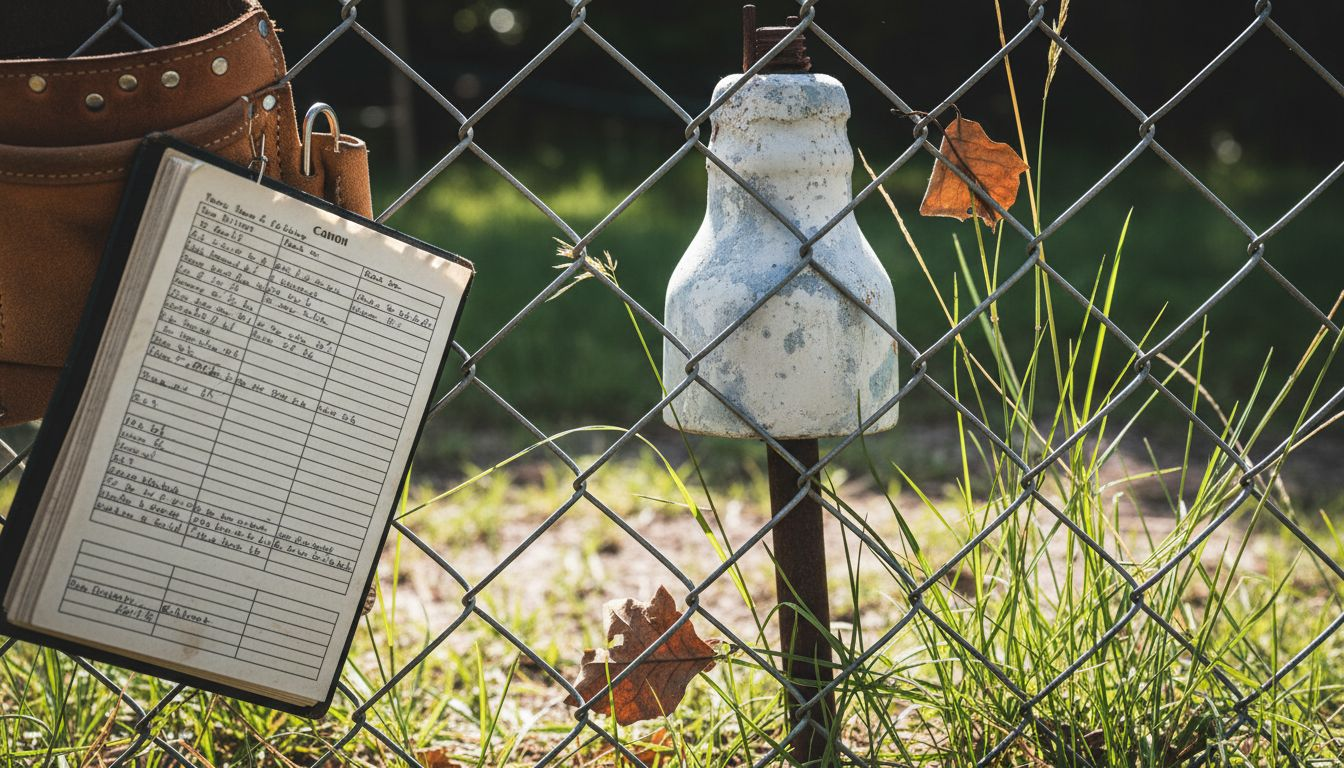
Ceramic insulators rarely degrade from weather but shatter easily. Inspect ceramic units for hairline fractures that compromise insulation. Even small cracks allow current leakage that drains fence effectiveness.
Follow these inspection and maintenance tips to maximize insulator life:
- Keep vegetation trimmed back at least 12 inches from insulators
- Clean insulators annually with plain water to remove conductive dirt
- Replace fasteners showing rust before they fail
- Maintain proper wire tension to prevent excessive stress on insulators
- Document replacement dates to track actual lifespan in your conditions
Create a simple maintenance log tracking insulator condition, voltage readings, and replacement dates. This data helps you identify problem areas and predict when sections need proactive upgrades rather than emergency repairs.
Common Misconceptions and Myths about Electric Fence Insulators
Misunderstandings about insulator performance lead many farmers to make poor purchasing decisions that cost them later. Clearing these myths helps you invest wisely in components that actually deliver promised results.
Myth: All plastic insulators perform equally well. Reality: Material grade and UV stabilization create massive performance differences. Generic plastic insulators degrade rapidly under sun exposure, becoming brittle and cracking within a few seasons. High-grade polymer formulations resist UV damage for decades.
Myth: Ceramic insulators never fail or break. Reality: While ceramic insulators are prone to breakage despite their electrical advantages, many farmers assume they’re indestructible. Ceramic excels at electrical insulation but shatters from impacts, freezing moisture expansion, or installation stress.
Myth: Installation quality has minimal effect on electric fencing. Reality: Even premium insulators fail quickly when installed incorrectly. Loose mounting allows movement that wears connection points. Insufficient clearance lets wire contact posts during wind or animal pressure. Poor installation negates material advantages completely.
Myth: Voltage loss happens gradually and predictably. Reality: Insulator failure often occurs suddenly when cracks reach critical size or fasteners finally give way. One failed insulator can drain voltage across long fence sections, creating weak spots animals quickly discover.
“The difference between a $2 and $4 insulator isn’t the upfront cost, it’s the 15 extra years of reliable service and the livestock escapes you prevent.”
Understanding these insulator misconceptions helps you evaluate product claims critically. Focus on documented UV resistance, verified lifespan data, and warranty coverage rather than just initial price.
Some farmers assume more expensive automatically means better, but price should align with documented performance and your specific needs. Mid-range polymer insulators often outperform premium ceramic options for general livestock containment in Canadian conditions.
Comparing Chain Link Fence Insulator Options for Canadian Farmers
Choosing between insulator options requires weighing multiple factors against your specific operation needs. High-grade polymer insulators combine durability with cost-effectiveness for Canadian farms, while ceramic is best for specialized uses despite fragility.
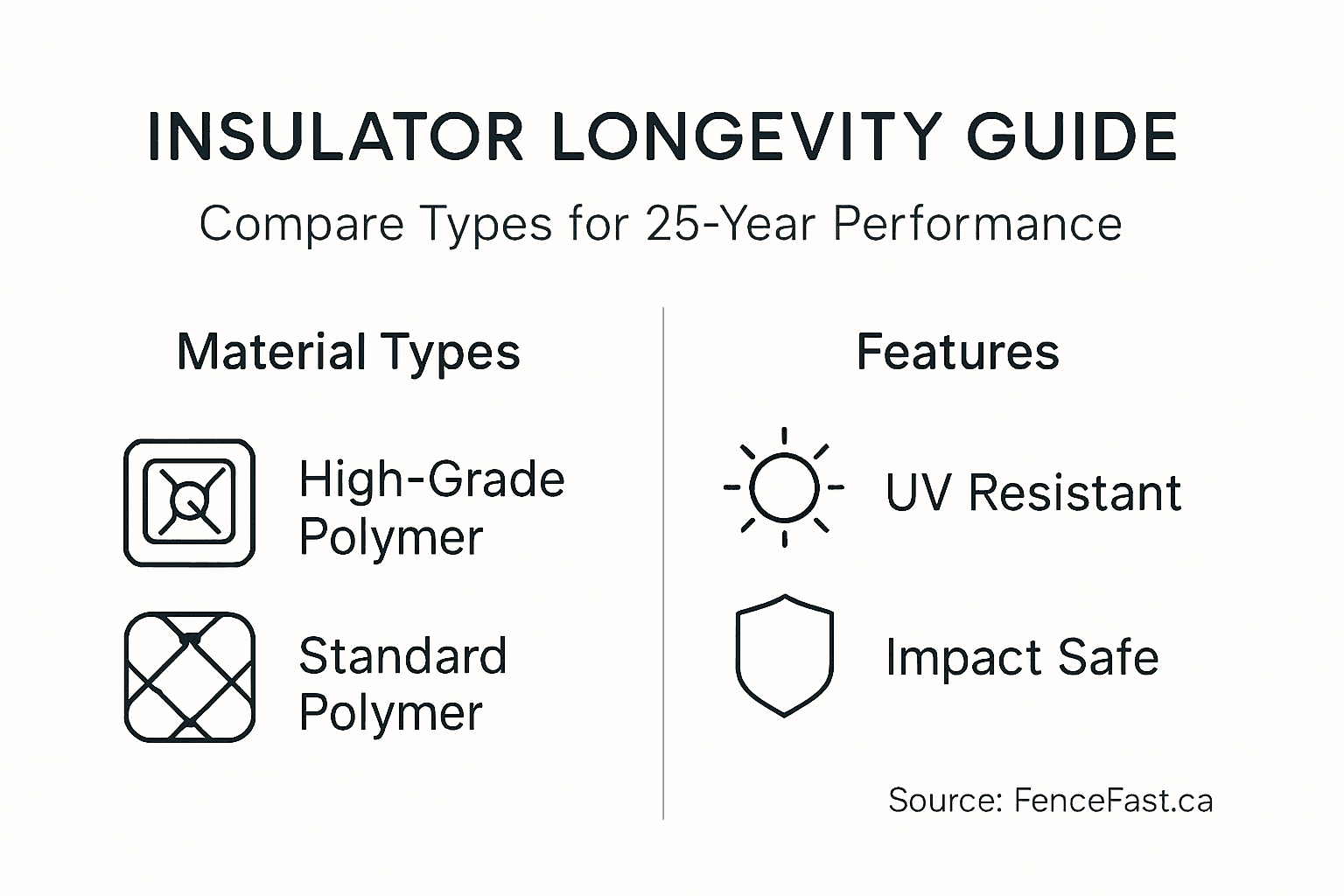
| Feature | High-Grade Polymer | Standard Polymer | Ceramic | Tube Post Polymer |
|---|---|---|---|---|
| Initial Cost | Moderate | Low | High | Moderate-High |
| Expected Lifespan | 25+ years | 10-15 years | 20+ years | 20+ years |
| Breakage Resistance | Excellent | Good | Poor | Excellent |
| UV Resistance | Excellent | Moderate | Excellent | Excellent |
| Installation Ease | Easy | Easy | Moderate | Moderate |
| Best For | All-purpose, high-stress | Budget builds | High-voltage specialty | Gates, corners |
Total cost of ownership matters more than purchase price. A $4 high-grade insulator lasting 25 years costs $0.16 annually. A $1.50 standard insulator replaced every 12 years costs $0.13 annually, but requires three times the labor for replacement.
Consider your livestock types when selecting insulators:
- Cattle: Heavy pressure requires robust polymer or tube post insulators at stress points
- Horses: High-grade polymer throughout prevents failures that could injure valuable animals
- Sheep/Goats: Standard polymer often suffices except at gates and feeders
- Mixed Species: Design for your most challenging livestock, then you’re covered for all
Climate challenges unique to your region influence insulator performance. Northern Alberta’s extreme cold demands different materials than coastal British Columbia’s wet conditions. Evaluate insulator option comparison data specific to Canadian climate zones.
Farm size affects your purchasing strategy too. Large operations benefit from buying high-grade insulators in bulk, spreading the slight premium across hundreds or thousands of posts. Smaller farms might mix high-grade at stress points with standard polymer on straight runs.
Review current Canadian insulator product comparisons before purchasing to understand what’s actually available. Product formulations improve constantly, so recommendations from even five years ago may not reflect today’s best options.
Practical Application: Enhancing Livestock Containment with the Right Insulators
Real-world results prove the value of investing in quality insulators and proper installation. A Saskatchewan cattle operation reduced fence-related livestock escapes by 85% after upgrading from generic plastic to high-grade polymer insulators across 12 kilometers of fence line. The investment paid for itself within 18 months through eliminated search time and prevented crop damage.
Another Alberta ranch measured voltage stability improvements after systematically replacing corroded insulators. Fence voltage increased from an inconsistent 3,000-4,500 volts to a steady 7,000+ volts. Cattle respect the fence boundary immediately, reducing pressure on gates and corner posts.
Quantifiable benefits from proper insulator selection and maintenance include:
- 30% reduction in fence maintenance calls during first year after upgrades
- 25-year service life eliminating two or three replacement cycles
- Consistent voltage delivery maintaining animal training and boundary respect
- Reduced labor costs from fewer emergency repairs and escaped animal recovery
- Lower stress on livestock from reliable, predictable fence behavior
FenceFast.ca offers comprehensive support beyond just selling products. Detailed guides on FenceFast insulator products help you select optimal components for your specific situation. Expert consultation services provide personalized recommendations based on your livestock types, fence layout, and climate challenges.
Integrating quality insulators with proper energizer sizing, regular maintenance, and good installation practices creates a improved livestock containment system that works reliably year after year. Your fence becomes a dependable partner in pasture management rather than a constant source of problems.
Learn more about FenceFast solutions tailored specifically for Canadian farms and ranches. The combination of proven products, expert advice, and ongoing support ensures your investment delivers maximum value over decades of service.
Discover FenceFast’s Durable Chain Link Fence Insulators and Installation Tools
FenceFast specializes in supplying Canadian farmers and ranchers with high-grade polymer and tube post insulators engineered for harsh climate performance. Our product selection focuses on proven durability, combining 25+ year lifespans with competitive pricing that makes sense for operations of any size.
Comprehensive installation tools and accessories streamline your fence building process, ensuring secure assembly that maximizes insulator performance. From specialized drill bits to voltage testers, we stock everything needed for professional results.
Explore our detailed insulator guide covering selection, installation, and maintenance for every fence type. Our fence installation tools guide walks you through equipping your operation efficiently. Visit FenceFast Canada today to discover how the right insulators transform your livestock containment system.
Frequently Asked Questions
What is the best insulator material for extreme Canadian winters?
High-grade UV-stabilized polymer insulators perform best in extreme Canadian winters, resisting freeze-thaw cycles that crack standard plastics. They maintain flexibility and strength from -40°C to +40°C without becoming brittle.
How often should I inspect and replace fence insulators?
Inspect insulators seasonally, at minimum twice yearly in spring and fall. Replace insulators immediately when you notice cracks, loose mounting, or voltage drops at specific posts. High-grade polymer insulators typically last 25+ years before requiring replacement.
Can improper insulator installation cause livestock escapes?
Yes, improper installation causes voltage losses up to 30%, creating weak fence sections that fail to deter livestock. Animals quickly learn which areas deliver weak or no shocks and exploit these gaps to escape.
Are ceramic insulators worth the extra cost?
Ceramic insulators suit specialized high-voltage applications where maximum electrical resistance matters most. For general livestock containment, high-grade polymer insulators offer better value through superior impact resistance and similar 25+ year lifespans at lower cost.
What tools do I need for efficient chain link fence insulator installation?
Essential tools include a cordless drill with appropriate metal bits, screwdrivers or socket wrenches matching your fastener types, wire cutters for clean wire cuts, and a voltage tester to verify proper installation. Pre-drilling pilot holes prevents post damage and ensures straight insulator alignment.

