

TL;DR:
- Remote fence monitoring uses IoT sensors and satellite devices to detect breaches and intrusions in real time. It offers significant security, cost savings, and coverage advantages over traditional patrols and CCTV systems. Most sensors retrofit existing fences, with satellite connectivity extending management to remote or off-grid ranches.
Remote fence monitoring is defined as the use of IoT-based sensors, wireless voltage monitors, and satellite-connected devices to detect and report fence breaches, voltage drops, or perimeter intrusions in real time. The advantages of remote fence monitoring go well beyond convenience. For property owners and agricultural managers across Canada, systems from brands like Gallagher and Tru-Test deliver real-time alerts, full perimeter coverage, and measurable cost savings that traditional patrols simply cannot match. This article breaks down each core benefit so you can decide whether a remote fencing system fits your operation.
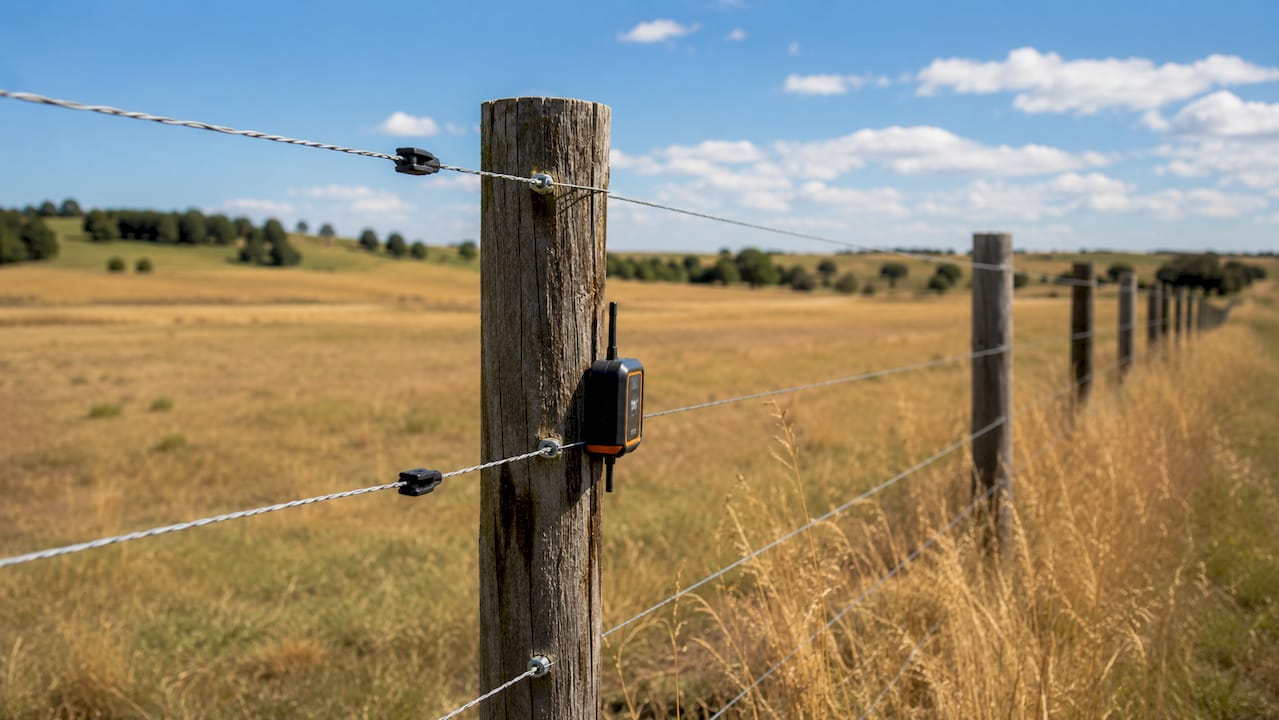
1. How remote fence monitoring improves security over traditional methods
Fence-mounted sensors provide total perimeter coverage regardless of lighting conditions or weather. That is the single biggest security advantage over CCTV, which depends on line-of-sight and fails in fog, darkness, or dense vegetation.
Traditional camera systems leave blind spots along fence lines. Sensors detect vibration, cutting, or voltage drops at every point along the fence, not just where a camera happens to be aimed. One remote monitoring operator can oversee multiple sites simultaneously from a single dashboard.
Remote monitoring also eliminates fence-line fatigue. Physical patrols are inconsistent. Guards miss things, especially late in a shift or during poor weather. A sensor-based system sends an instantaneous digital alert the moment a breach occurs, shifting your operation from reactive to proactive.
- Detects cuts, tampering, and voltage failures at any point along the fence
- Sends alerts to a phone, tablet, or centralized alarm platform within seconds
- Integrates with cameras and alarm systems to confirm incidents before dispatch
- Covers large agricultural boundaries that no patrol team can watch continuously
Pro Tip: Pair your fence sensors with a PTZ camera at key gate points. When a sensor fires, the camera auto-rotates to that zone. You get visual confirmation before sending anyone out.
2. Cost savings with remote fence monitoring systems
Smart surveillance combined with fence monitoring can reduce annual guard costs by 50–80%. That figure reflects real operational shifts, not theoretical projections. In documented case studies, guard posts have been consolidated from three per shift to one supervisor supported by remote technology.
For a mid-sized cattle operation running three guards per night shift, that reduction translates directly into payroll savings every single month. The technology pays for itself faster than most managers expect.
Maintenance costs also drop. IoT-based wireless fence sensors operate for 3–5 years on a single battery set. That means fewer service calls, less technician time, and lower ongoing overhead compared to camera systems that need regular cleaning, lens replacement, and cable maintenance.
- Lower labor costs from reduced physical guard presence
- Fewer patrol vehicles and associated fuel and maintenance expenses
- Reduced insurance liability when documented monitoring is in place
- Longer sensor battery life cuts maintenance frequency significantly
Pro Tip: Before pricing a remote monitoring system, calculate your current annual guard labor cost. Multiply by 0.5 to see the low-end savings estimate. Most operations find the system ROI within 12–18 months.
3. Sensor types and how to match them to your fence
Wireless voltage monitors are the standard choice for electric fences, while vibration sensors suit chain-link and welded mesh fencing. Matching the right sensor to your fence type is not optional. The wrong pairing generates constant false positives, which leads to alarm fatigue and ignored alerts.
Understanding your fence infrastructure before purchasing any monitoring system is the most important step most property owners skip. A vibration sensor on a loose or aging wire fence will trigger on wind. A voltage monitor on a poorly grounded electric fence will alarm on every dry spell.
| Fence Type | Recommended Sensor | Key Benefit |
|---|---|---|
| Electric wire fence | Wireless voltage monitor | Detects power drops and shorts instantly |
| Chain-link or welded mesh | Cable vibration sensor | Detects cutting or climbing attempts |
| Virtual fence boundary | GPS neckband + base station | Tracks animal location and boundary breaches |
| Mixed perimeter | Integrated sensor + camera | Combines detection with visual confirmation |
Integrating sensors with video and alarm systems reduces false alarms further. AI-assisted processing filters out environmental noise and flags only genuine intrusion events. The result is faster, more accurate incident response with fewer wasted callouts.
For remote ranches with no cellular coverage, direct-to-satellite connectivity removes the last barrier to full-time monitoring. Satellite integration delivers 24/7 visibility over livestock and fence lines from anywhere with a clear sky view. That capability changes what is possible for operations in northern or rugged terrain.
4. Practical examples of remote monitoring in action
Most fence sensors attach to existing fence infrastructure without requiring fence replacement. That fact alone removes the biggest objection most property owners raise. You do not need to tear out your current fence to get the benefits of remote management.
Consider a large cattle operation in northern Alberta managing 15 miles of perimeter fence. Before remote monitoring, the team ran daily physical patrols and still missed a gate failure that let 40 head drift onto a neighboring property overnight. After installing wireless voltage monitors and a centralized alert app, the same team receives a phone notification within minutes of any voltage drop. The response time dropped from hours to under 20 minutes.
Semi-rural properties face a different challenge. Outer-urban acreages near growing communities deal with trespassers, ATV riders, and opportunistic theft. Fence sensors on those perimeters send location-specific alerts that tell the property owner exactly which section of fence was breached. That precision cuts response time and removes the guesswork from patrol routing.
For livestock managers using smart fencing innovations like Gallagher eShepherd virtual fencing, remote monitoring extends to animal behavior and GPS boundary tracking. The system flags when an animal approaches or crosses a virtual boundary, giving managers a complete picture of both fence integrity and herd location from a single app.
5. Remote monitoring for improving livestock security specifically
Improving livestock security is the primary driver for most agricultural managers who adopt remote fence monitoring. A downed electric fence at 2 a.m. is not just a property issue. It is a livestock safety emergency, a road hazard, and a potential liability event all at once.
Remote monitoring converts that 2 a.m. discovery from a morning surprise into a real-time alert. The shift from reactive patrols to real-time digital alerts is the operational change that matters most for livestock managers. You stop finding problems after the damage is done and start addressing them while they are still small.
Gallagher’s eShepherd system, available through Fencefast, combines GPS-enabled solar-powered neckbands with app-based herd management. Managers set virtual boundaries and receive alerts when animals move outside them. That capability replaces hours of daily checking with a glance at a phone screen.
For properties running horses or cattle near roads, the stakes are especially high. A fence failure that puts animals on a highway creates serious risk. Remote voltage monitoring on those fence lines provides a safety net that no patrol schedule can replicate. You can also review livestock fence safety tips to build a complete perimeter protection plan around your monitoring system.
6. Why satellite connectivity changes remote ranch management
Satellite-based fence monitoring removes the geographic limits that have historically made remote ranch management difficult. Cellular networks do not reach every corner of a large Canadian ranch. Satellite connectivity does.
Halter’s satellite-enabled virtual fencing system, launched in 2024, demonstrated that off-grid herd management is now a practical reality. The system provides continuous livestock visibility without any cellular infrastructure. That is a genuine shift for operations in northern British Columbia, the Yukon, or remote prairie regions.
The practical implication is significant. A manager in Calgary can monitor fence voltage and herd location on a ranch 400 miles north in real time. Alerts arrive via satellite regardless of terrain or tower coverage. Response decisions get made faster, and the right people get dispatched to the right location with accurate information.
Key takeaways
Remote fence monitoring delivers measurable security, cost, and operational advantages that traditional patrol-based approaches cannot match at scale.
| Point | Details |
|---|---|
| Security coverage | Sensors detect breaches at every fence point, eliminating the blind spots CCTV leaves. |
| Cost reduction | Remote monitoring cuts annual guard costs by 50–80% in documented case studies. |
| Sensor matching | Pair wireless voltage monitors to electric fences and vibration sensors to mesh fences to avoid false alarms. |
| Retrofit-friendly | Most sensors attach to existing fence infrastructure without requiring full fence replacement. |
| Satellite reach | Direct-to-satellite connectivity extends monitoring to remote ranches with no cellular service. |
My take on adopting remote fence monitoring
I have seen property owners spend serious money on sensor systems and then undermine the whole investment with a vague response plan. The technology works. The weak point is almost always the human protocol behind it.
Alarm fatigue is real. If your system is configured too sensitively and fires 20 alerts a day, your team will start ignoring them. Predefined alarm thresholds and response protocols are not optional extras. They are the difference between a system that protects your property and one that collects dust.
My advice: start with your highest-risk fence sections, not your entire perimeter. Get the configuration right on a smaller zone before scaling. Learn what your environment triggers, whether that is wind, wildlife, or loose wire, and tune your thresholds accordingly.
The satellite connectivity piece genuinely excites me for Canadian operations. The barrier of “we’re too remote for this technology” is gone. If you run cattle in areas where your phone has no signal, that is no longer a reason to skip remote monitoring. It is actually the strongest argument for adopting it now.
Budget for the sensor system, not the fence replacement. If your fence structure is sound, retrofitting sensors is the right move. If the fence itself is failing, fix that first. A sensor on a bad fence gives you bad data.
— Juiced
How Fencefast supports your remote monitoring setup

Fencefast carries the electric fencing systems, Gallagher eShepherd virtual fencing technology, and livestock management tools that make remote fence monitoring practical for Canadian agricultural operations. Whether you are monitoring a small acreage or a large cattle ranch, Fencefast’s product catalog covers the hardware you need, from wireless voltage monitors to GPS neckbands and solar-powered base stations.
As an authorized Gallagher dealer with a 26-year partnership, Fencefast brings deep product knowledge to every setup. The team offers design consulting and virtual fencing guidance so your system is configured correctly from day one. Explore the full range of fencing and monitoring solutions at Fencefast, and ask about OFCAF and BMP grant programs that may offset your investment in virtual fencing technology.
FAQ
What are the main advantages of remote fence monitoring?
Remote fence monitoring delivers real-time breach alerts, full perimeter coverage, and significant reductions in guard labor costs. Sensor-based systems detect intrusions at every fence point, including in darkness and poor weather, where CCTV fails.
How much can remote fence monitoring reduce security costs?
Smart surveillance combined with fence monitoring can reduce annual guard costs by 50–80%. In practice, operations have consolidated from three guards per shift to one supervisor supported by remote technology.
Do I need to replace my fence to add remote monitoring?
No. Most fence sensors retrofit directly onto existing infrastructure, including chain-link, welded mesh, and electric wire fences, without requiring fence replacement.
What sensor should I use for an electric fence?
Wireless voltage monitors are the standard choice for electric fences. They detect power drops, shorts, and grounding failures instantly and send alerts to a connected app or alarm platform.
Can remote monitoring work on a ranch with no cell service?
Yes. Direct-to-satellite connectivity now enables 24/7 fence and livestock monitoring on remote ranches with no cellular infrastructure, making it a practical option for operations across northern and rural Canada.
Recommended
- Portable fencing advantages for Canadian farms: boost efficiency – FenceFast Ltd.
- Key benefits of farm perimeter fencing for Canadian farmers – FenceFast Ltd.
- Top farm security ideas for Canadian livestock safety – FenceFast Ltd.
- Wildlife Monitoring Solutions for Farms and Rural Lands – FenceFast Ltd.

