

Finding the right electric fence insulators for chain link can make all the difference for livestock containment. Many Canadian ranchers share concerns with their American neighbors over metal fencing grounding issues and escaping cattle. With some models tested to withstand over 25 years of harsh Canadian winters, investing in the correct components means fewer headaches and better security. This guide helps ranchers compare options, installation techniques, and common mistakes to avoid for safer and more efficient fencing.
Table of Contents
- What Are Electric Fence Insulators for Chain Link
- Insulator Types for Chain Link Fences Compared
- How Insulators Work with Metal Fencing
- Installation Requirements and Placement Strategies
- Common Risks and Critical Mistakes to Avoid
- Alternatives to Chain Link Fence Insulators
Key Takeaways
| Point | Details |
|---|---|
| Functionality | Electric fence insulators ensure that electrical current does not ground through metal fencing, maintaining an effective barrier for livestock containment. |
| Material Importance | Choosing high-quality, UV-resistant materials enhances durability and electrical performance, crucial for long-term use. |
| Insulator Types | Different insulator types, such as Standoff and Strain, are designed for specific needs and terrains, making selection critical for optimal functionality. |
| Maintenance | Regular inspections and maintenance are essential to prevent electrical failures and ensure livestock safety. |
What Are Electric Fence Insulators for Chain Link
Electric fence insulators for chain link fencing are specialized components designed to prevent electrical current from grounding through metal fence structures. These critical devices create a strategic separation between electrified wire and metal fence posts, ensuring consistent electrical flow for livestock containment and property security.
The primary function of chain link electric fence insulators is to redirect electrical current by mounting electrified wire away from conductive metal surfaces. Constructed from durable, UV-resistant materials like high-grade polymers, these insulators are engineered to withstand harsh outdoor conditions while maintaining electrical integrity. They come in various designs tailored to different wire gauges and fence configurations, allowing ranchers to customize their electric fencing solutions.
Key characteristics of effective electric fence insulators for chain link include:
- Superior electrical resistance to prevent short circuits
- Robust mechanical strength to withstand tension and environmental stress
- Compatibility with multiple wire sizes and fence post types
- Resistance to weathering, sunlight degradation, and temperature fluctuations
Pro tip: Always inspect your electric fence insulators seasonally for signs of wear, damage, or electrical degradation to maintain optimal livestock containment performance.
Insulator Types for Chain Link Fences Compared
When selecting electric fence insulators for chain link fences, ranchers have several critical types to consider, each designed to meet specific livestock containment and electrical performance requirements. Insulator selection depends on factors like wire gauge, fence configuration, and environmental conditions.
The primary insulator types for chain link fences include:
- Standoff Insulators: Mounted directly on metal posts, these create maximum distance between electrified wire and conductive surfaces. Ideal for preventing ground shorts and maintaining consistent electrical charge.
- Strain Insulators: Designed to handle high tension and support wire stretching, these insulators are crucial for long fence runs and areas with significant terrain variations.
- Corner Insulators: Specialized components that provide electrical isolation and structural support at fence direction changes, preventing electrical leakage during directional shifts.
- Inline Insulators: Used for connecting wire segments and maintaining electrical continuity across longer fence sections.
Each insulator type offers unique advantages depending on specific ranch layout and livestock management requirements. Ranchers must carefully evaluate their fence design, wire tension needs, and potential environmental challenges when selecting the most appropriate insulator configuration.
Pro tip: Invest in high-quality UV-resistant insulators with multiple mounting options to ensure long-term electrical fence performance and adaptability to changing ranch conditions.
Here’s a quick comparison of key electric fence insulator types for chain link fencing:
| Insulator Type | Primary Purpose | Best for Terrain | Typical Drawback |
|---|---|---|---|
| Standoff Insulator | Maximizes distance from metal | Flat or uneven ground | May require extra hardware |
| Strain Insulator | Handles high wire tension | Long or irregular lines | Installation can be complex |
| Corner Insulator | Provides isolation at direction changes | Sharp turns, angled fences | Needs careful placement |
| Inline Insulator | Maintains electrical continuity | Extended fence sections | Not for tight bends or corners |
How Insulators Work with Metal Fencing
Electric fence insulators serve a crucial role in managing electrical current around metal fencing structures, creating a critical barrier that prevents unwanted electrical grounding. Electrical isolation mechanisms ensure that electrified wires maintain their intended charge without compromising the structural integrity of the metal fence components.
The fundamental working principle of insulators involves strategically positioning non-conductive materials between electrified wires and metal surfaces. These specialized components create a physical and electrical separation that prevents current from dissipating through fence posts, mesh, or other metallic elements. By maintaining this precise distance, insulators guarantee that the electrical pulse remains concentrated on the wire, delivering a consistent and effective deterrent for livestock containment.
Key electrical isolation mechanisms include:
- Dielectric Barrier: Creates a non-conductive layer preventing electrical current transfer
- Mechanical Separation: Physically distances electrified wire from conductive surfaces
- Material Resistance: Utilizes high-performance polymers with exceptional electrical resistance
- Precision Engineering: Designs that minimize potential current leakage points
The interaction between insulators and metal fencing is complex, requiring careful material selection and precise engineering to ensure optimal performance across varying environmental conditions. Ranchers must consider factors like temperature fluctuations, moisture levels, and mechanical stress when selecting appropriate insulators for their specific fencing requirements.
Pro tip: Regularly inspect insulator mounting points and material integrity to prevent gradual electrical system degradation and maintain consistent livestock containment.
Installation Requirements and Placement Strategies
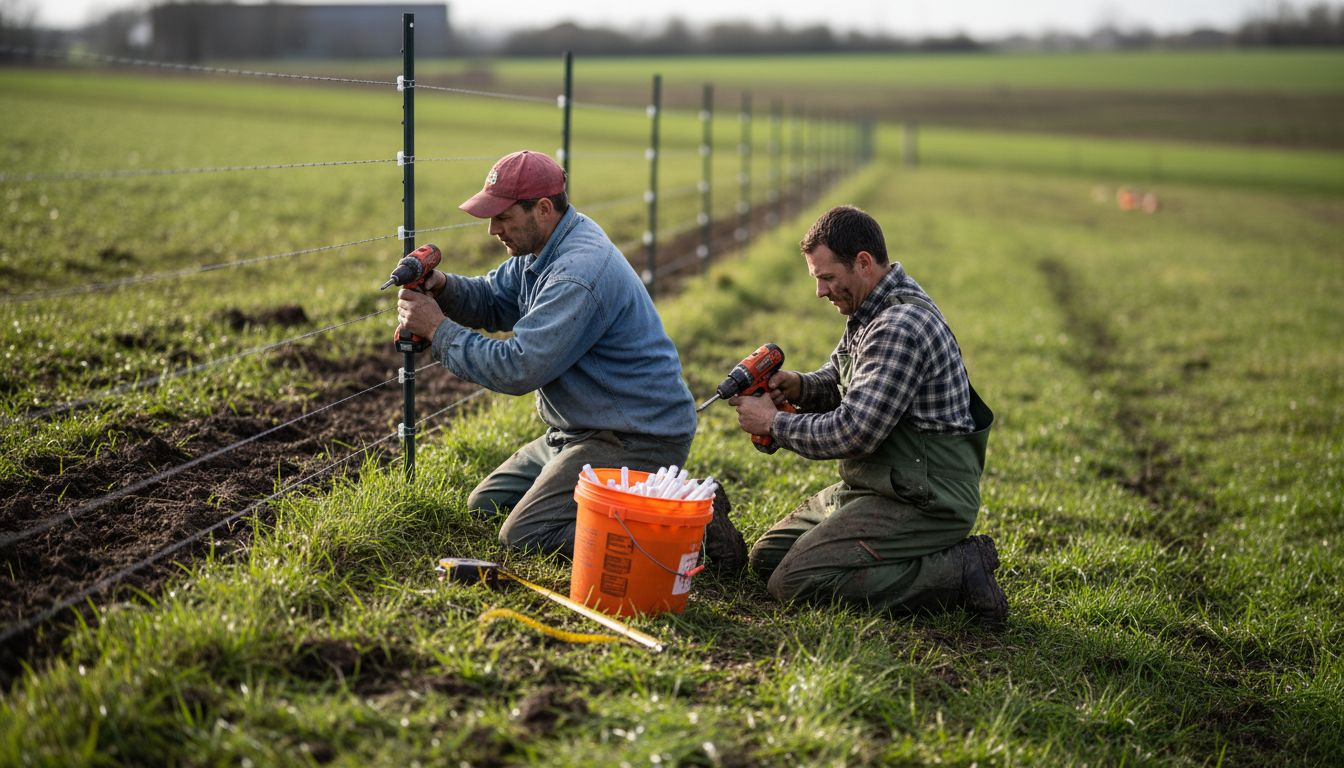
Proper installation of electric fence insulators on chain link fencing requires strategic planning and precise execution. Insulator placement techniques demand careful consideration of multiple factors to ensure optimal electrical performance and livestock containment.
The fundamental installation process involves establishing consistent wire spacing and electrical isolation. Ranchers must mount insulators at precise intervals, typically maintaining a 3 to 5 inch offset from metal fence components. This strategic positioning prevents electrical grounding while creating a clear deterrent zone for livestock. Critical installation considerations include:
- Vertical Alignment: Ensuring uniform wire height across fence sections
- Tension Management: Preventing wire sag and maintaining consistent electrical contact
- Material Compatibility: Using hardware specifically designed for chain link fence structures
- Environmental Resistance: Selecting UV-resistant and weather-durable mounting components
Installation complexity increases with terrain variations, requiring ranchers to adapt insulator placement to uneven ground, slope changes, and potential landscape obstacles. Careful measurement and strategic mounting become essential to maintain electrical continuity and fence effectiveness across diverse agricultural environments.
Pro tip: Use a laser level during installation to guarantee precise, consistent insulator positioning and minimize potential electrical performance variations.
Common Risks and Critical Mistakes to Avoid
Electric fence insulator failures can compromise livestock safety and fence effectiveness, making understanding potential risks crucial for ranchers. Electric fence installation risks demand careful attention to prevent costly and dangerous system breakdowns.
The most prevalent mistakes in electric fence insulator management include:
- Inadequate Clearance: Allowing electrified wire to contact metal fence components
- Material Degradation: Using low-quality insulators susceptible to rapid wear
- Inconsistent Maintenance: Neglecting regular inspection and replacement
- Improper Voltage Management: Failing to maintain consistent electrical charge
Ranchers must recognize that these risks extend beyond simple equipment failure. Compromised electric fencing can lead to livestock escapes, potential injury to animals, and significant financial losses. Careful material selection, routine professional inspections, and proactive maintenance represent the primary defense against these critical system vulnerabilities.
Environmental factors further complicate insulator performance, with temperature fluctuations, UV exposure, and mechanical stress gradually degrading electrical isolation capabilities. Ranchers should develop a comprehensive monitoring strategy that accounts for these environmental challenges, ensuring long-term fence reliability and livestock containment.
The following table summarizes common installation pitfalls and their potential impacts:
| Misstep | Possible Consequence | Preventive Action |
|---|---|---|
| Inadequate wire clearance | Short circuits, poor conductivity | Use precise measuring tools |
| Low-quality materials | Rapid wear and voltage loss | Choose UV-stable, durable types |
| Skipped maintenance | Undetected failures, animal escape | Implement regular inspection plans |
| Poor voltage management | Weak deterrent effect | Test charge after installation |
Pro tip: Implement a quarterly comprehensive inspection protocol that includes electrical continuity testing, visual damage assessment, and preemptive insulator replacement to minimize unexpected fence failures.
Alternatives to Chain Link Fence Insulators
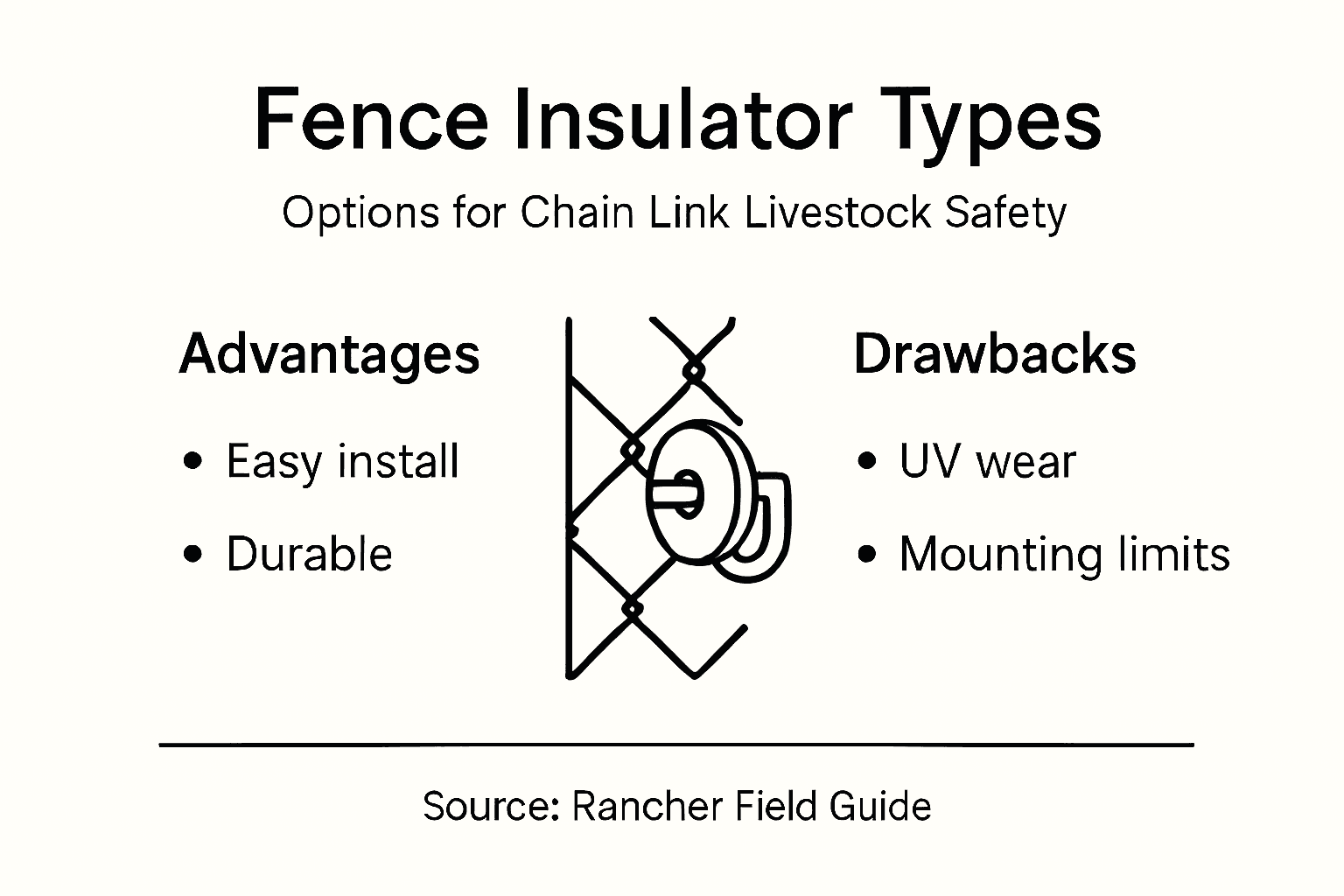
Ranchers seeking flexible livestock containment solutions have several alternative insulator options beyond traditional chain link fence designs. Fence insulator alternatives provide diverse approaches to maintaining effective electrical barriers for different agricultural environments.
Key alternative insulator configurations include:
- T-Post Insulators: Versatile mounting options for temporary and permanent fence sections
- Wood Post Insulators: Traditional option offering robust electrical isolation for wooden fence structures
- Composite Fence Line Insulators: Modern synthetic materials providing enhanced durability and weather resistance
- Tape Insulators: Designed for wide electrical tape applications with increased surface coverage
- Intermediate Rail Insulators: Specialized components for multi-wire fence configurations
Each alternative insulator type presents unique advantages depending on specific ranch requirements. Factors such as terrain complexity, livestock species, and environmental conditions significantly influence the most appropriate insulator selection. Ranchers must carefully evaluate their specific containment needs, considering installation complexity, long-term maintenance requirements, and potential cost implications.
The selection process demands a comprehensive understanding of electrical fencing principles, material performance characteristics, and site-specific challenges. Successful implementation requires balancing electrical conductivity, mechanical strength, and environmental adaptability.
Pro tip: Conduct a comprehensive site survey before selecting alternative insulators to ensure compatibility with your specific landscape and livestock management goals.
Secure Your Livestock with Reliable Electric Fence Insulators for Chain Link Fencing
Managing electric fence insulators effectively is essential to prevent electrical shorts and maintain the safety and security of your livestock. If you need high-quality UV-resistant insulators that offer durable electrical isolation and mechanical strength, look no further. At FenceFast.ca, we specialize in providing top-tier electric fencing components designed specifically for chain link fencing and other agricultural fencing needs.

Explore our wide selection of electric fence supplies and accessories that help you avoid common pitfalls like low-quality materials and improper installation. Whether you require standoff insulators to maximize clearance or strain insulators for high-tension wire, our expert knowledge and nationwide shipping across Canada ensure you get the right products promptly. Visit FenceFast.ca now to secure your fencing system and protect your valuable livestock with confidence.
Frequently Asked Questions
What are electric fence insulators for chain link fencing?
Electric fence insulators for chain link fencing are devices designed to prevent electrical current from grounding through metal fence structures, ensuring a consistent electrical flow for livestock containment and property security.
How do electric fence insulators work with metal fencing?
Electric fence insulators create a physical and electrical barrier between electrified wires and metal surfaces, preventing electrical current from dissipating through the fence. This helps maintain the intended charge on the wire for effective deterrence.
What are the different types of electric fence insulators available for chain link fences?
The main types of electric fence insulators for chain link fences include standoff insulators, strain insulators, corner insulators, and inline insulators. Each type serves specific purposes based on wire tension, terrain variations, and directional changes in the fence layout.
What are some common mistakes to avoid when using electric fence insulators?
Common mistakes include inadequate clearance between electrified wire and metal components, using low-quality materials, skipping regular maintenance checks, and failing to manage voltage effectively. Avoiding these pitfalls helps ensure optimal performance and livestock containment.

