

The right fence post material determines whether your fence stands firm for decades or starts leaning after the first hard winter. The four main categories are wood, metal, vinyl, and concrete, each with distinct tradeoffs in cost, durability, and maintenance. Before picking a material, you also need to account for your soil type, local climate, fence height, and how much upkeep you’re willing to do.
Here’s a quick-reference summary of what drives the decision:
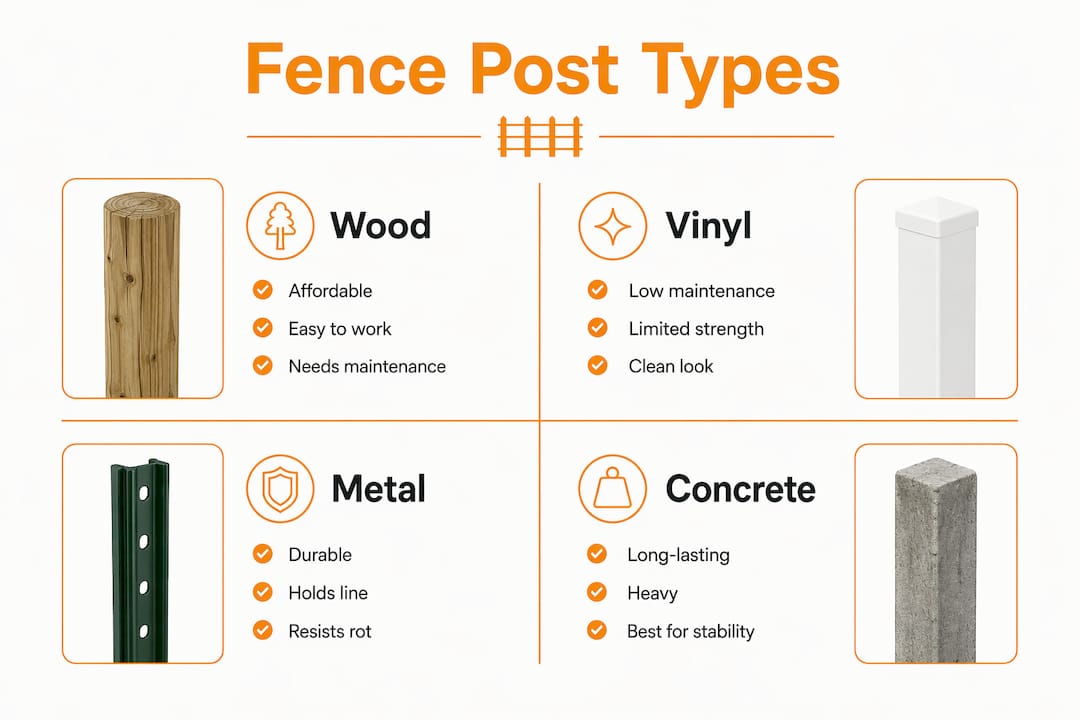
- Material: Wood is affordable and traditional; metal lasts longest; vinyl is low maintenance; concrete is nearly indestructible
- Durability: Ranges from 15 years for untreated wood, 20–40 years for pressure-treated wood (AWPA UC4B/UC4C grade), 40–60 years for galvanized steel, and 50+ years for precast concrete
- Embedment depth: The standard rule is one-third of total post length below grade, with a minimum depth that varies by fence height and local conditions.
- Environmental fit: Wet or clay soils, high-wind zones, and freeze-thaw climates all affect which material performs best
- Maintenance: Wood needs the most attention; metal and concrete need the least
Table of Contents
- 1. Wooden fence posts: what you need to know before buying
- 2. Metal fence posts: strength that outlasts most alternatives
- 3. Vinyl fence posts: low maintenance with real structural limits
- 4. Concrete fence posts: the long-game option
- 5. Post setting essentials: depth, soil, and concrete guidance
- Fencefast has the fencing supplies your project needs
- Key Takeaways
1. Wooden fence posts: what you need to know before buying
Wood is the most common residential post material, and for good reason. It’s affordable, easy to work with, and blends naturally with most fence styles. The catch is that wood’s longevity depends heavily on species, treatment grade, and how well you manage moisture at the base.
Cedar offers natural rot and insect resistance without chemical treatment, making it a smart pick for damp climates. Naturally rot-resistant species like cedar, mahogany, or redwood can have moderate longevity above ground and as in-ground posts depending on conditions. Pressure-treated pine costs less and performs comparably, though it can warp and crack over time. For ground-contact applications, posts rated to AWPA UC4B or UC4C standards are recommended; these standards imply higher durability and suitability for harsher conditions. Oak is dense and strong but costs more and needs regular maintenance to stay in good shape.
Key considerations for wood posts:
- Always install with proper drainage and grading to prevent standing water at the base
- Concrete encasement adds stability but can trap moisture against the wood if not applied correctly
- Seal cut ends with a wood preservative before setting
- Avoid burying untreated or low-grade lumber directly in soil
Pro Tip: If you’re setting wood posts in concrete, extend the concrete collar slightly above grade and slope it away from the post. This sheds water instead of pooling it at the wood-concrete interface, which is where rot almost always starts.
2. Metal fence posts: strength that outlasts most alternatives
Steel and aluminum posts are the go-to choice when you need a fence that holds its line over decades without constant attention. Steel resists warping entirely, which keeps long fence runs straight in ways wood simply cannot match, especially in windy or wet conditions.
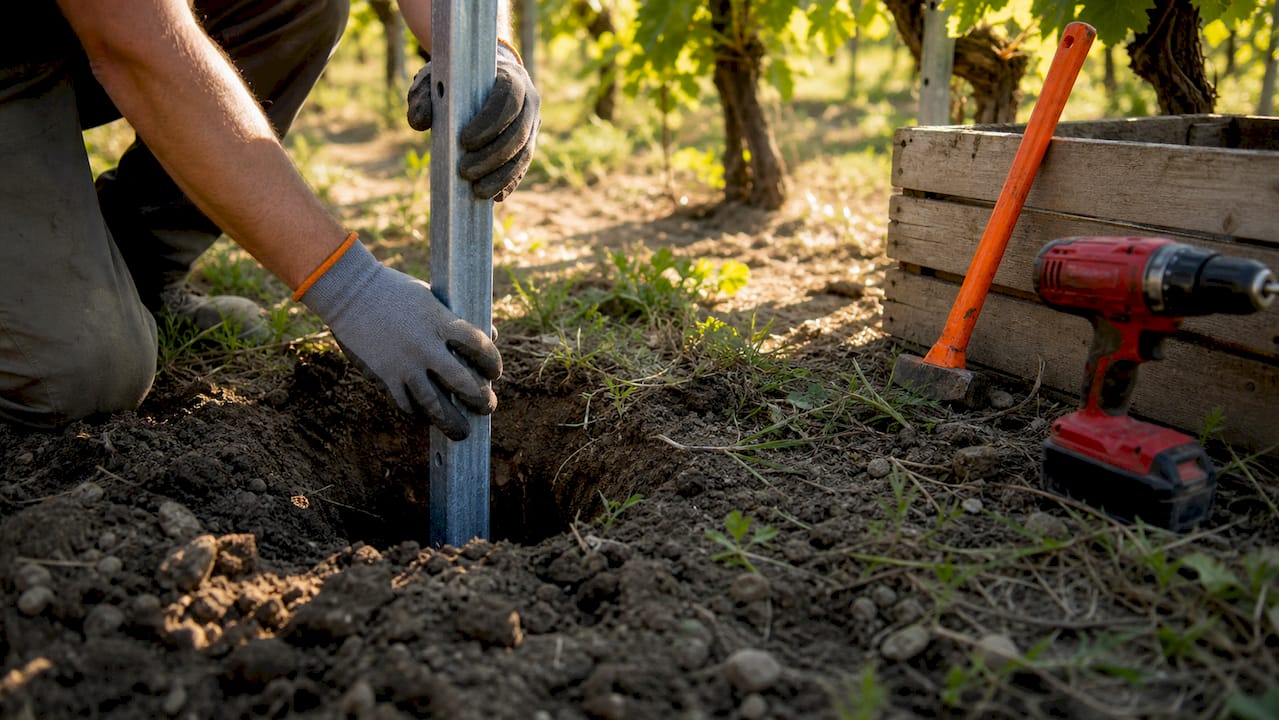
Galvanized steel posts conforming to ASTM A123 standards deliver 40–60 years of rust resistance in agricultural and commercial settings. They’re the standard for chain-link fencing, security perimeters, and high-tension agricultural wire systems. The upfront cost runs higher than wood, but the math flips quickly when you factor in zero rot, no warping, and far fewer replacements over a 30-year span.
Aluminum posts, typically extruded to 6063-T5 or 6061-T6 specifications, suit ornamental and pool barrier fencing where corrosion resistance matters but the structural loads are lighter than a full agricultural fence.
- Galvanized steel: best for chain-link, security, and long agricultural runs
- Aluminum: ideal for ornamental, pool, and decorative residential fencing
- Both materials: driven without concrete in agricultural settings, or concrete-encased for permanent residential installations
- Gate posts: always use steel or oversized aluminum, set deeper than standard line posts
3. Vinyl fence posts: low maintenance with real structural limits
Vinyl looks clean, never needs painting, and won’t rot or attract insects. For a residential decorative fence in a sheltered yard, it’s a genuinely practical choice. The limitation shows up when the fence gets taller or the wind picks up.
Vinyl posts are hollow PVC extrusions. Without an internal steel or aluminum insert, they flex under load. Above 42 inches of fence height, unreinforced vinyl posts fail at wind speeds well below standard design thresholds for most U.S. climate zones. Any 6-foot privacy fence in vinyl needs internal reinforcement, full stop.
- Durability: Rot-proof and insect-resistant, but susceptible to cracking in extreme cold
- Cost: Mid-range upfront, with savings on paint and stain over time
- Installation: Concrete encasement recommended for stability, especially at corners and gate posts
- Best fit: Residential decorative fencing in moderate climates, not exposed or high-wind sites
4. Concrete fence posts: the long-game option
Precast concrete posts are built for situations where you want to install once and forget about it for a generation. They don’t rot, don’t rust, and don’t warp. Agricultural perimeter fencing and industrial security applications rely on them for exactly that reason.
The tradeoff is weight and installation complexity. Typical precast concrete posts weigh over 200 pounds per unit and require mechanical handling equipment. You’re not setting these by hand. Service life runs 50 years or more with minimal maintenance, which makes the higher labor cost easier to justify on large or permanent installations.
- Durability: Exceptional, rated to ACI 318 design code standards
- Installation: Direct set or mechanical placement; not a DIY-friendly option for most homeowners
- Cost: Higher upfront and labor-intensive, but near-zero maintenance costs over decades
- Best fit: Agricultural perimeters, industrial fencing, and any application where long-term reliability outweighs installation convenience
5. Post setting essentials: depth, soil, and concrete guidance
Getting the post in the ground correctly matters as much as the material you chose. A well-selected post set at the wrong depth, or in poorly drained soil, will fail ahead of schedule regardless of what it’s made of.
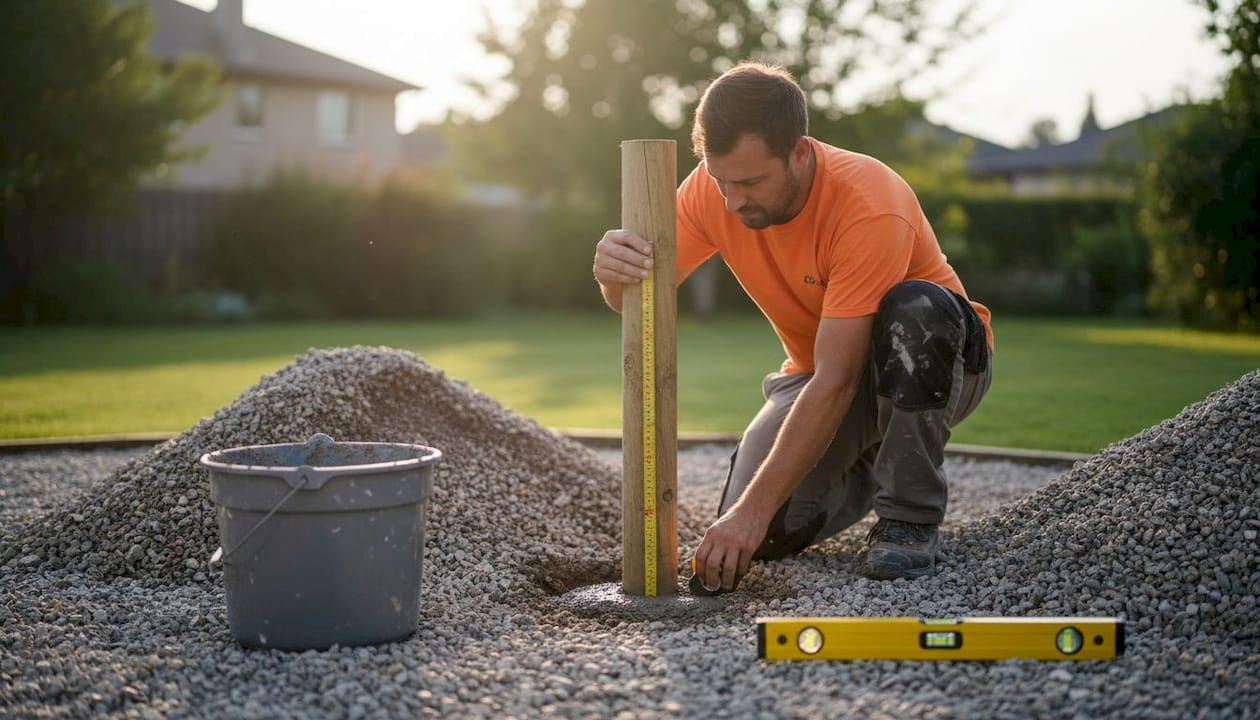
The standard embedment rule is one-third of total post length below grade. For a standard 6-foot residential fence, that means at least 2 feet deep, with 42–48 inches recommended for taller fences or high-wind locations. In cold climates, the local frost line overrides the rule of thumb entirely. The International Residential Code requires footings to extend below the frost line, and in northern states that can exceed 48 inches.
Soil type changes the calculation too. Sandy or clay soils require site-specific adjustments: sandy soil needs deeper posts and compacted gravel backfill, while clay holds moisture that accelerates wood decay even in pressure-treated lumber. In heavy clay or wet conditions, a gravel collar at the post base improves drainage and extends post life by keeping moisture away from the wood.
On concrete: building inspectors generally require it for permanent fences, but improper application traps moisture against wood posts and accelerates rot. Use a minimum 3,000 psi mix, and slope the collar above grade to shed water.
Pro Tip: In poor soil, going deeper helps less than improving drainage. A gravel collar combined with proper grading does more for wood post longevity than adding another 6 inches of depth.
One more thing worth knowing: embedment beyond roughly 10–12 times the post diameter yields diminishing returns for lateral resistance. Deeper is not always better, and it adds cost without proportional structural benefit.
Fencefast has the fencing supplies your project needs
Picking the right post material is only half the job. Getting the right products, in the right specs, shipped to your property without the runaround is the other half.
Fencefast carries fencing components, wire, connectors, and accessories built for real agricultural and rural projects across Canada. Whether you’re running a wood post perimeter on a residential lot or setting up a full farm fence line, the product catalog at Fencefast covers the hardware you need without the guesswork of sourcing from multiple suppliers. The team also offers design consulting for more complex projects. For more on matching materials to your specific site conditions, the fence post materials guide on the Fencefast blog is a practical next step. Browse the catalog and get your order placed directly online.
Key Takeaways
Wood, metal, vinyl, and concrete posts each suit different budgets and site conditions, but embedment depth and drainage management determine long-term performance across all four materials.
| Point | Details |
|---|---|
| Match material to site conditions | Clay and wet soils favor metal or concrete; wood works best with good drainage and proper treatment. |
| Follow the one-third embedment rule | Bury at least one-third of total post length, with a 2-foot minimum for a standard 6-foot fence. |
| Reinforce vinyl above 42 inches | Unreinforced vinyl posts fail at wind loads below standard design thresholds for most U.S. climate zones. |
| Concrete posts last 50+ years | Precast concrete delivers the longest service life but requires mechanical installation due to 200-pound-plus weight. |
| Typical Durability by Material | Untreated wood: 15 years; pressure-treated wood: 20–40 years; galvanized steel: 40–60 years; precast concrete: 50+ years. |
| Fencefast for supplies and guidance | Fencefast carries fencing components and offers design consulting for agricultural and residential projects across Canada. |

