

Choosing the right fence post material can feel overwhelming when you’re staring at dozens of options at the farm supply store. Your decision affects everything from how often you’ll repair broken sections to whether your cattle respect the boundary next spring. Wood posts rot in wet climates, metal posts bend under pressure, and composite materials promise durability but come with unfamiliar price tags. This guide breaks down the most common fence post materials used on Canadian farms, comparing their real-world performance, costs, and maintenance needs so you can select posts that match your livestock, soil conditions, and budget.
Table of Contents
- Key takeaways
- Common fence post materials for Canadian farms
- Comparing fence post materials: durability, cost, and maintenance
- Selecting the right fence post for your farm conditions
- Latest innovations and eco-friendly fence post materials
- Find quality fence posts and supplies at FenceFast
- Frequently asked questions
Key Takeaways
| Point | Details |
|---|---|
| Wood posts affordability | Wood posts are affordable and easy to work with, but they can rot in moisture rich soils and require ongoing maintenance. |
| Metal posts durability | Metal posts provide strong, long lasting support and withstand livestock pressure, but have higher upfront costs. |
| Composite posts durability | Composite posts offer durability with lower maintenance and eco friendly benefits, though they cost more initially. |
| Installation matters | Installation technique and selecting the right material for your fence type and livestock are crucial to maximizing fence life. |
Common fence post materials for Canadian farms
Walking through a fencing supplier, you’ll encounter four main post categories. Each has earned its place in agricultural settings through specific advantages.
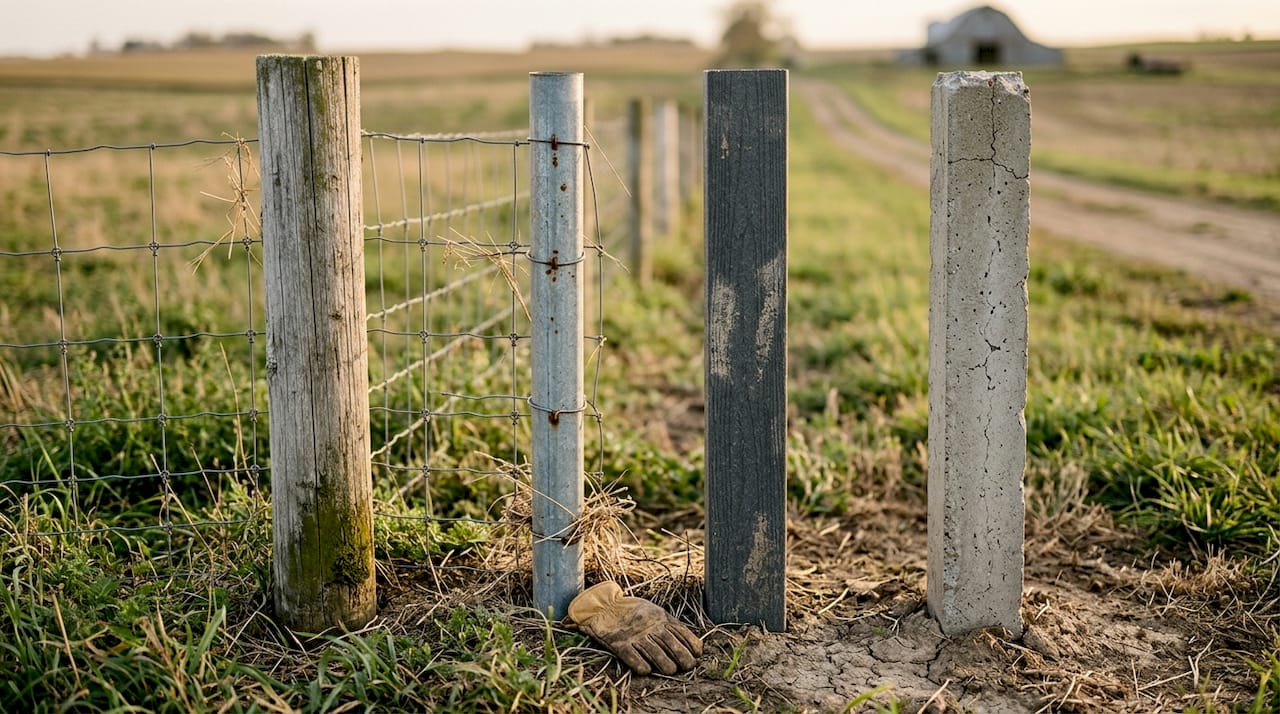
Wood posts dominate rural landscapes because they’re affordable and easy to work with. Cedar and treated pine resist decay better than untreated varieties, but wood posts are vulnerable to rot and pests in moisture-rich environments. You can hammer staples directly into wood, making wire attachment straightforward. Most wood posts last 10 to 20 years depending on treatment quality and soil drainage.
Metal posts bring serious strength to fence lines. Steel T-posts slide into the ground with a post driver, creating secure anchors for barbed wire and woven fencing. Galvanized pipes resist rust for decades, even in wet climates. Metal handles heavy livestock pressure without splitting or cracking. The main drawbacks are higher upfront costs and the need for specialized clips or wire ties instead of staples.
Composite posts combine recycled plastic with wood fibers, creating materials that resist rot, insects, and weathering. These newer options appeal to farmers prioritizing sustainability and low maintenance. Composite posts don’t splinter, so they’re safer around horses and other livestock prone to injury. They cost more than wood initially but eliminate the need for chemical treatments and frequent replacement.
Concrete posts deliver maximum durability in challenging conditions. They’re common in Europe but less popular in North America due to weight and installation difficulty. Concrete handles extreme weather, resists impact from large animals, and lasts 50-plus years. The trade-off is labor intensity during installation and limited flexibility if you need to relocate fence sections.
Pro Tip: Match your post material to fence type. Wood posts work well with fencing solutions for farms using traditional barbed wire, while metal T-posts excel with high-tensile smooth wire. Consider livestock fencing types when planning your material budget.
| Material | Typical Lifespan | Best Use Case |
|---|---|---|
| Untreated wood | 5-10 years | Temporary or budget fencing |
| Treated wood | 15-25 years | Perimeter fencing in dry climates |
| Steel T-posts | 20-30 years | High-tensile wire systems |
| Galvanized pipe | 30-50 years | Corner and brace posts |
| Composite | 25-40 years | Low-maintenance permanent fencing |
| Concrete | 50+ years | Heavy-duty applications |
Comparing fence post materials: durability, cost, and maintenance
Smart farmers look beyond sticker prices to understand total ownership costs. A $5 wood post that rots in seven years costs more over time than a $15 metal post lasting 30 years.
Durability separates temporary solutions from permanent infrastructure. Concrete and metal posts withstand decades of freeze-thaw cycles, livestock impact, and moisture exposure. Wood posts decay faster in wet soils, especially when untreated. Composite materials fall between wood and metal for longevity, offering 25 to 40 years of service in most conditions. Metal posts have higher initial costs but their extended lifespan makes them economical for permanent fence lines.
Maintenance requirements vary dramatically by material. Wood posts need regular inspection for rot, insect damage, and structural integrity. You’ll apply preservative treatments every few years and replace compromised posts as needed. Metal posts require minimal upkeep beyond occasional rust spot treatment on damaged galvanizing. Composite posts need only periodic cleaning and visual checks. Concrete posts are essentially maintenance-free once installed properly.
Environmental considerations increasingly influence material selection. Treated wood contains chemicals that leach into soil over time. Metal posts are recyclable at end of life. Eco-friendly fencing materials like composite posts made from recycled content appeal to operations pursuing sustainability certifications or reducing environmental impact.
| Material | Initial Cost per Post | Maintenance Frequency | Lifecycle Cost Rank |
|---|---|---|---|
| Wood (treated) | $8-$15 | Annual inspection, treatment every 3-5 years | Medium-High |
| Steel T-post | $10-$18 | Minimal, spot rust treatment | Low |
| Galvanized pipe | $25-$45 | Very minimal | Low |
| Composite | $20-$35 | Very minimal | Medium |
| Concrete | $15-$30 | None | Low (if installation costs excluded) |
Installation ease affects both immediate labor costs and long-term fence performance. Wood and metal posts install relatively quickly with basic tools. Concrete posts require heavy equipment or significant manual labor. Poor installation undermines even the best materials, causing premature failure regardless of inherent durability.
Pro Tip: Calculate cost per year of service, not just purchase price. Divide the installed cost by expected lifespan to compare materials fairly. Include treatment and replacement costs for accurate projections.
Selecting the right fence post for your farm conditions
Your specific farm environment determines which materials perform best. Generic recommendations fail when soil, climate, and livestock needs vary so dramatically across Canadian agricultural regions.
Soil type fundamentally affects post stability and longevity. Clay soils retain moisture, accelerating wood rot and promoting rust on damaged metal coatings. Sandy soils drain quickly but may not grip posts firmly, requiring deeper setting or concrete footings. Soil moisture and type influence durability more than many farmers realize. Rocky soils make driving posts difficult, favoring materials that can be augered or set in drilled holes.
Climate patterns create distinct challenges across Canada. Freeze-thaw cycles in prairie regions heave poorly anchored posts out of alignment. Coastal moisture accelerates wood decay and metal corrosion. Arid interior regions preserve wood longer but create hard, compacted soils that resist post installation. Match your material choice to local weather patterns for optimal performance.
Livestock requirements vary by species and management system. Cattle need strong posts spaced 12 to 16 feet apart to handle their weight and rubbing behavior. Horses require taller posts with smooth surfaces to prevent injury. Sheep and goats need closer post spacing with smaller diameter materials to support tight wire spacing. Consider these factors when budgeting materials:
- Assess your soil drainage and composition through simple field tests or soil maps
- Review local climate data for freeze depth, annual precipitation, and temperature extremes
- Identify your primary livestock species and their specific fencing requirements
- Determine fence purpose (perimeter security, pasture division, or temporary rotation)
- Calculate total linear footage and corner/brace post locations
- Compare material costs including installation labor and equipment needs
Installation technique matters as much as material selection. Set posts to proper depth, typically one-third of above-ground height plus six inches. Tamp backfill firmly in layers to prevent settling. Use concrete for corner and gate posts regardless of line post material. Follow fence post spacing guidelines appropriate for your wire type and terrain.
Regular inspection catches problems before they become failures. Walk fence lines seasonally, checking for loose posts, damaged wire attachments, and signs of rot or corrosion. Tighten loose wires promptly to prevent excess stress on posts. Replace compromised posts before they fail completely. These simple practices extend fence life regardless of material choice. Reference farm fence building steps for proper installation techniques that maximize post performance.
Latest innovations and eco-friendly fence post materials
Fencing technology continues evolving beyond traditional wood and metal options. New materials address sustainability concerns while delivering performance improvements.
Composite posts made from recycled materials combine plastic waste with wood fibers or other organic content. These engineered products resist moisture, insects, and decay without chemical treatments. Manufacturers design composite posts with pre-drilled holes or attachment channels for easier wire installation. Colors range from natural wood tones to dark browns that blend with rural landscapes.
Recycled plastic posts offer similar benefits with even greater durability. Made entirely from post-consumer plastic waste, these posts never rot, splinter, or require treatment. They’re lightweight compared to concrete yet strong enough for most livestock applications. The main limitation is flexibility under extreme impact, though this rarely causes problems in properly designed fence systems.
Electric fence innovations include specialized posts for temporary and semi-permanent installations. Modern temporary electric fence posts use fiberglass or composite materials with built-in insulators. These posts install quickly without tools, making them ideal for rotational grazing systems. Step-in posts push into soil by foot pressure, while tread-in designs use a wider base for stability.
Key benefits of innovative materials include:
- Zero chemical treatments required throughout product life
- Reduced carbon footprint from recycled content and longer lifespan
- Consistent quality without natural material variations
- Improved safety with no splinters or sharp edges
- Lower long-term costs through eliminated maintenance
Cost considerations remain important when evaluating new materials. Composite and recycled plastic posts typically cost 50 to 150 percent more than treated wood initially. However, their 30 to 50 year lifespan without maintenance often makes them economical over time. Availability varies by region, with major agricultural suppliers gradually expanding their sustainable product lines.
“Farmers increasingly recognize that sustainable fencing materials reduce environmental impact while delivering superior long-term value. The upfront investment in composite or recycled posts pays dividends through decades of maintenance-free service and alignment with conservation goals.”
Explore sustainable fencing materials to understand how these innovations fit your operation. Consider starting with a test section before committing to large-scale material changes.
Find quality fence posts and supplies at FenceFast
Building durable fences starts with selecting materials matched to your specific farm conditions and livestock needs. Whether you’re installing permanent perimeter fencing or creating flexible paddocks for rotational grazing, having the right posts and accessories makes the job easier.
FenceFast carries a comprehensive selection of fence post materials suited to Canadian agricultural operations. From traditional treated wood posts to modern composite options, you’ll find products designed for prairie winters, coastal moisture, and everything between. Our electric fence accessory kit includes insulators, connectors, and testing equipment to complete your installation. For rotational grazing systems, check out our electric fence netting with integrated posts for quick setup and livestock containment. Browse the complete catalog at FenceFast or contact our team for personalized recommendations based on your soil type, climate, and management goals.
Frequently asked questions
What type of fence post lasts longest for livestock fences?
Concrete and galvanized metal posts generally provide the longest service life for livestock fencing, often exceeding 40 to 50 years in most conditions. Metal posts resist rot, insects, and weather damage while maintaining structural integrity under livestock pressure. Properly treated wood posts can last 20 to 25 years with regular maintenance and favorable soil conditions. The longest-lasting option depends on your specific climate, soil moisture, and installation quality.
Are composite fence posts cost-effective compared to wood or metal?
Composite posts typically cost 50 to 100 percent more than treated wood initially but eliminate ongoing maintenance expenses like chemical treatments and premature replacement. Over a 30-year period, composite posts often prove more economical than wood when you factor in labor and material costs for repairs. They offer particular value for operations prioritizing sustainability and low-maintenance infrastructure. Metal posts remain the most cost-effective option for high-tensile wire systems when measured by cost per year of service.
How does soil type affect fence post material choice?
Wet or clay soils accelerate wood decay and promote rust on damaged metal coatings, making treated wood or composite posts better choices in these conditions. Rocky soils require posts that can be set in augered holes rather than driven, favoring wood or concrete over T-posts. Sandy soils drain well, extending wood post life, but may require deeper setting or concrete footings for adequate stability. Test your soil drainage and composition before committing to large material purchases to ensure compatibility with your chosen post type.

