

TL;DR:
- Fence posts are essential for transferring loads and ensuring fence durability. Proper depth, material choice, and bracing are critical for long-lasting, compliant safety fences. Regular inspections help prevent premature failure and extend the fence’s lifespan.
Fence posts are the primary structural members of any fencing system, transferring lateral loads from wind, animals, and tensioned wire directly into the soil. Without properly installed posts, no fence material, whether wood board, high-tensile wire, or vinyl panel, can hold its shape or serve its purpose. The importance of fence posts goes far beyond holding panels upright. Posts determine how long a fence lasts, how well it contains livestock, and whether it meets local building codes. Industry standards recommend burying at least one-third of the total post length below grade. That single rule separates fences that last decades from ones that lean within a few seasons.
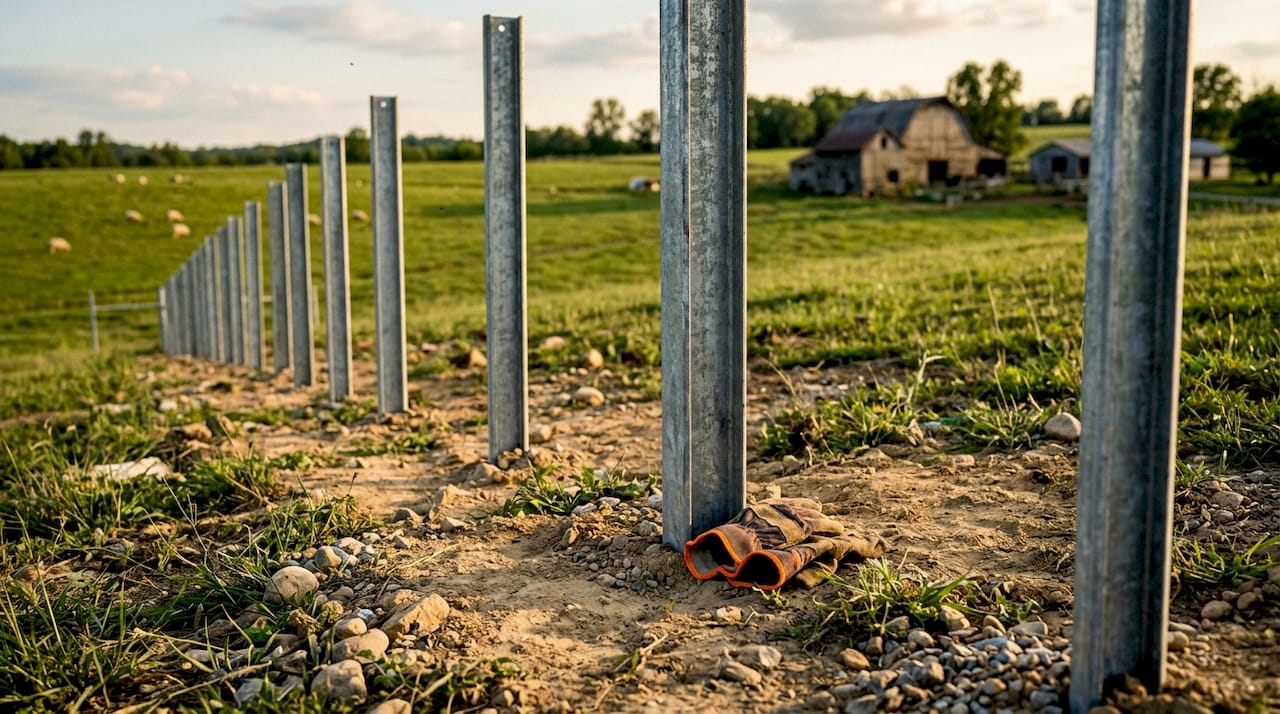
Why fence posts are the foundation of every fence system
Fence posts are load-transfer elements, not passive supports. Every force that acts on a fence, whether a 900-pound bull pressing against wire or a sustained wind gust across an open field, flows through the posts and into the ground. Mismatching installation methods to soil conditions is one of the leading causes of premature fence failure. A post driven into sandy soil without concrete behaves very differently than one set in dense clay with a formed footing.
The role of fence posts also extends to regulatory compliance. Most municipalities specify minimum post depth and require permits for fences over certain heights. That means getting the foundation wrong is not just a structural problem. It can also create legal liability for property owners and managers.
For livestock operations, the stakes are even higher. A fence that fails at the post level puts animals at risk of escape, injury, and predator exposure. Fencefast works with Canadian farmers and ranchers who understand this reality firsthand, and the guidance below reflects what actually works in the field.
What fence post materials work best for your property?
Material choice is the first decision every property owner faces, and it shapes every other aspect of fence performance.
- Wood (treated pine, cedar, or oak) remains the most common choice for agricultural fencing. Pressure-treated posts resist rot for 15–25 years in most soil types, but they require periodic inspection and treatment at the soil line.
- Galvanized steel posts resist rust and deliver superior strength for high-tensile wire and security fencing. They cost more upfront but require less maintenance over a 30-plus-year lifespan.
- Composite posts combine recycled wood fiber and plastic. They resist rot and insects but can flex under heavy lateral loads, making them better suited to decorative or light-duty applications.
- Vinyl posts work well for residential privacy fencing where aesthetics matter. They do not rot or corrode, but they lack the structural strength needed for livestock containment or high-tension wire systems.
Durability depends heavily on the match between material and environment. Steel posts in coastal or high-humidity zones need hot-dip galvanizing or a powder coat finish to prevent rust. Wooden posts in clay-heavy soils need proper drainage at the base to avoid accelerated rot. Choosing the wrong material for your soil type shortens post lifespan regardless of installation quality.
Cost and lifespan must be weighed together. A treated wood post may cost less at purchase, but a galvanized steel post that lasts twice as long with half the maintenance often delivers better value over a 20-year horizon. For a detailed breakdown of post material options suited to Canadian conditions, Fencefast has published a practical reference guide.
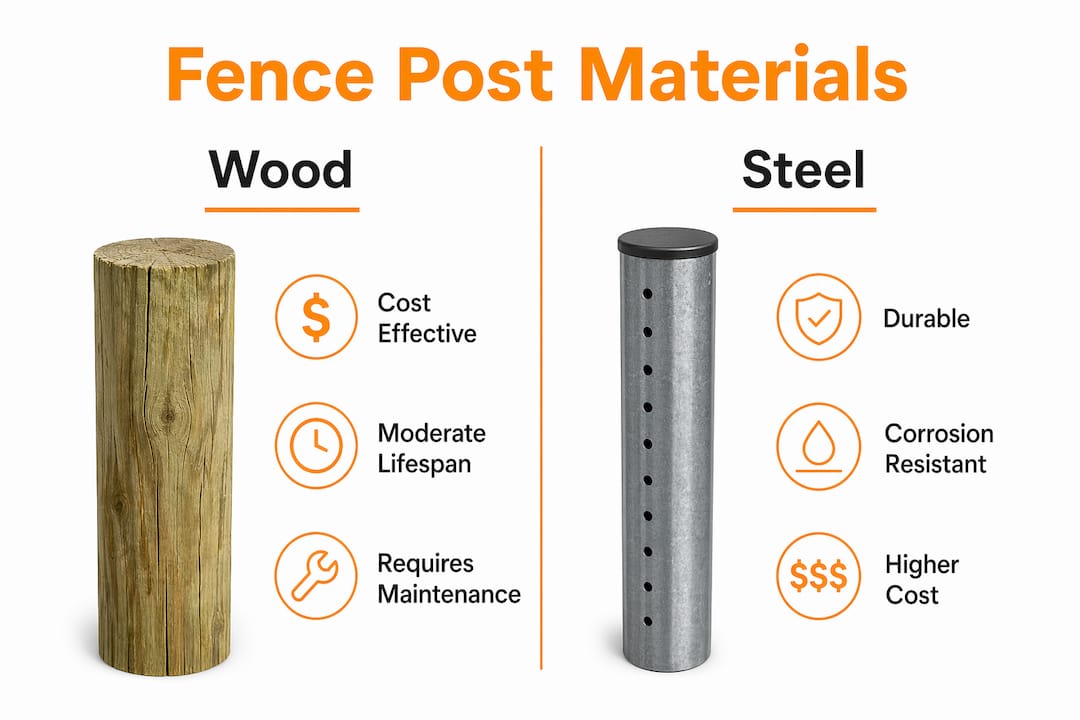
Pro Tip: Match your post material to your dominant soil type before you buy. Sandy, well-drained soils are forgiving for treated wood. Heavy clay soils trap moisture at the post base and accelerate rot, making galvanized steel or composite a smarter long-term choice.
How does installation depth affect fence post stability?
Installation depth is the single most controllable factor in long-term fence post stability. The standard rule is straightforward: bury at least one-third of the total post length below grade. For a 6-foot post, that means 24 inches in the ground. For an 8-foot post, bury 48 inches to prevent leaning within 2–3 years.
Depth alone is not enough. The footing design matters just as much.
- Dig the correct hole diameter. Concrete footings require hole diameters of 250–300mm to provide enough bearing area. Narrow holes reduce the footing volume and limit resistance to rotational forces.
- Use concrete with adequate strength. Concrete footings should reach a minimum compressive strength of 3,000 psi. Weaker mixes crack under frost pressure and lose their grip on the post.
- Add gravel at the hole bottom. A 4-inch gravel layer beneath the post base improves drainage and prevents moisture from pooling directly under the post end.
- Account for the frost line. Footings set below the frost line with a 6-inch buffer prevent frost heave from pushing posts upward and out of alignment. In many Canadian provinces, that means going deeper than the one-third rule alone would require.
- Allow concrete to cure fully. Concrete should cure for 24–48 hours before any fence panels or wire are attached. Loading a fresh footing causes shifting that is nearly impossible to correct later.
Wind loads add another layer of complexity. Wind-induced lateral forces create rotational moments at the post base. Inadequate footing volume allows the post to twist and lean even when the post material itself remains sound. This is why footing width matters as much as depth.
| Fence height | Minimum post length | Minimum burial depth | Recommended footing diameter |
|---|---|---|---|
| 4 ft | 6 ft | 24 in | 250mm |
| 6 ft | 8 ft | 32 in | 275mm |
| 8 ft | 11 ft | 48 in | 300mm |
Pro Tip: Check your local frost depth before finalizing post length. In northern Ontario or Alberta, frost lines can reach 48 inches or deeper. A post that meets the one-third rule but sits above the frost line will heave and lean within one or two winters.
Why do post spacing and bracing determine structural integrity?
Correct spacing keeps load distributed evenly across all posts. Incorrect spacing concentrates stress on individual posts, which accelerates failure.
Typical spacing recommendations by fence type:
- Residential privacy fencing: 6–8 feet between posts, with panels providing lateral support.
- Agricultural wire fencing: 10–12 feet for standard barbed or woven wire; 20–30 feet for high-tensile wire with intermediate stays.
- Security fencing: 6–8 feet to maintain panel rigidity and resist climbing or cutting attempts.
Corner posts and gate posts carry far more load than line posts and require different treatment. Gate posts must be more robust and reinforced than standard line posts to handle repeated operational stress. Using a standard line post at a gate opening leads to hardware failure, sagging, and latch misalignment within a few seasons.
Bracing is the factor most property owners underestimate. For high-tensile wire fencing, H-brace and N-brace systems are not optional extras. They are the primary defense against corner post pullout. Wire tension creates enormous horizontal force at every corner and end post. Without a brace assembly, even a well-set post will eventually pull forward. The brace transfers that tension load back along the fence line and into the ground, distributing the force across multiple posts rather than concentrating it at one.
| Fence type | Post spacing | Bracing required | Gate/corner treatment |
|---|---|---|---|
| Residential privacy | 6–8 ft | Minimal | Doubled posts at gates |
| Agricultural wire | 10–12 ft | H-brace at corners | Reinforced corner posts |
| High-tensile wire | 20–30 ft | H-brace or N-brace mandatory | Braced assemblies at all ends |
| Security chain-link | 6–8 ft | Terminal posts at corners | Heavier gauge corner posts |
For agricultural operations, Fencefast provides guidance on fence stability for farmers that covers brace assembly sizing and placement in detail.
How do you maintain fence posts to extend their lifespan?
Maintenance is where most property owners lose years of fence life through neglect. A few hours of inspection and treatment each season prevents the kind of damage that requires full post replacement.
- Inspect for rot and lean twice a year. Walk the fence line in spring after freeze-thaw cycles and in fall before the ground freezes. Push each post by hand. A post that moves more than an inch at the top needs attention before winter.
- Control drainage around post bases. Grade soil away from posts so water drains outward. Standing water at the base accelerates rot in wood and undermines concrete footings over time.
- Treat wooden posts at the soil line. The soil-air interface is where rot concentrates. Apply a wood preservative rated for ground contact to the bottom 12 inches of any exposed wood above grade. Reapply every 3–5 years.
- Protect metal posts from corrosion. Touch up any scratches or chips in galvanized or powder-coated steel posts with a zinc-rich primer. Salt spray, fertilizer residue, and animal contact all degrade protective coatings faster than weathering alone.
- Manage concrete collar design. Concrete collars that rise above grade and slope away from the post shed water effectively. Full concrete encasement that traps moisture against wood actually shortens post lifespan rather than extending it.
Seasonal timing matters for replacement work as well. Replacing posts in spring or early fall, when soil moisture is moderate, makes digging easier and allows concrete to cure without freezing. Trying to set posts in frozen ground or during a heat wave compromises footing quality. For a full seasonal maintenance checklist, Fencefast has published a fence longevity guide built specifically for farm and rural property conditions.
Pro Tip: Schedule your fence inspection for the same week every spring and fall. Tie it to a fixed task, like checking water lines or moving livestock, so it never gets skipped. Catching a leaning post early costs you one afternoon. Missing it costs you a full replacement project.
Key Takeaways
Fence posts are the structural foundation of every fencing system, and their material, depth, spacing, and maintenance determine whether a fence protects your property for decades or fails within a few seasons.
| Point | Details |
|---|---|
| Bury at least one-third | A 6-foot post needs 24 inches underground; an 8-foot post needs 48 inches to prevent leaning. |
| Match material to soil type | Steel suits clay-heavy or high-moisture soils; treated wood works well in sandy, well-drained ground. |
| Use proper concrete footings | Footings need 3,000 psi minimum strength and 250–300mm diameter holes to resist rotational forces. |
| Brace every corner and end post | H-brace or N-brace assemblies are mandatory for high-tensile wire fences to prevent post pullout. |
| Inspect and treat twice a year | Spring and fall checks catch rot, lean, and drainage problems before they require full post replacement. |
The part of your fence that nobody talks about
Property owners spend hours choosing fence panels, wire gauge, and gate hardware. They rarely spend the same attention on posts. That is a mistake I have seen play out on farms and rural properties across the country, and the pattern is always the same. A fence looks fine for two or three years, then starts leaning at the corners, sagging between posts, or pulling away from gates. The panels and wire are often still in good shape. The posts are the problem.
The uncomfortable truth is that a cheap post set correctly will outlast an expensive post set poorly. Depth, footing quality, and bracing matter more than the post brand or even the material in most cases. I have seen galvanized steel posts fail in five years because they were driven into clay without concrete, and I have seen pressure-treated wood posts last 30 years because the installer got the depth and drainage right.
The other thing worth saying directly: local conditions change everything. A depth that works in southern Ontario is not enough in northern Alberta. A spacing that suits a residential privacy fence is wrong for a high-tensile cattle perimeter. The one-third rule is a starting point, not a final answer. Adapt it to your frost line, your soil, and your fence purpose. That adaptation is what separates a fence that holds for a generation from one that needs rebuilding in a decade.
— Juiced
Fencefast has the posts and the expertise to back them up
Fencefast supplies fence posts and fencing components tested for Canadian soil and climate conditions, from pressure-treated wood to galvanized steel and everything in between. Whether you are building a new perimeter fence for livestock, replacing aging posts on a rural property, or planning a security fence for an agricultural operation, the team at Fencefast can point you to the right material and installation approach for your specific conditions.
Fencefast also provides design consulting and expert support to help property owners get installation right the first time. Visit Fencefast’s main site to browse the full product catalog, access installation resources, and connect with a team that has been serving Canadian farmers and rural property owners for over 26 years.
FAQ
Why are fence posts so important for livestock fencing?
Fence posts are the primary load-bearing elements that keep wire and panels under tension and in position. A post failure at any point in a livestock perimeter creates an escape risk and can injure animals.
How deep should fence posts be set?
The standard rule is to bury at least one-third of the total post length below grade. For an 8-foot post, that means 48 inches underground, with footings set below the local frost line to prevent heaving.
What is the best fence post material for Canadian farms?
Galvanized steel posts perform best in clay-heavy or high-moisture soils common across much of Canada. Pressure-treated wood remains a cost-effective option in well-drained sandy soils with proper drainage management at the base.
Do all fence posts need concrete footings?
Corner posts, gate posts, and end posts always need concrete footings with a minimum strength of 3,000 psi. Line posts in stable, dense soils can sometimes be driven without concrete, but footing design must match the soil type and fence tension.
How often should fence posts be inspected?
Inspect fence posts twice a year, in spring after freeze-thaw cycles and in fall before the ground freezes. Push each post by hand to check for movement, and look for rot at the soil line and erosion around the base.

