

Rugged Canadian pastures challenge horse owners to find reliable solutions for keeping equine herds safe while maximizing grazing land. Planning and installing an electric fence can address these concerns by providing secure containment tailored to your property’s unique layout. From evaluating slopes and tree lines to selecting compatible energizers and insulators, this practical guide walks through every vital decision so you can achieve effective pasture management and protect your livestock with confidence.
Table of Contents
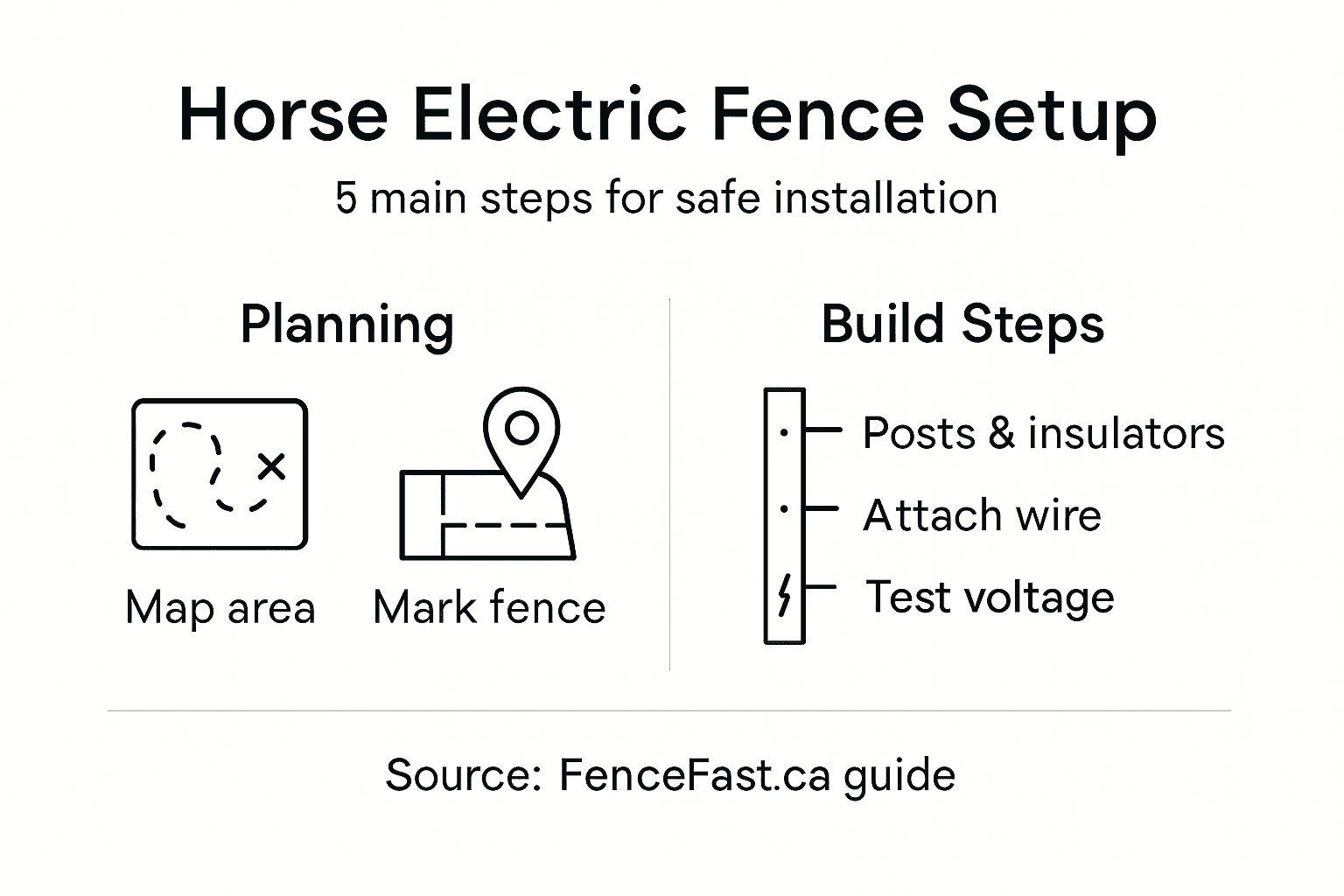
- Step 1: Assess Pasture Boundaries And Plan Fence Layout
- Step 2: Select Appropriate Electric Fencing Components
- Step 3: Prepare Site And Install Fence Posts And Insulators
- Step 4: Attach Fence Wire And Connect Power Supply
- Step 5: Test Electric Fence Function And Safety
Quick Summary
| Key Insight | Explanation |
|---|---|
| 1. Assess Pasture Boundaries Thoroughly | Conduct a comprehensive evaluation of your pasture’s characteristics to ensure effective fence layout and safety for your horses. |
| 2. Choose Suitable Electric Fencing Components | Select the right energizer, wire type, and grounding system tailored to your pasture to maintain optimal electrical performance. |
| 3. Install Posts with Precision | Properly mark and install fence posts and insulators to create a strong and stable foundation for your electric horse fence. |
| 4. Connect Power Supply Correctly | Follow precise protocols for wiring and connecting the energizer to ensure consistent electrical performance and horse safety. |
| 5. Regularly Test Fence Functionality | Conduct voltage and safety tests on a monthly basis and after weather events to ensure the electric fence is functioning correctly and safely. |
Step 1: Assess pasture boundaries and plan fence layout
Successfully installing an electric fence for horses begins with a thorough assessment of your pasture’s unique characteristics. This critical planning stage will determine the effectiveness and safety of your entire fencing system.
Start by conducting a comprehensive land boundary evaluation that considers multiple key factors. Your assessment should include:
- Topographical features like slopes, hills, and drainage patterns
- Natural boundaries such as tree lines, streams, or existing fence lines
- Soil composition which impacts post installation and ground conductivity
- Total pasture acreage to determine wire length and power requirements
- Vegetation type that might interfere with fence performance
Measure your pasture precisely and create a detailed sketch or digital map that identifies all terrain elements. This visual representation will help you strategically plan gate placements, corner post locations, and wire routing to maximize both horse safety and grazing efficiency.
Accurate boundary assessment prevents costly mistakes and ensures your electric fence provides optimal containment and protection.
Carefully examine potential obstacles like rocky ground, uneven terrain, or areas with significant grade changes that could complicate fence installation. Understanding these nuances helps you select appropriate materials and installation techniques that will maintain fence integrity.
Pro tip: Use landscape marking spray or stakes with bright flags to outline your proposed fence line before actual installation, allowing you to visualize the final layout and make adjustments.
Step 2: Select appropriate electric fencing components
Choosing the right electric fencing components is crucial for creating a safe and effective containment system for your horses. Your selections will directly impact the fence’s performance, durability, and overall functionality.
Your component selection must carefully consider electric fencing system design that matches your specific pasture environment. Critical components include:
- Energizer matching your power source and pasture size
- Grounding system to ensure consistent electrical performance
- Wire type appropriate for horse containment
- Insulators compatible with your fence posts
- Voltage tester for ongoing system maintenance
When selecting an energizer, consider the total length of your fence and the number of wire strands. For horse fencing, you’ll typically need a higher-powered energizer that delivers a sharp, memorable shock to discourage horses from challenging the boundary.
Selecting the wrong components can compromise your entire electric fence system, potentially leaving your horses vulnerable.
Pay special attention to wire gauge and tensile strength. High-tensile smooth wire works best for horse fencing, providing durability and visibility. Combine this with porcelain or polymer insulators that resist cracking and maintain electrical integrity under varying weather conditions.
Pro tip: Invest in a digital voltage tester to regularly check your fence’s electrical output and ensure consistent performance throughout seasonal temperature changes.
Step 3: Prepare site and install fence posts and insulators
Installing fence posts and insulators requires precision and careful planning to create a reliable electric horse fence. Your goal is to establish a stable, long-lasting foundation that will effectively contain and protect your horses.
Start by marking your fence line using electric fence insulators that match your terrain and post materials. Here are the key steps for successful installation:
- Clear the fence line of debris, rocks, and vegetation
- Select appropriate post materials like wood, steel, or fiberglass
- Space posts consistently (typically 50-100 feet apart)
- Dig post holes to recommended depth for your soil type
- Set posts vertically using a level for precise alignment
When setting posts, ensure they are sturdy and firmly anchored. For wooden posts, use quick-setting concrete to provide maximum stability. Steel posts should be driven deep enough to resist movement, with at least 18-24 inches underground for optimal support.
A well-installed fence post is the backbone of your electric horse containment system.
Choose high-quality ceramic or polymer insulators that can withstand outdoor conditions. These will keep your electrical wire properly separated from the post, ensuring consistent conductivity and preventing electrical shorts.
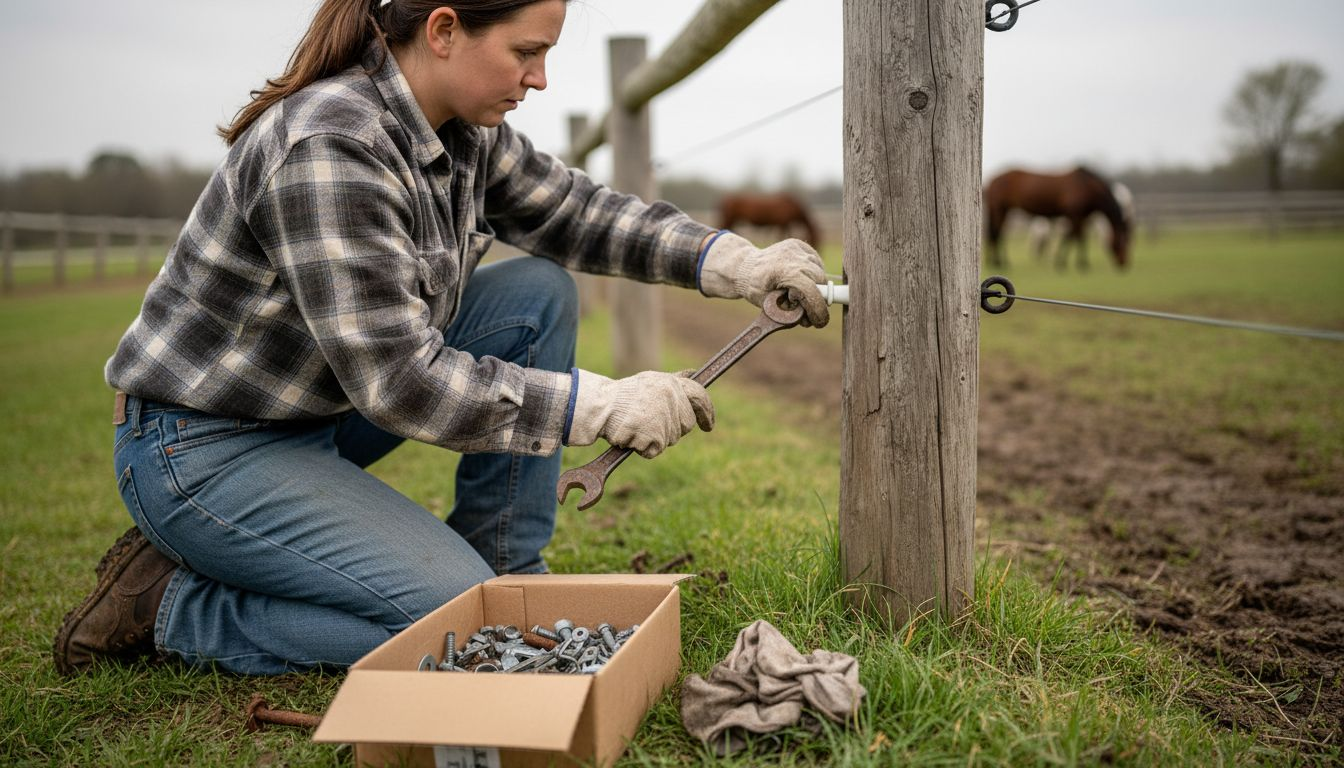
Pro tip: Use a string line between corner posts to ensure your fence line remains straight and uniform throughout installation.
Step 4: Attach fence wire and connect power supply
Connecting your electric fence wire and power supply is a critical step that determines the effectiveness of your horse containment system. Proper installation ensures consistent electrical performance and horse safety.
When attaching wire and connecting the power supply, follow the fence wire connection protocols carefully. Your wire attachment process should include:
- Unroll wire carefully to prevent tangling
- Attach wire to corner post insulators first
- Use wire tensioners to maintain proper tension
- Connect energizer terminals precisely
- Test wire conductivity before full installation
Ensure your energizer matches the total fence length and wire type. High-tensile smooth wire requires different tension techniques compared to poly wire, so adjust your approach accordingly. When connecting to power sources, you have three primary options: battery, solar, or plug-in electrical systems.
Here’s a quick reference comparing common electric fence power source options:
| Power Source Type | Key Advantages | Key Limitations | Suitable For |
|---|---|---|---|
| Plug-In Electric | Consistent power supply | Requires access to grid | Large or permanent pastures |
| Battery-Powered | Portable, flexible location | Needs regular battery changes | Temporary or remote setups |
| Solar-Powered | Eco-friendly, low running cost | Less reliable in low sunlight | Off-grid or sunny regions |
Precise wire attachment and power connection are fundamental to creating an effective electric horse fence.
Carefully route your ground wire and ground rods to complete the electrical circuit. Multiple ground rods spaced 10 feet apart can improve system performance, especially in dry or rocky soil conditions.
Pro tip: Use a digital multimeter to verify voltage consistency at different points along your fence line before allowing horses into the pasture.
Step 5: Test electric fence function and safety
Testing your electric horse fence is the final crucial step to ensure a safe and effective containment system. Proper testing confirms that every component functions correctly and provides the necessary protection for your horses.
Conducting a comprehensive electric fence safety inspection involves multiple critical checks. Your testing process should include:
- Measure voltage levels across entire fence line
- Check ground rod connections
- Inspect insulators for damage
- Test energizer output
- Verify wire tension and continuity
Use a digital voltage meter to confirm that your fence maintains at least 3000-4000 volts throughout the entire perimeter. Low voltage can compromise the fence’s effectiveness and potentially allow horses to escape or become injured by inconsistent electrical performance.
This table summarizes essential safety testing steps and their importance:
| Test Step | Purpose | Benefit |
|---|---|---|
| Voltage Measurement | Ensures shock is effective | Safeguards horse containment |
| Ground Rod Inspection | Confirms electrical path reliability | Prevents system failures |
| Wire Integrity Verification | Detects breaks or weak tension | Reduces escape risk and injury |
A thorough safety test is your final defense against potential fence failures and horse safety risks.
Pay special attention to ground connections and potential interference from vegetation or moisture. Some areas might require additional ground rods or periodic maintenance to maintain optimal electrical conductivity.
Pro tip: Conduct monthly voltage tests and after significant weather events to ensure your electric fence remains in top working condition.
Simplify Your Electric Fence Installation with Expert Supplies from FenceFast.ca
Building a safe and effective electric fence for your horses requires the right materials and reliable equipment. If you want to avoid common challenges like inconsistent voltage, poor grounding, or unstable fence posts, finding the right components is essential. From energizers and ground rods to high-tensile wire and durable insulators, the details matter to protect your horses and secure your pasture.

Take the stress out of your pasture setup by choosing quality fencing supplies designed specifically for agricultural use at FenceFast.ca. With a broad selection of electric fencing systems, animal management tools, and expert resources you can trust, now is the perfect time to ensure your installation meets all safety and performance standards. Get started today and experience peace of mind knowing your fencing project is backed by Canadian expertise and nationwide shipping. Explore our complete range at FenceFast.ca and find everything you need for a successful electric fence installation.
Frequently Asked Questions
How do I assess my pasture boundaries before installing an electric fence for horses?
Start by conducting a thorough evaluation of your pasture’s topographical features, natural boundaries, soil composition, total acreage, and vegetation type. Measure your pasture and create a detailed sketch or digital map to visualize the layout and plan the fence design effectively.
What components do I need to select for an effective electric fence for horses?
Choose essential components such as an appropriate energizer, a reliable grounding system, suitable wire type, compatible insulators, and a voltage tester. Ensure these selections match your pasture environment to achieve optimal fence performance and safety.
How do I properly install fence posts and insulators for an electric horse fence?
Clear the fence line of debris and then space your posts consistently, typically 50-100 feet apart. Set the posts vertically using a level and secure them firmly to ensure a reliable foundation for the electric fence.
What is the correct way to connect the electric fence wire and power supply?
Attach the fence wire starting at the corner post insulators, using tensioners to maintain proper tension. Connect the energizer to the power source while ensuring your ground wire is set up correctly to complete the electrical circuit.
How can I test the functionality and safety of my electric horse fence?
Measure the voltage levels across the entire fence line to ensure it is maintained between 3000-4000 volts. Check all connections, inspect insulators for damage, and verify wire tension to ensure a safe and effective containment system for your horses.
What regular maintenance should I perform on my electric fence for horses?
Conduct monthly voltage tests to verify the fence’s electrical output and check for any vegetation that may interfere with performance. Regularly inspect the grounding system and connections to ensure consistency, especially after significant weather changes.

