

TL;DR:
- Proper moisture control by keeping fence bottoms above soil and grading away from posts significantly extends fence lifespan. Regular inspections, timely repairs, and the use of durable materials like steel posts and galvanized hardware prevent early failure in farm fences. Consistent maintenance practices, including resealing every two to three years and addressing minor issues promptly, ensure long-lasting fencing systems.
Fence longevity is defined as the extended service life of a fence achieved through proactive moisture control, correct material selection, and consistent maintenance. On rural properties and working farms, a fence that fails early costs far more than the replacement materials. It disrupts livestock containment, boundary security, and daily operations. The tips for fence longevity in this guide focus on what actually moves the needle: moisture management, routine inspection, smart hardware choices, and fast repairs. Whether you run pressure-treated wood rails or galvanized steel posts, the same core principles apply.
1. Tips for fence longevity start with moisture control
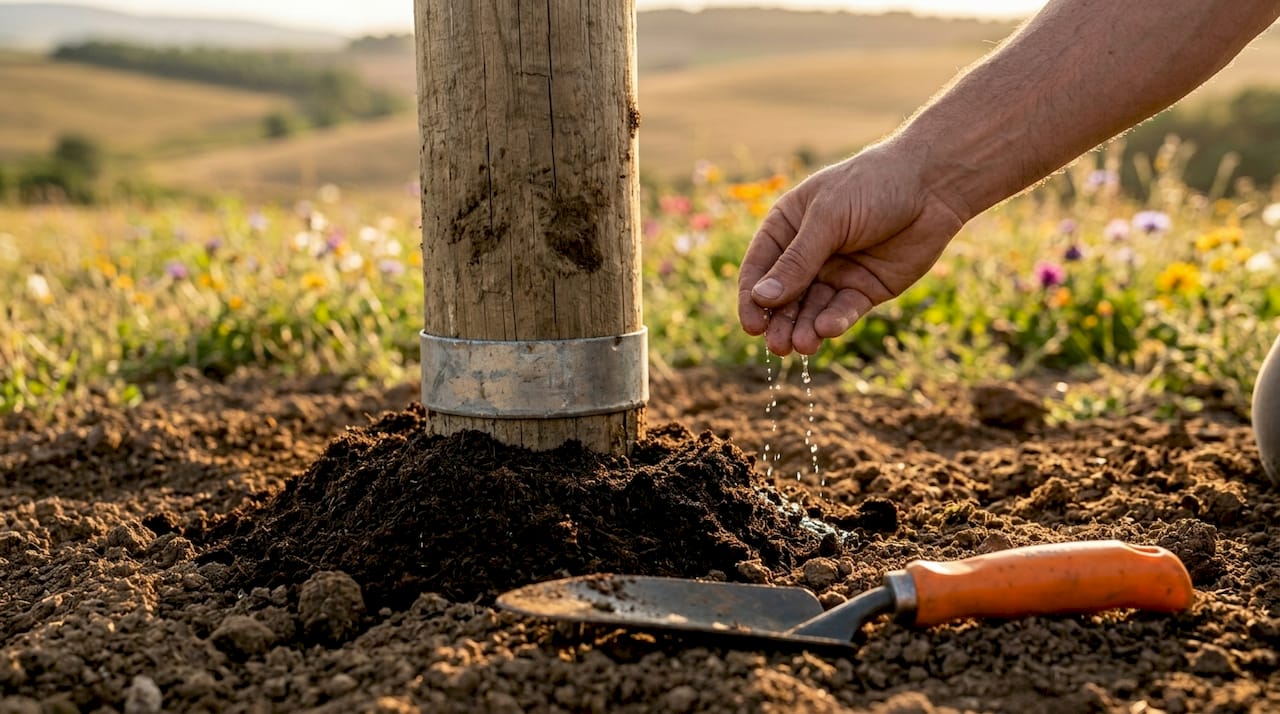
Moisture management is the highest-leverage action you can take to extend fence life. Water drives rot in wood, rust in metal hardware, and freeze-thaw cracking in posts. Every other maintenance step builds on this foundation.
The single most effective structural habit is keeping fence picket bottoms 2 to 3 inches above the soil line. A 2 to 3 inch gap limits capillary moisture wicking and prevents mud splash from soaking into end grain, which is the most decay-prone part of any board. On farm fences that sit in heavy clay or poorly drained pasture, this gap can add years to a fence’s service life.
Beyond the gap, grade the soil around your posts so water slopes away from the base rather than pooling against the wood or concrete footing. In wet paddocks or laneways, a gravel board or treated bottom rail acts as a sacrificial barrier that takes the moisture hit so your structural rails don’t have to.
- Keep fence bottoms 2 to 3 inches above ground level
- Grade soil to slope away from posts and footings
- Install gravel boards or treated bottom boards in muddy areas
- Redirect irrigation and sprinkler heads away from fence lines
- Trim grass and weeds back from the fence base to allow airflow
Pro Tip: After heavy rain, walk your fence line and look for standing water near posts. Any post sitting in a puddle for more than 24 hours is a rot candidate. Regrade or add gravel around that base before the next wet season.
2. Routine maintenance practices that maximize fence lifespan
Regular, incremental maintenance outperforms infrequent major treatments every time. Catching a loose rail or a rusted fastener in spring costs you 10 minutes. Ignoring it until the whole section leans costs you a full day and several hundred dollars in materials.
Build a biannual inspection into your farm calendar, once in early spring after freeze-thaw season and once in late fall before winter sets in. Here is what to check and do at each visit:
- Walk the full fence line and look for cracked boards, sagging rails, leaning posts, and rust streaks on hardware.
- Test post stability by pushing each post firmly. Any post with more than an inch of movement needs immediate attention.
- Clean the fence with mild soap and a soft brush to remove moss, mildew, and grime. Annual cleaning prevents organic growth from trapping moisture against the wood surface.
- Avoid high-pressure washing on wood fences unless you use a wide fan tip at low pressure. Concentrated pressure strips protective coatings and opens wood grain to moisture.
- Re-stain or reseal wood fences every 2 to 3 years. Reapplying protective coatings at regular intervals maintains an effective UV and moisture barrier, with intervals varying by exposure level and wood species.
- Lubricate gate hinges and latches with a silicone-based lubricant annually. Annual lubrication reduces friction, prevents binding, and stops the gate sag that stresses adjacent posts.
- Check and tighten all fasteners. Screws back out over seasons of thermal expansion and contraction. A loose screw today is a split rail next year.
- Trim vegetation to maintain a 6 to 12 inch clear zone along the fence. Trapped moisture and debris from overgrown plants accelerate decay and attract wood-boring insects.
Pro Tip: Before resealing pressure-treated wood, sprinkle a few drops of water on the surface. If the water beads up, the wood is not ready to accept a finish. Wait for the wood to dry fully before applying any stain or sealer, or you will trap residual treatment moisture and cause peeling within one season.
3. Which materials and hardware choices extend fence life most
Material selection sets your baseline lifespan before a single maintenance task is performed. Choosing the wrong post material or using ungalvanized fasteners in a wet climate is a slow-motion failure you will pay for in three to five years.
For posts in ground contact, pressure-treated wood rated for ground contact (UC4B or higher) is the minimum standard on Canadian farms. Steel posts go further. Steel posts resist rot and warping in moist soils where wood posts deteriorate fastest, and many farmers pair steel posts with wood pickets to maintain the appearance of a traditional board fence. You can read a detailed breakdown of post material options for Canadian conditions on the Fencefast blog.
Hardware is where many farmers underinvest. Ungalvanized nails rust within two to three seasons in wet climates, staining the wood and losing their grip. Use hot-dipped galvanized or stainless steel fasteners throughout. The cost difference per pound is small. The lifespan difference is measured in decades.
| Material | Lifespan advantage | Key weakness |
|---|---|---|
| Pressure-treated wood posts | Affordable, widely available, 15 to 25 years in ground | Requires drying before sealing; still susceptible to moisture over time |
| Steel posts | Rot-proof, warp-resistant, 40 or more years | Higher upfront cost; less aesthetic flexibility |
| Galvanized hardware | Rust-resistant for decades in wet conditions | Must be hot-dipped, not electroplated, for outdoor durability |
| Post caps and cap boards | Protect end grain from water entry | Require periodic inspection and replacement |
Post caps and cap boards are underused on farm fences. End grain absorbs water at a rate far higher than face grain, and an uncapped post top is a direct entry point for rot. Plastic or metal post caps cost under two dollars per post and can add years to the life of every wood post on your property.
4. How to prevent and manage common issues that reduce fence lifespan
Even well-built fences face specific threats that routine cleaning and sealing cannot fully address. Frost heave, insect damage, and gate stress are the three most common failure drivers on rural properties in Canada.
Frost heave is the leading cause of leaning posts in northern climates. Setting posts below the frost line with a crushed stone base and proper drainage prevents the freeze-thaw movement that shifts posts out of plumb. Concrete footings with bell-shaped bottoms and sloped tops shed water rather than pooling it, which further reduces heave risk. If you already have leaning posts, proper embedment and drainage are the only permanent fixes. Straightening a post without addressing drainage is a repair you will repeat every two years.
Insect damage concentrates at cut ends and ground-contact points. When you trim or repair boards, the fresh cut exposes unprotected wood fiber. Apply a borate-based preservative to every cut end before installation. Keep firewood piles and wood debris away from fence lines, since these attract carpenter ants and termites that will migrate to your fence posts.
Gate stress is a hidden failure point that damages more than just the gate. High-traffic gates that bind cause users to slam or yank them, which transmits vibration directly into the adjacent posts and loosens fasteners over time. Correct sag with a turnbuckle anti-sag kit before it gets bad enough to require post replacement. Lubricate hinges and check alignment every spring.
- Pro Tip: Replacing isolated rotted pickets early is one of the most cost-effective fence longevity techniques available. One bad picket spreads moisture to adjacent boards through direct contact. Pull it out the season you spot it.
Key takeaways
Fence longevity requires moisture control, correct material selection, and consistent biannual maintenance to prevent the decay and structural failures that drive premature replacement.
| Point | Details |
|---|---|
| Moisture is the primary threat | Keep picket bottoms 2 to 3 inches off soil and grade ground away from posts to limit water contact. |
| Biannual inspection prevents cascade failures | Check posts, fasteners, and gate hardware each spring and fall to catch problems before they spread. |
| Material choices set baseline lifespan | Steel posts and galvanized hardware outperform untreated alternatives by decades in wet farm conditions. |
| Seal wood at the right time | Wait for pressure-treated wood to pass the water-bead test before applying stain or sealer to avoid peeling. |
| Fast spot repairs save the whole fence | Replacing one rotted picket immediately prevents moisture from spreading to adjacent boards and rails. |
What 20 years of farm fences actually taught me
Most fence failures I have seen were not caused by bad materials or harsh weather. They were caused by neglect of the small stuff. A gate that sagged for two seasons. A post base that sat in a puddle every spring. A fresh-cut board end that never got treated. Each one looked minor at the time and became a full section replacement later.
The farmers who get the longest life from their fences share one habit: they treat fence inspection like they treat equipment maintenance. It goes on the calendar, it gets done, and small problems get fixed the same week they are found. They are not spending more money overall. They are spending it earlier and in smaller amounts, which is always cheaper than emergency repairs during calving season or before a property inspection.
The one investment I consistently recommend to anyone building new farm fencing is steel posts. The upfront cost is real, but the math is straightforward. A wood post in wet ground may need replacement in 10 to 15 years. A steel post in the same ground is still standing in 40. You also get better options for rural fencing best practices when your posts are not the weak link in the system.
One mistake I see repeatedly is sealing new pressure-treated wood too soon. Farmers want to get the job done and move on, so they seal the same week they install. The wood is still wet from the treatment process, the sealer traps that moisture, and within one season the finish is peeling and the wood is exposed again. Do the water-bead test. It takes 30 seconds and saves you a full resealing job.
Build a seasonal fence care checklist and stick to it. Spring inspection, fall inspection, annual gate lubrication, resealing every two to three years. That schedule, applied consistently, is worth more than any single premium product.
— Juiced
Get the right materials from Fencefast

Fencefast stocks the fencing components that make these longevity practices work in the real world. From galvanized hardware and pressure-treated post supplies to steel post systems built for Canadian farm conditions, the product catalog is built around what rural properties actually need. If you are planning a new fence build or upgrading an aging line, the team at Fencefast can help you select materials matched to your soil type, climate zone, and livestock requirements. For farmers who want step-by-step guidance on fixing what you already have, the fence repair guide covers practical repair methods for every common failure type. Nationwide shipping makes it easy to get what you need without a trip to town.
FAQ
How often should I reseal a wood farm fence?
Reseal or restain wood fences every 2 to 3 years, adjusting based on sun exposure and wood species. Fences on south-facing or wind-exposed runs need more frequent treatment than sheltered sections.
What is the best way to prevent fence post rot?
Set posts below the frost line with a crushed stone base, use pressure-treated or steel posts for ground contact, and keep soil graded away from the post base to prevent water pooling.
How do I stop my farm gate from sagging?
Install a turnbuckle anti-sag kit on the gate frame and lubricate hinges with a silicone-based lubricant annually. Catching sag early prevents the binding that causes users to slam gates and loosen adjacent post fasteners.
Should I use wood or steel posts for a long-lasting farm fence?
Steel posts outlast wood posts significantly in moist soils, resisting rot and warping where wood posts typically fail first. Many farmers use steel posts with wood pickets to balance durability and appearance.
When can I seal new pressure-treated wood?
Wait several weeks to months after installation before sealing pressure-treated wood. Sprinkle water on the surface: if it beads up, the wood is still too wet and needs more drying time before you apply any finish.
Recommended
- How to Build Farm Fence: Step-by-Step for Strong Results – FenceFast Ltd.
- Choosing fence posts: practical guide for Canadian farms – FenceFast Ltd.
- Fence installation steps for Canadian farms: A practical guide – FenceFast Ltd.
- How to Build a Fence: Step-by-Step Guide for Rural Properties 2025 – FenceFast Ltd.

