

TL;DR:
- Proper fencing safety involves correct installation, including grounding with at least three rods spaced 10 feet apart, and ongoing weekly inspections of voltage, insulators, and vegetation contact to prevent faults. Livestock-specific safety measures require designing fences with appropriate height, material, and voltage levels; training animals properly ensures long-term respect for the fence boundary. Using properly fitted protective gear such as cut-resistant gloves, steel-capped boots, and eye protection significantly reduces injury risks during fence installation and maintenance.
Fencing safety precautions are the set of installation, maintenance, and operational practices that prevent injury to livestock, protect farm workers, and keep fence systems compliant with agricultural safety standards. Every rural property owner running cattle, sheep, or horses depends on fencing that holds reliably and doesn’t create hazards in the process. The risks are real: a poorly grounded electric fence can shock animals unpredictably, a loose wire can trap a leg, and an under-maintained system fails exactly when you need it most. This guide covers the core safety measures for fencing installation, routine upkeep, livestock-specific considerations, and the protective gear that keeps you safe while doing the work.
What are the essential fencing safety precautions for livestock protection?
Fencing safety precautions in an agricultural context cover three distinct layers: physical installation quality, electrical system integrity, and ongoing maintenance discipline. Skipping any one of these layers creates compounding risk. A fence that looks solid but has poor grounding will deliver inconsistent shocks, and livestock that receive weak or erratic pulses quickly learn to ignore the fence entirely.
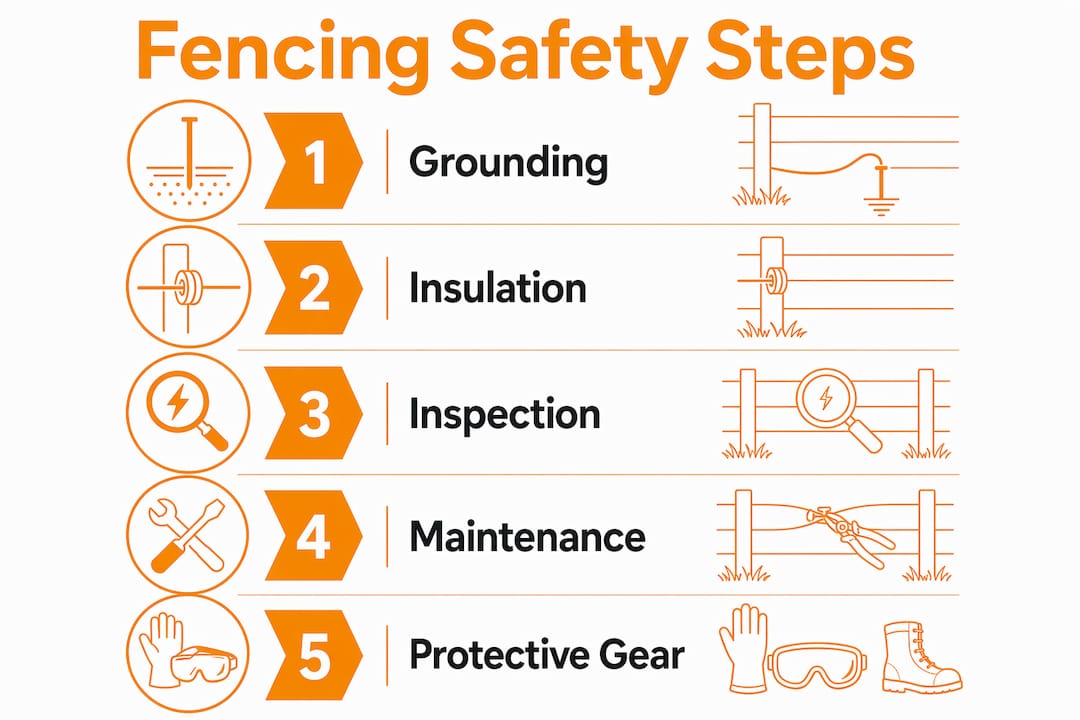
The foundation of safe installation starts with your earthing system. At least three grounding rods spaced approximately 10 feet apart at the fence start are required for proper pulse transmission. This is the most commonly skipped step on farm installations, and it’s the one that causes the most downstream problems. Without adequate grounding, you get voltage drop across the line and unpredictable behavior from the energizer.
Insulated connections matter just as much as grounding. Improper insulation or poor joints cause shorts and power diversion that impair both performance and safety for livestock and humans. Every joiner, connector, and lead-out cable needs to be tight, weatherproof, and rated for outdoor agricultural use. A single bad joint can bleed enough current to make the rest of the line ineffective.
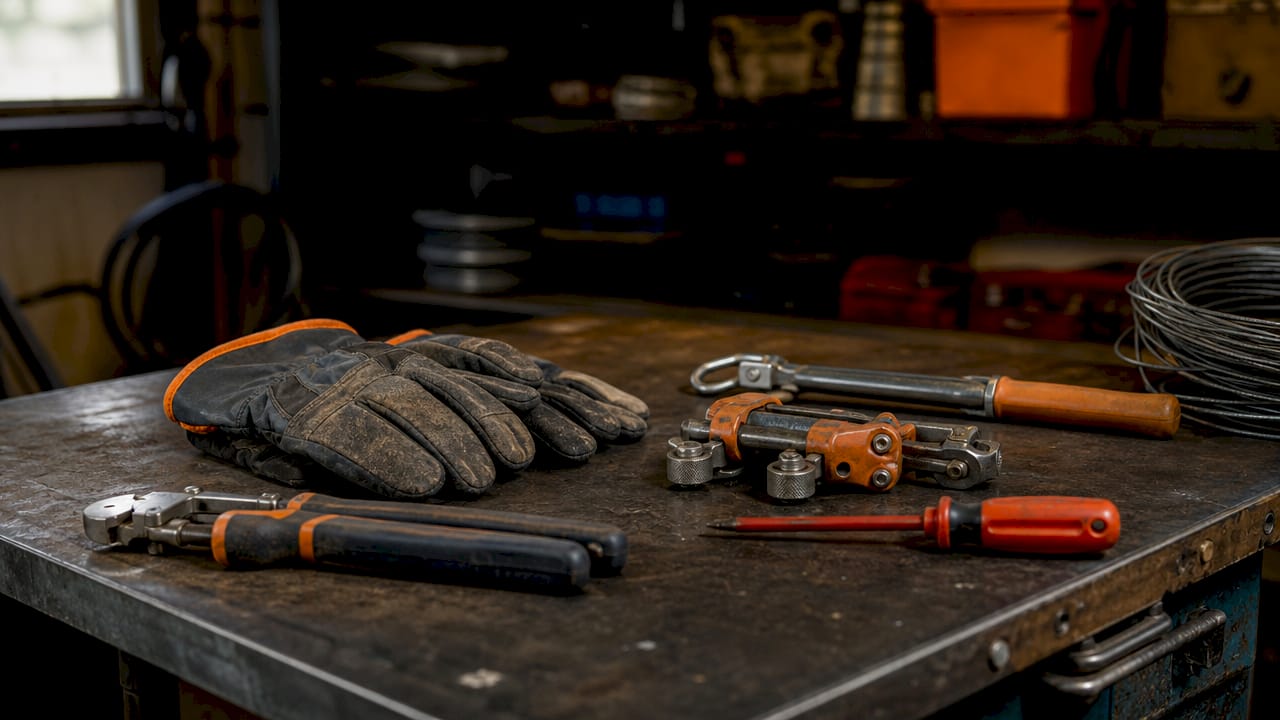
The table below summarizes the core tools and materials you need on hand before starting any fencing installation:
| Tool or Material | Purpose | Safety Requirement |
|---|---|---|
| Insulated gloves | Hand protection during wire handling | Heavy-duty, puncture-resistant |
| Grounding rods (3+) | Earth the electric system | Spaced ~10 ft apart |
| Insulated connectors | Prevent shorts at joins | Rated for outdoor/agricultural use |
| Lightning diverter | Protect fence and energizer from strikes | Required on permanent fences |
| Voltage tester | Verify line integrity | Use before and after installation |
| Steel-capped boots | Foot protection during post driving | Non-slip sole |
Pro Tip: Before energizing any new fence, walk the full line and check every insulator by hand. A loose insulator found before power-up costs you nothing. One found after a livestock incident costs you far more.
Post spacing and wire tension are physical safety factors that get underestimated. Posts set too far apart allow wire to sag, creating gaps that smaller animals like sheep or young calves can push through or get tangled in. Tension that’s too high on barbed or high-tensile wire creates a spring-loaded hazard if a post fails or a wire is cut.
How do you maintain and inspect fencing to uphold safety standards?
Routine inspection is not optional maintenance. It is the primary mechanism for catching faults before they become injuries. A fence that passed installation checks in spring can develop grounding failures, insulator cracks, and vegetation shorts by midsummer without a single visible sign from a distance.
Follow this inspection sequence on a weekly basis for electric systems:
- Check voltage at multiple points along the line. A reading below 3,000 volts on a livestock fence indicates a fault somewhere. Teagasc recommends weekly voltage monitoring as the baseline standard for maintaining system integrity.
- Inspect all insulators and connectors. Look for cracks, UV degradation, or moisture ingress. Replace any insulator that shows discoloration or physical damage.
- Clear vegetation contact points. Grass and brush touching the live wire are the most common cause of shorts on farm fences. A single heavy weed contact can drop line voltage by 1,000 volts or more.
- Test the grounding system separately. Disconnect the fence from the energizer and measure earth rod resistance. Poor ground readings explain most cases where the energizer appears to be working but livestock aren’t respecting the fence.
- Examine physical fence components. Check posts for lean or rot, wire for breaks or kinks, and gates for secure latching. Physical damage to the fence structure creates both containment failures and entanglement hazards.
Pro Tip: Electric fence shock problems are routinely blamed on the energizer when the real cause is poor joints or inadequate grounding. Before replacing any energizer, test the earth system and check every connection on the line. You’ll solve the problem faster and cheaper.
Safe repairs follow a simple rule: de-energize before you touch anything. This sounds obvious, but time pressure on a working farm leads to shortcuts. Always switch off the energizer at the source, not just at a remote switch, and confirm the line is dead with a voltage tester before handling wire or connectors.
What fencing safety measures apply to different livestock and fence types?
Livestock behavior directly determines what fencing safety requirements you need to meet. Cattle are strong and pressure-test fences constantly. Horses are fast and panic easily, making barbed wire a serious injury risk. Sheep are persistent escape artists that exploit any gap at ground level. Each species requires a different approach to both fence design and the safety practices around it.
For electric fencing, the psychological effect of the initial contact sets the tone for long-term containment. Maintaining constant power with minimal leakage is critical because the first shock an animal receives determines whether it learns to respect the fence or test it repeatedly. An underpowered or intermittent fence trains animals to push through rather than back away. For step-by-step guidance on this process, Fencefast’s guide on training livestock safely covers the conditioning sequence in detail.
The comparison below outlines key safety considerations by livestock type and fence system:
| Livestock | Fence Type | Key Safety Consideration |
|---|---|---|
| Cattle | High-tensile electric | Minimum 5,000V; energizer sized to fence load |
| Horses | Tape or rail electric | No barbed wire; high visibility tape reduces panic |
| Sheep | Portable electric netting | Tight ground contact to prevent escapes and entanglement |
| Pigs | Multi-strand electric | Low bottom strand (6 in.) to prevent rooting under |
| Mixed stock | Permanent post and wire | Physical barrier plus electric offset for reinforcement |
Temporary electric fences carry specific safety requirements beyond permanent installations. Energizer sizing matched to fence load is non-negotiable for temporary setups, since these systems are moved frequently and connections are remade each time. Every reconnection is an opportunity for a loose joint or a missed insulator that degrades the system.
For sheep specifically, portable electric netting needs to lie flat against the ground with no gaps. Lambs and small sheep can get their heads caught in netting that has lifted or sagged, which creates a strangulation risk. Fencefast’s resource on electric fencing for sheep covers the specific netting heights and ground contact standards that prevent this.
Which protective gear and safety standards reduce injury risk during fencing work?
Protective gear for fencing work on a farm is not the same category as sport fencing equipment, but the underlying principle is identical: the right gear, properly fitted and regularly inspected, prevents injuries that would otherwise be routine. The sport fencing world offers a useful benchmark for how seriously equipment standards should be taken.
British Fencing specifies that gloves must cover half the forearm with no holes and meet at least CEN Level 1 standards. For agricultural work, the equivalent principle applies: gloves must cover the wrist and lower forearm, resist puncture from wire ends, and be inspected before each use. A glove with a small hole in the palm provides almost no protection against a barbed wire cut or a high-tensile wire snap.
The core protective gear list for fencing installation and repair work:
- Heavy-duty leather or cut-resistant gloves covering the wrist and lower forearm
- Steel-capped, non-slip boots rated for outdoor terrain and post-driving work
- Safety glasses or goggles when cutting wire or driving staples (wire ends snap back)
- High-visibility vest when working near roads or in low-light conditions
- Long-sleeved, close-fitting clothing to prevent wire snagging
“Safety in fencing activities requires a cooperative culture of personal responsibility and incident reporting to reduce accidents and injuries.” — British Fencing Safety Zone
This principle translates directly to farm operations. If a worker notices a fence fault or a near-miss incident, reporting it and fixing it immediately is the practice that prevents the next, more serious event. Fencing safety is a shared responsibility between everyone working on or around the fence system, not just the person who installed it.
Protective equipment also needs to fit correctly. Ill-fitting gear creates its own hazards. Oversized gloves reduce grip and dexterity, increasing the chance of dropping tools or losing control of tensioned wire. The same logic that applies to properly fitted safety masks in sport fencing applies to every piece of protective equipment on a working farm.
Key takeaways
Effective fencing safety precautions require correct installation, consistent maintenance, livestock-specific design, and properly fitted protective gear working together as a system.
| Point | Details |
|---|---|
| Ground the system correctly | Install at least three grounding rods spaced 10 ft apart before energizing any electric fence. |
| Inspect weekly, not seasonally | Check voltage, insulators, and vegetation contact every week to catch faults before they cause injury. |
| Match fence design to livestock | Cattle, horses, sheep, and pigs each require different fence heights, materials, and voltage levels. |
| Wear the right protective gear | Use cut-resistant gloves covering the forearm, steel-capped boots, and eye protection for all wire work. |
| Train animals on new fences | Consistent power during initial contact determines long-term livestock respect for the fence boundary. |
What I’ve learned from years of watching fencing go wrong
The most common mistake I see rural property owners make is treating fencing as a one-time project rather than an ongoing system. They install correctly, energize the fence, and then check it again six months later when a cow is standing in the wrong paddock. By that point, the grounding has degraded, two insulators have cracked, and a section of vegetation has been shorting the line for weeks.
The second mistake is blaming the energizer for everything. In my experience, the energizer is almost never the problem. Poor joints, inadequate grounding, and vegetation contact account for the vast majority of electric fence failures. Replacing an energizer when the ground rods are the issue is expensive and solves nothing.
What actually works is building inspection into your weekly routine the same way you check water troughs or feed levels. Five minutes with a voltage tester and a walk along the line catches 90% of problems before they become incidents. The farms with the best fencing safety records are not the ones with the most expensive equipment. They are the ones with the most consistent habits.
One more thing: livestock training on a new fence is not optional. Initial contact effectiveness sets the psychological boundary that keeps animals contained for years. A fence that delivers a weak first shock because of a grounding problem or a loose connection has already failed, even if it looks perfect from the road.
— Juiced
Get the right fencing products and expert support from Fencefast

Fencefast carries the full range of electric fencing components, grounding systems, insulators, energizers, and protective accessories that rural property owners across Canada rely on for safe, effective livestock containment. Whether you’re setting up a new paddock system, upgrading an aging fence line, or troubleshooting a persistent voltage problem, Fencefast’s team brings over 26 years of agricultural fencing expertise to every order. As an authorized Gallagher dealer, Fencefast also offers access to advanced virtual fencing technology for operations ready to move beyond traditional wire. Visit Fencefast to browse the full product catalog, get design guidance, and find the right solution for your property.
FAQ
What are the most important fencing safety precautions for electric fences?
Proper grounding with at least three rods spaced 10 feet apart, insulated connections at every join, and weekly voltage checks are the three most critical safety measures for any electric fence system. Vegetation contact and poor joints are the leading causes of faults that create safety risks for livestock and farm workers.
How often should you inspect a livestock fence for safety?
Electric fences require weekly voltage monitoring to maintain safe and effective containment. Physical fence components including posts, wire, and insulators should be inspected at least monthly, with additional checks after storms or any incident involving livestock contact with the fence.
What protective gear do you need for fencing installation work?
Cut-resistant gloves covering the wrist and forearm, steel-capped non-slip boots, and safety glasses are the minimum protective gear for any fencing installation or repair work. Long-sleeved clothing prevents wire snagging, and a high-visibility vest is required when working near roads or in low light.
Why do livestock stop respecting an electric fence over time?
Animals lose respect for an electric fence when voltage drops due to poor grounding, shorts from vegetation, or loose connections. Consistent power during initial training is what establishes the psychological barrier, so any degradation in line integrity after that point allows animals to retest and eventually push through.
What is the difference between temporary and permanent electric fence safety requirements?
Permanent fences require lightning diverters and a fixed grounding system, while temporary fences prioritize energizer sizing matched to the fence load and tight connections that are remade correctly each time the fence is moved. Both systems require the same weekly voltage checks and insulator inspections to stay safe and effective.

