
For Canadian farmers and ranchers, even the best electric fence is only as strong as its weakest connection to the soil. The performance of your livestock containment depends heavily on the quality of your ground rod system, especially when challenged by dry summers or rocky farm fields. Choosing the right ground rod for electric fence goes beyond hardware—it creates a reliable foundation for both livestock safety and protection against wildlife threats.
Table of Contents
- What Is A Ground Rod For Electric Fence?
- Types Of Ground Rods And Their Materials
- Critical Features For Optimal Grounding
- Proper Installation And Soil Conditions
- Cost Factors And Common Mistakes
Key Takeaways
| Point | Details |
|---|---|
| Function of Ground Rods | Ground rods create a complete electrical circuit for electric fences, crucial for their effectiveness in livestock containment and security. |
| Material and Size Considerations | Copper-clad steel and solid copper rods are preferred for their conductivity and durability, typically measuring 6-8 feet in length. |
| Impact of Soil Conditions | Soil moisture and composition significantly affect grounding effectiveness; proper testing and maintenance are essential for optimal performance. |
| Installation Best Practices | Correct ground rod placement and maintenance can prevent long-term issues; it’s vital to maintain minimum spacing and test resistance regularly. |
What Is a Ground Rod for Electric Fence?
A ground rod is a critical component in electric fence systems designed to establish an effective electrical circuit for livestock containment and security. These metal rods are strategically driven into the ground to provide a complete return path for electrical current from the fence back to the energizer, enabling the fence to function properly.
The primary purpose of a ground rod is to complete the electrical circuit when an animal or person touches the electrified fence and ground simultaneously. This interaction allows the electric shock to be delivered effectively, creating a powerful deterrent for livestock and wildlife.
Key characteristics of ground rods include:
- Typically made from galvanized steel or copper
- Usually 6-8 feet long to ensure deep ground contact
- Diameter ranges between 1/2 to 3/4 inches
- Installed vertically into soil with maximum soil contact
The effectiveness of a ground rod depends on several crucial factors:
- Soil moisture content
- Soil type and composition
- Length and material of the ground rod
- Number of ground rods installed
Poor grounding can result in significant issues like reduced fence performance and potential stray voltage risks. Proper grounding systems require careful installation and periodic maintenance to ensure optimal electric fence functionality.
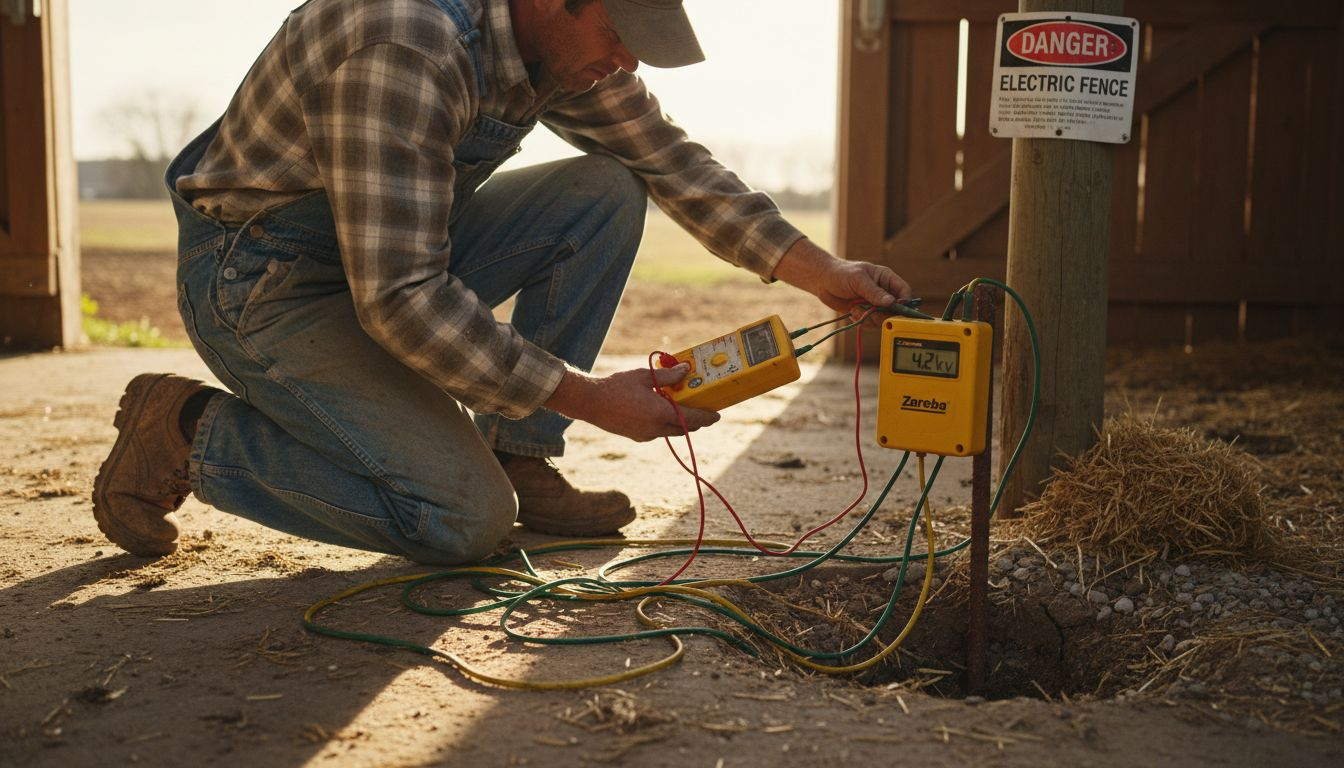
Pro tip: Test your ground rod’s effectiveness using a voltmeter to confirm proper electrical conductivity and fence performance before relying on it for livestock containment.
Types of Ground Rods and Their Materials
Electric fence ground rods come in various materials and configurations, each designed to optimize electrical conductivity and ground performance. The most common ground rod types are distinguished by their composition, with steel and copper electrodes being the primary choices for agricultural electric fencing systems.
Copper-Clad Steel Ground Rods are the industry standard for electric fences, offering a robust combination of durability and conductivity. These ground rods feature:
- Galvanized steel core for structural strength
- Copper coating providing superior electrical conductivity
- Resistance to corrosion and environmental degradation
- Typical lengths between 6-8 feet
- Diameter ranging from 1/2 to 3/4 inches
Solid Copper Ground Rods represent another premium option, particularly beneficial in challenging soil conditions. Their characteristics include:
Here’s a comparison of popular ground rod materials and their suitability for various soil conditions:
| Ground Rod Material | Electrical Conductivity | Cost Range | Ideal Soil Condition |
|---|---|---|---|
| Copper-Clad Steel | High | $15-$40/rod | Most soil types |
| Solid Copper | Excellent | $25-$50/rod | High resistivity soils |
| Galvanized Steel | Moderate | $10-$30/rod | Moist, conductive soil |
| Supplemental Plates | Varies | $20-$75/item | Rocky or dry areas |
- 100% copper construction
- Exceptional electrical conductivity
- Higher cost compared to copper-clad alternatives
- Better performance in areas with high soil resistivity
- Longer lifespan in moisture-rich environments
Alternative ground rod configurations can be employed when traditional single-rod installations prove insufficient:
- Multiple ground rod systems
- Ground rod grids
- Supplemental ground plates
- Soil conditioning techniques
Proper ground rod selection depends on local soil conditions, fence energizer specifications, and specific agricultural requirements.
Pro tip: Always measure soil resistivity and consult local agricultural extension services to determine the most appropriate ground rod type for your specific electric fence installation.
Critical Features for Optimal Grounding
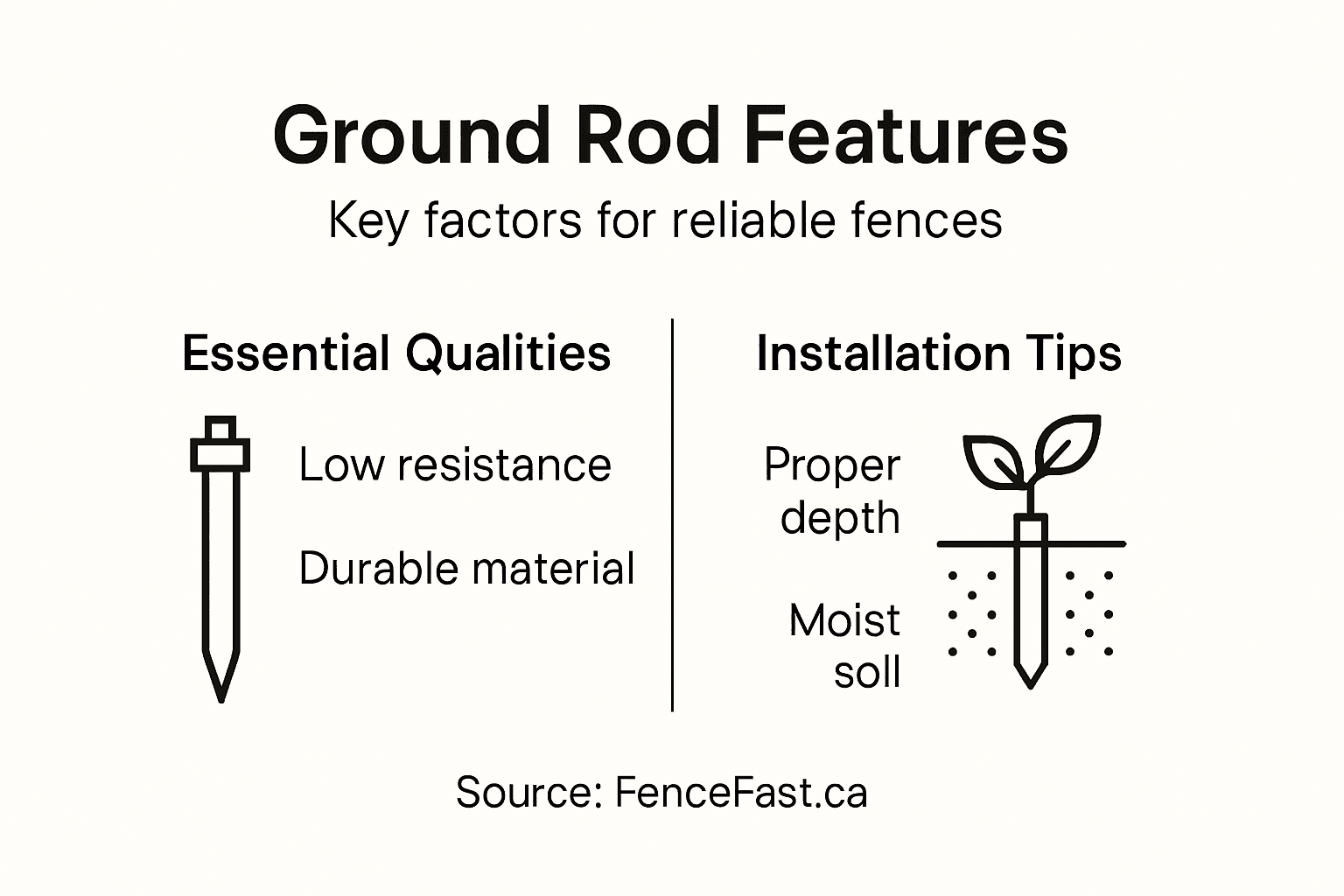
Achieving optimal grounding for electric fences requires a comprehensive understanding of multiple interconnected factors. Soil conductivity and moisture play crucial roles in determining the effectiveness of your ground rod system, directly impacting the fence’s performance and safety.
Key Performance Factors for electric fence grounding include:
- Soil moisture content
- Soil composition and mineral structure
- Ground rod material and length
- Number and spacing of ground rods
- Quality of electrical connections
- Proximity to potential interference sources
Moisture Requirements are particularly critical for ground rod functionality. Dry or extremely compact soils significantly reduce electrical conductivity, potentially compromising the entire fence system. The ideal ground environment should provide:
- Consistent moisture levels
- Good mineral content
- Minimal rocky or clay-heavy compositions
- Stable temperature ranges
Multiple ground rod strategies can help overcome challenging soil conditions:
- Install additional ground rods in series
- Use longer ground rods (8-10 feet recommended)
- Create ground rod grids for enhanced conductivity
- Implement soil conditioning techniques
- Periodically test ground system resistance
Proper grounding is not just about installation, but maintaining a consistent and reliable electrical return path.
Pro tip: Invest in a dedicated ground resistance tester to regularly verify your electric fence’s grounding performance and identify potential issues before they become critical problems.
Proper Installation and Soil Conditions
Successful electric fence grounding hinges on meticulous installation techniques and careful consideration of soil conditions and resistance. The ground rod’s effectiveness depends entirely on creating optimal electrical contact with the surrounding soil environment.
Installation Best Practices for ground rods include:
- Select locations with consistent moisture
- Avoid rocky or extremely dry terrain
- Ensure direct vertical rod placement
- Drive rod at least 6-8 feet deep
- Maintain minimum spacing between multiple rods
- Remove any surface obstructions
Ground Rod Placement Strategies vary depending on specific environmental challenges. National Electrical Code guidelines recommend several critical installation approaches:
- Test soil resistivity before installation
- Choose locations with consistent soil moisture
- Space additional rods 10-20 feet apart
- Verify total ground system resistance
- Use chemical soil treatments if needed
Soil composition dramatically influences ground rod performance. Different soil types present unique challenges:
- Sandy soils: Require deeper rod placement
- Clay soils: Provide excellent conductivity
- Rocky terrain: May need multiple supplemental rods
- Dry regions: Demand more extensive grounding systems
Effective grounding is a dynamic process requiring ongoing monitoring and potential adjustments.
Pro tip: Conduct annual ground resistance tests and maintain a log of measurements to proactively identify potential electrical system degradation.
Cost Factors and Common Mistakes
Understanding the financial implications and potential pitfalls of electric fence ground rod installation is crucial for farmers and ranchers. Cost considerations and installation mistakes can significantly impact the overall effectiveness and longevity of your electric fencing system.
Material Cost Breakdown for ground rod installation:
- Copper ground rods: Most expensive ($25-$50 per rod)
- Galvanized steel rods: Budget-friendly ($10-$30 per rod)
- Copper-clad steel rods: Mid-range pricing ($15-$40 per rod)
- Additional installation materials: $20-$75
- Soil conditioning treatments: $50-$150
Common Installation Mistakes that increase long-term expenses:
To summarize common installation mistakes and recommended prevention strategies:
| Installation Mistake | Impact on System | Prevention Strategy |
|---|---|---|
| Shallow rod depth | Poor conductivity | Ensure 6-8 ft minimum depth |
| Incorrect rod spacing | Increased resistance | Space rods 10-20 ft apart |
| Ignoring soil moisture | Unreliable shock | Select locations with moisture |
| Lack of resistance testing | Undetected faults | Test annually with proper tools |
| Using poor materials | Early corrosion | Invest in quality rod materials |
- Using insufficiently long ground rods
- Neglecting soil moisture requirements
- Improper rod spacing
- Failing to test ground resistance
- Ignoring corrosion potential
National Electrical Code guidelines highlight several critical cost-saving strategies:
- Verify ground resistance before full installation
- Consider shorter rods in appropriate soil conditions
- Implement preventative maintenance
- Test ground system annually
- Plan for potential environmental variations
Cutting corners on ground rod installation can result in exponentially higher repair and replacement costs.
Pro tip: Budget for quality ground rod materials and professional testing upfront to minimize potential long-term electrical system failures and unexpected expenses.
Ensure Your Electric Fence Grounding with Reliable Rods from FenceFast
The article highlights how proper ground rod selection and installation are critical challenges to achieve optimal electric fence performance and livestock containment. You understand the frustration of dealing with poor conductivity, unpredictable shocks, and costly system failures caused by inadequate grounding solutions. With the many variables such as soil moisture, rod length, and material type, finding the right ground rod can be overwhelming but vital to your fence’s safety and reliability.
FenceFast.ca offers a trusted range of durable copper-clad steel and galvanized steel ground rods designed specifically for Canadian agricultural conditions. Our products help you avoid common mistakes like shallow rod depth and improper spacing that the article warns about. Experience peace of mind knowing that our fencing components are engineered to create a strong electrical circuit that keeps your livestock secure and reduces expensive maintenance.
Take control of your electric fencing system today with expert recommended materials and installation accessories available at FenceFast.

Explore our selection now and ensure your fence’s grounding system delivers powerful, consistent shock performance. Don’t wait until faulty grounding compromises your farm’s security. Visit FenceFast.ca and order your ground rods and fencing supplies for reliable containment and long-lasting results.
Frequently Asked Questions
What is a ground rod for an electric fence?
A ground rod is a metal rod driven into the ground to create a return path for electrical current in an electric fence system. This ensures effective livestock containment and enhances security.
How do I determine the right type of ground rod for my electric fence?
The right ground rod depends on soil conditions, including moisture and type. Copper-clad steel rods are standard for most applications, while solid copper rods perform better in high-resistivity soils. Always test soil resistivity and consult local guidelines.
What are the common mistakes to avoid when installing ground rods?
Common mistakes include shallow rod depth, incorrect spacing between rods, ignoring soil moisture conditions, and failing to test ground resistance. Ensuring a minimum depth of 6-8 feet and proper spacing of 10-20 feet apart can help prevent these issues.
How can I maintain the effectiveness of my electric fence grounding system?
Regular maintenance includes annual resistance testing, monitoring soil moisture levels, and ensuring quality electrical connections. Consider using soil conditioning techniques and periodically check for corrosion to maintain optimal performance.
Recommended
- Electric Fence Ground Rods: Boosting Livestock Safety – FenceFast Ltd.
- Electric Fence Ground Rod Installation for Reliable Fencing – FenceFast Ltd.
- Electric Fence Ground Wire: Power, Safety, and Reliability – FenceFast Ltd.
- DIY Ground Rod for Electric Fence: Step-by-Step Setup Guide – FenceFast Ltd.

