

Most Canadian farms lose valuable livestock each year due to poor electric fence grounding, with improper systems causing up to 30 percent more escapes compared to American setups. Effective fence ground wires are more than a technical detail—they safeguard animals and protect property. Whether you work with cattle or sheep, understanding electric fence grounding unlocks smarter solutions for reliable containment and peace of mind in every season.
Table of Contents
- What Is an Electric Fence Ground Wire?
- Wire Types and System Variations Explained
- How Ground Wire Influences Fence Performance
- Correct Installation Steps and Best Practices
- Common Grounding Mistakes on Canadian Farms
- Troubleshooting, Maintenance, and Seasonal Tips
Key Takeaways
| Point | Details |
|---|---|
| Importance of Ground Wire | The ground wire is essential for completing the electrical circuit in electric fencing systems, ensuring effective livestock containment. |
| Installation Best Practices | Proper installation includes using multiple ground rods in moist soil and maintaining connections to maximize conductivity. |
| System Maintenance | Regular testing and seasonal adjustments are crucial for maintaining optimal performance, especially in varying soil conditions. |
| Common Mistakes | Avoid installing ground rods too close to other electrical systems and relying on a single ground rod for extensive fences to ensure reliability. |
What Is an Electric Fence Ground Wire?
An electric fence ground wire is a critical electrical infrastructure component that enables the safe and effective operation of electric fencing systems. It serves as a conductor that completes the electrical circuit by providing a return pathway for electrical current through the soil back to the energizer. Ground wire systems in electric fences are fundamental to delivering consistent and reliable shock protection for livestock containment.
The ground wire connects ground rods inserted deep into moist soil with the energizer’s negative terminal, creating a complete electrical pathway. When an animal touches the electrified fence wire, the current travels through their body into the ground, then returns through the ground wire back to the energizer. This process depends on soil moisture and conductivity, making proper ground wire installation crucial for maintaining electrical current flow and shock effectiveness.
Typically, an electric fence ground wire system consists of several key components:
- Galvanized ground rods (usually copper or zinc-coated steel)
- Insulated ground wire connecting rods to the energizer
- Moisture-rich soil providing electrical conductivity
- Proper rod spacing and depth for maximum performance
Pro tip: Select ground rods at least 6 feet long and install them in areas with consistent soil moisture to maximize your electric fence’s grounding effectiveness.
Wire Types and System Variations Explained
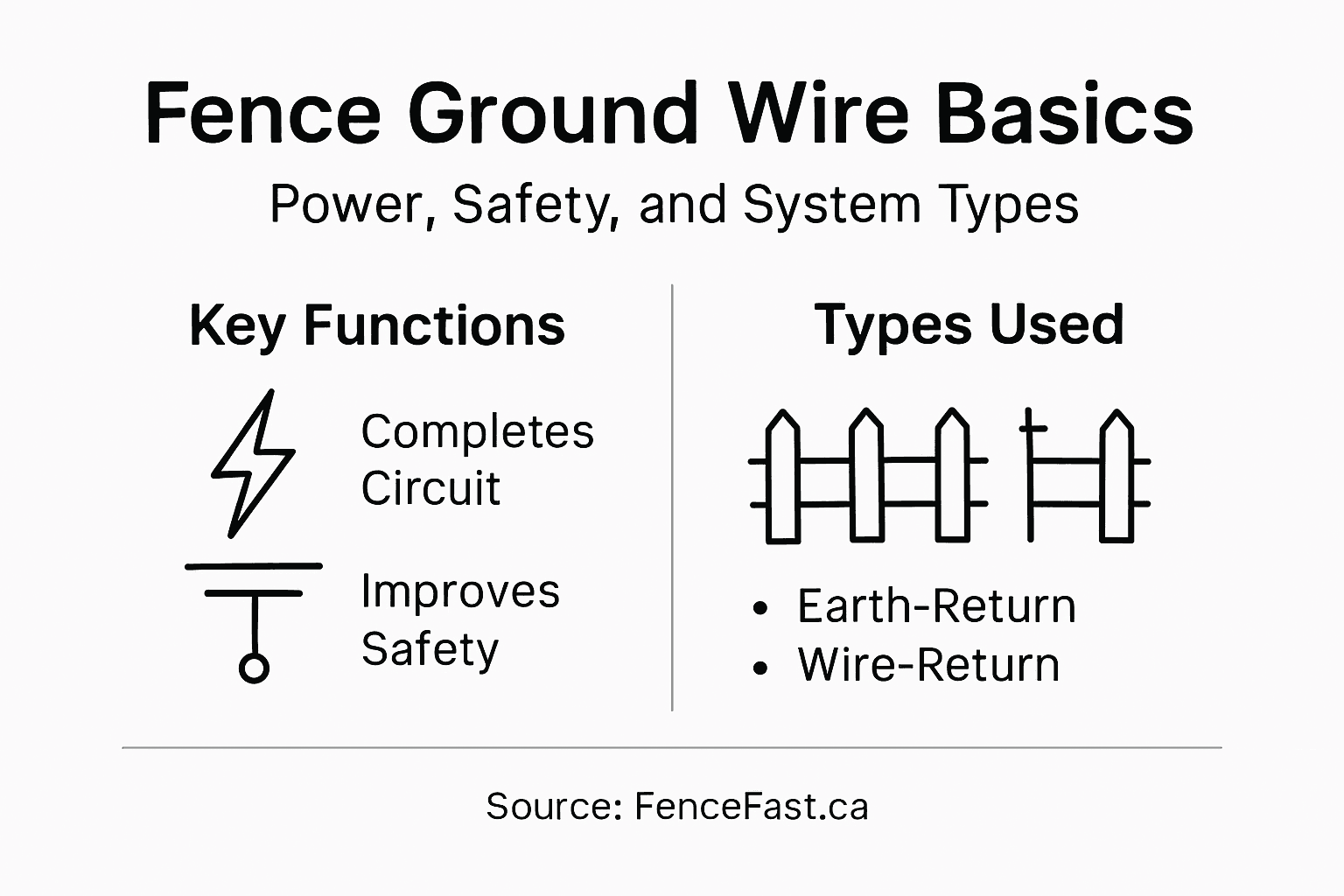
Electric fence ground systems employ two primary configuration approaches: earth-return and wire-return systems, each designed to address specific environmental and agricultural challenges. Ground wire installation techniques vary based on soil conditions, terrain, and livestock management requirements.
In earth-return systems, multiple galvanized steel ground rods are strategically placed in moist soil to create an effective electrical circuit. These systems work best in regions with consistent soil moisture and good ground conductivity. Conversely, wire-return systems become crucial in areas with poor soil conditions, utilizing additional wire strands to complete the electrical circuit when traditional ground rod methods prove ineffective.
Here is a comparison of earth-return and wire-return electric fence grounding systems:
| Aspect | Earth-Return System | Wire-Return System |
|---|---|---|
| Ideal Soil Condition | Moist soil with high conductivity | Dry, sandy, or rocky locations |
| Primary Application | General livestock containment | Areas with poor soil conditions |
| Number of Ground Rods | Typically multiple, spaced apart | May require fewer rods, uses extra wires |
| Key Benefit | Simple design, lower setup cost | Maintains performance in challenging soils |
| Limitation | Reduced effectiveness in dry conditions | More complex installation |
Ground wire materials play a critical role in system performance and longevity:
- Galvanized steel wire: Standard option for most applications
- Copper wire: Recommended for high-joule energizers
- Zinc-coated steel: Provides enhanced corrosion resistance
- Stainless steel: Ideal for extreme environmental conditions
Pro tip: Select ground wire materials matching your specific environmental conditions and energizer specifications to ensure maximum electrical conductivity and system reliability.
How Ground Wire Influences Fence Performance
The ground wire serves as the critical backbone of electric fence performance, directly impacting the system’s ability to deliver consistent and effective livestock containment. Electric fence ground systems determine the strength and reliability of electrical shock delivery, making proper installation and maintenance essential for ranchers and farmers.
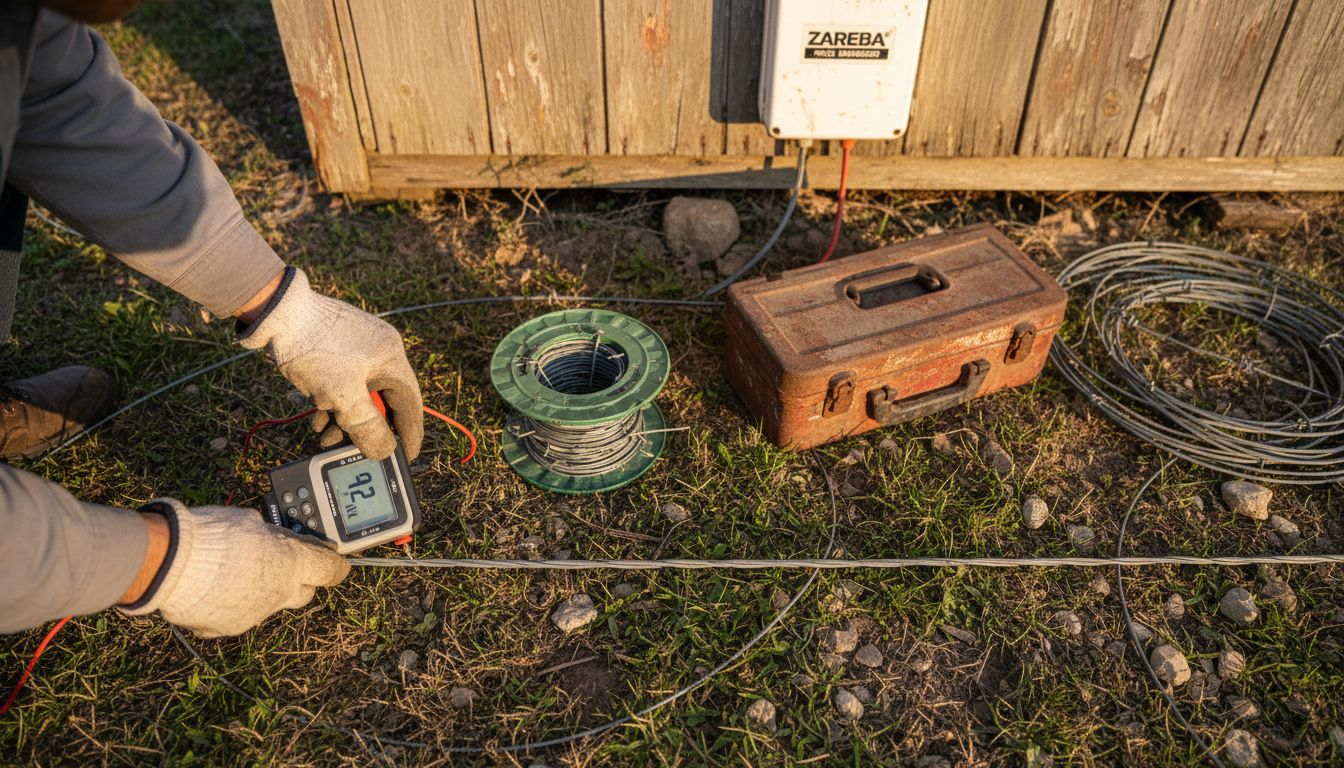
A weak or improperly configured ground wire can dramatically reduce fence effectiveness, leading to potential livestock escape scenarios and compromised security. Resistance in the ground wire system creates inefficient current flow, resulting in diminished shock strength that may fail to deter animals from crossing boundary lines. The ground wire must maintain low electrical resistance, ensuring that maximum current returns to the energizer and creates a consistent deterrent barrier.
Key factors influencing ground wire performance include:
- Wire material conductivity
- Connection quality between ground rods and energizer
- Soil moisture and mineral content
- Number and spacing of ground rods
- Overall system design and environmental conditions
Pro tip: Test your ground wire system’s performance annually using a dedicated ground rod tester to ensure optimal electrical conductivity and shock delivery effectiveness.
Correct Installation Steps and Best Practices
Installing an electric fence ground wire requires precision and careful attention to environmental conditions. Electric fence grounding techniques demand strategic placement and methodical implementation to ensure maximum electrical conductivity and system reliability.
The ground rod installation process involves several critical steps. Begin by selecting a location with consistently moist soil, avoiding areas near other electrical grounds to prevent interference. Drive galvanized steel ground rods at least six feet deep, spacing multiple rods a minimum of 10 feet apart to reduce electrical resistance. Ensure each rod maintains direct contact with damp soil and use heavy-gauge galvanized or copper wire to connect the rods, creating a continuous and low-resistance electrical pathway.
Key installation best practices include:
- Use corrosion-resistant wire and clamps
- Protect electrical connections from moisture and oxidation
- Verify rod depth and soil moisture content
- Maintain at least three ground rods for complex or lengthy fence systems
- Separate ground wire from other electrical infrastructure
- Test ground system resistance periodically
Pro tip: Invest in a professional ground resistance tester to accurately measure your electric fence ground wire system’s performance and identify potential weak points before they compromise livestock safety.
Common Grounding Mistakes on Canadian Farms
Electric fence grounding systems present unique challenges for Canadian farmers, with environmental conditions and seasonal variations significantly impacting performance. Ground rod installation errors can compromise livestock containment and fence reliability across diverse agricultural landscapes.
The most prevalent grounding mistakes involve improper rod placement and inadequate system design. Farmers often fail to account for soil moisture variations, particularly in regions experiencing significant temperature fluctuations. Installing ground rods too close to building foundations, using insufficient rod depth, or neglecting proper wire connections can dramatically reduce electrical conductivity. Cold and dry soil conditions in provinces like Alberta and Saskatchewan pose additional challenges, requiring more sophisticated grounding strategies.
Critical grounding errors to avoid include:
- Placing ground rods near other electrical systems
- Using undersized or corroded ground wire
- Relying on a single ground rod for extensive fence systems
- Neglecting seasonal soil moisture changes
- Connecting energizer ground to household electrical grounds
- Failing to test ground system resistance regularly
Pro tip: Conduct a comprehensive ground resistance test twice annually, focusing on spring and fall, to ensure your electric fence maintains optimal performance across changing Canadian agricultural conditions.
Troubleshooting, Maintenance, and Seasonal Tips
Maintaining an electric fence ground wire system requires systematic attention to performance and environmental variables that can compromise electrical conductivity. Electric fence maintenance protocols demand regular testing and strategic seasonal adaptations to ensure consistent livestock management and fence effectiveness.
Seasonal maintenance involves understanding how temperature, moisture, and soil conditions impact ground wire performance. During winter months, frozen ground can significantly reduce electrical conductivity, requiring farmers to implement alternative grounding strategies. Canadian agricultural regions with extreme temperature variations demand more sophisticated approaches, such as adding additional ground rods or transitioning to wire-return systems when traditional earth-grounding becomes challenging.
Key maintenance and troubleshooting strategies include:
Here is a summary table outlining key seasonal maintenance priorities for electric fence ground wire systems:
| Season | Main Threat | Recommended Action |
|---|---|---|
| Spring | Wet/muddy ground | Check for corrosion and connection issues |
| Summer | Dry soil | Add water near rods, test conductivity regularly |
| Fall | Cooling soil | Inspect wires and clamps ahead of winter |
| Winter | Frozen ground | Add rods in unfrozen areas, switch to wire-return |
- Conduct voltage and resistance tests quarterly
- Inspect ground rods for corrosion and proper embedding
- Verify clamp tightness and connection integrity
- Monitor soil moisture levels during seasonal transitions
- Replace damaged or worn ground wires immediately
- Adjust ground rod configuration based on environmental conditions
Pro tip: Create a seasonal maintenance log to track ground wire system performance, documenting resistance measurements, environmental conditions, and any modifications made throughout the year.
Ensure Reliable Power and Safety with Expert Electric Fence Ground Wire Solutions
Maintaining a strong and efficient electric fence ground wire system is essential for livestock containment and farm safety. If you have struggled with poor grounding, fluctuating shock effectiveness, or seasonal challenges like frozen soil, you are not alone. The article highlights how selecting the right ground rods, wire materials, and installation techniques is critical for consistent fence performance across Canadian farms. Avoid common grounding mistakes by using corrosion-resistant materials and testing your system regularly to keep your electric fence delivering a powerful and reliable shock.

At FenceFast.ca, we specialize in providing the exact fencing components and electric fencing supplies you need to build or upgrade a dependable ground wire system. From galvanized and copper wire options to ground rods and connectors designed for Canadian agricultural conditions, our products help you overcome environmental challenges and maintain livestock security. Start improving your electric fence today by exploring our wide selection and expert resources. Visit FenceFast.ca now and get the tools needed to create a safer, more effective fencing system. Don’t wait until system failure puts your livestock at risk.
Frequently Asked Questions
What is the purpose of an electric fence ground wire?
An electric fence ground wire provides a return pathway for electrical current, completing the circuit by allowing current to flow through the ground back to the energizer, ensuring effective livestock containment.
How do I improve the effectiveness of my electric fence ground wire system?
To enhance the effectiveness, ensure you install ground rods at least 6 feet deep in moist soil, use corrosion-resistant materials, and maintain a minimum spacing of 10 feet between multiple ground rods for optimal conductivity.
What are the differences between earth-return and wire-return grounding systems?
Earth-return systems use multiple ground rods in moist soil and work well in high conductivity areas, while wire-return systems use additional wires to establish a circuit in locations with poor soil conditions, ensuring functionality where ground rods alone may be ineffective.
How often should I test my electric fence ground wire system?
It’s recommended to test your ground wire system’s performance at least once a year, using a dedicated ground rod tester, to ensure optimal electrical conductivity and shock delivery effectiveness.

