

Most Canadian farmers know that efficient animal control can mean the difference between profit and loss. Portable hot wire fencing, originally popularized by American ranchers, has quickly become a trusted solution for flexible containment on Canadian properties. With studies showing that electric containment reduces livestock escapes by up to 80 percent, these innovative systems offer the versatility and security every modern operation demands.
Table of Contents
- Portable Hot Wire Fence Fundamentals
- Types and Key Features Explained
- Installation and Setup Best Practices
- Typical Uses and Livestock Applications
- Risks, Limitations, and Maintenance Needs
- Comparing Portable Hot Wire Fence Alternatives
Key Takeaways
| Point | Details |
|---|---|
| Flexible Solution | Portable hot wire fencing offers a versatile approach to livestock management, enabling farmers to adapt boundaries according to their needs. |
| Critical Installation | Proper planning and execution during installation are paramount for ensuring effective containment and performance. |
| Regular Maintenance | Routine checks and upkeep are essential to prevent failures and maintain electrical effectiveness. |
| Diverse Options | Various types of portable fencing systems cater to different livestock and terrain, allowing for customized solutions. |
Portable Hot Wire Fence Fundamentals
Portable hot wire fencing represents a flexible and efficient livestock management solution for Canadian farmers seeking adaptable perimeter control. These systems leverage electrical pulses to create psychological barriers that effectively contain and direct livestock movement without requiring permanent infrastructure. Electric fence physics demonstrate how low-amperage, high-voltage electrical currents create a momentary deterrent that trains animals to respect boundary lines.
The core components of a portable hot wire fence include an energizer (power source), conducting wire, support posts, and a robust grounding system. Modern energizers convert standard electrical current into short, intermittent pulses that deliver a sharp but safe shock when an animal contacts the wire. These pulses typically last less than one-thousandth of a second, ensuring livestock experience a startling but non-injurious electrical sensation that quickly teaches boundary respect.
Successful portable hot wire fence implementation requires strategic planning and understanding of key technical considerations. Farmers must evaluate factors like terrain, livestock species, voltage requirements, and potential power sources (battery, solar, or electrical grid). Proper grounding remains critical - a well-designed ground system ensures consistent electrical circuit completion and maximizes fence effectiveness across varying environmental conditions.
Pro tip: Before installing your portable hot wire fence, conduct a comprehensive perimeter walk to identify potential interference sources like metal objects or dense vegetation that could disrupt electrical conductivity.
Types and Key Features Explained
Portable hot wire fencing systems come in multiple configurations tailored to specific livestock management needs, with portable livestock fence variations offering unique benefits for Canadian agricultural operations. The primary types include polywire fences, electric netting, tape fencing, and rope-style electric barriers, each designed to address different terrain challenges and animal containment requirements.
Polywire fences represent the most basic and versatile portable electric fence option. Constructed from lightweight synthetic materials interwoven with metallic conductors, these fences provide excellent flexibility and rapid deployment. Electric netting offers more comprehensive coverage, featuring a grid-like design that creates a complete physical and electrical barrier ideal for smaller livestock like sheep, goats, and poultry. Tape and rope fencing provide enhanced visibility and durability, making them particularly effective for larger animals such as cattle and horses.
Key features to consider when selecting a portable hot wire fence include conductivity, visibility, tensile strength, and ease of installation. Modern systems incorporate advanced materials like polyethylene and stainless steel conductors that resist environmental degradation and maintain consistent electrical performance. Visibility markers, tension springs, and quick-connect systems have revolutionized portable fencing, allowing farmers to quickly establish secure boundaries across diverse agricultural landscapes.
Pro tip: Select portable hot wire fence materials that match your specific livestock species and terrain conditions, ensuring optimal conductivity and durability for your unique agricultural environment.
Installation and Setup Best Practices
Successful portable hot wire fence installation requires meticulous planning and precision. Electric fencing setup techniques emphasize the critical importance of strategic post placement, wire height, and systematic deployment to ensure maximum livestock containment and safety. Canadian farmers must consider terrain, animal species, and specific agricultural objectives when designing their portable fencing system.
The installation process begins with selecting appropriate posts and spacing them consistently. Temporary fence posts should be placed approximately 30-50 feet apart, depending on terrain complexity and wire tension requirements. Farmers must ensure posts are sturdy, vertically aligned, and capable of maintaining wire tension. Insulators play a crucial role in preventing electrical current grounding, so selecting high-quality, weather-resistant insulators becomes paramount for maintaining fence effectiveness across varying environmental conditions.
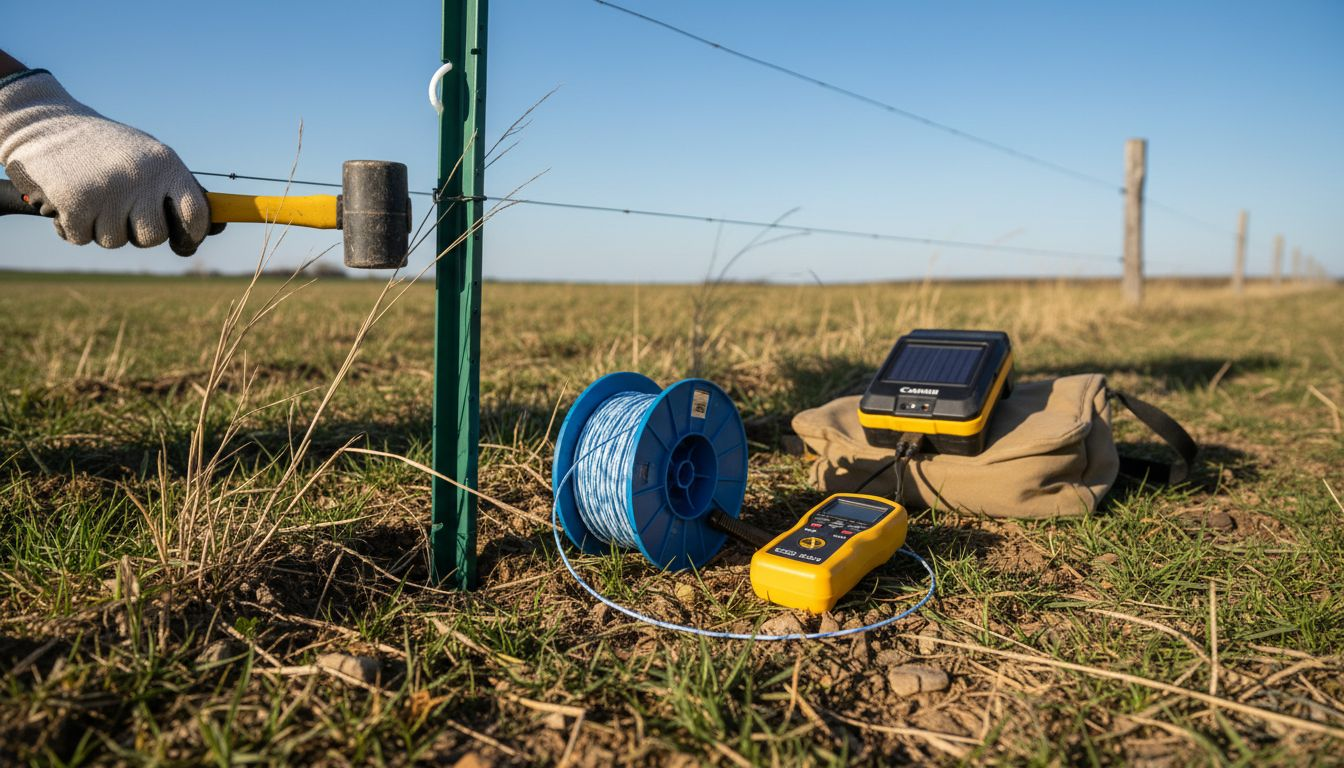
Grounding represents the most critical technical aspect of portable hot wire fence installation. A properly designed grounding system typically requires three grounding rods placed 10 feet apart and driven at least 6-8 feet into the ground. Soil composition and moisture levels directly impact grounding effectiveness, necessitating careful site selection and potentially supplementing with additional grounding mechanisms in dry or rocky terrain. Farmers should also implement clear marking systems and create deliberate entry/exit points with specialized gate handles to manage livestock movement safely and efficiently.
Pro tip: Test your portable hot wire fence’s electrical continuity and grounding effectiveness using a dedicated voltage tester before introducing livestock to the enclosed area.
Typical Uses and Livestock Applications
Portable hot wire fencing serves multiple critical functions across different livestock management scenarios. Portable fencing applications demonstrate remarkable versatility in supporting rotational grazing, temporary containment, and strategic pasture management for various agricultural species. These flexible systems enable farmers to create dynamic, adaptable boundaries that can be quickly reconfigured to meet changing herd management needs.
For cattle operations, portable hot wire fences excel in creating subdivided grazing zones that promote pasture rotation and prevent overgrazing. Sheep and goat farmers utilize these systems to establish temporary enclosures for breeding, lambing, or kidding areas, ensuring controlled and safe environments. Pig producers find portable fencing particularly useful for managing breeding groups, quarantine zones, and protecting sensitive young stock from potential environmental risks.
Beyond traditional livestock management, portable hot wire fences offer unique solutions for specialized agricultural scenarios. Poultry farmers can create mobile chicken runs that protect birds from predators while allowing controlled access to fresh grazing areas. Equine operations leverage these systems for creating temporary paddocks, training enclosures, and managing horse movement during breeding or medical treatments. The adaptability of portable hot wire fencing makes it an indispensable tool for farmers seeking efficient, cost-effective livestock control strategies.
Pro tip: Regularly inspect and adjust your portable hot wire fence setup to match seasonal changes and evolving livestock management requirements.
Risks, Limitations, and Maintenance Needs
Portable hot wire fencing, while versatile and effective, presents several critical risks and maintenance challenges that farmers must carefully manage. Livestock fencing maintenance considerations highlight the importance of proactive monitoring and systematic upkeep to ensure reliable animal containment and system performance. Electrical interference, vegetation growth, and environmental degradation can compromise fence functionality if not addressed consistently.
Weather conditions pose significant challenges for portable hot wire fencing systems. Extreme temperatures, heavy precipitation, and wind can cause electrical shorts, reduce wire tension, and accelerate equipment deterioration. Vegetation growth near fence lines can create additional electrical leakage points, potentially reducing shock effectiveness and creating gaps in livestock containment. Farmers must develop regular inspection routines that include clearing vegetation, checking wire tension, testing electrical conductivity, and replacing damaged components before they become critical failure points.

Legal and safety considerations represent another crucial aspect of portable hot wire fence management. Farmers must ensure fence installations comply with local agricultural regulations, maintain clear warning signage, and implement safeguards that prevent accidental human or animal contact. Regular maintenance should include comprehensive system checks, grounding verification, and voltage testing to guarantee consistent performance. Equipment vulnerabilities such as corroded connections, damaged insulators, and power supply inconsistencies can transform a protective barrier into a potential safety hazard if left unchecked.
Below is a summary of major risks and maintenance factors for portable hot wire fences:
| Risk or Challenge | Typical Cause | Prevention Strategy |
|---|---|---|
| Electrical shorts | Wet weather or debris | Regular checks, insulation upkeep |
| Vegetation interference | Grass and weeds touching wire | Clear growth monthly |
| Equipment wear | Exposure to elements | Inspect and replace as needed |
| Grounding issues | Dry or rocky soil | Use additional ground rods |
Pro tip: Develop a quarterly maintenance checklist that systematically documents fence condition, electrical performance, and potential repair needs to prevent unexpected system failures.
Comparing Portable Hot Wire Fence Alternatives
Portable fencing alternatives offer Canadian farmers diverse solutions for livestock management, each with unique characteristics tailored to specific agricultural needs. The primary options include electric netting, polywire, tape fencing, and movable panel systems, each presenting distinct advantages and limitations that farmers must carefully evaluate based on their specific livestock and terrain requirements.
Electric netting provides comprehensive containment with a grid-like structure, making it ideal for smaller livestock like sheep, goats, and poultry. Polywire represents the most lightweight and economical option, offering quick deployment and high flexibility for temporary paddocks and rotational grazing scenarios. Tape fencing delivers enhanced visibility and durability, particularly beneficial for larger animals like cattle and horses. Portable panel systems, while more expensive, offer robust physical barriers that can be quickly repositioned and provide maximum structural integrity for high-risk containment situations.
Here is a quick reference comparing the key portable hot wire fencing options:
| Fence Type | Ideal Livestock | Visibility Level | Setup Flexibility |
|---|---|---|---|
| Polywire | Cattle, sheep | Moderate | Highly portable |
| Electric Netting | Poultry, sheep, goats | High | Rapid deployment |
| Tape Fence | Horses, cattle | Very high | Simple installation |
| Rope Fence | Horses, cattle | High | Suitable for larger areas |
The selection process demands careful consideration of multiple factors including livestock species, terrain complexity, budget constraints, and intended management strategy. Farmers must assess electrical conductivity, material durability, ease of installation, and long-term maintenance requirements. Key differentiators include wire thickness, conductor quality, insulator design, and compatibility with existing farm infrastructure. Some systems excel in temporary applications, while others provide more permanent flexible solutions that can adapt to changing agricultural management needs.
Pro tip: Conduct a comprehensive farm assessment of your specific livestock and terrain requirements before investing in portable hot wire fencing to ensure optimal system selection.
Take Control of Your Livestock with Reliable Portable Hot Wire Fence Solutions
Managing livestock effectively demands fencing systems that adapt to your specific needs. Whether you face challenges like variable terrain, electrical grounding issues, or the need for rapid setup and reconfiguration, having access to high-quality portable hot wire fencing components and accessories is essential. Our selection at FenceFast.ca supports every step of your project with durable energizers, insulators, wires, and grounding rods designed to maximize fence efficiency and animal safety.
Start building your ideal portable fencing system today by exploring our wide range of electric fencing products. Act now to enhance containment, ensure animal welfare, and simplify maintenance with expert-approved supplies available for quick shipping across Canada. Visit https://fencefast.ca and discover solutions that keep your livestock secure and your operation running smoothly.
Frequently Asked Questions
What are the key components of a portable hot wire fence?
The essential components include an energizer (power source), conducting wire, support posts, and a grounding system that ensures consistent electrical circuit completion.
How do I properly install a portable hot wire fence?
Begin by selecting appropriate posts and spacing them 30-50 feet apart. Ensure sturdy post alignment, install high-quality insulators, and create a robust grounding system with at least three grounding rods.
What types of livestock is portable hot wire fencing suitable for?
Portable hot wire fencing is ideal for various livestock, including cattle, sheep, goats, pigs, and poultry. Each type of fencing offers specific advantages based on the size and behavior of the animals.
How can I maintain my portable hot wire fence?
Regular maintenance should include checking wire tension, inspecting for vegetation interference, verifying grounding effectiveness, and conducting voltage tests to ensure proper electrical performance.

