

Shifting pastures and changing herd sizes can leave Canadian livestock farmers searching for new ways to contain and protect their animals without the hassle of heavy, fixed fencing. Efficient pasture rotation and animal safety are more challenging on diverse rural terrain, driving many to explore flexible options. With innovations like virtual fencing systems using GPS-enabled collars, farmers can now manage cattle and horses with greater precision and adaptability than ever before.
Table of Contents
- Portable Livestock Fencing Defined and Debunked
- Main Types and Core Features Compared
- How Portable Fencing Systems Work
- Applications for Cattle and Horse Pastures
- Key Setup Requirements and Moving Tips
- Cost Factors and Common Mistakes to Avoid
Key Takeaways
| Point | Details |
|---|---|
| Portable Livestock Fencing Offers Flexibility | These systems allow Canadian farmers to efficiently manage pasture rotations without the constraints of traditional fencing. |
| Modern Technologies Enhance Management | Innovations like virtual fencing provide precise boundary control with minimal physical infrastructure, optimizing animal movement. |
| Critical Setup and Training are Essential | Proper installation and training ensure successful adaptation of livestock to new fencing technologies and minimize potential stress. |
| Cost Management is Key | Farmers should account for both initial investments and long-term operational expenses when implementing fencing solutions. |
Portable Livestock Fencing Defined and Debunked
Portable livestock fencing represents a flexible agricultural solution designed to help Canadian farmers efficiently manage pasture rotation and animal containment. Unlike traditional permanent fencing, these systems offer unprecedented mobility and adaptability for managing livestock across varied terrain and changing agricultural needs.
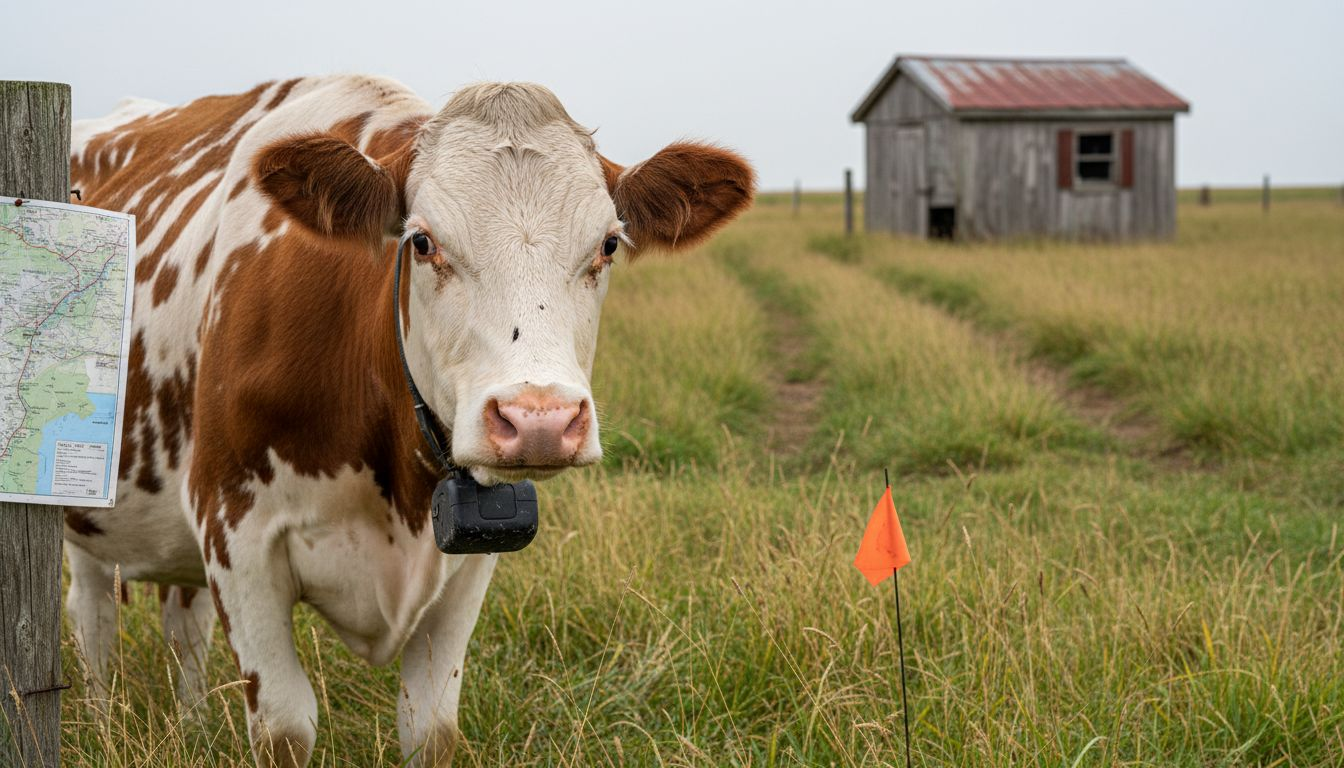
At its core, portable livestock fencing encompasses several technological approaches, ranging from traditional movable panels to advanced electronic boundary systems. Modern farmers now have access to innovative solutions that go far beyond fixed wire installations, including virtual fencing technologies that use GPS-enabled collars to create invisible boundaries without physical infrastructure.
The primary advantages of portable fencing systems include:
- Quick and easy installation
- Minimal ground disturbance
- Ability to rapidly reconfigure pasture layouts
- Reduced long-term infrastructure costs
- Enhanced grazing management flexibility
While traditional fencing methods remain reliable, emerging technologies like virtual fencing are revolutionizing livestock management. These systems use electronic collars that deliver auditory cues and mild electrical signals to guide animals within designated boundaries, offering unprecedented precision in pasture control.
Pro tip: Always test your portable fencing system thoroughly before full deployment to ensure proper functionality and animal safety.
Main Types and Core Features Compared
Portable livestock fencing technologies have evolved dramatically, offering Canadian farmers multiple options for managing animal boundaries with unprecedented flexibility. Virtual fencing systems present increasingly sophisticated approaches that go beyond traditional fixed perimeters, providing innovative solutions for pasture management.
Portable Fencing Categories include several distinct technological approaches:
- Traditional movable panel systems
- Temporary electric wire configurations
- GPS-enabled electronic collar boundaries
- Dynamic virtual boundary technologies
- Modular fence panel solutions
These systems differ significantly in their technological complexity and implementation strategies. Modern virtual fencing technologies, for instance, can be classified into three primary stimuli types: auditory-only, electrical-only, and combined stimulus systems. Each approach offers unique advantages for livestock management, with varying levels of animal stress and operational effectiveness.
Here’s a side-by-side look at major portable livestock fencing approaches for Canadian farmers:
| System Type | Typical Use Cases | Technological Complexity | Mobility/Flexibility |
|---|---|---|---|
| Movable Panels | Short-term confinement, easy relocation | Low, manual setup | High, panels can be repositioned |
| Temporary Electric Wire | Rotational grazing, dividing fields | Moderate, requires energizers | High, wires are lightweight and adjustable |
| GPS Virtual Fencing | Large pastures, sensitive zones | High, uses software and sensors | Extremely high, boundaries redefined digitally |
| Modular Panel Solutions | Seasonal paddocks, mixed-species | Moderate, semi-automated | Moderate, panels assembled/disassembled |
The core features of advanced portable fencing systems typically encompass:
- Precise GPS location tracking
- Real-time animal movement monitoring
- Flexible boundary configuration
- Low-impact installation requirements
- Minimal infrastructure investment
- Remote management capabilities
Pro tip: Carefully evaluate your specific livestock species and pasture conditions before selecting a portable fencing technology to ensure optimal performance and animal welfare.
How Portable Fencing Systems Work
Portable fencing technologies have revolutionized livestock management by offering dynamic and flexible boundary control for Canadian farmers. Virtual fencing systems utilize sophisticated GPS technologies to create intelligent, adaptable animal containment solutions that transcend traditional physical barriers.
Key Operational Components of modern portable fencing include:
- GPS-enabled neck collars
- Advanced tracking software
- Remote management interfaces
- Boundary definition algorithms
- Audio and electrical stimuli mechanisms
The fundamental mechanism involves precise electronic boundary creation and animal guidance. When livestock approach a virtual boundary, they first receive auditory warnings through their GPS collar. If the animal continues to move toward the restricted area, the system delivers a mild electrical pulse, encouraging the animal to retreat and reinforce the invisible perimeter.
These intelligent systems offer remarkable advantages for pasture management:
- Instantaneous boundary reconfiguration
- Reduced physical infrastructure requirements
- Minimal landscape disruption
- Precise animal movement tracking
- Enhanced grazing pattern optimization
- Lower long-term maintenance costs
Pro tip: Invest time in proper collar training to ensure your livestock quickly adapts to the virtual fencing technology and minimizes stress.
Applications for Cattle and Horse Pastures
Portable fencing technologies have transformed livestock management, offering Canadian farmers unprecedented flexibility in pasture control. Virtual fencing systems support sustainable grazing practices by providing dynamic boundary management for both cattle and horses.
Specific Applications for different livestock include:
- Beef cattle rotational grazing
- Dairy herd pasture management
- Horse paddock boundary control
- Sensitive ecosystem protection
- Precision grazing distribution
- Integrated crop-livestock systems
The technology adapts uniquely to different animal behaviors and farm requirements. For cattle, virtual fencing enables precise grazing zone management, allowing farmers to control herd movement with minimal stress. Horses benefit from more nuanced boundary control, reducing the risk of injury from traditional fixed fencing and providing more dynamic pasture access.
Key benefits for livestock management encompass:
- Reduced physical infrastructure costs
- Enhanced pasture biodiversity
- Minimized landscape disruption
- Improved grazing pattern optimization
- Increased animal welfare monitoring
- Flexible boundary reconfiguration
Pro tip: Introduce virtual fencing technologies gradually, allowing your livestock time to adapt to the new boundary management system through consistent training and positive reinforcement.
Key Setup Requirements and Moving Tips
Successful implementation of portable livestock fencing requires strategic planning and careful execution. Proper collar setup involves precise calibration techniques that ensure accurate boundary management and animal comfort.
Critical Setup Requirements include:
- Accurate GPS collar fitting
- Robust communication network coverage
- Comprehensive animal training protocols
- Software boundary zone configuration
- Battery life management
- Terrain compatibility assessment
The initial setup process demands meticulous attention to detail. Farmers must ensure each collar fits comfortably and maintains consistent sensor contact, while simultaneously calibrating virtual boundary zones through GPS-enabled software interfaces. Progressive training helps livestock understand and respond to audio cues, minimizing potential stress during boundary transitions.
Key considerations for moving portable fencing systems encompass:
- Gradual boundary adjustments
- Continuous signal strength monitoring
- Anticipating terrain interference
- Regular collar battery checks
- Backup communication strategies
- Monitoring animal adaptation responses
Pro tip: Create a comprehensive training log documenting each animal’s response to virtual fencing to refine your approach and minimize potential adaptation challenges.
Cost Factors and Common Mistakes to Avoid
Implementing portable livestock fencing requires careful financial planning and strategic decision-making. Understanding comprehensive cost considerations is crucial for Canadian farmers seeking to optimize their pasture management technologies.
Primary Cost Components include:
- Initial hardware investment
- GPS collar purchases
- Software subscription fees
- Maintenance and replacement expenses
- Training program development
- Ongoing technical support
The financial landscape of portable fencing technologies involves more than simple equipment purchases. Farmers must account for long-term operational expenses, including battery replacements, potential system upgrades, and continuous staff training to ensure effective implementation and minimize potential technological limitations.
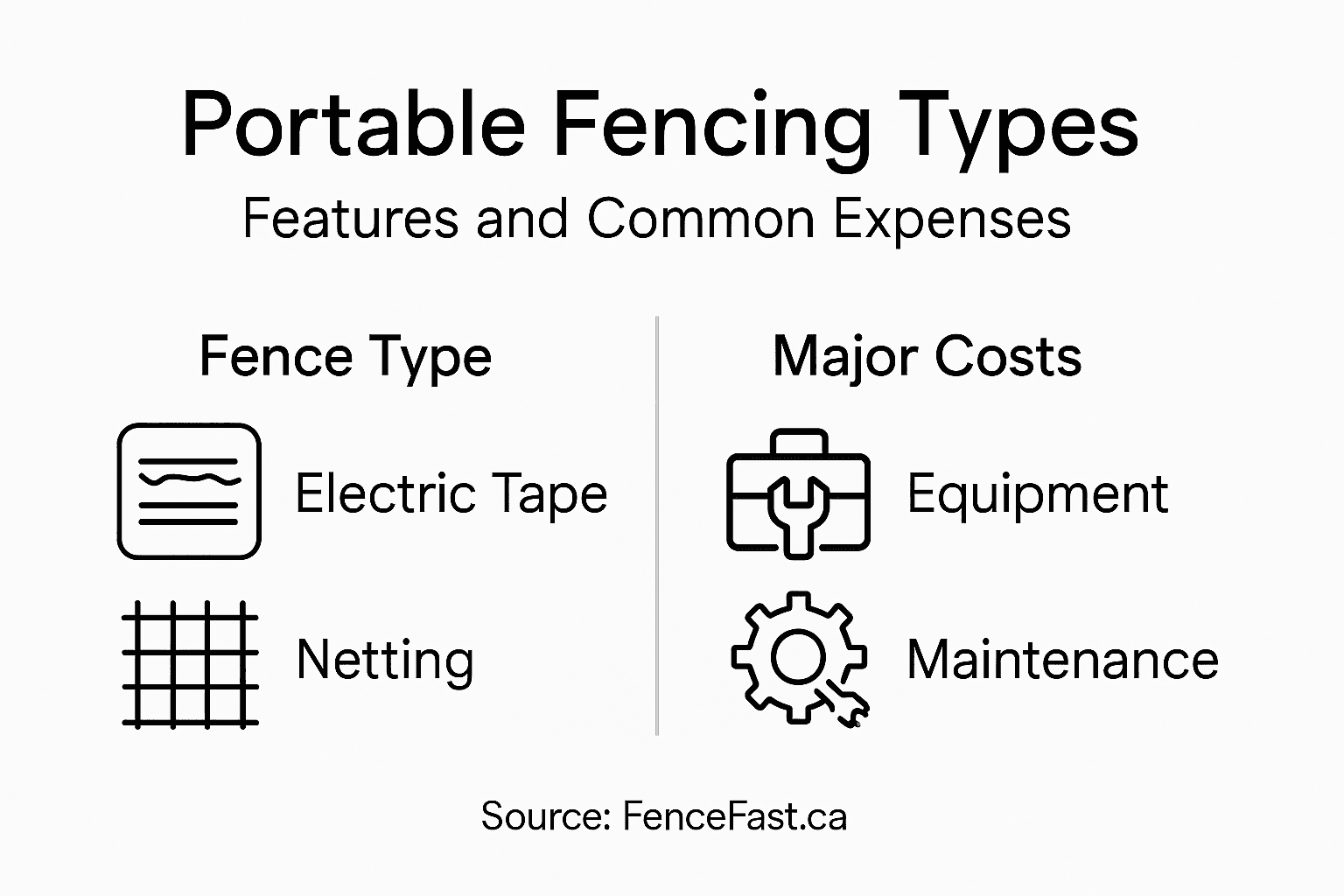
Compare these financial and planning factors when investing in portable fencing:
| Cost Factor | Description | Impact on Total Budget |
|---|---|---|
| Hardware Investment | Initial purchase of equipment | Significant upfront cost |
| Subscription Fees | Ongoing software or service costs | Affects yearly expenses |
| Maintenance & Training | Replacement parts, staff education | Raises long-term outlays |
| Connectivity & Batteries | Network plans, power supplies | Can add unexpected costs |
Common mistakes that can significantly increase overall costs involve:
- Underestimating training time requirements
- Ignoring individual animal adaptation challenges
- Poor boundary planning
- Insufficient system compatibility assessment
- Neglecting regular maintenance protocols
- Overlooking potential connectivity issues
Pro tip: Create a detailed budget spreadsheet that includes both upfront and projected long-term expenses to accurately assess the total financial investment in portable fencing technologies.
Upgrade Your Pasture Management with Portable Fencing Solutions
Managing livestock boundaries safely and flexibly is crucial for every Canadian farmer seeking effective pasture rotation and animal containment. If you face challenges like frequent fence relocation, minimizing landscape disruption, or adapting to advanced technologies such as GPS virtual fencing, FenceFast.ca offers tailored solutions to meet your needs. Explore our selection of electric fencing systems, fencing components, and livestock management tools that simplify installation and enhance mobility while prioritizing animal welfare and operational efficiency.

Discover how you can take full control of your pasture with reliable products and expert advice at FenceFast.ca. Don’t wait to revolutionize your livestock fencing setup. Visit us now to find equipment designed for durability, flexibility, and ease of use to support safer pasture management today.
Frequently Asked Questions
What are the main benefits of portable livestock fencing?
Portable livestock fencing offers quick installation, minimal ground disturbance, enhanced flexibility in pasture layouts, and reduced long-term infrastructure costs, making it an efficient solution for livestock management.
How does virtual fencing work for livestock management?
Virtual fencing uses GPS-enabled collars to establish invisible boundaries. Livestock receive auditory warnings as they approach these boundaries, and if they continue, a mild electrical pulse encourages them to retreat.
What should I consider when selecting a portable fencing system?
Consider the livestock species, pasture conditions, installation requirements, and the system’s technological complexity to ensure optimal performance and animal welfare.
What are common mistakes to avoid when implementing portable livestock fencing?
Common mistakes include underestimating training time, ignoring individual animal behavior, poor boundary planning, and not maintaining regular maintenance protocols.

