

Most Canadian ranch operations can increase pasture productivity by up to 35 percent with well-designed rotational grazing fencing. As cattle numbers rise and American management techniques grow popular, Canadian ranchers find themselves needing smart solutions that balance cost, flexibility, and animal welfare. This guide breaks down proven fencing fundamentals for rotational grazing, highlighting clear strategies to strengthen pasture health and simplify day-to-day livestock control.
Table of Contents
- Rotational Grazing Fencing Fundamentals Explained
- Types Of Fencing For Rotational Grazing Systems
- Designing Paddocks And Managing Rotations
- Cost, Labor, And Safety Considerations
- Common Mistakes And Troubleshooting Tips
Key Takeaways
| Point | Details |
|---|---|
| Effective Fencing Infrastructure | Establish a combination of permanent, semi-permanent, and temporary fencing to optimize flexibility and durability in rotational grazing systems. |
| Paddock Design and Management | Design paddocks to support grazing followed by adequate recovery periods to enhance pasture health and animal nutrition. |
| Cost and Labor Considerations | Understand the initial investment and ongoing labor needed for rotational grazing to maximize long-term pasture productivity. |
| Common Mistakes | Avoid poorly designed paddocks and inadequate water distribution to prevent grazing inefficiencies and livestock stress. |
Rotational grazing fencing fundamentals explained
Rotational grazing is a strategic livestock management approach that divides pastureland into multiple sections or paddocks to optimize grassland health and animal productivity. By systematically moving livestock between pasture sections, ranchers can prevent overgrazing, promote soil regeneration, and enhance overall pasture ecosystem sustainability.
A fundamental rotational grazing system requires carefully planned fencing infrastructure that allows flexible movement between designated grazing areas. Typically, this involves establishing permanent boundary fences around the total pasture area, with internal temporary or semi-permanent fencing enabling precise livestock subdivision. Wire mesh fencing reinforced with electric or barbed wire strands provides a robust solution for containing cattle while creating clear pasture management boundaries.
The core principles of effective rotational grazing fencing include strategic paddock design, uniform water distribution, and flexible movement capabilities. Paddocks should be sized to match herd requirements and grazing duration, ensuring animals have sufficient nutrition while preventing landscape degradation. Water troughs strategically placed throughout the pasture guarantee livestock hydration during rotation cycles, minimizing stress and maintaining animal health.
Pro tip: When designing rotational grazing fencing, plan for approximately 20-30% more paddock space than your current herd size to accommodate future growth and provide additional resting areas for pasture regeneration.
Types of fencing for rotational grazing systems
Rotational grazing systems require a strategic approach to fencing that balances flexibility, durability, and cost-effectiveness. Farmers typically utilize three primary fencing categories: permanent, semi-permanent, and temporary fencing solutions, each serving distinct purposes in pasture management.
Permanent fencing forms the foundational boundary of a grazing system, typically constructed with robust materials like wooden posts, sturdy wire mesh, or metal panels. These structures define the overall pasture perimeter and provide long-term containment for livestock. Semi-permanent fencing offers more internal flexibility, often utilizing rigid PVC posts with electrified lines that allow ranchers to create precise paddock subdivisions while maintaining structural integrity.
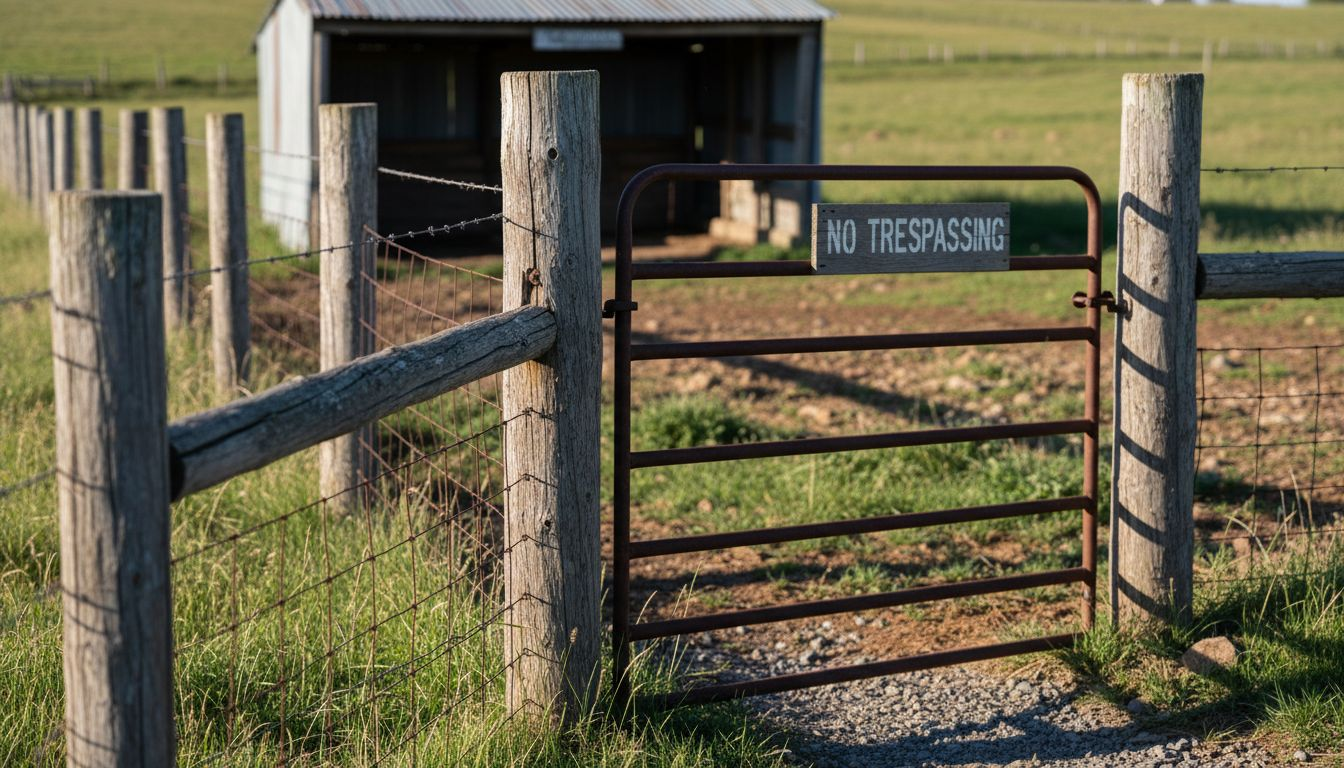
Temporary fencing plays a critical role in dynamic pasture management, with polywire and polytape emerging as popular options for quick paddock reconfiguration. Polywire, an electrified plastic interwoven with metal filaments, provides an affordable and lightweight solution for frequent livestock movement. Polytape offers enhanced visibility and slightly more durability, making it ideal for ranchers seeking a balance between performance and ease of use.
Pro tip: When selecting temporary fencing materials, choose stainless steel filament options over aluminum, as they resist work hardening and provide superior longevity during frequent repositioning.
Here’s a quick overview of common fencing options for rotational grazing:
| Fencing Type | Durability | Flexibility for Reconfiguration | Typical Use Case |
|---|---|---|---|
| Permanent | High | Low | Boundary and long-term areas |
| Semi-Permanent | Moderate | Moderate | Internal paddock divisions |
| Temporary (Polywire) | Low to Moderate | High | Rapid grazing adjustments |
Designing paddocks and managing rotations
Adaptive multi-paddock grazing systems demand strategic design and precise livestock management to maximize pasture health and animal productivity. The fundamental approach involves dividing pastureland into smaller, interconnected paddocks that enable controlled grazing and systematic recovery periods for vegetation.
Paddock sizing and configuration are critical components of an effective rotational grazing strategy. Most successful systems utilize paddocks designed to support approximately three days of grazing followed by a three-week rest period, allowing grass to fully regenerate and maintain robust root systems. Water infrastructure plays a crucial role in this design, with strategically placed troughs encouraging uniform grazing patterns and minimizing soil compaction in specific areas.
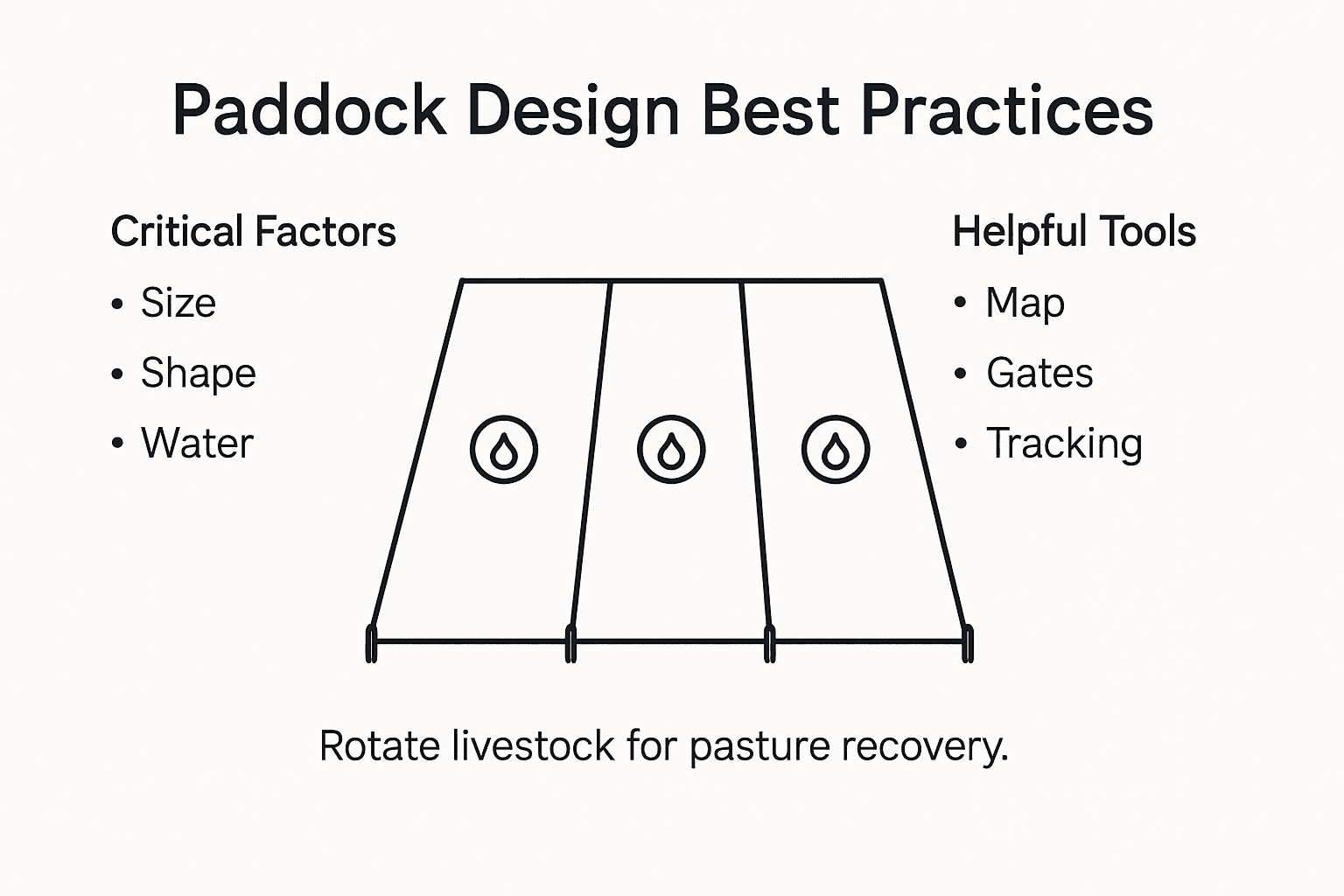
The rotation management process requires careful monitoring of forage conditions, livestock nutritional needs, and pasture recovery rates. Ranchers must remain flexible, adjusting paddock sizes and rotation schedules based on seasonal variations, grass growth rates, and herd nutritional requirements. This dynamic approach ensures optimal grass productivity, maintains soil health, and supports consistent livestock nutrition throughout the grazing season.
Pro tip: Create a detailed pasture rotation map and digital tracking system to help monitor grazing periods, rest intervals, and paddock performance, allowing for more precise and adaptive management strategies.
Cost, labor, and safety considerations
Economic considerations for rotational grazing systems reveal significant upfront investments and complex cost structures, with fencing expenses representing a substantial portion of total implementation costs. Ranchers must carefully analyze the financial implications, recognizing that while initial expenses are higher, long-term benefits can offset these investments through improved pasture productivity and livestock management.
Labor requirements represent another critical factor in rotational grazing systems. More frequent livestock movement and fence maintenance demand increased time and operational complexity compared to traditional continuous grazing approaches. Temporary fencing solutions can help mitigate some labor challenges, offering flexibility and reduced long-term maintenance demands while providing strategic paddock management capabilities.
Safety considerations extend beyond simple animal containment, encompassing comprehensive livestock welfare and environmental protection strategies. Proper fencing design must prevent animal injuries, minimize escape risks, and support uniform grazing patterns. Strategic water infrastructure placement reduces animal travel distances, decreases livestock stress, and promotes more consistent nutritional intake across different paddock sections.
Pro tip: Develop a comprehensive budget spreadsheet tracking both initial fencing investments and ongoing maintenance costs, including labor hours, to accurately assess the true economic impact of your rotational grazing system.
Below is a summary of key cost, labor, and safety factors in rotational grazing systems:
| Factor | Main Challenge | Benefit for Grazing System |
|---|---|---|
| Upfront Costs | High initial investment | Enhanced pasture productivity |
| Labor Intensity | Frequent livestock movement | Supports precise pasture recovery |
| Safety Measures | Preventing animal injury/escape | Protects livestock and pastureland |
| Maintenance | Regular fence checks needed | Reduces long-term repair expenses |
Common mistakes and troubleshooting tips
Rotational grazing systems often encounter challenges that can compromise their effectiveness and efficiency, with uneven grazing patterns and inefficient fencing infrastructure being primary concerns for ranchers. Understanding these potential pitfalls is crucial for developing a robust and adaptable pasture management strategy that supports both livestock health and land productivity.
One of the most significant mistakes involves poorly designed paddock configurations that restrict livestock movement and limit grazing opportunities. Ranchers must carefully consider gate placement, ensure adequate space for animal mobility, and create flexible fencing systems that can be easily adjusted based on seasonal variations, forage conditions, and herd size. Inflexible infrastructure can lead to overgrazing in certain areas while leaving other sections of pastureland underutilized.
Water infrastructure placement represents another critical aspect of successful rotational grazing management. Inadequate water distribution can force livestock to travel excessive distances, causing unnecessary stress and reducing overall grazing efficiency. Strategic water trough placement within each paddock encourages uniform grazing patterns, prevents soil compaction in specific areas, and ensures consistent nutritional intake across different pasture sections.
Pro tip: Conduct monthly pasture audits to assess grazing patterns, fence condition, and potential infrastructure improvements, allowing for proactive management and continuous system optimization.
Enhance Your Rotational Grazing Success with Expert Fencing Solutions
Rotational grazing fencing demands careful planning and quality materials to ensure flexible livestock movement and optimal pasture recovery. If you are managing paddock designs, seeking durable permanent or temporary fencing, or aiming to reduce labor with reliable electric fencing systems, FenceFast.ca offers the comprehensive supplies and expertise you need. Avoid common challenges like inadequate water access and fence wear by choosing products that support efficient rotations and animal safety.
Explore our wide range of fencing components, electric fencing power supplies, and livestock management tools designed specifically for Canadian farmers and ranchers. Start building a resilient and adaptable rotational grazing system today and experience improved pasture health and livestock performance. Visit FenceFast.ca now to get expert advice, enjoy nationwide shipping, and take your grazing management to the next level.
Frequently Asked Questions
What is rotational grazing fencing and why is it important?
Rotational grazing fencing is a livestock management technique that divides pastureland into sections, or paddocks, allowing for systematic movement of animals. This approach prevents overgrazing, promotes soil regeneration, and enhances pasture health.
What types of fencing are used in rotational grazing systems?
Common types of fencing used in rotational grazing systems include permanent fencing for boundaries, semi-permanent fencing for internal divisions, and temporary fencing for flexible paddock adjustments, such as polywire and polytape.
How should paddocks be designed for effective rotational grazing?
Paddocks should be sized to support about three days of grazing, followed by a three-week rest period, allowing vegetation to fully regenerate. Water troughs should be strategically placed to encourage uniform grazing patterns and minimize soil compaction.
What are some common mistakes to avoid when implementing rotational grazing systems?
Common mistakes include poor paddock design that restricts livestock movement, inadequate water distribution that increases stress, and an inflexible fencing system that can lead to overgrazed areas. Regular assessments and adjustments are essential for successful management.

