

TL;DR:
- High tensile wire, made from high-carbon steel, offers exceptional strength, spring-like impact response, and a lifespan of 25 to 40 years. Proper installation with engineered end assemblies and correct tensioning is essential to prevent failure and maximize durability. It is most suitable for large-scale, long-term fencing needs, especially in cattle operations, when integrated with electrification and regular maintenance.
Most farmers assume high tensile wire is just stronger wire. It’s not. The high tensile wire advantages that matter on a working farm come from a fundamentally different system: higher carbon steel, tighter tension, and an installation approach that treats your fence like a load-bearing structure. Get that system right and you have a fence that handles 600-pound cattle, Canadian winters, and decades of daily stress without constant repairs. Get it wrong and the wire’s properties work against you. This guide breaks down exactly what makes high tensile wire worth choosing, and what it takes to make those benefits actually show up on your land.
Table of Contents
- Key Takeaways
- High tensile wire advantages: what the wire actually does differently
- Practical high tensile wire benefits on working farms
- What proper installation actually requires
- High tensile wire vs regular wire and other fencing types
- Maintaining your high-tensile fence for long-term performance
- My perspective on getting high-tensile fencing right
- Build it right with Fencefast
- FAQ
Key Takeaways
| Point | Details |
|---|---|
| Superior material properties | High tensile wire uses high-carbon steel, delivering over 650 N/mm² strength and spring-like tension retention. |
| Long-term cost savings | Fewer posts, less maintenance, and a 25 to 40 year lifespan make it cheaper per year than most alternatives. |
| Installation determines performance | Engineered end braces and correct tensioning are what separate a great high-tensile fence from an expensive failure. |
| Compatible with electrification | High tensile wire pairs directly with electric fencing systems to reduce livestock pressure and structural wear. |
| Best fit for large pastures | High-tensile fencing excels on large acreage with cattle, where its cost and durability benefits are most visible. |
High tensile wire advantages: what the wire actually does differently
Most fencing wire you’ve handled is mild steel. It bends easily, stays bent, and loses tension once it stretches. High tensile wire is made from high-carbon steel and is engineered to a minimum tensile strength above 650 N/mm², which is roughly twice the strength of standard soft wire at the same gauge.
That number matters for two reasons. First, the wire resists permanent deformation. When a steer leans into a standard wire fence, the wire stretches and stays stretched. With high tensile wire, the tension system absorbs the impact and returns to its original state, much like a spring. Second, the higher strength lets you use thinner wire to achieve the same or better containment. Thinner wire means lighter rolls, easier handling across large properties, and lower material costs per meter of fence run.
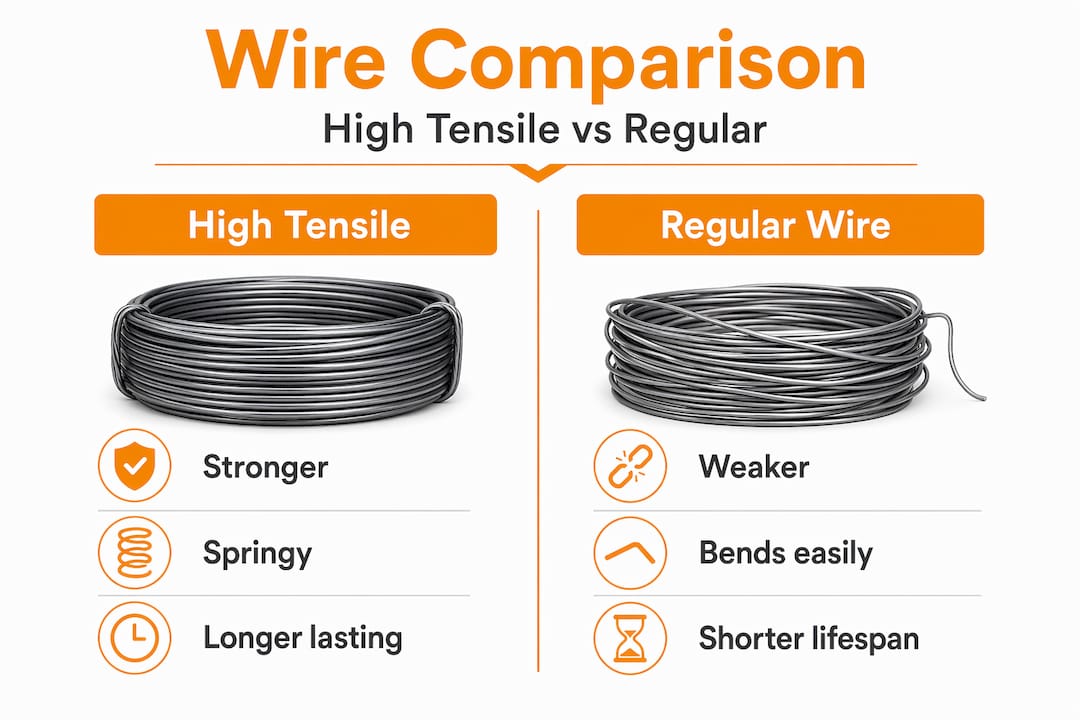
The spring-like behavior under impact only works when the end assemblies are engineered correctly. The wire doesn’t just sit in place. It stays under constant load between properly braced anchor points. That constant tension is what prevents sag, maintains fence height, and keeps the wire where you need it even as soil shifts, temperatures change, and livestock test it repeatedly.
Galvanizing matters too. High quality high tensile wire carries a heavier zinc coating than standard wire, which directly affects outdoor lifespan. Proper coating combined with tension maintenance means 25 to 40 years of service life in outdoor farm conditions. No other common wire type comes close to that number.
Pro Tip: When comparing wire products, look for the tensile strength rating on the specification sheet, not just the gauge. Two wires at the same gauge can perform very differently depending on carbon content and coating weight.
Practical high tensile wire benefits on working farms
The material properties above are interesting, but what you care about is what they mean at 6 a.m. when you’re checking a fence line in February. Here is where the high tensile wire benefits become concrete and farm-specific.
Maintenance load drops significantly. Because high-tensile wire maintains consistent tension over long distances, you’re not walking the fence every season retightening wire that has sagged. Sagging is the gateway problem for most farm fences. Once tension drops, livestock learn where the weak spots are, foliage grows into the wire, and snow loads pull posts out of alignment. Tight tension prevents all of it.

Post spacing can be stretched further, which is where the real cost savings show up on large acreage. Because of its tensioned wire design, high-tensile needs fewer posts than welded wire panels or woven wire fencing. On a 160-acre pasture, the difference between 10-foot and 15-foot post spacing adds up to hundreds of posts and a significant reduction in both labor and material cost.
The high tensile wire uses that benefit farmers most include:
- Cattle perimeter fencing on large pastures where post count and lifespan directly affect profitability
- Rotational grazing divisions that need to be moved or reconfigured seasonally
- Horse paddocks with electrification added to train horses to respect the boundary without contact
- Goat and sheep enclosures where the wire is typically combined with a woven bottom section for smaller animal containment
- Biosecurity perimeter fencing, where the wire meets minimum 2.5 mm galvanized high tensile specifications required for government grant eligibility
Pro Tip: If you’re applying for agricultural fencing grants, check the wire specification requirements carefully before purchasing. Many programs specify minimum tensile ratings that only high tensile wire products meet, so your wire choice can affect grant eligibility.
For a broader look at choosing the right wire for your specific livestock, the agricultural fencing wire guide at Fencefast covers how to match wire type to species and terrain.
What proper installation actually requires
This is where the high tensile wire advantages either pay off or disappear. Poor installation is responsible for the vast majority of high-tensile fence failures. Not bad wire. Not weak livestock. Poor installation.
Here is what a properly engineered high-tensile fence system requires, in order of importance:
-
Engineered end and corner assemblies. Corners and braces must be built as strong structural members capable of withstanding the static pull of tensioned wire plus the dynamic force of livestock impact. A 4-inch treated corner post with a proper brace assembly is the foundation. Without it, tension pulls the corner post inward, the wire sags, and the fence fails within a few seasons.
-
Correct and measured tensioning. Too little tension and the fence sags. Too much and you risk splitting wooden posts or overstressing wire joints. Most high-tensile systems are tensioned to a specific pound-force range using a tension meter, not by feel. Taking the time to tension correctly at installation is the difference between a 30-year fence and a 10-year problem.
-
Appropriate post selection for your terrain. In soft or wet soils, standard steel posts may heave or shift seasonally, breaking the tension balance across the entire run. Rocky terrain requires different anchor strategies. Your post type and depth must match your soil conditions, not just the standard installation spec.
-
Consistent wire spacing for your livestock. Wire spacing that works for mature cattle will not contain calves or smaller breeds. Plan spacing before installation because retrofitting wire strands into a tensioned system adds significant time and cost.
-
In-line tensioners at regular intervals. These allow you to re-tension individual wire strands as the system settles during its first season without releasing the entire fence run.
The most common failure mode in high-tensile wire fencing is loss of tension caused by weak end assemblies and unstable posts. The wire itself almost never fails first. That’s a critical insight because it tells you where to invest your time and money: the corners, not the wire.
Pro Tip: Budget 20 to 30 percent of your total fence project cost for corner and brace assemblies alone. Farmers who try to cut corners on bracing spend that money again within five years on repairs.
High tensile wire vs regular wire and other fencing types
Understanding the high tensile wire features that separate it from alternatives helps you make the right call for each section of your operation. Not every fence needs to be high-tensile. Here is an honest comparison.
| Fence Type | Lifespan | Post Spacing | Maintenance | Best Use |
|---|---|---|---|---|
| High tensile wire | 25 to 40 years | 15 to 20 feet | Low | Cattle, large pastures, perimeter |
| Standard mild steel wire | 10 to 15 years | 8 to 12 feet | High | Small paddocks, temporary fencing |
| Welded wire panels | 15 to 25 years | 8 to 10 feet | Medium | Sheep, goats, poultry, small animals |
| Barbed wire | 15 to 20 years | 12 to 15 feet | Medium | Cattle perimeter, not horses |
| Woven wire (field fence) | 20 to 30 years | 12 to 16 feet | Medium | Mixed livestock, multi-species pastures |
A few honest trade-offs worth knowing:
- High tensile wire is not ideal for horses without electrification. Horses that spook and hit a tight, high-tensile fence can be seriously injured. Adding electric fencing for cattle and horses teaches animals to respect the boundary through conditioning rather than contact.
- Welded wire panels are easier to install with less specialized knowledge, but high-tensile requires fewer posts and outperforms welded wire on longevity and large-scale cost per acre.
- Barbed wire is cheaper upfront but creates livestock injury risks and fails biosecurity specifications for many grant programs.
The advantages of tensile strength are most pronounced at scale. On a 10-acre hobby farm with a few goats, welded wire panels may be more practical. On a 500-acre cattle operation, high-tensile is almost always the better economic and operational choice.
Maintaining your high-tensile fence for long-term performance
Even a well-built high-tensile fence needs a system for ongoing management. Here is what that looks like in practice:
- Walk the fence line at least twice a year, once after spring thaw and once before winter. These are the two periods when post movement and tension loss are most likely to occur.
- Check braces first, not wire tension. If a corner brace has shifted, re-tensioning the wire without fixing the brace will just accelerate the brace failure.
- Add visibility markers on high-traffic sections. Bright polytape or flagging tied at intervals makes the fence visible to horses and newly introduced livestock, reducing the number of high-impact hits the fence takes during animal adjustment periods.
- Electrify wherever livestock pressure is consistent. Electrified high-tensile fences deter animal testing, which is the leading cause of wire fatigue and structural damage over time.
- Handle tension releases carefully. High-tensile wire under load stores significant energy. Cutting a tensioned wire without proper tools or technique causes dangerous snap-back. Always release tension before cutting and keep bystanders clear.
Pro Tip: Keep a tension meter in your truck during fence checks. A five-minute check on tension levels at each in-line tensioner can tell you whether a section needs attention before it becomes a visible problem.
For species-specific guidance, Fencefast’s guide on high-tensile wire for goats covers how to adapt spacing and electrification for smaller, more persistent escape artists.
My perspective on getting high-tensile fencing right
I’ve seen a lot of farmers buy the best wire available and then underinvest in everything else. The wire sits on correctly spaced posts, the tension looks okay, and then two winters later the corners have moved, the wire sags by mid-fence, and the whole run needs attention.
My take is that well-engineered end assemblies matter more than any other single factor in a high-tensile fence. I would rather build a fence with a modest wire spec and exceptional corners than premium wire anchored to mediocre braces. The corners carry the load. The wire is just the tension member between them.
I’ve also learned that electrification changes the game on livestock behavior in ways that are hard to overstate. Once cattle understand the fence, they stop testing it. That single change in behavior reduces structural demand on the fence dramatically and extends the effective service life well beyond what any wire spec alone could deliver.
The other thing I’d push back on is the idea that high-tensile is only for large operations. The lifespan and reduced maintenance load make it a smart choice for anyone who plans to be on the same land for more than 15 years. The upfront investment looks different when you spread it over 35 years of service.
— Fencefast
Build it right with Fencefast
If you’re planning a high-tensile wire fence project, whether it’s a new cattle perimeter, rotational grazing system, or a full farm security upgrade, Fencefast carries the wire, hardware, tensioners, bracing components, and electric fencing systems you need to do it correctly. The team at Fencefast has been working with Canadian farmers and ranchers for over two decades and understands the terrain, livestock, and climate challenges specific to Canadian agricultural operations. You can browse the full selection of farm fencing solutions at Fencefast.ca and take advantage of detailed installation resources, product recommendations, and support to match your project requirements. Getting the system right the first time is always less expensive than fixing it later.
FAQ
What are the main high tensile wire advantages over regular wire?
High tensile wire offers superior strength above 650 N/mm², a spring-like response to livestock impact, longer lifespan of 25 to 40 years, and lower long-term maintenance needs compared to standard mild steel wire.
Why does installation matter so much with high-tensile fencing?
The most common fence failures come from weak end assemblies and unstable posts, not the wire itself. Without properly engineered corners and precise tensioning, the wire cannot function as intended.
Is high tensile wire suitable for all livestock?
High tensile wire works well for cattle, sheep, goats, and pigs, but requires electrification and visibility markers when used for horses to prevent injury from contact during spooking.
How often should high-tensile fences be inspected?
A minimum of two inspections per year, after spring thaw and before winter, with tension checks and brace evaluation at each visit. High-traffic sections benefit from more frequent checks.
Can high-tensile wire qualify for government fencing grants?
Yes. Many agricultural grant programs specify minimum wire standards that align directly with high-tensile wire specifications, making product selection relevant to grant eligibility.

