

Many farmers think solar electric fences can’t provide reliable power year-round in Canada’s harsh climate. This misconception keeps ranchers tied to expensive grid connections or fuel-hungry generators. The reality is that modern solar powered fences deliver consistent, off-grid energy storage that works even through long winter nights and cloudy stretches. This comprehensive guide explains exactly how these systems function, the different types available for various farm scenarios, and practical tips for selecting, installing, and maintaining solar electric fencing. You’ll discover why thousands of Canadian livestock operations now trust solar technology for dependable, sustainable animal containment.
Table of Contents
- How Solar Powered Electric Fences Work: The Technology Behind Reliable Livestock Containment
- Types Of Solar Powered Electric Fence Systems And How To Choose For Your Farm Needs
- Benefits And Practical Advantages Of Solar Electric Fences For Canadian Farms And Ranches
- Installation, Maintenance, And Best Practices For Solar Powered Electric Fences In Canada
- Discover Solar Electric Fencing Solutions At FenceFast Ltd.
- Frequently Asked Questions
Key takeaways
| Point | Details |
|---|---|
| Photovoltaic conversion | Photovoltaic panels convert sunlight into electrical energy, which is stored in batteries to ensure the fence operates consistently, even during periods without direct sunlight. |
| Off-grid independence | Solar electric fences operate independently of grid power, providing flexibility for remote farms and eliminating monthly electricity costs. |
| System variety | Different solar energizer configurations including stand-alone, grid-connected, and hybrid designs suit various farm needs and budgets. |
| Portable advantages | Portable solar panels enhance mobility for temporary fencing and reduce fuel expenses across diverse farm operations. |
| Selection matters | Proper system sizing, battery capacity, and maintenance practices maximize reliability and cost-effectiveness in Canadian conditions. |
How solar powered electric fences work: the technology behind reliable livestock containment
Understanding the core technology helps you make smarter purchasing decisions and troubleshoot issues quickly. Solar energizers function through a sequence where photovoltaic modules absorb sunlight, generating DC electricity through semiconductor materials like silicon. These panels contain layers of specially treated silicon that create an electric field when photons strike them. The conversion happens silently and instantly, with no moving parts to wear out.
The generated electricity flows into deep-cycle batteries designed for repeated charging and discharging cycles. Battery capacity determines how many days your fence can operate without sunlight, a crucial factor in Canadian winters when daylight hours shrink and cloud cover persists. Most quality systems include charge controllers that prevent battery overcharging during sunny periods and excessive discharge during extended darkness. This protection extends battery life significantly, often to five years or more with proper maintenance.
The solar panel electric fence charger takes stored DC power and converts it into periodic high-voltage pulses that travel along your fence wire. These pulses typically deliver 5,000 to 10,000 volts in brief bursts lasting milliseconds, creating an uncomfortable but safe shock that trains animals to respect fence boundaries. The energizer’s timing circuit controls pulse frequency, usually one pulse every second, which maintains effective deterrence while conserving battery power.
Solar electric fences operate completely off-grid, independent from traditional electrical supply infrastructure. This autonomy proves invaluable for remote pastures, rotational grazing systems, and properties where extending utility lines would cost thousands of dollars. You gain installation flexibility without sacrificing reliability, since modern solar technology has matured into a proven solution for agricultural applications.
Battery capacity and panel wattage directly affect system reliability, especially in Canada’s variable sunlight conditions. A 10-watt panel might suffice for small paddocks in southern regions, while northern operations or longer fence runs often require 20 to 30-watt panels paired with larger battery banks. Matching components properly prevents the frustrating scenario where your fence loses power during critical containment periods.
Key components working together:
- Photovoltaic panels generating electricity from sunlight exposure
- Deep-cycle batteries storing energy for continuous operation
- Charge controllers protecting batteries from damage
- Energizers converting stored power into containment pulses
- Fence wire conducting pulses to create the psychological barrier
Pro Tip: Regularly check battery charge levels using a voltmeter and clean PV panels with water and a soft cloth to maximize energy conversion efficiency, especially after dust storms or before winter when sunlight becomes scarce.
Types of solar powered electric fence systems and how to choose for your farm needs
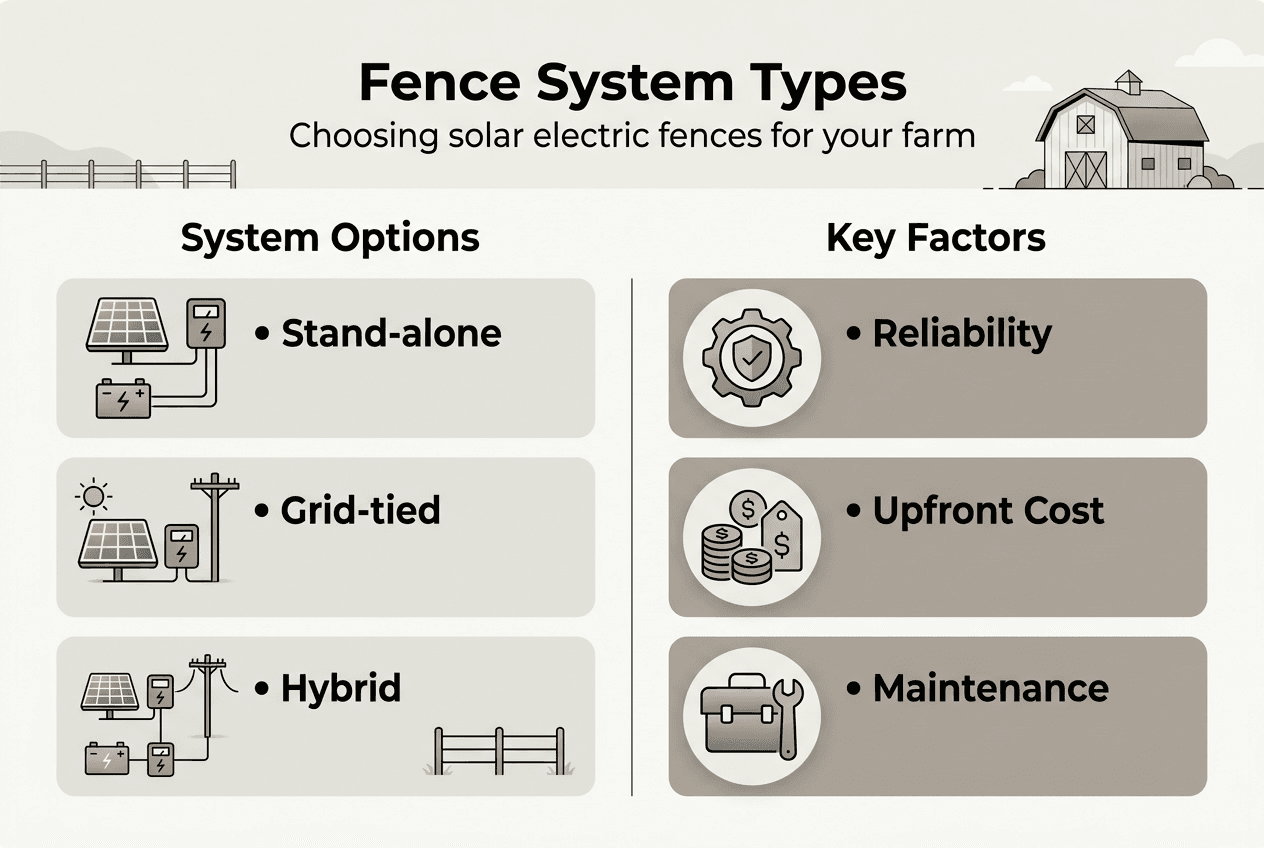
Selecting the right system configuration saves money and prevents headaches down the road. Solar energizer systems for ranch containment come in stand-alone (off-grid), grid-connected, and hybrid designs, each offering distinct advantages for different operational scenarios. Understanding these differences helps you match technology to your specific farm layout, budget constraints, and reliability requirements.
Stand-alone systems operate entirely independent of utility connections, making them ideal for remote pastures, seasonal grazing areas, and properties without electrical service. These systems rely completely on solar panels and battery storage, requiring careful sizing to ensure adequate power during low-sunlight periods. Installation simplicity represents a major advantage since you avoid trenching for electrical lines or dealing with utility company requirements. However, you must ensure sufficient battery capacity for your fence length and local climate patterns.
Grid-connected systems supplement utility power with solar generation, reducing energy costs while maintaining grid backup during extended cloudy periods. These configurations work well for farms with existing electrical infrastructure who want to lower operating expenses and gain some energy independence. The grid connection provides peace of mind during equipment failures or unusually demanding power situations. Installation complexity increases slightly due to electrical code requirements and potential utility interconnection agreements.
Hybrid systems combine battery storage, solar panels, and grid power, offering maximum reliability and operational flexibility. Electric fence chargers come in three primary power configurations tailored to agricultural needs, and hybrids represent the premium option for critical containment applications. These systems automatically switch between power sources based on availability and cost, optimizing both reliability and economics. Dairy operations, breeding facilities, and farms managing valuable livestock often justify the higher upfront investment for this redundancy.
Each configuration carries different installation complexity, upfront costs, and maintenance requirements that affect total cost of ownership. Stand-alone systems minimize installation expense but require more careful component selection and monitoring. Grid-connected options add utility bill savings to solar benefits but involve electrical permits and inspections. Hybrids deliver ultimate reliability at premium pricing, suitable when animal containment absolutely cannot fail.
| System Type | Best Use Case | Upfront Cost | Ongoing Costs | Reliability |
|---|---|---|---|---|
| Stand-alone | Remote pastures, rotational grazing, no grid access | Moderate | Very low (no utility bills) | High with proper sizing |
| Grid-connected | Farms with existing power, cost reduction focus | Moderate to high | Low (reduced utility bills) | Very high (dual power sources) |
| Hybrid | Critical containment, valuable livestock, maximum uptime | High | Low to moderate | Highest (triple redundancy) |
Choosing depends on farm location, herd size, fencing length, budget, and reliability needs that vary dramatically between operations. A 40-acre cattle ranch in southern Ontario faces different requirements than a remote sheep operation in northern Saskatchewan. Evaluate your specific situation honestly, considering worst-case scenarios like week-long winter storms or equipment failures during calving season.
Explore various solar energizer system types to understand detailed specifications and real-world performance data. Reading case studies from farms similar to yours provides valuable insights into system performance under comparable conditions.
Pro Tip: For Canadian winters, ensure your system includes battery capacity rated for at least seven days of operation without solar charging, and verify all components carry weatherproofing rated to negative 40 degrees Celsius.
Benefits and practical advantages of solar electric fences for Canadian farms and ranches
The financial and operational gains from solar fencing extend far beyond simple electricity cost savings. Solar fences eliminate dependence on costly or unavailable grid electricity in remote areas where extending utility lines could cost $15,000 to $30,000 per mile. This independence transforms previously unusable land into productive grazing areas, expanding your operational capacity without prohibitive infrastructure investments.
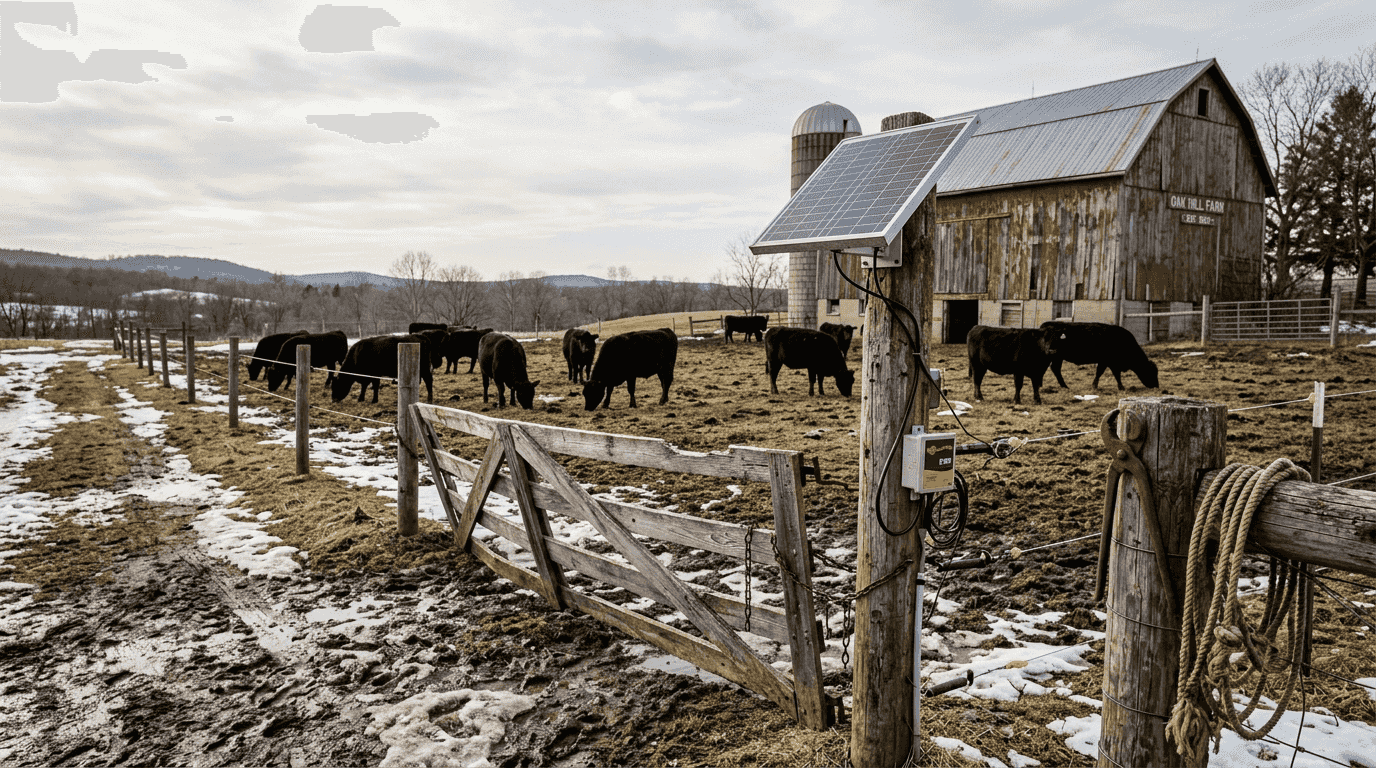
Operational costs drop dramatically by eliminating fuel for generators and reducing maintenance needs associated with combustion engines. Generators require regular oil changes, fuel purchases, spark plug replacements, and eventual rebuilds or replacements. Solar systems have virtually no consumables beyond occasional battery replacement every five to seven years. This simplicity reduces both direct costs and the time spent on equipment maintenance, freeing you for more productive farm activities.
Environmentally sustainable practices matter increasingly to consumers, retailers, and certification programs. Solar fencing reduces your carbon footprint compared to gas-powered systems, supporting marketing claims about sustainable farming practices. Some agricultural certification programs now award points or preferences for renewable energy use, potentially opening premium market channels for your products.
Portable solar panels offer a viable and clean solution for farms, providing flexibility and saving on fuel expenses across diverse applications. Beyond fencing, these panels can power water pumps, livestock monitoring equipment, gate operators, and even temporary lighting during night checks. This versatility maximizes your return on investment, spreading equipment costs across multiple farm functions.
Major advantages for Canadian livestock operations:
- Energy independence eliminating grid connection costs and monthly utility bills
- Reduced maintenance time and expense compared to generator-powered systems
- Environmental sustainability supporting premium marketing and certifications
- Operational flexibility for rotational grazing and temporary containment
- Reliable animal safety through consistent, controlled electric pulses
- Weather resilience with properly sized battery backup for cloudy periods
- Quiet operation avoiding noise pollution in rural residential areas
- Scalability allowing easy expansion as your operation grows
Improved reliability and animal safety result from consistent, controlled electric pulses that maintain steady voltage regardless of grid fluctuations or generator fuel levels. Animals learn fence boundaries faster and more reliably when the deterrent remains constant. This psychological conditioning reduces fence testing, escape attempts, and the resulting labor spent retrieving wandering livestock.
Discover how portable solar electric fence benefits extend to temporary paddocks, sacrifice areas, and rotational grazing systems that move frequently throughout the season. The mobility advantage alone justifies solar investment for many progressive grazing operations.
Farmers save substantial money and time over system lifespans typically exceeding 15 years, enhancing overall ranch management efficiency and profitability. When you calculate total cost of ownership including installation, maintenance, fuel, and replacement parts, solar systems often break even within three to five years compared to conventional alternatives.
Installation, maintenance, and best practices for solar powered electric fences in Canada
Proper installation and maintenance practices determine whether your solar fence delivers decades of reliable service or becomes a frustrating money pit. Following proven procedures from the start prevents costly mistakes and ensures optimal system performance through Canadian weather extremes.
Step-by-step installation process:
- Survey your fence route, identifying optimal solar panel locations with maximum southern exposure and minimal shading from trees, buildings, or terrain features throughout all seasons.
- Calculate total fence length and determine appropriate energizer output joules based on vegetation contact, wire type, and animal species being contained.
- Install grounding rods in moist soil locations, driving at least three six-foot rods spaced ten feet apart for proper electrical grounding that ensures effective animal deterrence.
- Mount solar panels on sturdy posts or brackets angled 45 to 60 degrees facing true south, not magnetic south, adjusting angle seasonally if possible for optimal winter performance.
- Position battery boxes in sheltered locations protecting them from extreme temperature swings while maintaining ventilation to prevent hydrogen gas accumulation during charging.
- Connect all components following manufacturer wiring diagrams precisely, using appropriately rated wire gauges and weatherproof connectors to prevent voltage drops and corrosion failures.
- Test system voltage at multiple fence points before introducing animals, verifying readings meet minimum effective levels for your livestock species.
Solar electric fence chargers operate independent of traditional power grids by charging a battery bank from solar panels which then powers the fence charger, creating a self-contained system requiring minimal ongoing intervention when properly configured.
Maintenance requirements remain minimal but critical for preventing unexpected downtime, especially before winter when system demands increase and solar input decreases. Schedule quarterly inspections covering battery terminals for corrosion, panel surfaces for dirt or debris accumulation, wire connections for looseness or damage, and vegetation growth that might short out fence lines.
Essential maintenance tasks and timing:
- Monthly voltage checks at fence endpoints during grazing season
- Quarterly battery electrolyte level inspection for flooded lead-acid types
- Bi-annual panel cleaning using water and soft cloths, avoiding abrasive materials
- Annual wire tension verification and insulator condition assessment
- Pre-winter system test under load with full battery charge confirmation
- Spring startup inspection after freeze-thaw cycles checking all connections
Common installation mistakes to avoid:
- Undersizing battery capacity for fence length and local climate
- Positioning panels where winter snow accumulation blocks sunlight
- Using inadequate wire gauge causing voltage drops over long distances
- Installing insufficient grounding rods in dry or rocky soil
- Mixing incompatU components from different manufacturers
- Skipping voltage testing before introducing livestock
Review comprehensive fence charger selection tips to match energizer specifications with your specific fencing application, animal types, and terrain challenges. Proper initial selection prevents the expensive mistake of replacing undersized equipment after discovering performance shortfalls.
Required tools and safety equipment:
- Voltmeter capable of reading 10,000+ volts for fence testing
- Insulated gloves and safety glasses for electrical work
- Post hole digger or auger for grounding rod installation
- Wire strippers, crimpers, and weatherproof connectors
- Wrenches and screwdrivers matching your component fasteners
- Ladder or lift for elevated panel mounting locations
Pro Tip: Position solar panels facing true south (use a compass and correct for magnetic declination in your region) with minimal shading year-round, and tilt them at your latitude plus 15 degrees during winter months for optimal low-angle sunlight capture when you need it most.
Preparing fences for harsh Canadian winters involves protecting batteries from extreme cold by insulating battery boxes or moving them to heated buildings, applying dielectric grease to all electrical connections preventing moisture intrusion and corrosion, and conducting full system tests under load to verify adequate reserve capacity before temperatures plummet and livestock containment becomes critical.
Discover solar electric fencing solutions at FenceFast Ltd.
Ready to implement reliable, sustainable fencing for your Canadian farm or ranch? FenceFast Ltd. specializes in solar-powered electric fencing products engineered specifically for Canadian agricultural conditions and livestock species. Their extensive selection includes complete solar energizer systems, replacement components, and upgrade accessories that help you build or enhance fencing infrastructure matching your exact operational requirements.

Whether you need a compact system for rotational grazing paddocks or a robust setup for permanent perimeter fencing, FenceFast’s product range covers applications from small hobby farms to large commercial cattle operations. Their electric fence accessory kit provides everything needed to complete your installation with professional results, while specialized solutions like positive-negative electric fence netting offer portable containment options for poultry, sheep, and other small livestock. Beyond products, FenceFast connects farmers with expert advice, installation support, and ongoing customer service tailored to solar fencing success in Canadian climates.
Frequently asked questions
What maintenance does a solar powered electric fence require?
Regularly clean solar panels to remove dust, pollen, and debris that reduce energy capture, and check battery charge levels monthly using a voltmeter to catch declining performance before complete failure. Inspect all wiring connections quarterly for corrosion, looseness, or animal damage that could cause voltage drops or system shutdown. Maintenance remains minimal compared to generator systems but proves essential for preventing unexpected downtime, especially before winter when system demands peak and you depend on stored summer charging.
Can solar electric fences power large-scale livestock operations effectively?
Yes, with appropriate system sizing matching energizer output joules, battery amp-hour capacity, and solar panel wattage to your total fence length and livestock numbers, solar fences reliably manage even large cattle herds across extensive acreage. Commercial operations successfully use solar systems for perimeter fencing exceeding 20 miles and rotational grazing managing hundreds of animals. Consult detailed solar fencing for large cattle farms sizing guides that calculate exact component specifications based on your fence configuration, terrain, and vegetation contact levels.
Are solar electric fences cost-effective compared to traditional power sources?
Solar fences carry higher upfront equipment costs, typically $800 to $2,500 for complete systems depending on power requirements, but eliminate ongoing electricity bills and fuel purchases that total hundreds or thousands annually for grid or generator alternatives. Most operations achieve payback within three to five years, after which the fence operates essentially free beyond minimal battery replacement costs every five to seven years. Remote locations where extending utility lines costs $15,000+ per mile see immediate cost advantages, while farms with existing power still benefit from eliminating monthly charges. Review detailed cost comparison solar fencing analysis showing total ownership expenses across typical 15-year system lifespans for various farm scenarios.

