

Managing livestock across sprawling Canadian pastures demands fencing that moves as quickly as your herd. Traditional permanent fencing locks you into fixed grazing patterns, wasting forage and labor. Research shows that 68% of Canadian mixed livestock farmers report using polywire to reduce setup time by over 50%. This guide walks you through key criteria and seven proven removable fencing solutions tailored to Canadian farm conditions, helping you choose systems that balance speed, durability, and cost.
Table of Contents
- Key Criteria For Choosing Removable Fencing
- Removable Fencing Options For Canadian Ranchers
- Comparison And Summary Of Removable Fencing Solutions
- Situational Recommendations For Canadian Farmers And Ranchers
- Explore FenceFast’s Expert Fencing Solutions
- Frequently Asked Questions About Removable Fencing
Key Takeaways
| Point | Details |
|---|---|
| Five critical factors | Durability, installation speed, livestock suitability, lifecycle cost, and power compatibility determine your best fencing choice. |
| Polywire leads for speed | Fastest setup under 30 minutes per 100m, ideal for rotational grazing cattle, sheep, and goats. |
| High-tensile for longevity | Durable 5-6 year lifespan but requires specialized tools and more labor than polywire alternatives. |
| Electric netting combines benefits | Delivers visibility plus shock deterrent, especially effective for sheep and cattle containment. |
| Solar power enables remote fencing | Supports off-grid operations up to 20 km, reducing grid dependency for mobile setups. |
Key Criteria for Choosing Removable Fencing
Selecting the right removable fencing starts with understanding what matters most for your operation. Canadian farming conditions demand materials that withstand harsh winters, UV exposure, and temperature swings from 30°C down to -40°C. Durability isn’t just about initial strength. It’s about how your fence performs after repeated freeze-thaw cycles and handling.
Installation speed directly impacts your rotational grazing efficiency. If you’re moving fences weekly, spending four hours per setup eats into productive time. You need systems that one person can deploy in under an hour. Removal must be equally fast, especially when weather windows close quickly.
Livestock species dramatically affect containment requirements. Cattle respect single-strand electric fencing, while sheep often need multiple strands or netting. Horses require highly visible options to prevent panic, and goats test every weakness. Match your fencing to the animals you’re managing, not a generic solution.
Total lifecycle cost tells the real story. A cheaper wire that fails in two seasons costs more than premium material lasting six years. Factor in replacement frequency, repair time, and labor costs. Consider maintenance requirements like retensioning or replacing insulators.
Pro Tip: Calculate your cost per year, not just upfront price. Divide total system cost by expected lifespan, then add annual maintenance expenses. This reveals true value and helps justify quality investments.
Power reliability becomes critical for electric systems. Grid-connected energizers offer consistent output but limit mobility. Battery units provide flexibility but need regular charging. Solar energizers balance both needs, especially for remote pastures. Your choice affects fence effectiveness and daily management burden. For more detailed guidance on mobile setups, explore these moveable fence ideas proven on Canadian operations.
Removable Fencing Options for Canadian Ranchers
Understanding your options helps you match fencing types to specific situations. Each system brings distinct advantages and trade-offs worth examining closely.
Polywire Electric Fencing
Polywire systems weigh under 100 grams per 50-meter roll, making them the lightest option available. You can install 100 meters in under 30 minutes using step-in posts. Material costs run approximately $0.15 per square foot, with a typical lifespan of three to four years under Canadian conditions.
This fencing excels for rotational grazing with cattle, sheep, and goats. The lightweight design means one person handles setup and takedown without equipment. You’ll appreciate this when moving paddocks twice weekly during peak growing season. The visible conductor strands and electric pulse train animals quickly, reducing fence pressure.
Downsides include lower breaking strength compared to wire alternatives. Heavy snow loading or fallen branches can damage polywire more easily. UV degradation accelerates in high-altitude or exposed locations. Budget for replacement every three to four seasons.
High-Tensile Wire Fencing
High-tensile wire delivers superior durability with a five to six-year lifespan. The 12.5-gauge wire resists breakage and maintains tension better than lighter alternatives. This makes it ideal for semi-permanent temporary installations where you relocate fencing seasonally rather than weekly.
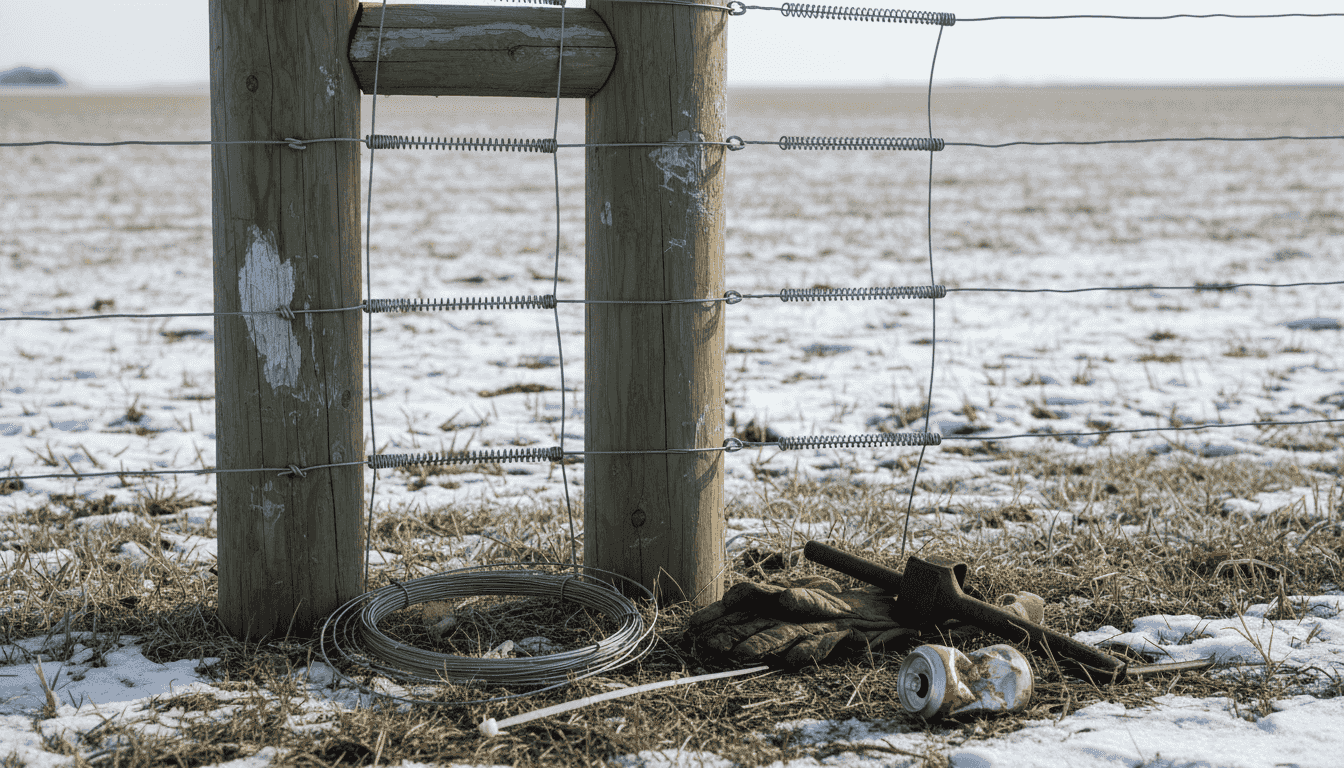
Installation requires specialized tools: wire spinners, tensioning devices, and proper corner bracing. Setup time runs three to four times longer than polywire for equivalent distances. You’ll need two people for efficient installation. The labor investment pays off in longevity and reduced maintenance.
Costs vary based on wire quality and coating. Expect higher upfront investment than polywire but lower annual replacement costs. High-tensile works well for perimeter sections of rotational systems where frequent moves aren’t needed. Check out these cattle fencing ideas for integration strategies.
Portable Panel Fencing
Steel or aluminum panels provide maximum security for temporary corrals, sorting pens, and quarantine areas. Each panel weighs approximately 25 kilograms and costs $50 to $80. Interlocking designs create solid barriers that contain even aggressive animals.
Panels excel when you need absolute containment: loading areas, vaccination chutes, or emergency pens. Setup requires no tools, just physical strength to position and connect panels. Two people can erect a 10-panel pen in 20 minutes.
The weight and cost make panels impractical for frequent relocation across large pastures. They’re investment pieces for specific high-value uses, not everyday rotational grazing. Storage space and transportation capacity become limiting factors on smaller operations.
Electric Netting Fencing
Electric netting combines physical barrier properties with electric deterrent. Woven polywire creates a visible mesh delivering shocks at multiple heights. Costs range from $0.13 to $0.50 per square foot depending on height and conductor count.
This option shines for sheep containment where animals tend to push through single-strand systems. The visible mesh reduces fence challenges compared to wire-only setups. Built-in posts simplify installation, though setup takes longer than basic polywire. You’ll spend 45 to 60 minutes per 100-meter roll initially, faster with practice.
Netting works exceptionally well for cattle in high-pressure situations. Calves respect the barrier better than single strands. The system suits operations prioritizing animal welfare and stress reduction. For comprehensive comparison of electric options, review this portable electric fence analysis.
Solar-Powered Fence Energizers
Solar energizers deliver one to five joules output, sufficient to power up to 20 kilometers of fencing. Modern units feature efficient panels charging maintenance-free batteries. They operate reliably even during cloudy Canadian winters with proper panel positioning.
These energizers eliminate grid dependency, enabling truly mobile fencing systems. You position them strategically as pastures rotate, maintaining consistent fence performance. No extension cords, no generator fuel, no power bills for remote sections.
Initial cost runs higher than plug-in units, typically $200 to $600 depending on output capacity. The investment pays back through flexibility and reduced operating costs. Solar units suit operations with extensive acreage or limited grid access. Battery life typically spans five to seven years before replacement.
Pro Tip: Position solar panels facing south at a 45 to 60-degree angle for optimal year-round charging in Canadian latitudes. Clean panels monthly to maintain efficiency. For detailed system guidance, explore Electric Fencing Materials selection principles.
Comparison and Summary of Removable Fencing Solutions
Direct comparison helps you evaluate trade-offs across fencing types quickly.
| Fencing Type | Cost per Unit | Lifespan (years) | Setup Time (100m) | Best Use Case | Livestock Suitability |
|---|---|---|---|---|---|
| Polywire Electric | $0.15/sq ft | 3-4 | Under 30 min | Rotational grazing, frequent moves | Cattle, sheep, goats |
| High-Tensile Wire | $0.20-0.30/sq ft | 5-6 | 90-120 min | Semi-permanent temporary fences | All livestock, perimeter |
| Portable Panels | $50-80/panel | 10+ | 20 min (10 panels) | Corrals, sorting, quarantine | All livestock, high security |
| Electric Netting | $0.13-0.50/sq ft | 4-5 | 45-60 min | Sheep containment, visible barrier | Sheep, cattle, poultry |
| Solar Energizer | $200-600/unit | 5-7 (battery) | 15 min | Off-grid power, mobile systems | Powers any electric fence |
Polywire offers the best mobility and speed combination for active rotational systems. High-tensile provides maximum durability when relocation frequency drops. Panels serve specialized containment needs where security trumps portability. Electric netting balances visibility and deterrent for challenging livestock. Solar power enables everything else to work independently.
Your operation likely benefits from combining multiple types. Use high-tensile for semi-permanent perimeters, polywire for internal paddock divisions, and panels for working areas. This hybrid approach optimizes both capital investment and daily efficiency. For deeper system comparisons, check this electric fence systems comparison and types of cattle fence breakdown.
Situational Recommendations for Canadian Farmers and Ranchers
Applying general knowledge to your specific situation requires considering your unique circumstances. These targeted recommendations help you make confident choices.
-
For intensive rotational grazing: Choose polywire electric fencing with solar energizers. The combination delivers maximum mobility and minimal setup time. You’ll move paddocks every one to three days without grid limitations. Step-in posts and lightweight wire mean one person handles the job in under 30 minutes.
-
For seasonal pasture rotation: Implement high-tensile wire for durability across three to six-month periods. The robust construction withstands weather extremes between moves. Yes, initial setup takes longer, but reduced maintenance and replacement costs justify the investment for longer rotations.
-
For quarantine and medical pens: Deploy portable panels for absolute security and animal safety. Sick or injured livestock need reliable containment without escape risk. Panels provide peace of mind and professional appearance for veterinary visits or regulatory inspections.
-
For remote or extensive rangelands: Pair solar energizers with polywire or electric netting based on livestock type. Solar units power up to 20 kilometers, covering vast territories without infrastructure. Battery backup ensures consistent operation through cloudy periods and winter months.
-
For mixed livestock operations: Layer systems by animal type and location. Use electric netting for sheep in vulnerable areas, high-tensile perimeters for cattle sections, and polywire for flexible internal divisions. This targeted approach maximizes effectiveness per dollar invested.
-
For rough or variable terrain: Select systems with flexible post options. Step-in posts adapt to rocky ground where driving posts fails. Portable panels work on concrete pads or packed earth. Match fencing flexibility to your landscape challenges rather than fighting terrain limitations.
Pro Tip: Start with a small pilot system before committing to large-scale purchases. Test one paddock rotation or pen setup to verify the system meets your specific needs. Learn quirks and best practices on a manageable scale, then expand confidently.
Terrain complexity affects every decision. Rolling hills need more posts for proper fence contact. Brush-heavy areas require stronger wire resisting snag damage. Rocky ground demands alternative post solutions. Evaluate your most challenging 20% of terrain, then select systems handling those conditions. What works there will excel everywhere else. Explore best fencing for cattle, portable fence solutions, and temporary livestock fencing for additional situational guidance.
Explore FenceFast’s Expert Fencing Solutions
Equipping your operation with quality tools transforms fencing from a chore into efficient livestock management. FenceFast offers professionally curated fence installation equipment specifically selected for Canadian farm conditions. Speed up wire fence setup with the Hayes fencing and crimping tool, designed for reliable field performance. Protect yourself during installation with the FenceFast Barbwire Hat, engineered for safety and comfort during long workdays.
Our selection combines proven durability with practical functionality farmers actually need. Every product ships across Canada, backed by expert support to answer installation questions and troubleshoot challenges. Whether you’re building your first rotational system or upgrading existing infrastructure, FenceFast provides the components and knowledge to succeed.
Frequently Asked Questions About Removable Fencing
Which fencing type is easiest to relocate multiple times per season?
Polywire electric fencing with step-in posts offers the fastest relocation capability, with setup times under 30 minutes per 100 meters. One person can handle installation and removal without specialized tools or equipment. The lightweight design means minimal physical strain even when moving fences twice weekly during intensive rotational grazing.
How long do solar-powered energizers typically last on Canadian farms?
Modern solar fence energizers deliver five to seven years of reliable operation before battery replacement becomes necessary. The solar panels themselves often last 15 to 20 years with minimal maintenance. Position panels facing south at 45 to 60-degree angles and clean monthly to maximize performance through Canadian winters and cloudy periods.
What maintenance is required to keep removable fences durable through winter?
Inspect connections and insulators monthly, tightening any loose components before freeze-thaw cycles cause damage. Remove ice buildup from wires and posts to prevent stress fractures. Store polywire and netting indoors during extended non-use periods to minimize UV degradation. Check energizer output weekly to catch power issues before animals test weak sections.
Can electric netting fences prevent sheep from pressing on the fence line?
Electric netting significantly reduces fence pressure compared to non-electric barriers by delivering memorable shocks at multiple contact heights. The visible mesh structure also provides a clear psychological barrier sheep recognize and respect. Most flocks learn boundaries within two to three days, dramatically reducing wool damage and escape attempts common with wire-only systems.
Are there budget-friendly fencing options for small-scale Canadian ranchers?
Polywire electric fencing paired with step-in posts and a basic energizer provides the most economical entry point, typically under $200 for materials covering an acre. Used portable panels offer another cost-effective option for small corrals and pens. Start with essential infrastructure covering your highest-priority areas, then expand gradually as budget allows. Learn fundamental principles through electric fencing basics before investing.

