

A qualified agricultural fencing contractor who runs a real site assessment, hands you a written estimate, and backs the work with a warranty is the safest bet for containing livestock and building out rotational grazing. Professionals read terrain and soil the way you read weather, and they know corner bracing and tensioning well enough to keep a fence tight for decades. Before you sign anything, ask for proof of insurance and a scope of work in writing.
TL;DR:
- Proper site assessment, written scope, and warranty are critical factors when choosing a fencing contractor to ensure long-lasting livestock containment.
- Fence selection must consider animal species, terrain, and management goals, with different types such as woven wire, high-tensile, barbed wire, and electric systems suited for specific needs.
- Accurate cost estimates depend on linear footage, material grade, terrain, site prep, and permits, making detailed itemized quotes essential.
- Vetting the contractor for licensing, insurance, references, and proven experience reduces the risk of poor installation and future repairs.
- Post-installation maintenance involves tensioning, component checks, and repairs, with ongoing support often included in the contractor’s service.
Table of Contents
- What Does an Agricultural Fencing Contractor Actually Install?
- How Much Does Farm Fencing Cost, and What Drives the Price?
- How Do You Vet and Choose the Right Contractor?
- What Happens Between Estimate and Finished Fence?
- Pairing Permanent Perimeter With Portable Systems: What Fencefast Recommends
- What Maintenance Should You Expect After Installation?
- How Do Contractors Handle Wildlife, Weather, and Difficult Soil?
- What Fencing Contractors Wish Landowners Understood
- Where to Read More on Fencing and Grazing Management
- Sources
What Does an Agricultural Fencing Contractor Actually Install?
A contractor’s first job isn’t stretching wire. It’s matching a fence system to your livestock, your terrain, and how you actually want to manage forage. Fence selection depends on the animal class you’re containing, their age, and your broader forage-management goals, according to Mississippi State University Extension Service. A weanling calf and a mature bull need different fence heights and wire spacing, and a good contractor asks about that before quoting anything.
Most agricultural fence installation falls into a few categories:
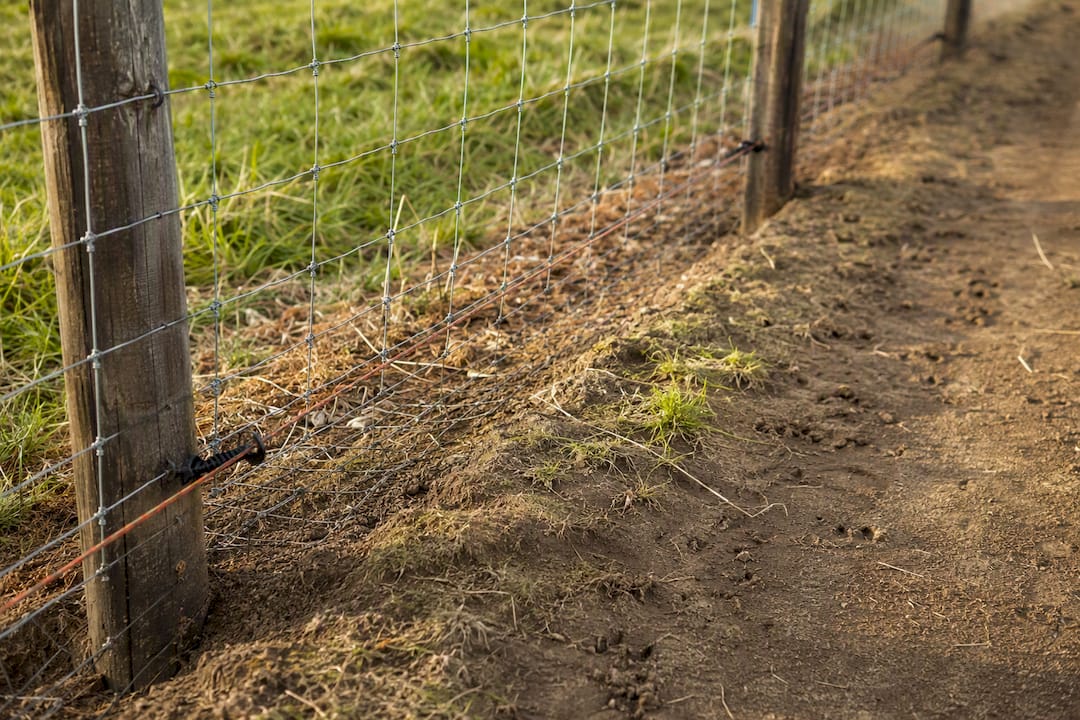
- Woven or welded wire – the standard for goats, sheep, hogs, and mixed operations where animals might test a fence at ground level.
- High-tensile wire – strong, low-maintenance perimeter fencing for cattle and horses, often electrified for extra deterrence.
- Barbed wire – still common for cattle-only perimeters where budget matters more than aesthetics.
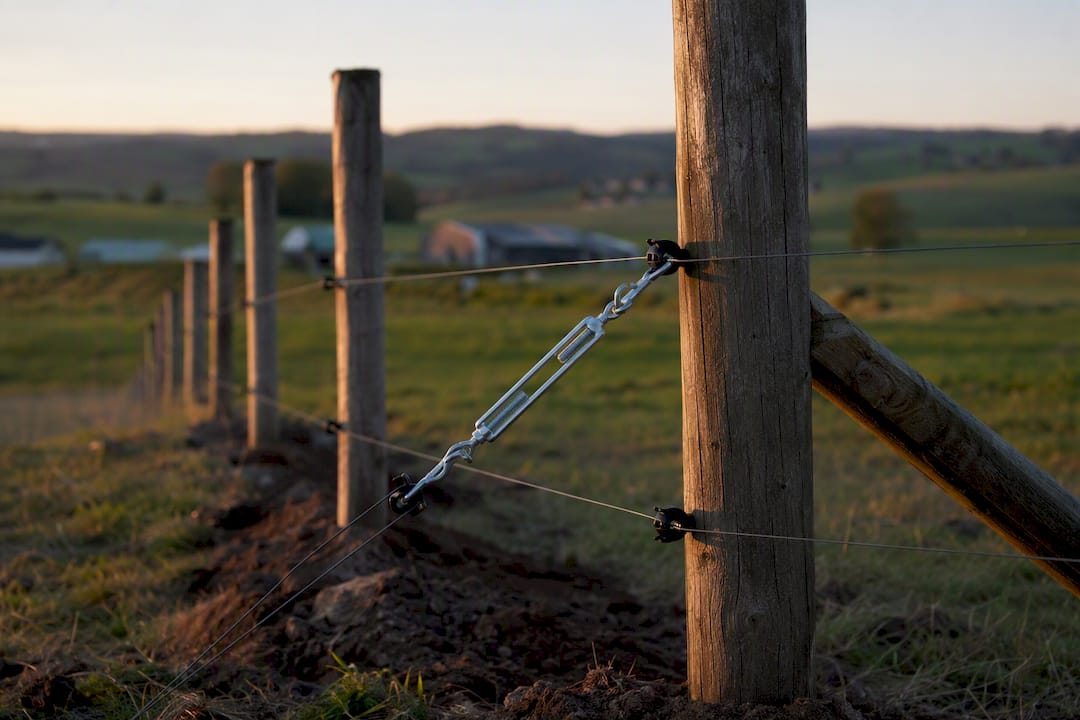
- Permanent electric systems – energized high-tensile or multi-strand wire; contractors recommend at least three strands on perimeter fences and two on cross fences, with solid H-braces at every corner, per Mississippi State Extension’s fencing guide.
- Portable electric fencing – polywire or polyrope on step-in posts, built for rotational grazing rather than permanent boundaries.
Most working farms end up with a hybrid: a permanent perimeter for security, and portable electric cross-fences for daily paddock moves.
How Much Does Farm Fencing Cost, and What Drives the Price?
There’s no single number that applies to every job, and any contractor who quotes a farm fence sight unseen is guessing. Pricing on farm fencing services comes down to a handful of variables that stack on top of each other:
- Linear feet – the biggest single driver; longer runs lower your per-foot cost but raise the total.
- Material grade – galvanized high-tensile wire costs more upfront than barbed wire but needs far less maintenance.
- Gates and hardware – wide equipment gates and walk-through gates each add material and labor.
- Terrain and soil – rocky ground, wet clay, or steep grades slow post-setting and raise labor hours.
- Post type and spacing – wood, steel T-posts, or composite, spaced according to load and fence type.
- Access and site prep – a fence line that requires brush clearing or equipment hauling costs more than open pasture.
- Permits – some counties require permits for perimeter fencing near roads or property lines.
Pro Tip: Never compare two bids on the bottom-line number alone. Ask for an itemized breakdown by linear foot, material, and labor so you can see exactly where the dollars go and whether one contractor is cutting corners on brace posts or wire gauge.
Cost efficiency has to be judged over the fence’s full lifecycle, not just the invoice. Temporary electric fencing is widely considered the most affordable and flexible option for short-term pasture subdivision, per Mississippi State Extension, but it isn’t a substitute for a durable perimeter. A cheap perimeter fence that needs rebuilding in eight years usually costs more than a properly braced high-tensile system that lasts thirty.
How Do You Vet and Choose the Right Contractor?
Hiring the wrong crew costs you twice, once for the bad fence and once to fix it. Work through this checklist before you sign a contract:
- Confirm licensing and registration. Rules vary by state and province, but any legitimate rural fencing contractor should be able to show proof without hesitation.
- Ask for proof of insurance. You want both general liability and workers’ compensation. If a crew member gets hurt on your land and the contractor has no coverage, you’re exposed.
- Request three references with local project photos. Call at least one. Ask how the fence has held up through a full winter or wet season.
- Get a written estimate and scope of work. It should list materials, linear footage, post spacing, gate count, and a completion timeline. Verbal quotes are a red flag on their own, and reputable contractors typically include permit support and a written scope as standard practice, per Parish Fence and Gates.
- Confirm warranty terms in writing. Ask what’s covered on workmanship versus what the manufacturer covers on materials, since warranty scope varies by material and contractors don’t always volunteer the distinction.
- Check equipment and crew capability. A contractor running a hydraulic post driver on rocky ground finishes faster and sets posts straighter than a crew working with hand tools.
During the estimate visit, ask direct questions: Have you fenced for this livestock species before? How do you build corner braces for high-tensile wire? Do you install temporary electric for rotational paddocks, or only permanent perimeter? What maintenance should I expect in year one?
Red flags worth walking away from: a contractor who wants full payment upfront, one who can’t name a bracing method, or one who refuses to put the scope in writing. A fair payment schedule usually looks like a modest deposit, a progress payment at material delivery or midpoint, and a final payment on completion and walkthrough.
What Happens Between Estimate and Finished Fence?
Most agricultural fence installation projects run through four stages: site walk and estimate, permitting and material ordering, ground work, and final tensioning and gate hookup. Weather, material backorders, and permit delays are the usual culprits when a timeline slips.
Before any post goes in the ground, call 811 or your regional utility locate service, and confirm whether your county requires a permit for perimeter fencing. Contractors sometimes handle permit applications, but many expect the landowner to pull them.
On your end, prepare the site before the crew shows up:
- Clear brush and debris along the planned fence line.
- Plan how you’ll move or pen livestock during construction.
- Mark existing utility lines, septic fields, and well locations.
- Decide gate placement based on how equipment and vehicles actually move across the property.
Planning with aerial photos and soil surveys before you dig helps divide paddocks with similar production capacity and keeps fence lines straight, which Mississippi State Extension notes is also the more economical way to build.
Pairing Permanent Perimeter With Portable Systems: What Fencefast Recommends
Fencefast works with contractors and landowners across a wide range of livestock operations, and the pattern that shows up again and again is a hybrid setup: a permanent perimeter fence for security, paired with portable electric cross-fences for day-to-day paddock control. Portable fencing lets you subdivide pasture quickly and allocate grazing with precision, according to Gallagher’s portable fencing guidance, which matters most on operations rotating stock every few days.
A few technical points worth raising with any contractor:
- Energizer sizing matters more than most owners assume. An undersized energizer is a common reason electric fences go “dead” in heavy vegetation, especially on longer runs.
- Wire type should match the system. High-tensile wire holds voltage over longer distances; polywire suits short-term, frequently moved cross-fences.
- Corner bracing has to handle load, not just look sturdy. High-tensile systems put real lateral stress on posts, and undersized H-braces are a frequent cause of sagging fence lines within a few years.
If you’re sourcing materials yourself or comparing a contractor’s parts list against retail options, Fencefast’s electric fencing resources and design consulting can help you confirm the specs before a crew breaks ground.
What Maintenance Should You Expect After Installation?
A finished fence isn’t the end of the relationship with a good contractor. Wire stretches, posts heave in freeze-thaw cycles, and wildlife pressure loosens staples over a single season, so most established farm fencing services offer some form of post-installation support.
Ask upfront whether tensioning checks and repair visits are included in the first year or billed separately. Some contractors build a routine inspection into their pricing, especially on high-tensile electric systems where voltage drops are hard to diagnose without walking the line. Others treat maintenance as a standalone call, priced per visit or per hour.
At minimum, expect these ongoing needs regardless of who built the fence:
- Annual tensioning on high-tensile wire, since temperature swings loosen strands over time.
- Insulator and connector checks on electric systems, particularly after storms or fallen limbs.
- Post replacement where rot, rust, or livestock rubbing has weakened individual posts.
- Gate hardware adjustment, since hinges and latches take the most repeated wear on any fence.
A contractor who won’t discuss what happens after the invoice is paid is one worth questioning before you sign. The best working relationships in rural fencing tend to be ongoing, not one-and-done.
How Do Contractors Handle Wildlife, Weather, and Difficult Soil?
Every farm has at least one site condition that complicates a straightforward fence build, and experienced contractors plan for it instead of discovering it mid-project.
Wildlife pressure is a common one. Deer routinely break through under-braced perimeter wire, and in regions with elk or larger predators, contractors often recommend taller fencing or additional strands on the top and bottom of the run. Feral hogs are notorious for undermining woven wire at ground level, which sometimes calls for a buried apron or an added hot wire near the base.
Weather affects both the build and the finished fence. Frost heave in cold climates can push posts out of the ground over a winter if they’re not set below the frost line. In wetter regions, standing water rots wood posts faster and calls for treated lumber or steel alternatives. High-wind areas need deeper-set corner posts to handle the lateral load electric fencing already puts on bracing.
Soil type changes the whole approach to post-setting. Rocky ground often requires a hydraulic driver or pre-drilling, while sandy or loose soil sometimes needs concrete footings to hold posts steady under tension. A contractor who asks detailed questions about your soil and local wildlife before quoting a job is showing you they’ve actually done this before, not just read about it.
What Fencing Contractors Wish Landowners Understood
Most owners underestimate site prep. They picture a crew showing up and stretching wire the same day, but half the real work happens before a post ever goes in the ground: walking the line, checking soil, planning corners where the load will actually hold. That gap between expectation and reality is where most budget surprises come from, not from contractors padding invoices.
The owners who get the best results are the ones who ask specific questions before hiring, not after something fails. Bring the checklist from this article to your next estimate visit and watch how a contractor responds. The good ones welcome it.
— Juiced
Where to Read More on Fencing and Grazing Management
For deeper technical grounding, Mississippi State University Extension’s pasture fencing guide covers system design and bracing standards. Gallagher’s portable fencing page details rotational-grazing hardware, and Fencefast’s grazing rotation guide walks through paddock planning.

