

Over 70% of electric fence fire incidents stem from poor installation and maintenance, yet many farmers underestimate these risks. Protecting your livestock, property, and workers demands more than stringing wire and plugging in an energizer. You need proven safety practices that prevent fires, reduce injury, and keep your operation compliant. This guide walks you through essential installation techniques, maintenance routines, and livestock protection strategies that Canadian ranchers rely on. You’ll learn how to ground your fence correctly, manage vegetation, and design systems that safeguard both animals and wildlife.
Table of Contents
- Key takeaways
- Common risks and misconceptions about electric fence safety
- Essential installation and grounding practices for safety
- Maintenance routines and vegetation control to prevent hazards
- Livestock protection and wildlife-friendly electric fencing designs
- Explore FenceFast electric fence solutions for farm safety
- Frequently asked questions about electric fence safety
Key Takeaways
| Point | Details |
|---|---|
| Proper installation and maintenance | Most electric fence fires come from poor installation and maintenance, so follow established setup protocols and perform monthly inspections. |
| Grounding matters | Install a minimum of three moist soil ground rods spaced ten feet apart, connect with heavy galvanized wire, and test resistance to ensure a solid earth path. |
| Voltage compliance | Keep the system between 2000 and 5000 volts and regularly verify with a voltmeter. |
| Vegetation management | Clear vegetation around fences to prevent shorts, sparks, and fire risk and maintain clearance. |
| Signs and PPE | Post visible warning signs every 100 feet and ensure personnel wear protective equipment during repairs. |
Common risks and misconceptions about electric fence safety
Many farmers assume electric fences are low risk, so they skip regular inspections. That belief creates serious hazards. Poor wiring, inadequate grounding, and vegetation contact increase fire hazards dramatically. Over 70% of electric fence fire incidents trace back to poor installation and lack of maintenance, not equipment failure.
Injury risks to livestock and humans rise without proper voltage and warning signs. Animals can panic or suffer burns if voltage exceeds safe limits. Workers touching energized wires without protective equipment face shocks that cause falls or worse. Children and pets wandering near unmarked fences encounter unexpected jolts.
Key hazards include:
- Improper installation that creates short circuits and arcing
- Unmaintained vegetation that contacts wires and sparks fires
- Lack of personal protective equipment during repairs
- Missing or faded warning signs that fail to alert people
- Corroded connections that generate heat and ignite dry grass
“Regular monthly inspection and maintenance are critical to avoid these risks. A voltmeter check takes five minutes but prevents disasters.”
Neglecting these basics transforms a helpful tool into a liability. Your fence protects livestock only when you maintain it properly. Monthly walkthroughs catch problems before they escalate. Check for broken insulators, loose wires, and vegetation encroachment. Document voltage readings to track performance over time. This routine prevents the majority of electric fence safety incidents.
Essential installation and grounding practices for safety
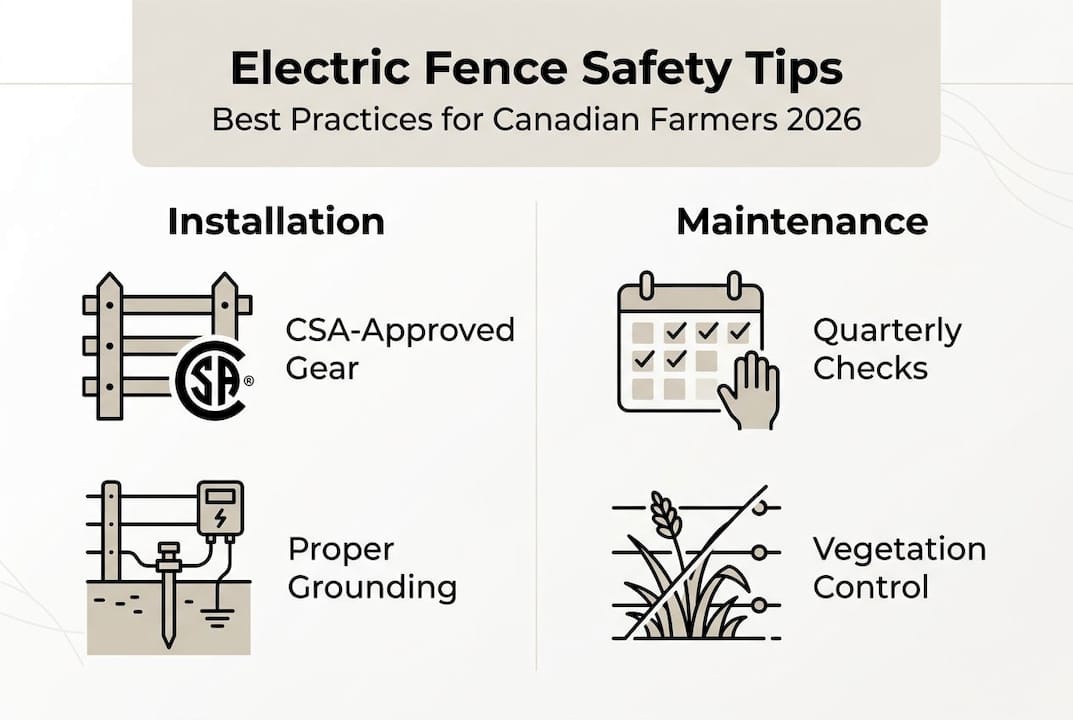
Proper installation starts with CSA-approved energizers and legal voltage limits. Electric fences must comply with safety standards including voltage limits, visibility requirements, proper installation and grounding, periodic inspections, and animal welfare considerations. Keep your system between 2000 and 5000 volts. Lower voltage fails to deter animals effectively. Higher voltage risks injury and violates regulations.
Grounding determines whether your fence works safely. Install minimum three galvanized ground rods spaced 10 feet apart in moist soil. Place ground rods at least 65 feet from power utility lines to prevent interference. Poor grounding causes weak shocks, voltage loss, and unpredictable fence behavior. Animals learn to push through weak fences, defeating your entire system.
Follow these installation steps:
- Select a CSA-approved energizer rated for your fence length and livestock type
- Drive ground rods six feet deep into consistently moist soil
- Connect ground rods with heavy-gauge galvanized wire
- Test resistance between ground rods to confirm solid connection
- Mount energizer in a dry, protected location away from flammable materials
- Install visible warning signs every 100 feet along public-facing fence lines
- Test fence voltage quarterly with a voltmeter to ensure consistent safety
Pro Tip: In dry soils, deeper or additional ground rods improve grounding effectiveness significantly. Sandy or rocky soil requires more ground contact to achieve proper conductivity.
| Soil condition | Ground rods needed | Spacing | Depth |
|---|---|---|---|
| Moist clay or loam | 3 rods | 10 ft apart | 6 ft deep |
| Dry sandy soil | 4-5 rods | 10 ft apart | 8 ft deep |
| Rocky terrain | 5-6 rods | 8 ft apart | As deep as possible |
| High water table | 3 rods | 12 ft apart | 6 ft deep |
Use a voltmeter to verify your fence delivers consistent power. Walk the entire perimeter and test every 500 feet. Voltage should remain within your target range throughout. Drops indicate shorts, poor connections, or inadequate grounding. Address these issues immediately. A properly installed and grounded system requires minimal adjustment after initial setup. Review the complete electric fence build and test process for detailed guidance.
Maintenance routines and vegetation control to prevent hazards
Ongoing maintenance prevents most fence failures and fire risks. Maintain a clear buffer of at least 2 meters on each side of the fence to prevent contact with vegetation. Grass, weeds, and branches touching wires create shorts that drain voltage and generate heat. During dry seasons, a single arc can ignite a wildfire.
Inspect wires, insulators, and fence posts regularly to detect wear or damage early. Walk your fence line monthly. Look for:
- Broken or cracked insulators that allow current to leak
- Corroded wire connections that increase resistance
- Loose fence posts that let wires sag into vegetation
- Animal damage from rubbing or chewing
- Rust or oxidation on galvanized components
Wear appropriate personal protective equipment when inspecting or repairing fences. Non-conductive gloves and rubber-soled boots protect you from accidental shocks. Turn off the energizer before touching wires. Use insulated tools for repairs. Even low-voltage shocks can startle you into falling or dropping equipment.
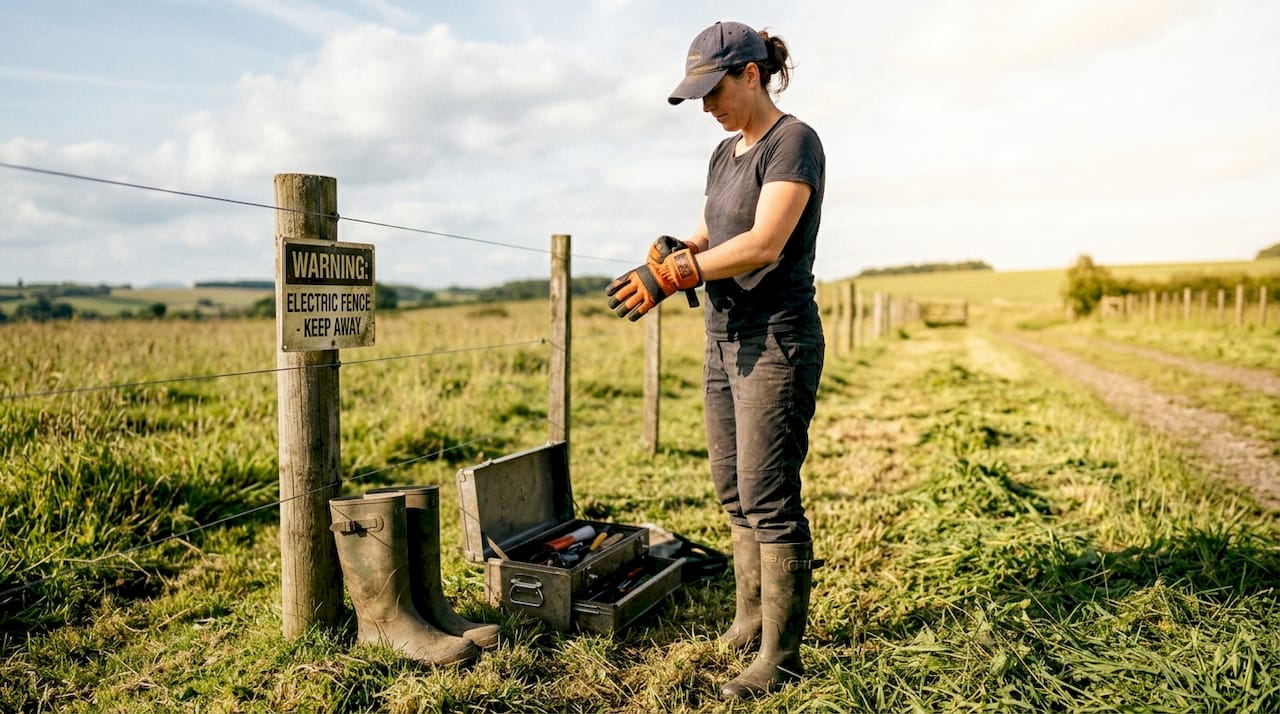
Use warning signs to keep children and pets away from high voltage areas. Replace faded signs immediately. Position signs at eye level where people naturally look. Include contact information so neighbors can report problems.
Pro Tip: Scheduling quarterly maintenance before seasonal changes reduces risk of shorts and fires. Spring growth, summer heat, fall leaf drop, and winter ice each create unique challenges. Anticipating these patterns keeps your fence reliable.
Regularly trimming vegetation also prevents voltage losses and keeps fence pulses strong. A weed trimmer or mower handles most maintenance. For larger properties, herbicide strips create permanent clearance zones. Avoid herbicides near water sources or where livestock graze. Clear vegetation around fence to prevent arcing and shorts, and inspect wires and insulators regularly for maximum safety.
Document your maintenance activities. Note voltage readings, repairs, and vegetation control dates. This record helps you spot patterns and proves due diligence if incidents occur. Many insurance policies require documented maintenance for coverage. Refer to electric fence maintenance tips and the basic electric fence setup guide for comprehensive checklists.
Livestock protection and wildlife-friendly electric fencing designs
Effective livestock security starts with proper fence strand configuration. Use 3-5 strands for cattle at heights of 24 inches, 36 inches, and 48 inches. This spacing effectively contains cattle and deters predators like wolves and coyotes. Additional strands at 12 inches and 60 inches provide extra security for calves and against climbing predators.
Train livestock to electric fences to reduce stress and injury risks. Introduce animals gradually in a small training pen. Let them approach the fence naturally and receive a mild shock. Most animals learn the boundary within hours. Trained livestock respect fences better and experience fewer injuries than animals forced against electrified barriers.
| Livestock type | Strand count | Heights (inches) | Voltage range | Training period |
|---|---|---|---|---|
| Cattle | 3-5 | 24, 36, 48, 60 | 3000-4000 V | 1-2 days |
| Horses | 3-4 | 20, 32, 44 | 2000-3000 V | 2-3 days |
| Sheep/goats | 5-7 | 8, 16, 24, 32, 40 | 4000-5000 V | 1 day |
| Pigs | 2-3 | 8, 16 | 2000-3000 V | 1-2 days |
Apply wildlife-friendly designs with smooth wires and offset spacing to avoid accidental entrapment. Wildlife-friendly design uses smooth wires and offset top and bottom strands to prevent entrapment. Barbed wire injures wildlife unnecessarily. Offset the top strand outward six inches and the bottom strand inward six inches. This configuration lets animals pass under or jump over without getting tangled.
Electric fences prove highly effective against predators. Anti-coyote electric fencing reduces livestock loss significantly when properly maintained. The psychological deterrent works better than physical barriers because predators learn to avoid the shock.
Best practices for maintaining animal welfare alongside security:
- Monitor livestock behavior daily for signs of fence stress or injury
- Adjust voltage seasonally as animal coats thicken or thin
- Provide alternative water sources away from fence lines
- Create visual markers so animals see fences easily
- Remove snow and ice buildup that might cause shorts
- Check for injuries during routine livestock health inspections
Horses require special consideration due to their flight response. Review the electric fence for horses installation guide for species-specific recommendations. Horses panic more easily than cattle, so visible tape or rope fencing works better than thin wire. Combine electric with physical barriers for maximum safety.
Explore FenceFast electric fence solutions for farm safety
Applying these safety practices becomes easier with the right equipment. FenceFast offers CSA-approved electric fence energizers and accessories tailored for Canadian farms. Our product selection addresses the specific challenges you face, from extreme weather to diverse livestock needs.

Product kits simplify installation and maintenance for safer fences. The Patriot electric fence accessory kit includes everything you need for reliable setup: insulators, connectors, ground rods, and testing equipment. These complete solutions eliminate guesswork and ensure compatibility across components.
Specialized netting provides protection against bears and nuisance wildlife while securing livestock. Our bear and nuisance electric fence netting combines physical barriers with electric deterrent for maximum effectiveness. This dual approach works especially well in areas with persistent predator pressure. Explore FenceFast for practical farm safety solutions that match your operation’s needs.
Frequently asked questions about electric fence safety
What voltage is safe for electric fences in Canada?
Safe electric fence voltage ranges from 2000 to 5000 volts depending on livestock type. Cattle require 3000-4000 volts, while sheep and goats need 4000-5000 volts for effective containment. Test voltage quarterly with a voltmeter to ensure compliance and safety.
How often should I inspect my electric fence?
Inspect your electric fence monthly for vegetation contact, damaged insulators, and voltage levels. Quarterly deep inspections should include ground rod testing, energizer checks, and complete perimeter walks. Seasonal maintenance before spring growth and winter weather prevents most failures.
Can electric fences harm my livestock?
Properly installed electric fences deliver brief, uncomfortable shocks that train animals without causing injury. Voltage within safe limits (2000-5000 V) creates psychological deterrence, not physical harm. Train livestock gradually and monitor for stress or injury during the first week.
What warning signs are legally required for electric fences?
Canadian regulations require visible warning signs every 100 feet along public-facing fence lines. Signs must display the international electric fence symbol and contact information. Replace faded signs immediately to maintain legal compliance and protect visitors. Review electric fence safety tips for complete signage requirements.
How do I protect children and pets from electric fences?
Install warning signs at child eye level and maintain clear sight lines to fences. Teach children that electric fences deliver shocks and establish boundaries they must respect. Keep pets leashed near fence lines and consider lower voltage in areas where pets roam freely.
What causes stray voltage in electric fence systems?
Stray voltage results from poor grounding, corroded connections, or proximity to utility lines. Install ground rods at least 65 feet from power lines and maintain clean, tight connections throughout your system. Test ground resistance annually to catch problems before they create safety hazards.

