

TL;DR:
- Fencing laws for livestock vary by jurisdiction, with distinctions between fence-in and fence-out doctrines that impact liability. Local ordinances and property designations can override state laws, requiring careful verification of your specific land status before construction. Proper maintenance, compliant materials, and documented procedures are essential for legal protection and effective dispute resolution.
If you run livestock, you’ve probably heard conflicting things about livestock fencing regulations. Who pays for the fence? What happens if your cattle stray? Is the neighbor responsible or are you? The answers depend heavily on where you farm and what type of land you’re on. Fencing laws vary by state, province, and even municipality, and the wrong assumption about your liability could cost you significantly. This guide breaks down the core frameworks, construction requirements, dispute resolution steps, and a practical compliance checklist so you know exactly where you stand.
Table of Contents
- Key takeaways
- Livestock fencing regulations: fence-in vs fence-out explained
- Construction and maintenance requirements
- Resolving fencing disputes
- Practical compliance checklist for livestock owners
- My take on where livestock owners go wrong
- Build fencing that meets the standard from day one
- FAQ
Key takeaways
| Point | Details |
|---|---|
| Fence-in vs fence-out doctrine | Your liability for straying livestock depends on which doctrine governs your jurisdiction. |
| Local ordinances override state law | Herd districts and municipal rules can flip fencing responsibility even in open-range states. |
| Fence condition determines legality | A fence must be actively maintained, not just originally built to spec, to be considered lawful. |
| Dispute resolution exists before court | Processes like Ontario’s fence-viewer system let neighbors resolve disputes affordably without litigation. |
| Document everything | Surveys, photos, and written agreements protect you in any fencing dispute or compliance review. |
Livestock fencing regulations: fence-in vs fence-out explained
The single biggest source of confusion in livestock fencing laws comes down to two opposing doctrines. Get this distinction wrong and you could be paying damages you never expected.
Fence-in jurisdictions place the burden on the livestock owner. You are legally responsible for confining your animals. If your cattle break through and damage a neighbor’s crops, you’re liable. Most eastern states and Canadian provinces operate under this framework.
Fence-out jurisdictions flip that responsibility. Landowners who want to protect their property from roaming livestock must build and maintain their own fence. Historically, much of the American West followed this open-range tradition. Colorado’s fence law under C.R.S. 35-46-101 and 35-46-102 codifies this arrangement, requiring landowners to fence out livestock rather than livestock owners to fence them in.
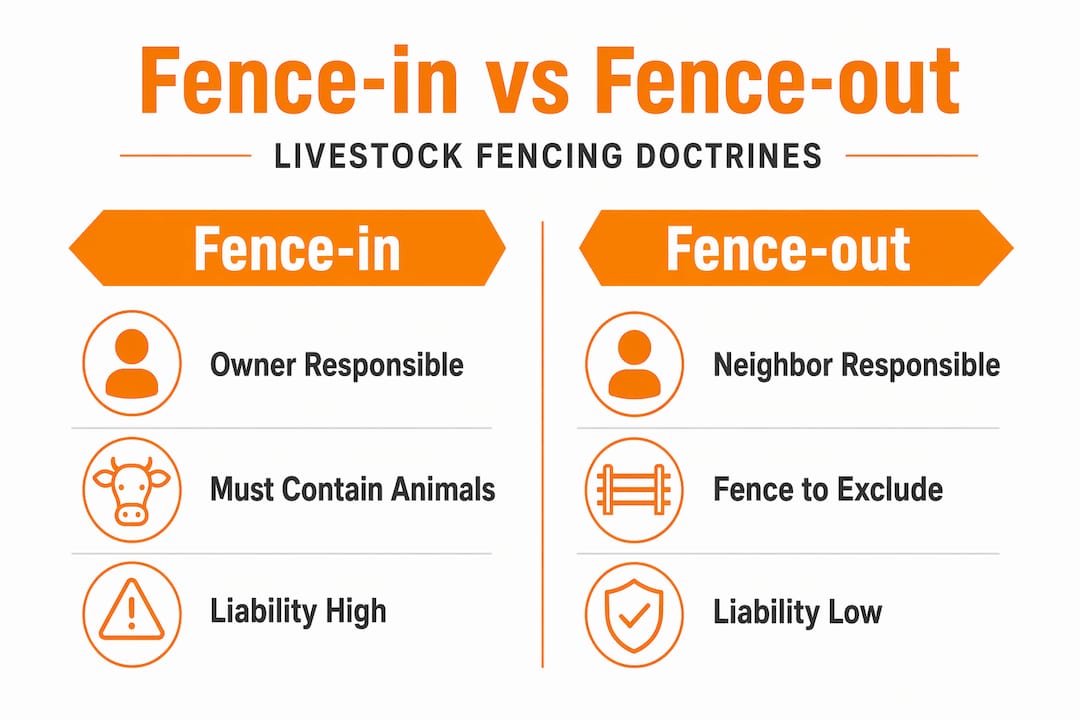
Here’s where it gets complicated. Even in fence-out states, local ordinances and herd districts can shift responsibility back to livestock owners by designating certain areas as closed range. The type of land matters too. Bureau of Land Management parcels, national forest land, and privately owned pasture can each carry different rules even within the same county.
| Feature | Fence-in doctrine | Fence-out doctrine |
|---|---|---|
| Liability for straying livestock | Livestock owner | Landowner wanting protection |
| Common regions | Eastern states, most Canadian provinces | Western U.S. open-range states |
| Modified by local ordinances? | Yes | Yes, closed-range designations apply |
| Species-specific rules possible? | Yes | Yes |
Pro Tip: Before you build a single post, check whether your property sits inside a herd district or livestock district. These local designations can completely change your legal standing, regardless of what broad state law says.
A critical insight worth repeating: the “fence-in vs fence-out” label is not always a reliable shortcut. Local ordinances may override the broad state tradition on your specific parcel. Verifying your property’s status with the county or municipality is not optional. It’s how you avoid costly surprises.
Understanding Canadian fencing requirements adds another layer for farmers operating north of the border, where province-level rules and municipal bylaws interact in similar ways.
Construction and maintenance requirements
Knowing which doctrine applies to you is step one. Knowing what your fence must actually look like is step two. Farm fence requirements vary by jurisdiction, but several patterns appear across most regulatory frameworks.
Here are the construction criteria you’ll commonly encounter when reviewing regulations for livestock enclosures:
- Minimum height requirements. Most jurisdictions specify a minimum fence height based on the species being contained. Cattle fencing typically requires 48 to 54 inches. Horse fencing often calls for 54 to 60 inches. Poultry and hog enclosures follow separate specifications entirely.
- Wire strand count and spacing. Many livestock barrier guidelines specify a minimum number of wire strands and the maximum gap between them. A four-strand barbed wire fence at regulated spacing is a common baseline for cattle, though woven wire configurations may satisfy requirements at lower strand counts.
- Post spacing and material. Regulations often address post spacing, typically between 10 and 20 feet for perimeter fencing, and may distinguish between wood, steel, and composite post materials.
- Gate and corner post strength. Corner and end posts must typically be braced and set deeper than line posts. Gates must latch securely and meet the same height requirements as the fence line.
- Maintenance to lawful standard. This is the point most livestock owners overlook. Courts evaluate fence condition based on current tension, wire integrity, and functionality, not just the original build specifications. A fence that was legally compliant at construction but has sagged wires and rotting posts is no longer a lawful fence.
That last point deserves emphasis. Fence legality depends on current condition, not the strand count you started with. Walking your fence line twice a year and repairing what you find is not just good practice. It’s a legal obligation in most jurisdictions.
Pro Tip: Keep a dated maintenance log with photos after every fence inspection. If a neighbor ever claims your fence was defective at the time of a livestock escape, that log is your primary defense.
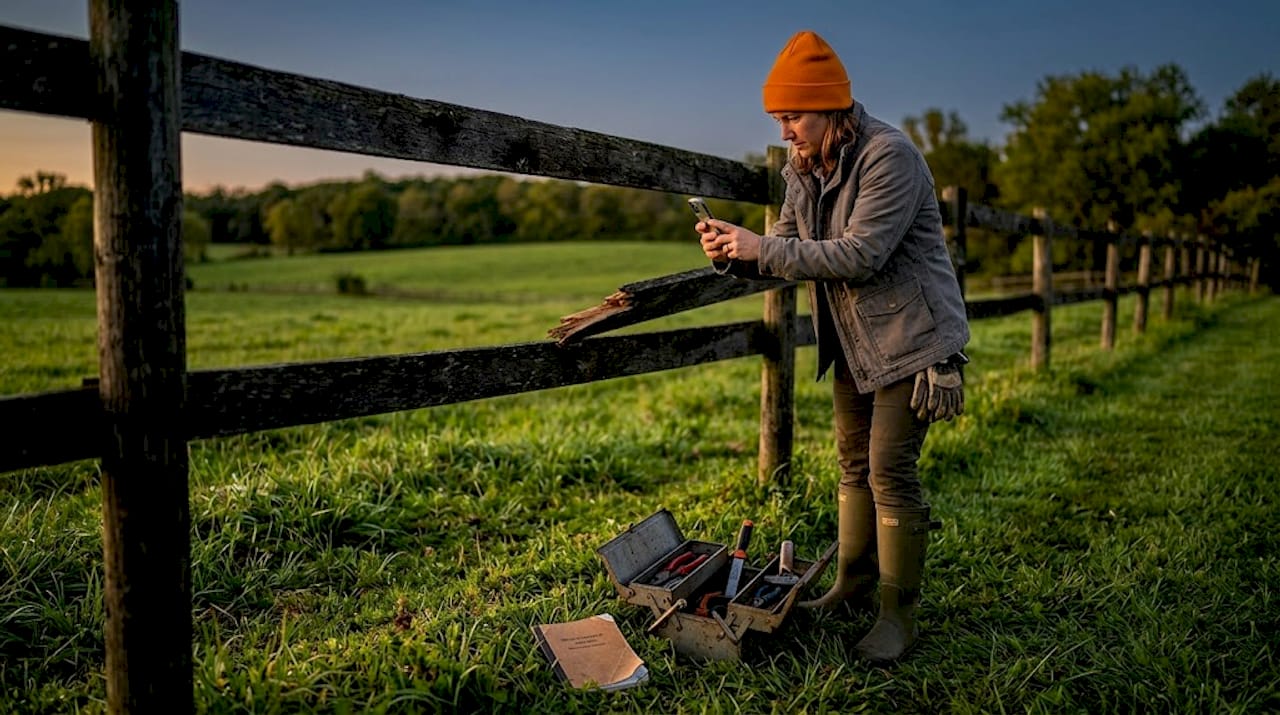
Local zoning rules add yet another layer. Colorado municipalities impose separate fence height and setback rules beyond state standards, and HOAs in rural-residential zones may restrict materials and colors. Always check both state and municipal requirements before construction. For guidance on species-specific fencing needs, regulations frequently differ between cattle, horses, hogs, and poultry.
Resolving fencing disputes
Fencing disputes between neighbors are more common than most people expect, and they rarely start with obvious wrongdoing. The typical triggers are:
- Disagreement over who is responsible for a shared boundary fence
- Disputes about whether an existing fence meets legal standards
- Requests for fence upgrades that one party doesn’t want to fund
- Uncertainty about whether the fence sits on the actual property line
- Complaints about fence damage caused by one party’s livestock
Before you hire a lawyer, understand that most jurisdictions offer a formal non-litigation process specifically for these situations. Ontario’s Line Fences Act is one of the most detailed examples in North America. Under that legislation, three fence-viewers are appointed and a formal notice is filed with the municipal clerk to begin the process. The fence-viewers conduct an on-site visit and issue a legally binding Award that resolves the dispute, including who builds what and who pays.
What makes this process worth understanding even if you’re not in Ontario is how it models good dispute resolution generally. Fence-viewers are impartial community members focused on fence functionality and practical facts, not legal arguments. The goal is affordable, fair resolution without courtroom costs.
“Efficient dispute resolution requires a clear formal start, proper documentation, and an understanding that boundary encroachments are a separate legal issue from line fencing disputes.” Source: Your Actionable Guide to the Line Fences Act Ontario for 2026
Cost-sharing rules under most dispute laws apply only to standard or “sufficient” fences. Under Ontario’s Line Fences Act, neighbors split costs 50/50 for a standard fence. If one party wants vinyl or ornamental fencing instead, the upgrading party covers the difference. That framework is a useful model for neighboring farm negotiations anywhere.
One critical distinction: boundary disputes are not the same as fence disputes. If you suspect a fence crosses onto your land, get a licensed survey done before touching anything. Removing or altering a fence without legal advice can escalate the situation and expose you to liability, even if you believe the fence is on your property.
Practical compliance checklist for livestock owners
Staying compliant with livestock fence regulations doesn’t require a legal degree. It requires a consistent process. Use this livestock fencing checklist before any new fence project and during annual reviews of existing fencing.
- Confirm the applicable doctrine. Determine whether your property falls under fence-in or fence-out rules, and check for any herd district or closed-range designations at the county level.
- Review state and municipal specs. Pull the actual fence construction standards for your jurisdiction. Check both state agricultural codes and local zoning bylaws. They don’t always match.
- Verify property boundaries. Use a licensed surveyor to confirm the property line before installing any boundary fence. This eliminates the single most common source of neighbor disputes.
- Document pre-construction conditions. Photograph the area before you build, especially along shared fence lines. This protects you if a neighbor later disputes the fence placement or condition.
- Select compliant materials. Match your wire type, post spacing, and fence height to the regulatory minimums for your specific livestock species. Review agricultural fencing standards for guidance on material selection that holds up both physically and legally.
- Notify affected neighbors in writing. If you’re building or upgrading a shared boundary fence, written notice protects both parties and starts the formal record.
- Schedule regular maintenance inspections. Walk the full perimeter at least twice per year. Log dates, repair actions, and photos each time.
- Know your local dispute resolution process. Find out whether your county or province has a fence-viewer system or equivalent arbitration process before you need it.
- Seek legal advice early. If a dispute involves boundary encroachment or potential litigation, get a real estate attorney involved before taking any physical action on the fence.
The benefits of livestock fencing regulations are real when you follow them proactively. Documented compliance protects you from liability claims, simplifies neighbor disputes, and keeps your livestock contained safely. Reviewing fencing laws in Canada alongside provincial agricultural guidelines gives you the most complete picture if you operate north of the border.
My take on where livestock owners go wrong
I’ve worked with enough farmers and ranchers to see a consistent pattern. The ones who end up in expensive disputes almost always made the same early mistake: they assumed they knew the rules without actually checking.
I’ve seen producers in open-range counties act completely surprised when a fence-viewer ruled against them because their fence was in disrepair, not because of their fence design. The courts and arbitrators don’t care how many strands of wire you started with. They look at what the fence is doing right now. That’s the standard most people don’t realize applies to them until it’s too late.
What I’ve also learned is that fence-viewers and similar impartial processes are genuinely underused. Most farmers default to either doing nothing and letting resentment build, or jumping straight to lawyers. The middle ground, a formal but non-litigation process, resolves the vast majority of fence disputes faster and cheaper than either extreme.
My pragmatic advice: treat your fence line like a piece of equipment. Inspect it on a schedule. Fix what’s broken. Document it. The neighbor relationship you preserve and the legal exposure you avoid are worth far more than the cost of a few hours of fence maintenance per year.
— Juiced
Build fencing that meets the standard from day one
Getting your fencing right the first time means choosing materials and configurations that satisfy the regulatory minimums in your jurisdiction while holding up to real-world livestock pressure. Fencefast carries fencing components, wire, electric fencing systems, and accessories specifically suited to agricultural and livestock applications across Canada. Whether you’re building a new perimeter or upgrading an existing boundary fence to meet current farm fence requirements, the product selection at Fencefast covers cattle, horses, hogs, poultry, and more. The team also provides design consultation to help you match your setup to local regulations. Skip the guesswork and build confidently with gear that’s already field-tested on Canadian farms.
FAQ
What is the difference between fence-in and fence-out laws?
Fence-in laws require livestock owners to confine their animals and hold them liable if animals stray. Fence-out laws require neighboring landowners to build their own fences if they want to keep livestock off their property.
Can local ordinances override state fencing laws?
Yes. Herd districts and municipal ordinances can shift fencing responsibility even in open-range states, making it critical to verify your specific property’s status before assuming state law applies as written.
What makes a fence legally compliant?
A fence must meet minimum height and construction specifications for your jurisdiction and remain in functional, maintained condition. Courts assess current fence integrity, not just original build specs.
How are livestock fencing disputes resolved without going to court?
Many jurisdictions offer arbitration-style processes. Ontario uses the Line Fences Act, where fence-viewers issue binding awards after an on-site review. Most similar processes are faster and cheaper than litigation.
Who pays for a shared boundary fence?
Under most cost-sharing frameworks, neighbors split the cost of a standard fence equally. If one party requests an upgrade, the upgrading party pays the difference above the basic fence cost.

