

TL;DR:
- A safe horse enclosure requires proper fence height, material choice, gate design, and pasture management. Regular inspections and maintenance prevent hazards and ensure safety for horses and owners. Following these guidelines reduces injuries, enhances durability, and promotes healthy grazing.
Horse enclosure tips are the practical guidelines that define safe, effective boundaries for horses, covering fence height, gate design, materials, and pasture management. A well-built enclosure protects horses from injury, prevents escapes, and makes daily care easier. The difference between a good enclosure and a dangerous one often comes down to a handful of structural decisions made before the first post goes in the ground. These tips draw on agricultural extension standards and real-world fencing experience to help you build and maintain a setup that works.
1. What is the right fence height for a horse enclosure?
Fence height is the single most important structural decision in any horse pen. The recommended minimum height is 54 to 60 inches, with stallions and jumpers requiring at least 6 feet. A fence that is too short invites horses to lean over, test the boundary, or clear it entirely.
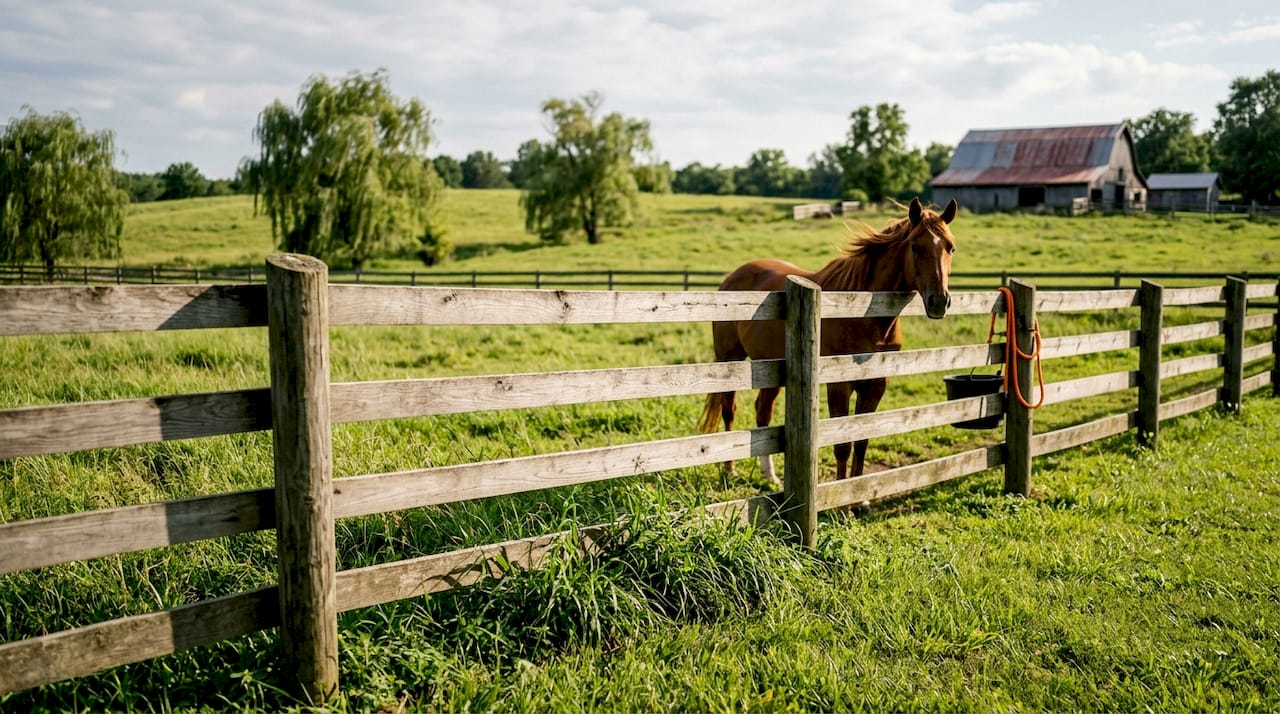
Bottom rail clearance matters just as much as overall height. Rails set 8–12 inches from the ground prevent hoof entrapment without leaving a gap large enough for a horse to roll under. For enclosures housing foals, mesh openings should be no larger than 2 by 4 inches to stop small hooves from getting caught.
Visibility is a factor most owners underestimate. Horses are prey animals, and a fence they cannot see clearly causes anxiety and increases the chance they will run through it. Wide boards, colored tape, or ribbon tied to wire lines all improve visibility and reduce fence-strike injuries.
Pro Tip: Add an electrified top wire set 6 inches above the top rail. Horses learn the boundary quickly and stop leaning on the fence, which extends the life of the structure significantly.
- Minimum height: 54–60 inches for most horses
- Stallions and jumpers: 6 feet minimum
- Bottom clearance: 8–12 inches
- Foal mesh openings: no larger than 2 by 4 inches
- Visibility aids: colored tape, wide boards, or ribbon
2. How to design gates and corners for safety and function
Gates are the most used and most neglected part of any horse enclosure. Gate openings should measure at least 12–16 feet wide to allow equipment access and prevent horses from crowding the entrance. A narrow gate creates a pinch point where horses jostle, which raises the risk of kicks and crush injuries.
Corner design is equally critical. Rounded corners prevent dominant horses from trapping submissive ones in dead ends. A 90-degree corner acts like a cage within a cage. Fencing off sharp corners with extra posts or curving the fence line eliminates this hazard entirely.
Post depth determines whether the whole structure holds. Line posts need to be set at least 36 inches deep, while corner and gate posts require 48 inches or more. Wet or sandy soils demand concrete collars to stop posts from loosening over time.
Here are the key steps for gate and corner setup:
- Size gate openings to a minimum of 12 feet, ideally 16 feet for tractor access.
- Install self-latching, horse-proof gate hardware that cannot be nosed open.
- Position gates away from feeding areas to reduce crowding and competition.
- Round all corners by adding extra posts to create a curved fence line.
- Set corner and gate posts at 48 inches deep with concrete collars in soft soils.
- Brace corner posts with diagonal cross-bracing to resist lateral pressure.
Wide gates also reduce injury risk by limiting crowding and keeping maintenance equipment moving freely through the property.
3. What materials provide the safest horse fencing?
Material choice determines how long your fence lasts and how much damage a horse can do to itself when it contacts the fence. Each material has a clear role.
Wood board fencing is the traditional standard. It is highly visible, strong, and horses respect it. The downside is maintenance: boards split, rot, and need regular painting or sealing. Pressure-treated lumber extends lifespan but adds upfront cost.
Vinyl and PVC fencing looks like wood but requires almost no maintenance. It flexes on impact rather than splintering, which reduces injury risk. The trade-off is cost and the fact that a determined horse can break it.
Woven no-climb wire with a top board rail is one of the most practical options for large pastures. The small mesh prevents leg entrapment, and the top board adds visibility. Safe wire fencing paired with a visible top rail gives you containment and safety in one system.
Barbed wire is not acceptable for horse enclosures. Horses move fast and panic easily. Barbed wire causes deep lacerations that can end a horse’s career or life. No cost saving justifies that risk.
Electric tape and rope work as secondary barriers inside a pasture, not as perimeter fencing. Electric wire should never serve as the primary perimeter fence. It functions as a psychological deterrent only after horses have been properly introduced to it.
Pro Tip: If you use electric tape on interior divisions, pair it with a reliable charger like the Gallagher Live Lite and check voltage weekly. A dead fence teaches horses to ignore it.
- Wood board: high visibility, strong, requires maintenance
- Vinyl/PVC: low maintenance, impact-flexible, higher cost
- Woven no-climb wire: best for large pastures, small mesh prevents entrapment
- Electric tape: secondary barrier only, never primary perimeter
- Barbed wire: never use around horses
4. How to manage pastures and paddocks for a safe horse environment
Pasture management is where most horse owners lose ground, literally. Overgrazing destroys the root system, turns paddocks to mud, and concentrates parasites. The fix is rotational grazing with a clear system.
Divide your pasture into at least 3 to 4 paddocks and rotate horses out of each section when grass is grazed down to 3–4 inches. Rest each paddock for 4–6 weeks to allow full regrowth. This single practice reduces parasite load, preserves grass cover, and keeps mud from forming at high-traffic spots.
Shelter placement shapes how horses use the space. Run-in sheds should provide 100–150 square feet per horse, face away from prevailing winds, and sit on elevated, well-drained ground. A shed placed in a low spot fills with water and manure, defeating its purpose.
Water source placement is a detail that pays off. Set water troughs on gravel pads positioned away from gates and feeding areas. Horses congregate around water, and a muddy water zone near a gate creates a slip hazard and a crowding problem at the same time.
| Pasture element | Recommended standard |
|---|---|
| Number of paddocks | 3–4 minimum for rotation |
| Rotation trigger | Grass grazed to 3–4 inches |
| Rest period per paddock | 4–6 weeks |
| Run-in shed size | 100–150 sq ft per horse |
| Shed orientation | Away from prevailing winds |
| Water trough base | Gravel pad, away from gates |
Toxic plant removal is non-negotiable. Walk each paddock before horses enter and remove ragwort, yew, bracken fern, and any other species known to be harmful in your region. New growth after rain brings new risks.
5. Essential horse enclosure maintenance and safety inspection tips
A fence that looked solid in spring can be a hazard by fall. Routine inspection and maintenance catch problems before they become emergencies. Build a monthly walk-around into your schedule and a full inspection after every major storm.
The most common failures are loose boards, sagging wire, and corroded hardware. Each one is easy to fix when caught early and expensive to ignore. A horse that finds a weak spot will test it repeatedly until something gives.
Pro Tip: Install safety caps on all exposed metal T-posts. An uncapped T-post at eye level is one of the most common sources of serious facial injuries in horses. Caps cost almost nothing and take seconds to install.
Key maintenance checks to run regularly:
- Inspect every board and rail for cracks, rot, or looseness
- Test electric fence chargers and walk the line for shorts or breaks
- Check all gate latches for smooth operation and secure closure
- Remove fallen branches, wire scraps, and debris from fence lines
- Verify that mesh and rail gaps remain under 12 inches throughout
- Confirm post stability by pushing each post; any movement needs attention
- After storms, check for leaning posts, downed sections, and debris caught in wire
The Gallagher Ag Devices App lets you monitor electric fence voltage remotely, which means you catch a fault before your horses do. That kind of early warning is worth more than the cost of the tool.
Key Takeaways
A safe horse enclosure requires correct fence height, horse-proof gate design, appropriate materials, active pasture rotation, and consistent maintenance.
| Point | Details |
|---|---|
| Fence height standard | Set minimum height at 54–60 inches; use 6 feet for stallions and jumpers. |
| Gate sizing | Gates must be at least 12–16 feet wide to prevent crowding and allow equipment access. |
| Material selection | Use wood board, vinyl, or woven no-climb wire; never use barbed wire around horses. |
| Pasture rotation | Divide into 3–4 paddocks and rest each section for 4–6 weeks after grazing. |
| Maintenance schedule | Inspect monthly and after every storm; cap metal posts and test electric chargers weekly. |
What I’ve learned from years of watching horse enclosures fail
The enclosures that cause the most injuries are not the ones built with bad materials. They are the ones built with good intentions and no plan. An owner spends money on quality boards and then installs them at the wrong height, skips the corner rounding, and puts the gate right next to the hay feeder. The result is a fence that looks solid and behaves dangerously.
The detail that surprises most horse owners is how much corner design matters. I have seen submissive horses cornered and kicked badly in paddocks that had no other obvious hazard. Rounding those corners with two extra posts costs almost nothing and removes a real risk. Most people only make that change after an incident.
Pasture rotation is the other area where I see consistent neglect. Owners graze one paddock to dirt while the others sit unused because rotating feels like extra work. The parasite buildup in an overgrazed paddock is invisible until a horse shows symptoms, and by then the damage is done. A simple rotation schedule, written on a calendar and followed, prevents most of that.
My honest recommendation: walk your enclosure from your horse’s perspective. Get low, look for gaps, sharp edges, and dead-end corners. What you find in 20 minutes will tell you more than any checklist.
— Juiced
Fencefast has the tools to build it right
Building a safe horse enclosure takes the right materials and the right tools. Fencefast carries everything from fencing components to electric fence chargers and installation gear, all suited to Canadian agricultural conditions.
The Hayes Fencing and Crimping Tool gives you precise, secure connections on wire fencing, which is where most DIY installations fail. Paired with a reliable charger and quality wire, it makes the difference between a fence that holds and one that needs constant repair. Fencefast ships nationwide and carries the Gallagher product line backed by a 26-year authorized dealer partnership. If you are building a new enclosure or upgrading an existing one, the product range at Fencefast covers every stage of the job.
FAQ
What is the minimum fence height for horses?
The minimum recommended fence height for horses is 54–60 inches. Stallions and horses that jump require at least 6 feet.
Can I use barbed wire for a horse pasture?
Barbed wire is not safe for horse enclosures. Horses move fast when startled and suffer severe lacerations from barbed wire contact.
How wide should a horse pasture gate be?
Gates should be at least 12 feet wide, with 16 feet preferred for equipment access. Narrow gates increase crowding and injury risk.
How often should I rotate horse paddocks?
Move horses out of a paddock when grass is grazed down to 3–4 inches and rest that section for 4–6 weeks before reintroducing horses.
Is electric fencing safe as the only horse fence?
Electric fencing is not safe as a standalone perimeter fence. It works as a secondary psychological barrier inside a physical fence, not as the primary containment system.
Recommended
- Safe Horse Fencing Guide: What Every Owner Must Know – FenceFast Ltd.
- Electric Fence for Horses Installation Guide: Safe Pasture Setup – FenceFast Ltd.
- How to Set Up Temporary Horse Fencing for Safe Containment – FenceFast Ltd.
- Safe Fencing for Horses: Top Options and Expert Tips 2025 – FenceFast Ltd.

