

TL;DR:
- Effective animal barriers combine physical strength with psychological deterrents tailored to specific species and threats. Proper maintenance, thoughtful design, and innovative wildlife crossing solutions significantly reduce escapes, vehicle collisions, and animal mortality. Layering physical fences with electric deterrents and conducting regular inspections ensure farm security and animal safety.
Animal barriers are physical or psychological structures designed to control livestock movement, prevent escapes, and protect farm security. Farmers and ranchers rely on several distinct types of animal barriers, from traditional board fences to electric netting and wildlife crossing systems, each suited to different species, terrain, and threat levels. Choosing the wrong barrier costs money, risks animal welfare, and creates security gaps that compound over time. This guide breaks down every major barrier category with the specifics you need to make the right call for your operation.
1. What are the main types of animal fencing used on farms?
Physical fencing is the foundation of livestock containment. These structures use material strength rather than behavioral conditioning to keep animals in or out.
The most common physical fence types include:
- Board fencing: Wood planks nailed to posts. Highly visible and safe for horses. High maintenance and cost.
- Barbed wire: Steel wire with sharp points at intervals. Effective for cattle on large acreages. Not suitable for horses or animals prone to panic.
- Woven wire (field fence): Interlocked horizontal and vertical wires. Works well for sheep, goats, and mixed livestock. Holds shape under pressure.
- High-tensile wire: Smooth, tightly strung steel wire. Durable and low maintenance. Often combined with electric current for added deterrence.
- Cable fencing: Heavy-gauge steel cables between posts. Used for perimeter security on large ranches.
- Mesh and netting: Tightly woven panels for small animals, poultry, and predator exclusion.
Physical fencing uses materials strong enough to prevent break-through, which makes it the right choice when introducing unfamiliar animals or managing high-activity zones. Placement matters as much as material. A fence installed in the wrong location fails regardless of how strong it is.
| Fence type | Best for | Durability | Relative cost |
|---|---|---|---|
| Board fencing | Horses, show animals | 15–25 years | High |
| Barbed wire | Cattle, large acreages | 20+ years | Low |
| Woven wire | Sheep, goats, mixed stock | 15–20 years | Medium |
| High-tensile wire | Cattle, perimeter lines | 20+ years | Medium |
| Mesh/netting | Poultry, small animals | 5–15 years | Medium |
2. How does electric fencing work as an animal barrier?
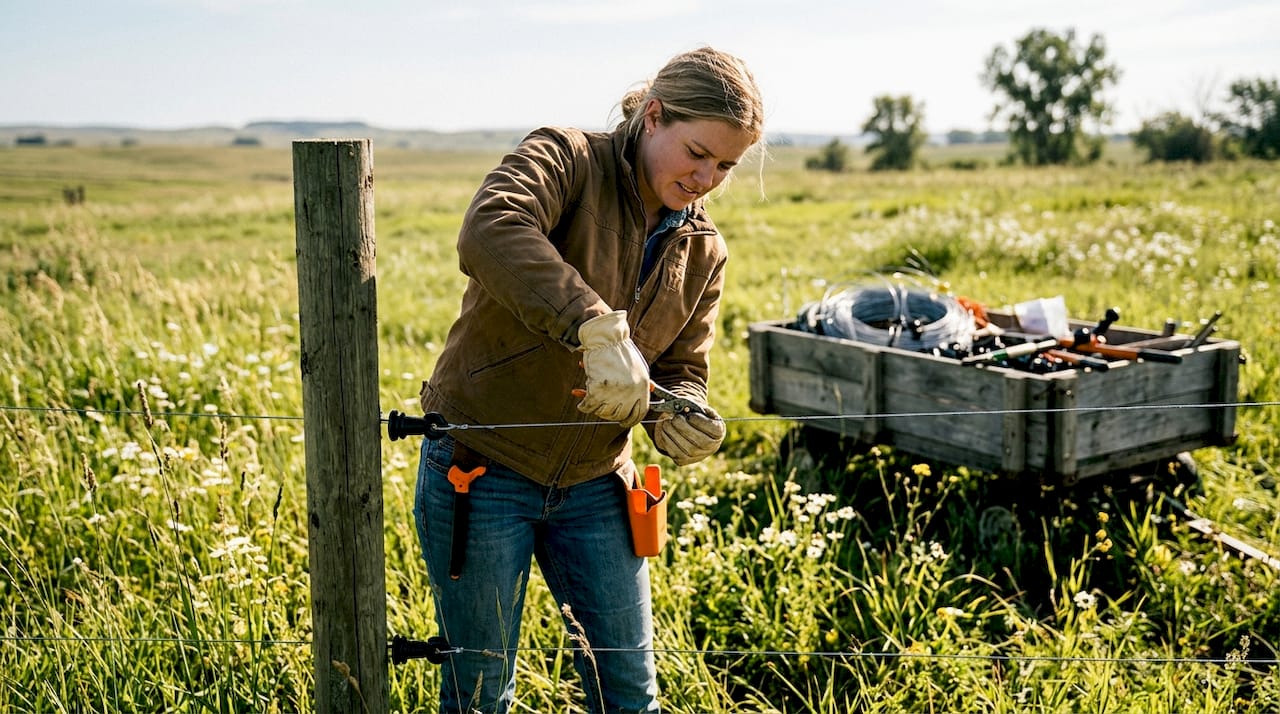
Electric fencing works on psychological deterrence, not physical force. One sharp shock teaches an animal to avoid the fence line. After that, the fence does not need to physically stop the animal because the animal stops itself.
Electric fencing applies differently across species, and getting that match right is the difference between a working system and a daily headache:
- Cattle adapt quickly to minimal wire setups. Two or three strands of polywire or high-tensile wire are often enough.
- Horses need high-visibility electric tape so they can see the fence before they hit it. Horses that cannot see a fence will run through it.
- Sheep and goats require electrified netting because their wool insulates them from standard wire shocks. Ground-level netting closes the gap that single-strand setups leave open.
Temporary electric netting lasts 1–3 years, while permanent physical fences can last 20 or more years. That lifespan gap matters when you are budgeting for rotational grazing systems versus fixed perimeter lines.
Training animals to respect electric fences before relying on them is non-negotiable. Walk new animals along a live fence with a handler present. Let them make contact in a controlled setting. Animals that learn the fence in a panic situation often break through it.
Pro Tip: Check fence voltage weekly with a digital voltmeter. A fence running below 2,000 volts loses its deterrent effect. Vegetation touching the wire is the most common cause of voltage drop, so clear a 12-inch strip along the fence line.
3. What innovations exist in wildlife protection barrier design?
Wildlife protection barriers go beyond keeping livestock in. They manage how wild animals interact with farm boundaries, roads, and habitat corridors. Poor barrier design kills animals and creates liability.
Funnel fencing directs animals toward designated safe crossing points rather than forcing them to attempt dangerous crossings at random locations. The system uses fence wings that angle toward an underpass or overpass, guiding deer, elk, and other large mammals into the crossing structure. One-way Liberty Gates installed at fence corners allow animals to exit a highway corridor but prevent them from re-entering. Placing gates at fence corners significantly improves animal use rates compared to gates along straight fence sections.
Wildlife crossing structures combined with strategic fencing reduce wildlife-vehicle collisions by more than 90%. A single crossing can prevent roughly 1,400 accidents over 70 years and cut large-mammal collisions by over 80%. Those numbers represent real savings in vehicle damage, human injury, and livestock loss for farms near high-traffic roads.
Animal psychology shapes the best barrier designs. Chinese wildlife crossings use vegetation-shielded entrances with layered soil and species-specific paths to increase animal acceptance. An animal that feels exposed at a crossing entrance will not use it. Shielding the approach with native vegetation removes that hesitation.
For farms bordering wildlife habitat, integrating these principles into your perimeter fence design reduces animal mortality, lowers the risk of livestock-wildlife conflict, and supports coexistence with native species.
4. How to choose the right animal barrier for your farm
Matching the barrier to the situation requires honest answers to four questions: What species are you containing? What predators or wildlife are you excluding? Is this a permanent or temporary setup? What is your realistic maintenance capacity?
Key decision factors:
- Species and behavior: Cattle tolerate minimal wire setups. Horses need visibility. Sheep and goats need netting. Pigs need solid lower barriers because they root under wire.
- Predator pressure: Coyotes, wolves, and bears require taller, stronger perimeter fencing. A standard three-strand electric setup will not stop a determined predator.
- Terrain: Rocky or uneven ground makes post installation harder and creates gaps under fence lines. Woven wire or mesh conforms better to irregular terrain than high-tensile wire.
- Temporary vs. permanent: Portable electric fence systems suit rotational grazing where paddock boundaries change seasonally. Permanent woven wire or high-tensile suits fixed perimeters.
- Budget and maintenance: Low-cost barbed wire requires regular tension checks and staple replacement. Higher upfront costs for high-tensile or board fencing often mean lower long-term maintenance.
Combining physical and psychological barriers delivers the best results. A woven wire perimeter with an electric offset wire on the inside stops animals from leaning into the fence and damaging it. That combination extends fence life and reduces repair costs.
Pro Tip: Electric fences paired with community awareness and satellite monitoring help farmers coexist with wildlife more effectively than fencing alone. Knowing when and where wildlife pressure increases lets you reinforce barriers before a breach happens.
5. What materials and construction factors affect barrier durability?
The material you choose determines how long your fence lasts and how much labor it demands. No material is universally best. Each has a specific role.
| Material | Strength | Lifespan | Maintenance level |
|---|---|---|---|
| Treated wood | High | 15–25 years | Medium |
| Galvanized steel wire | High | 20+ years | Low |
| Polywire/polytape | Low | 1–3 years | High |
| Synthetic netting | Medium | 5–10 years | Medium |
| High-tensile steel | Very high | 20+ years | Low |
Construction quality affects durability as much as material choice. Corner posts carry the entire tension load of a fence line. Under-built corners cause the whole fence to sag within a season. Brace assemblies at corners and gates must be set in concrete or driven deep enough to resist frost heave in northern climates.
Regular inspection catches problems before they become escapes. Walk fence lines monthly. Look for broken wires, loose staples, leaning posts, and vegetation contact on electric lines. Sheep wool insulates animals from electric shocks, so vegetation grounding on sheep fences is a critical failure point that needs weekly attention, not monthly.
Safety considerations matter for both animals and workers. Barbed wire causes serious lacerations on horses and panicking cattle. Smooth wire or tape eliminates that risk in high-traffic areas. Proper grounding on electric systems prevents dangerous voltage buildup that can injure animals and people.
6. Barriers to animal movement: understanding design impacts
Physical barriers such as fences, dams, and Jersey barriers can impede animal movement and cause injury when design ignores species-specific needs. That applies to both livestock and wildlife. A fence that works perfectly for cattle can be lethal for deer that attempt to jump it and become entangled.
Fencing is most effective as part of a management system that incorporates monitoring, education, and community engagement. A fence alone is a static tool. Pairing it with regular monitoring, neighbor coordination, and species-aware design turns it into a dynamic management system that adapts to changing animal pressure.
Invasive vegetation creates unintended barriers by altering habitat structure. Dense brush along fence lines blocks native species movement and can push wildlife into conflict with livestock areas. Clearing fence lines serves double duty: it maintains electric fence voltage and keeps wildlife corridors open.
Key Takeaways
The most effective animal barriers combine physical strength with psychological deterrence, matched to the specific species, terrain, and threat level of each farm operation.
| Point | Details |
|---|---|
| Match barrier to species | Cattle need minimal wire; horses need visible tape; sheep and goats need electrified netting. |
| Electric fencing deters, not blocks | Animals learn to avoid the fence after one shock, making voltage maintenance critical. |
| Wildlife design saves lives | Funnel fencing and crossing structures cut wildlife-vehicle collisions by over 90%. |
| Combine barrier types | Pairing physical and electric barriers extends fence life and improves containment. |
| Inspect and maintain regularly | Monthly fence walks and weekly voltage checks prevent escapes before they happen. |
What I’ve learned after years of watching fences fail
Most fence failures are not material failures. They are planning failures. Farmers choose a fence type based on what their neighbor uses or what the local co-op stocks, without accounting for their specific animals, terrain, or predator pressure. That shortcut costs more in repairs and escaped animals than the right fence would have cost upfront.
Electric fencing gets underestimated constantly. Ranchers see the low material cost and assume low performance. The opposite is true when the system is maintained. A well-grounded, properly tensioned electric fence with adequate voltage outperforms a neglected physical fence every time. The catch is that electric fencing demands consistent attention. Voltage drops silently. Animals test the fence daily. A fence that worked last week may be dead this week because a weed grew into the wire.
The wildlife barrier innovations coming out of funnel fencing research in Idaho and vegetation-shielded crossing designs from China are genuinely worth attention for farms near wildlife corridors. These are not conservation luxuries. They reduce animal mortality, cut liability from vehicle collisions, and lower the stress load on livestock that share boundaries with wild animals.
My honest recommendation: start with a clear species and threat assessment before you buy a single post. Then build the permanent perimeter first, add electric deterrents inside it, and use portable systems for rotational grazing. That layered approach gives you flexibility without sacrificing security.
— Juiced
Fencefast has the fencing solutions your farm needs
Whether you are setting up a permanent perimeter for cattle or a portable rotational system for sheep, Fencefast carries the full range of electric fencing components, wire, netting, and accessories built for Canadian farm conditions.
Fencefast is an authorized Gallagher dealer with 26 years of experience helping farmers and ranchers across Canada select and install the right barrier for their operation. From electric fence setup guides to complete product catalogs covering power supplies, solar panels, netting, and high-tensile wire, the resources are there when you need them. Visit Fencefast to browse fencing solutions matched to your livestock and terrain.
FAQ
What is the most effective barrier for cattle containment?
High-tensile wire or polywire electric fencing works well for cattle because they respond quickly to psychological deterrence. Two to three strands at the right height and voltage are enough for most cattle operations.
How long does electric fencing last compared to physical fencing?
Temporary electric netting lasts 1–3 years, while permanent physical fences made from galvanized steel or treated wood last 20 or more years. The right choice depends on whether your setup is permanent or rotational.
Why do sheep and goats need special electric fencing?
Sheep and goats have wool that insulates them from standard electric wire shocks. They require electrified netting with ground-level contact and regular vegetation control to maintain effective voltage.
What is funnel fencing and how does it protect wildlife?
Funnel fencing uses angled fence wings to guide wildlife toward safe crossing structures rather than forcing random crossings. One-way Liberty Gates at fence corners allow animals to exit road corridors safely without re-entering.
How often should I inspect my animal barrier?
Walk physical fence lines monthly and check electric fence voltage weekly. Vegetation contact is the most common cause of voltage failure and should be cleared from electric lines as soon as it appears.

