

TL;DR:
- Proper fencing can reduce predation losses by up to 70 percent.
- Layered defense systems, combining physical barriers and electric fencing, provide maximum protection.
- Regular maintenance and understanding Canadian-specific challenges are crucial for effective poultry fencing.
Losing birds to a fox or coyote overnight is one of the most frustrating experiences a Canadian farmer can face. The good news is that proper poultry fencing reduces predation losses by up to 70%, which means the right setup makes a measurable difference. Whether you run a backyard laying flock in Ontario or a commercial operation in Alberta, the fencing choices you make directly affect how many birds you keep. This guide walks you through the best materials, methods, and installation practices to protect your flock through every Canadian season.
Table of Contents
- Understanding poultry fencing needs in Canada
- Comparing top poultry fencing materials and methods
- The power of electric fencing and layered defenses
- Installation, maintenance, and common pitfalls
- What most poultry fencing guides get wrong in Canada
- Trusted poultry fencing solutions for Canadian farms
- Frequently asked questions
Key Takeaways
| Point | Details |
|---|---|
| Layered protection works best | Combining physical fences, electric netting, and buried aprons significantly reduces losses. |
| Choose weatherproof materials | Galvanized steel and coated mesh resist Canadian rust and last through severe winters. |
| Install for your threats | Fence height, mesh design, and underground barriers should all match your local predators. |
| Maintain your defenses | Monthly inspections and fast repairs prevent breaches and save bird lives. |
Understanding poultry fencing needs in Canada
Canadian poultry keepers face a unique combination of threats that farmers in milder climates simply don’t deal with. Predator pressure is intense and varied. Foxes, raccoons, coyotes, weasels, mink, and even bears can target your flock depending on your region. Aerial threats like hawks and owls add another layer of risk that ground-only fencing won’t address.
Weather compounds the challenge. Freeze-thaw cycles loosen fence posts, frost heave can shift buried barriers, and heavy snow loads stress wire panels. Moisture accelerates rust on uncoated metals, which weakens the fence long before you notice the damage. Choosing durable fencing for Canada means thinking beyond summer performance and planning for year-round stress.
Here are the core requirements every Canadian poultry fence should meet:
- Height: Fence height for poultry should be 4 to 6 feet, adjusted for bird species and local predator types
- Buried apron: Wire mesh buried at least 12 inches deep, angled outward, to stop digging predators
- Secure gates: Latches with locks, no gaps at the base or sides
- Overhead protection: Netting or wire roof for breeds that can’t fly and areas with heavy hawk activity
- Rust-resistant materials: Galvanized or coated wire to survive Canadian winters
- Post depth: Posts set at least 24 inches into the ground to resist frost heave
Local regulations also matter. Some provinces and municipalities have bylaws governing fence height, setback from property lines, and the use of electric fencing near public roads or shared property. Always check with your local agricultural office before breaking ground.
Remember: A fence that meets minimum requirements today may not be enough as local predator populations grow or shift. Build for the worst-case scenario, not the average season.
Understanding these baseline needs puts you in a much stronger position to choose materials and methods that actually hold up.
Comparing top poultry fencing materials and methods
Not all wire is created equal, and the differences matter enormously when a determined coyote is testing your perimeter at 2 a.m. Choosing the right material is one of the most important decisions you’ll make for your flock’s safety.
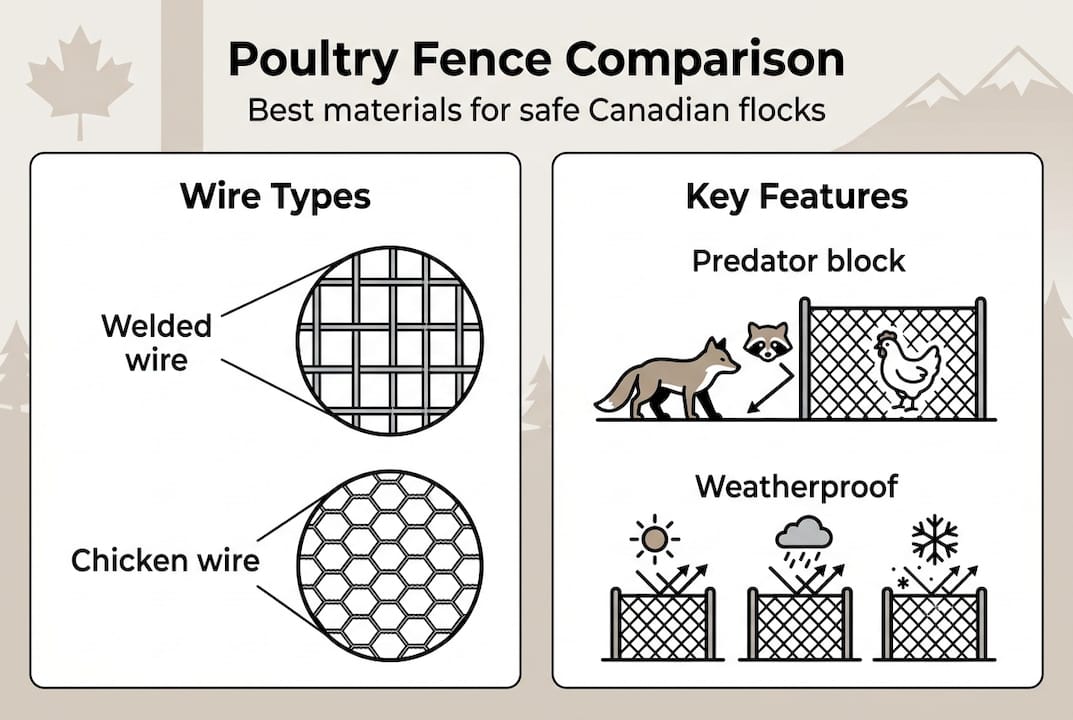
Preferred fencing materials include welded wire mesh, galvanized steel, and hardware cloth, all of which outperform basic chicken wire for strength and longevity. Chicken wire is lightweight and cheap, but its thin gauge and hexagonal weave make it easy for a raccoon to tear through or a fox to chew. It’s fine for keeping birds in, but it won’t keep determined predators out.
| Material | Predator resistance | Weather durability | Cost | Best use |
|---|---|---|---|---|
| Chicken wire | Low | Poor | Low | Temporary or inner dividers |
| Welded wire mesh | High | Good | Medium | Permanent runs and coops |
| Hardware cloth | Very high | Excellent | Higher | Coop walls and buried aprons |
| Electric netting | High (with energizer) | Good | Medium | Rotational or seasonal setups |
| Galvanized steel panels | Very high | Excellent | Higher | Long-term perimeter fencing |
For permanent installations, welded wire mesh with a galvanized coating is the workhorse choice. The welded joints don’t unravel under pressure the way woven wire can. Hardware cloth (typically 1/2-inch or 1/4-inch mesh) is the gold standard for coop walls and buried aprons because even small predators like weasels and mink can’t squeeze through.
A few key specs to keep in mind when shopping:
- Mesh size: No larger than 1 inch for the main run; 1/2 inch for coop walls
- Wire gauge: 16-gauge minimum for runs; 19-gauge or heavier for hardware cloth
- Coating: Hot-dipped galvanized lasts significantly longer than electro-galvanized in wet or snowy conditions
- Width: Choose panels wide enough to minimize seams, which are natural weak points
For a side-by-side look at how these options stack up across Canadian farm conditions, the fencing materials comparison guide breaks it down by use case. If you’re managing a smaller operation, fencing for small farms covers scaled-down solutions that don’t sacrifice security.
Pro Tip: Bury hardware cloth at the base of your run in an L-shape, with the foot of the L pointing outward away from the coop. This simple trick stops virtually all digging attempts without requiring deep trenching.
The power of electric fencing and layered defenses
Physical barriers are essential, but adding an electric layer transforms your fence from a challenge into a genuine deterrent. Predators learn fast. One memorable shock at the perimeter is usually enough to redirect a coyote or fox to easier targets elsewhere.
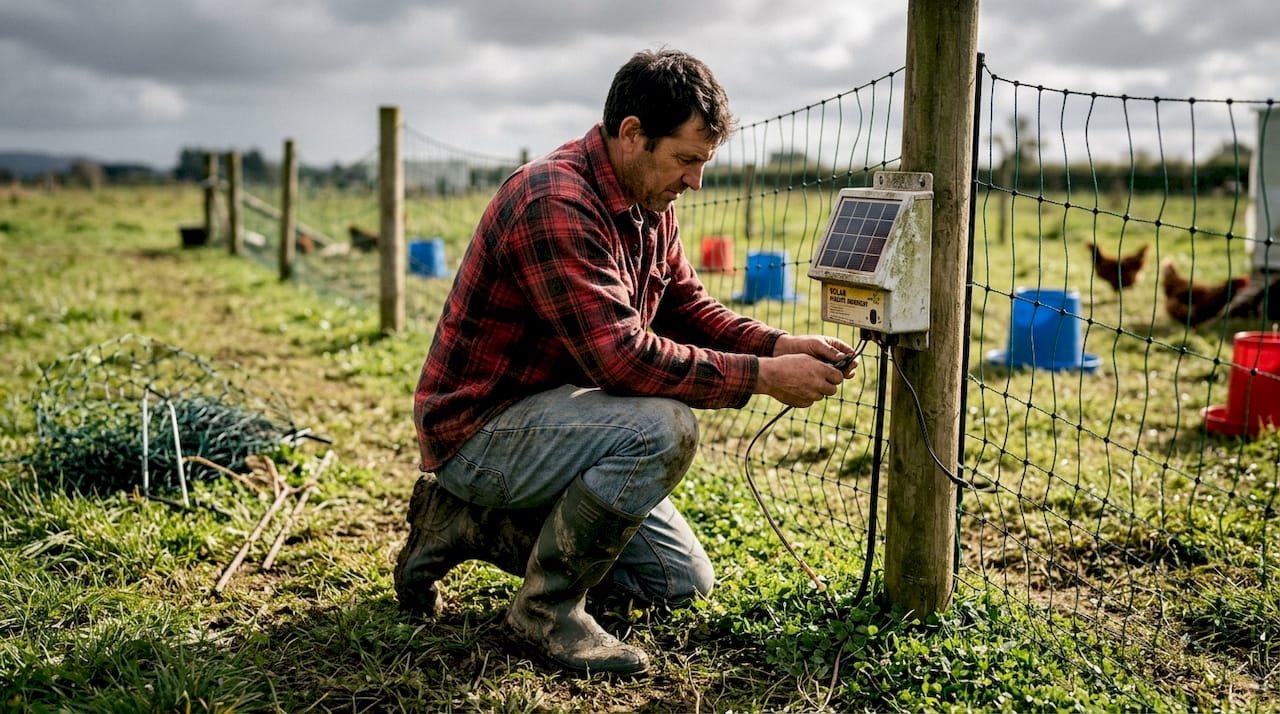
Electric fencing reduces livestock predation by 82%, with documented cases showing sheep losses drop from 147 to just 26 over three years in Alberta. That’s not a marginal improvement. It’s a fundamental shift in how well your operation is protected.
Electric netting combines a physical mesh barrier with an electrified charge. When a predator touches the fence, it receives a sharp but non-lethal shock. The result is a conditioned avoidance response. The predator associates your fence line with discomfort and stops testing it. For electric fencing for chickens, low-impedance energizers work best because they maintain a consistent charge even when vegetation contacts the wire.
The most secure setups use a layered defense strategy:
- Outer electric netting: Deters predators before they reach the main fence
- Welded wire mesh perimeter: The primary physical barrier
- Buried hardware cloth apron: Stops digging attempts at the base
- Secure coop with hardware cloth walls: Last line of defense for nighttime
| Defense type | Predator deterrence | Installation effort | Portability |
|---|---|---|---|
| Physical mesh only | Moderate | Medium | Low |
| Electric netting only | High | Low | High |
| Layered (mesh + electric + apron) | Very high | High | Low |
| Virtual fencing | Experimental | Low | Very high |
Research into virtual fencing alternatives is progressing, but for poultry, the technology is still in early stages and not a practical replacement for physical and electric solutions.
Pro Tip: Run a single strand of electric wire 6 to 8 inches out from the base of your main fence, about 6 inches off the ground. This intercepts predators before they even contact the primary barrier, and it’s one of the cheapest upgrades you can make.
Installation, maintenance, and common pitfalls
A great fence poorly installed is almost as bad as no fence at all. Canadian conditions demand attention to detail from the first post to the final gate latch.
Here’s a reliable installation sequence for a permanent poultry run:
- Measure and mark the perimeter, accounting for gate placement and any natural terrain features
- Set corner and brace posts first, at least 24 inches deep (deeper in frost-prone regions)
- Stretch wire tightly between posts to eliminate sag, which predators can push under
- Install the buried apron before attaching the main fence panel to the base rail
- Hang gates with self-closing hinges and lockable latches
- Add overhead netting if your birds are at risk from aerial predators
- Test electric components before birds are introduced to the run
Once your fence is up, maintenance is what keeps it working. Regular inspections, secure gates, and maintenance are essential to prevent breaches. A monthly walk-around takes 15 minutes and can catch small problems before they become expensive ones.
Seasonal reminder: After every hard frost or heavy snowfall, check for posts that have shifted, wire that has gone slack, or apron sections that have been pushed up by frost heave. These are the moments predators exploit.
Common mistakes that undermine otherwise solid fencing:
- Shallow posts that frost heave lifts out of the ground by spring
- Vegetation overgrowth that grounds out electric fences and reduces their effectiveness
- Ignoring local regulations on fence height or electric fence setbacks
- Skipping the apron because it seems like extra work
- Unlocked or poorly fitted gates that create an easy entry point
For operations that move birds seasonally, a portable fencing guide covers lightweight options that maintain security without permanent installation.
What most poultry fencing guides get wrong in Canada
Here’s an uncomfortable truth: most poultry fencing advice is written for mild climates and assumes a level of predator pressure that doesn’t match Canadian reality. The result is that too many farms end up with chicken wire stapled to wooden posts and a false sense of security.
Chicken wire is the single most common fencing mistake we see. It’s marketed as poultry fencing, but it keeps birds in, not predators out. A raccoon can tear through standard chicken wire with its hands. A determined fox can chew through it in minutes.
The second big gap is treating fencing as a one-time installation rather than an ongoing system. A fence that was solid three years ago may have frost-heaved posts, rusted wire, and vegetation grounding the electric line. Layered defense combining mesh, electric, and buried apron consistently outperforms any single method, but only if all three components are maintained.
Finally, most guides skip the behavioral side entirely. Training your birds to stay away from the fence line reduces accidental shocks and keeps them from pressing against weak points. And complying with provincial fence law isn’t just a legal checkbox. It protects you from liability if a neighbor’s animal is injured. For a broader view of how fencing intersects with wildlife management, wildlife and livestock fence services covers the regulatory and practical angles most guides ignore.
Trusted poultry fencing solutions for Canadian farms
Ready to protect your flock with equipment built for Canadian conditions? FenceFast Ltd. carries the full range of products you need, from permanent welded wire systems to portable electric setups.

For farmers looking to add an electric layer quickly, the electric fence accessory kit from Patriot gives you everything to get started in one package. If you need flexible perimeter protection for rotational setups, the positive/negative fence netting delivers reliable deterrence in a portable format. Our team offers design consulting to help you match the right solution to your specific farm layout, predator pressure, and budget. Nationwide shipping means you get what you need, when you need it.
Frequently asked questions
What is the best fence height to protect poultry from predators?
Fence height for poultry should be a minimum of 4 to 6 feet, adjusted based on the size of your birds and the predators active in your area. Adding an overhead net provides full enclosure protection for high-risk zones.
How can I stop foxes or coyotes from digging under my poultry fence?
Install an L-shaped apron of hardware cloth with the base buried at least 12 inches deep and angled outward away from the coop. This configuration stops virtually all digging predators without requiring a deep trench.
Is electric fencing safe for chickens and effective for predator control?
Yes. Electric netting delivers a sharp, non-lethal shock that conditions predators to avoid the fence, and reduces livestock predation by 82% based on Canadian case data. Chickens quickly learn to avoid the fence after one or two contacts.
How often should I inspect or maintain my poultry fencing?
Inspect your fence monthly and after any severe weather event, repair damage immediately, and keep vegetation trimmed away from electric lines. Regular inspections and locked gates are the simplest way to prevent costly predator breaches.

