

Picking the wrong fencing material on a Canadian farm is not just an inconvenience. It can mean a spooked horse crashing through a board fence, a flock of sheep squeezing through a gap, or a repair bill that wipes out a season’s margin. High-tensile wire fencing offers a lifespan of 20 to 40 years with low maintenance, making it a benchmark for cost-effective cattle containment. But cattle are not sheep, and Alberta winters are not the same challenge as wet coastal soils. This guide walks through the key criteria, compares the top materials, and gives you a clear framework for making the right call.
Table of Contents
- How to choose fencing materials: Key criteria for Canadian farms
- High-tensile wire: The backbone for cattle fencing
- Wood fencing: Classic visibility, more maintenance
- Woven wire: Escape-proof for sheep and goats
- Barbed wire: Budget solution for cattle perimeters
- Electric fencing: Flexible and effective modern option
- Fence post options: Durability where it matters
- Smart combos: Hybrid fences for mixed herds and budget flexibility
- Fencing materials at a glance: Cost, lifespan, maintenance
- Situational recommendations: What works best for your farm
- Find the right fencing materials and expert help
- Frequently asked questions
Key Takeaways
| Point | Details |
|---|---|
| Match fence to livestock | Choose materials based on the animals you raise to improve safety and reduce escapes. |
| Factor in weather resistance | Galvanized steel and coated wires resist harsh Canadian winters better than untreated wood. |
| Hybrid solutions work best | Mixing materials lets you balance visibility, durability, and cost on any farm. |
| Compare costs over lifespan | Consider both upfront price and maintenance to find the most cost-effective fence. |
How to choose fencing materials: Key criteria for Canadian farms
Before you price out wire or order posts, you need a clear picture of what your fence actually has to do. The right material for a 500-head cattle operation in Saskatchewan looks nothing like the right material for a mixed hobby farm in Ontario.
Here are the core criteria to evaluate:
- Animal type: Cattle tolerate high-tensile wire well. Horses need smooth, visible barriers. Sheep and goats require tight mesh to prevent escapes.
- Climate: Canadian winters demand galvanized or coated materials to resist freeze-thaw cycles and rust.
- Budget: Weigh upfront installation cost against long-term maintenance. Cheap wire that rusts in five years is not actually cheap.
- Lifespan and maintenance: Some materials need annual checks and repairs; others run decades with minimal attention.
- Flexibility: Will your herd size or land use change? Some systems adapt easily; others lock you in.
Pro Tip: Before buying anything, sketch your property and mark wet zones, predator pressure areas, and where different species graze. That map will tell you more than any product spec sheet.
For a broader overview of what works across species and terrain, the livestock fence tips and fencing solutions in Canada resources are solid starting points.
High-tensile wire: The backbone for cattle fencing
High-tensile wire is the workhorse of Canadian cattle operations. It is strong, relatively affordable, and built to handle the temperature swings that destroy lesser materials.
Key advantages:
- Cost: Low to moderate upfront, with minimal ongoing expense
- Lifespan: 20 to 40 years with proper installation
- Maintenance: Very low once tensioned correctly
- Climate performance: Galvanized coating resists rust; the wire flexes under frost pressure without snapping
High-tensile wire fencing offers the best balance of cost, durability, and suitability for cattle in Canadian conditions. That is a hard combination to beat for large pastures.
The limitation is real, though. High-tensile wire is not suitable for horses, which can panic and run through it, or for small livestock like sheep and goats that will find every gap. Use it where it belongs: cattle perimeters and large paddocks.
Pro Tip: Pair high-tensile wire with a single electric offset strand on the inside to train cattle away from the fence line. It dramatically reduces wire damage from rubbing and leaning.
For more ideas specific to your operation, see cattle fencing ideas and fencing wire solutions.
Wood fencing: Classic visibility, more maintenance
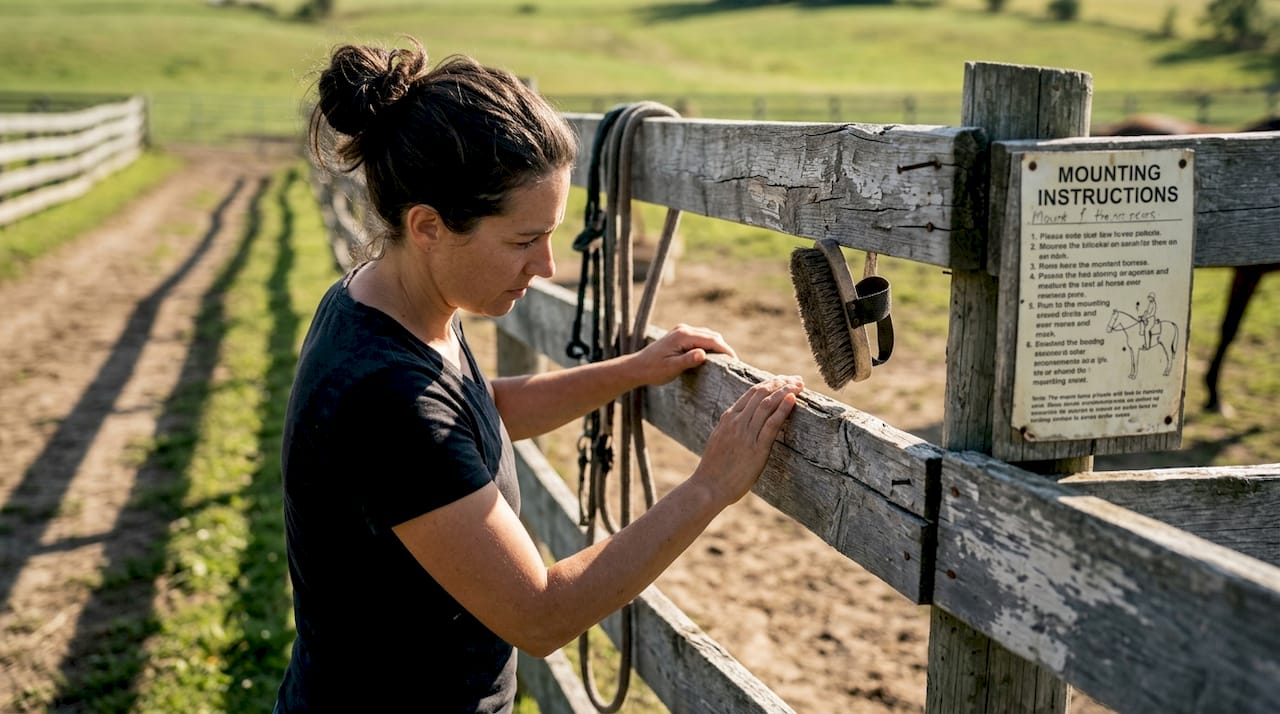
Wood fencing remains the standard for horse operations. Horses are flight animals. When startled, they run first and look second. A fence they can clearly see is a fence they are less likely to crash through.
Advantages and drawbacks:
- Visibility: High contrast against pasture backgrounds reduces collision risk
- Safety: Smooth surfaces prevent lacerations from wire
- Cost: High installation cost and frequent upkeep
- Lifespan: 10 to 20 years, shorter in wet or freeze-thaw conditions
- Weather vulnerability: Untreated wood rots fast in Canadian climates; pressure-treated or painted lumber is essential
Wood fencing provides high visibility and safety for horses but carries higher costs and a shorter lifespan with more maintenance than wire alternatives.
For large acreages, wood fencing is rarely practical as the sole material. Most horse farms use wood on high-traffic areas like paddocks and laneways, then switch to other materials for back pastures. Explore wood fence options to see how they fit into a broader farm plan.
Woven wire: Escape-proof for sheep and goats
If you have ever chased a goat through a neighbor’s garden, you understand why woven wire exists. The tight mesh pattern physically blocks small animals from pushing through, squeezing under, or finding a gap wide enough to exploit.
What makes woven wire stand out:
- Escape prevention: Mesh openings are too small for lambs and kids to pass through
- Security: Unmatched for flocks and herds that test every weakness in a fence line
- Cost: Higher material and labor costs than high-tensile or barbed wire
- Versatility: Works for mixed pastures when combined with electric offset strands
Woven wire is ideal for sheep and goats due to tight mesh preventing escapes, though the higher cost and labor-intensive installation are real trade-offs to plan for.
Pro Tip: Add a single electric wire 6 to 8 inches out from the base of woven wire fencing. It stops predators from digging under and keeps livestock from pushing against the mesh, which extends the fence’s life significantly.
For species-specific guidance, the best fencing for goats resource covers mesh sizing and height recommendations in detail.
Barbed wire: Budget solution for cattle perimeters
Barbed wire has been defining cattle country for over a century. It is still the most cost-effective option for large perimeter fencing where cattle are the only animals involved.
The case for barbed wire:
- Cost: Lowest upfront cost per foot of any permanent fencing option
- Lifespan: 15 to 25 years with basic maintenance
- Application: Best for cattle-only, large open pastures
- Limitation: Poses real injury risk to horses, sheep, and mixed herds
Barbed wire is economical for cattle perimeters but risks injury to other livestock, which is why it should never be used in mixed-species areas.
For context on real costs, 4-strand barbed wire installation runs approximately $7,400 per mile in western Canada, with roughly 2% annual maintenance costs. That is still competitive for large acreages. Review the full barbed wire guide before committing to this option.
Electric fencing: Flexible and effective modern option
Electric fencing has moved well beyond a single hot wire around a garden. Modern systems power rotational grazing setups, predator exclusion perimeters, and temporary paddocks that can be moved in under an hour.
Why electric fencing works:
- Flexibility: Reconfigure paddock sizes seasonally without pulling posts
- Effectiveness: Properly maintained electric fencing reduces escapes by up to 90% compared to passive wire alone
- Multi-species use: Works for cattle, sheep, goats, and predator exclusion with the right configuration
- Requirements: Reliable power source, regular voltage checks, quality insulators, and solid grounding
Electric fencing excels in flexibility for rotational grazing and predator control, but it is only as effective as the maintenance behind it. A dead fence is worse than no fence.
For bison-specific applications and general setup guidance, the electric fencing tips resource is worth reading. If you need a system you can move between fields, the portable fencing guide covers your options.
Fence post options: Durability where it matters
The wire is only as good as what holds it up. Post selection is one of the most overlooked decisions in fencing, and it directly determines how long your fence stays tight and upright.
Post comparison:
- Steel T-posts: Superior durability of 20 to 50 years in wet Canadian soils; resistant to rot and frost heave
- Pressure-treated wood: Good lifespan in moderate conditions; more affordable than steel for corner and brace posts
- Untreated wood: Deteriorates quickly in saturated or freeze-thaw soils; not recommended for permanent fencing
In wet or clay-heavy soils, steel T-posts can outlast untreated wood by a factor of two or more. That difference compounds over decades of fence maintenance costs.
For a full breakdown of post materials and their performance in Canadian conditions, the fence post materials guide covers everything from installation depth to frost considerations.
Smart combos: Hybrid fences for mixed herds and budget flexibility
Few Canadian farms run a single species on uniform terrain. Hybrid fencing acknowledges that reality and lets you match the right material to each zone of your property.
Common hybrid approaches:
- Wood top rail plus wire: Gives horses the visibility they need while wire handles the structural load
- Woven wire plus electric offset: Keeps small livestock in and predators out
- High-tensile perimeter plus electric interior: Cost-effective outer boundary with flexible interior paddock management
Hybrid approaches optimize safety, cost, and versatility for mixed livestock and are preferred by many Canadian farmers who need one property to serve multiple purposes.
Pro Tip: Design your hybrid system so each zone can be upgraded independently. That way, if you add a new species or expand a paddock, you are not rebuilding the whole fence from scratch.
See hybrid fencing strategies for real-world examples of how Canadian farms combine materials effectively.
Fencing materials at a glance: Cost, lifespan, maintenance
With all the options covered, here is a side-by-side comparison to help you make a fast, informed decision.
| Material | Approx. cost per foot | Lifespan | Maintenance | Best for |
|---|---|---|---|---|
| High-tensile wire | Low to moderate | 20 to 40 years | Very low | Cattle, large pastures |
| Wood | High | 10 to 20 years | High | Horses, paddocks |
| Woven wire | Moderate to high | 20 to 30 years | Low to moderate | Sheep, goats, mixed |
| Barbed wire | Low | 15 to 25 years | Low | Cattle-only perimeters |
| Electric | Low to moderate | Varies by system | Moderate | Rotational grazing, predator control |
Note that 4-strand barbed wire installation runs approximately $7,400 per mile in western Canada, giving you a real-world anchor for budget planning. For lower-cost temporary solutions, temporary fencing options are worth exploring.
Situational recommendations: What works best for your farm
Here are direct recommendations based on the most common Canadian farming setups.
- Cattle on large pastures: Use high-tensile wire or 4-strand barbed wire for perimeters. Add electric offset strands to reduce fence pressure from the herd.
- Horses: Install wood board or wood rail fencing in paddocks and high-traffic areas. Add an electric offset on the inside to discourage cribbing and leaning.
- Sheep and goats: Woven wire is non-negotiable for containment. Add electric offset at the base for predator control.
- Mixed livestock: Build a hybrid system. Use the most restrictive material (woven wire or wood) where your most escape-prone animals graze, and high-tensile or electric for the rest.
- Expanding operations: Choose modular fencing components that can be reconfigured as your herd or land use changes.
Matching fence to species is the single most important rule: visibility and smooth surfaces for horses, tight mesh for goats and sheep, and tensile strength for cattle. Mismatches lead directly to escapes and injuries.
Find the right fencing materials and expert help
Choosing fencing materials is one of the most consequential decisions you will make for your farm’s safety and long-term budget. Whether you are building a new perimeter, upgrading an aging fence line, or designing a rotational grazing system, having the right products and guidance makes all the difference.
At FenceFast, we stock everything from high-tensile wire and woven mesh to complete electric fencing systems, with nationwide shipping across Canada. If you want a hands-on solution, check out electric fence netting for portable paddock setups, or add a fence monitor to keep your electric system running at full strength. Not sure where to start? Reach out and we will help you match materials to your specific animals, terrain, and budget.
Frequently asked questions
Which fencing material lasts longest in wet Canadian climates?
Galvanized steel and high-tensile wire typically outlast wood due to superior rust and moisture resistance, often performing well for 20 to 50 years in saturated soils.
Is electric fencing safe for all types of livestock?
Properly installed electric fencing is safe and effective for cattle, sheep, and goats, but horses may need additional visible barriers to prevent panic-driven collisions.
What is the most cost-effective fencing for large cattle pastures?
Barbed wire is the most budget-friendly permanent option for cattle-only perimeters, though it should never be used where horses or small livestock are present.
How do you prevent sheep and goats from escaping?
Woven wire with tight mesh is the most reliable containment method, and adding electric offset strands at the base provides an extra layer of security against both escapes and predators.
Can I mix fencing materials on my property?
Yes. Hybrid designs combining wood, wire, and electric elements are common on Canadian mixed farms and allow you to match the right material to each zone and species.

