

TL;DR:
- High tensile fencing uses high-carbon steel wire for superior strength, elasticity, and longevity compared to traditional wire. It offers better livestock containment, reduced maintenance, and longer service life, making it the preferred choice for large-scale farms and ranches. Proper installation with strong corner assemblies and correct tensioning is essential to maximize its durability and safety.
High tensile fencing is defined as a tightly tensioned high-carbon steel wire system that delivers superior strength, elasticity, and longevity compared to conventional wire fencing. The high tensile fence pros are straightforward: fewer strands, longer service life, and better livestock containment at a lower total cost over time. Where traditional low-carbon wire sags and corrodes within a decade, high tensile wire with galvanized or polymer coatings resists rust for 30–50 years. For farmers, ranchers, and agricultural contractors across Canada, this fencing type has become the standard for perimeter and pasture work.
What are the main high tensile fence pros for livestock?
High tensile wire fencing delivers livestock containment that traditional wire simply cannot match. The wire relies on strength and elasticity rather than multiple loose strands, which means it holds its shape under pressure from cattle, horses, or hogs without permanent deformation. When an animal pushes against the fence, the wire flexes and springs back. That recovery is what keeps your fence line tight season after season.
The advantages of high tensile fencing for livestock safety go beyond containment. Here is what sets it apart from barbed or standard woven wire:
- Controlled tension maintains consistent fence height and eliminates sag gaps that allow livestock to push through or under
- Smooth wire or polymer coatings remove sharp edges that cause cuts and scrapes, especially critical for horses
- Fewer strands required means less wire to tangle with hooves or legs during a fence breach
- Higher visibility with coated wire options reduces the chance of animals running into the fence at speed
- Predictable failure behavior under extreme load, compared to the unpredictable snap of corroded barbed wire
Coated high tensile wire is the preferred choice for horses because smooth polymer coverings prevent cuts and scrapes that barbed wire causes routinely. For cattle operations, the wire’s ability to handle greater force predictably reduces the risk of a fence breach turning into a full herd escape.
Pro Tip: For horse paddocks specifically, choose a high-visibility polymer-coated high tensile wire in white or brown. Horses have wide-angle vision but poor depth perception up close, and a visible fence line prevents panic runs directly into the wire.
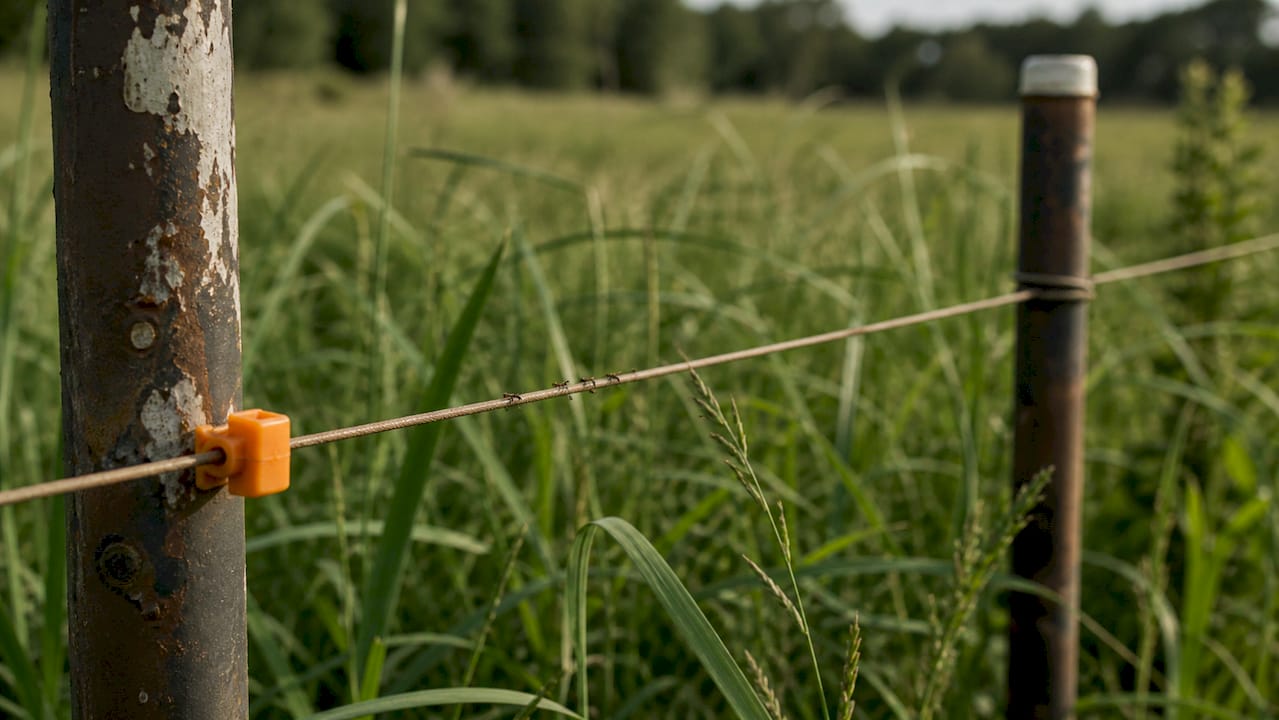
High tensile wire also maintains tension and alignment far better than loosely tensioned traditional wire, which means your fence line stays effective between maintenance checks rather than requiring constant re-tightening after every hard winter.
What are the cost and maintenance advantages?
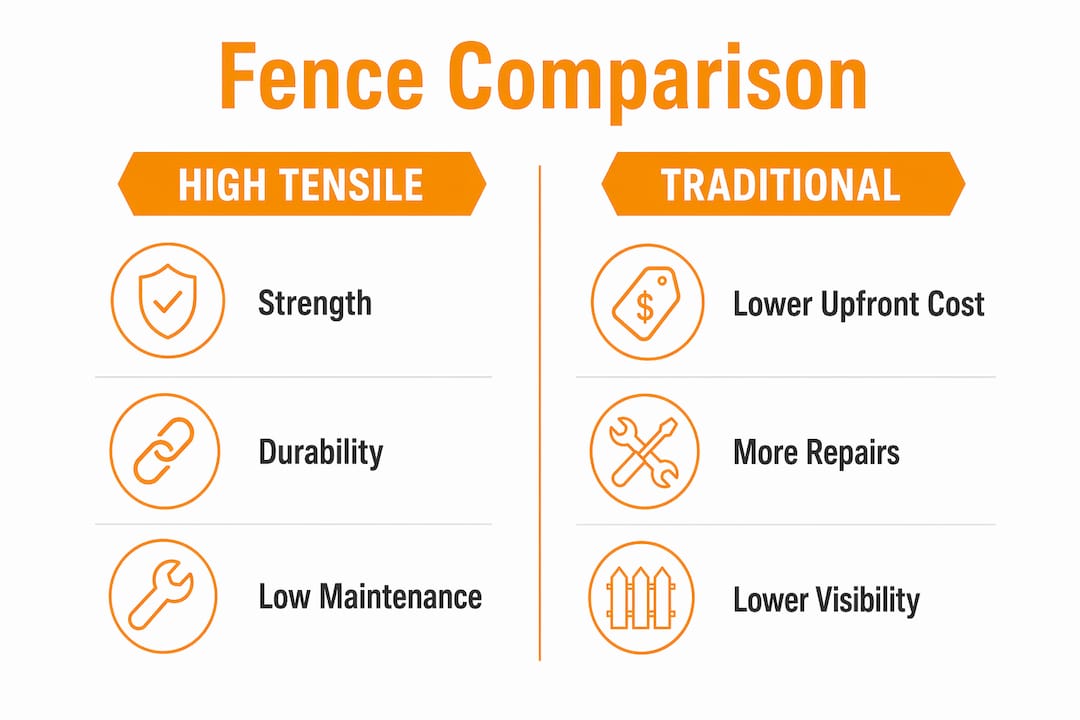
High tensile fencing costs more upfront than standard wire but delivers a significantly lower total cost of ownership. Fewer fence posts and less maintenance lead to real savings over time, and those savings compound across a 30–50 year service life.
The math favors high tensile wire on large properties. Stronger wire and higher tension enable wider post spacing and fewer wire strands for equivalent containment. On a typical cattle perimeter, you can space line posts at 30 feet or more compared to 10–12 feet for standard wire. That difference cuts your post material cost and installation labor significantly on a multi-mile fence project.
| Cost Factor | High Tensile Fencing | Traditional Wire Fencing |
|---|---|---|
| Upfront material cost | Higher per roll | Lower per roll |
| Post spacing | 25–40 feet | 10–15 feet |
| Estimated lifespan | 30–50 years | 10–15 years |
| Annual maintenance labor | Minimal | Moderate to high |
| Repair frequency | Low | High |
| Total cost over 30 years | Lower | Higher |
Galvanized Class 3 zinc coating is the key to that long service life. The coating prevents rust and wear under harsh weather, which is non-negotiable for Canadian operations dealing with freeze-thaw cycles, heavy snow loads, and spring mud. Class 3 coating provides roughly three times the zinc coverage of standard Class 1 wire, and that difference shows up directly in how long your fence survives without repair.
Pro Tip: When budgeting a new fence project, calculate cost per year of service rather than cost per foot of wire. High tensile wire at $0.08 per foot lasting 40 years beats standard wire at $0.04 per foot lasting 12 years every time.
Reduced repair frequency also means less labor time pulled away from core farm operations. A fence that needs re-tightening once every few years instead of every spring frees up significant time during the busiest seasons.
How do you install high tensile fences for best results?
Proper installation determines whether your high tensile fence performs for decades or fails in the first hard winter. The wire stores considerable mechanical energy in corner assemblies, and that energy must be properly managed through bracing and tensioning.
Follow these steps for a reliable installation:
- Build solid corner and end assemblies first. High tensile wire exerts far more force on corners than standard wire. Use a double-brace H-brace or floating brace assembly with treated posts set at least 4 feet deep in firm soil.
- Select appropriate post materials. Treated wood posts, steel T-posts, or fiberglass posts all work, but spacing and depth requirements differ. Use proper fence installation equipment to drive posts to consistent depth.
- Space line posts correctly. For flat terrain, 30-foot spacing is standard. Reduce spacing to 15–20 feet on hills, curves, or soft ground where lateral forces increase.
- Use in-line tensioners on each wire strand. Tensioners allow you to set and adjust tension without cutting wire. Target 200–250 pounds of tension for most cattle applications.
- Tension wire gradually and evenly. Never tension one strand to full load before the others. Work across all strands progressively to distribute load evenly across the brace assembly.
- Inspect brace assemblies under full tension before releasing the tensioner. Check for post movement, wire slippage at staples, and brace diagonal tightness.
- Install high tensile fence insulators if you plan to electrify the fence. Insulators rated for high tensile wire prevent energy loss and maintain shock effectiveness.
Poorly tensioned high tensile wire can snap with enough force to injure operators and animals. This is not a fence type where shortcuts in bracing pay off. If you are new to high tensile installation, consult an experienced contractor for your first corner assembly.
High tensile fencing vs. traditional fencing: which wins?
High tensile wire is 3 to 4 times stronger than traditional barbed wire and lasts significantly longer with less maintenance. That comparison alone explains why it has become the dominant choice for large-scale cattle and horse operations.
| Feature | High Tensile Wire | Barbed Wire | Woven Wire |
|---|---|---|---|
| Tensile strength | Very high | Moderate | Moderate |
| Livestock injury risk | Low (coated) | High | Low to moderate |
| Post spacing | Wide | Narrow | Narrow |
| Lifespan | 30–50 years | 10–20 years | 15–25 years |
| Maintenance needs | Low | Moderate | Moderate to high |
| Best for | Cattle, horses, perimeter | Cattle perimeter | Sheep, goats, pigs |
Barbed wire remains common on older properties, but its injury risk to livestock and handlers is a real liability. Horses in particular should never be contained with barbed wire. A spooked horse running into barbed wire can suffer severe lacerations that require veterinary care and can end a working animal’s career.
Woven wire performs well for smaller livestock like sheep and goats, but it sags over time and requires closer post spacing. For a comparison of top fencing materials used across Canadian farms, the data consistently shows high tensile wire outperforming alternatives on large perimeter applications.
The high tensile wire benefits for ranchers managing large acreage are especially clear. Wider post spacing and fewer strands reduce installation time on multi-mile projects, and the wire’s elasticity handles the ground movement and temperature swings that crack and loosen traditional wire over time.
Key takeaways
High tensile fencing delivers the lowest total cost of ownership of any wire fencing type when installed correctly on agricultural properties.
| Point | Details |
|---|---|
| Superior strength and elasticity | High tensile wire resists stretching under livestock pressure and springs back, preventing sag and gaps. |
| 30–50 year service life | Galvanized Class 3 zinc coating prevents rust and wear, far outlasting standard wire fencing. |
| Lower total cost over time | Wider post spacing and minimal maintenance reduce lifetime costs despite higher upfront material prices. |
| Safety requires proper installation | Solid corner bracing and correct tensioning are non-negotiable to prevent high-energy wire failure. |
| Best choice for horses and cattle | Polymer-coated high tensile wire eliminates sharp edges and reduces injury risk for sensitive livestock. |
What i’ve learned after years of watching fences fail
Most fence failures I’ve seen come down to one of two things: the wrong wire for the job, or a corner assembly that was not built to handle the load. High tensile wire gets blamed for failures that are actually installation errors. When a rancher tells me their high tensile fence “just let go,” the first question I ask is about the brace assembly. Nine times out of ten, the corner post was undersized or the diagonal brace wire was never properly tightened.
The other thing I’ve noticed is how dramatically coated wire has changed the conversation around horse fencing. A decade ago, most horse operations were still using board fencing or woven wire because high tensile wire felt too risky around horses. Polymer-coated high tensile wire changed that. The visibility and smooth surface make it genuinely safe for horses, and the longevity advantage over board fencing is enormous.
The ranchers I respect most treat fence installation as a long-term infrastructure investment, not a quick fix. They spend more on corner assemblies than most people expect, they use quality tensioners, and they check tension every spring. Those fences are still standing 25 years later. The ones who cut corners on bracing are rebuilding sections every few years and wondering why high tensile wire has a bad reputation on their property.
If you are evaluating whether high tensile fencing is worth it for your operation, the answer is almost always yes, provided you commit to doing the installation right the first time.
— Juiced
Get the right high tensile fencing for your operation
Fencefast carries a full selection of high tensile wire, tensioners, insulators, and bracing components for cattle, horse, and perimeter fencing projects across Canada.
Whether you are building a new pasture fence from scratch or replacing aging barbed wire on a large acreage, Fencefast has the products and expertise to help you get it right. The team offers design consulting and product guidance tailored to your livestock type, terrain, and budget. Visit Fencefast to browse the full catalog, get a quote, or connect with a fencing specialist who understands what Canadian farms actually need.
FAQ
What makes high tensile wire stronger than regular wire?
High tensile wire uses high-carbon steel that is drawn to a smaller diameter but with significantly greater tensile strength. It relies on strength and elasticity rather than multiple loose strands, which means it holds tension for decades without permanent deformation.
Is high tensile fencing safe for horses?
Yes, when polymer-coated wire is used. Smooth coated high tensile fence eliminates sharp edges and improves visibility, making it one of the safest wire fencing options available for horse paddocks and pastures.
How long does high tensile fencing last?
High tensile fencing with galvanized Class 3 zinc coating resists rust for 30–50 years under normal agricultural conditions. Proper installation and annual tension checks extend that service life further.
How does high tensile fencing compare to barbed wire?
High tensile wire is 3 to 4 times stronger than barbed wire, lasts longer, and poses significantly less injury risk to livestock and handlers. It also requires fewer posts and less frequent maintenance.
What is the biggest installation mistake with high tensile fencing?
Undersized or improperly built corner and brace assemblies are the most common failure point. High tensile wire stores considerable mechanical energy, and weak corners cannot absorb that load, leading to fence failure and potential injury.

