

TL;DR:
- Wildlife exclusion fences effectively protect crops and livestock but require careful planning and maintenance.
- Different wildlife species demand tailored fencing solutions considering height, materials, and location.
- Coordinated efforts with neighbors and ongoing management optimize long-term fence performance and wildlife coexistence.
You walk out at dawn and find your hay bales torn apart, your fence line breached, and three calves missing. It happens faster than you’d expect, and the financial hit is real. Wildlife intrusions cost Canadian farmers millions in crop and livestock losses every year. The good news is that a well-planned exclusion fence, built for your specific threat and landscape, is one of the most proven tools available. This guide walks you through every stage: understanding the wildlife pressures you face, planning and building the right fence, and keeping it working season after season.
Table of Contents
- Understanding the need for wildlife exclusion
- Planning your wildlife exclusion fence
- Step-by-step: Building effective exclusion fences
- Optimizing fence maintenance and wildlife coexistence
- A nuanced perspective on wildlife exclusion fencing
- Your next steps: Find the right fencing solutions
- Frequently asked questions
Key Takeaways
| Point | Details |
|---|---|
| Assess wildlife risks | Identify which animals and areas on your farm need targeting before building any fence. |
| Choose effective materials | Select fence types and materials that match your specific wildlife threat and landscape. |
| Follow proper installation steps | Careful planning and installation directly impact fence performance and longevity. |
| Maintain and adapt | Regular fence checks and adaptation to seasonal/wildlife changes ensure long-term protection. |
| Balance with ecosystem needs | Consider impacts on non-target species and neighbors to ensure responsible, sustainable fencing. |
Understanding the need for wildlife exclusion
Canadian farms face pressure from a wide range of wildlife species. Elk and deer browse crops and break through hay storage. Coyotes, wolves, and bears prey on livestock, sometimes repeatedly targeting the same operation. Smaller species like raccoons, porcupines, and beavers cause damage that adds up over time. Each animal requires a different fencing approach, which is why understanding your specific threat is the first step.
Fencing is widely preferred over lethal control methods because it works around the clock without ongoing human effort. Trapping and shooting can reduce local populations temporarily, but they don’t stop the next wave of animals from moving in. A physical barrier, by contrast, protects the area regardless of which individual animals are in the region that season. This is especially important in areas where wildlife populations are recovering or protected under provincial regulations.
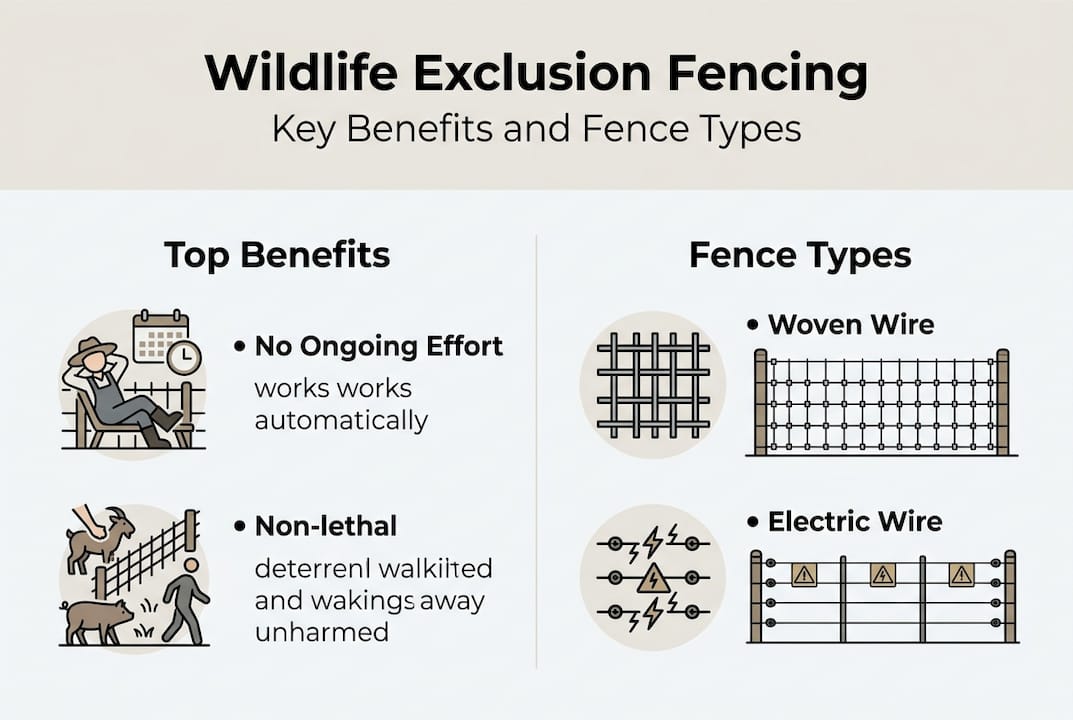
That said, exclusion fencing is not a perfect solution. Large-scale exclusion fencing is discouraged due to cost, logistics, and wildlife movement impacts, with selective fencing preferred for targeted problem zones. A fence that blocks elk from your alfalfa field may push them onto your neighbor’s land instead. That’s a real tradeoff you need to think through before you break ground.
Here are the wildlife types most commonly driving exclusion fencing decisions on Canadian farms:
- Elk and deer: Browse crops, damage fences, and raid hay storage
- Coyotes and wolves: Prey on sheep, goats, calves, and poultry
- Bears: Raid beehives, grain bins, and livestock pens
- Beavers: Flood fields and damage irrigation infrastructure
- Raccoons and porcupines: Damage stored feed and equipment
“The goal isn’t to eliminate wildlife from your landscape. It’s to protect specific high-value areas while allowing wildlife to move through lower-risk zones on your property.”
For a broader look at how exclusion strategies compare, the types of exclusion fencing available today cover everything from simple electric strands to multi-wire high-tensile systems. Understanding your options early saves money and frustration later. You can also review fence protection for farms to see how other Canadian operations have structured their exclusion plans.
Planning your wildlife exclusion fence
Good fencing starts on paper, not in the ground. Before you order a single post, you need a clear picture of where wildlife is entering, what they’re after, and what regulations apply to your land.
Start with a site assessment. Walk your property perimeter at different times of day and look for tracks, trails, browse lines, and fence damage. Mark problem zones on a map. Wildlife tend to use the same corridors repeatedly, so identifying those pathways lets you focus your fencing budget where it matters most.
Next, match your fence design to your specific threat. Elk require height. Coyotes require ground-level tension and sometimes an outrigger wire angled outward. Bears need electric deterrence because they’re strong enough to push through most physical barriers. A fence that works for deer won’t stop a determined black bear.
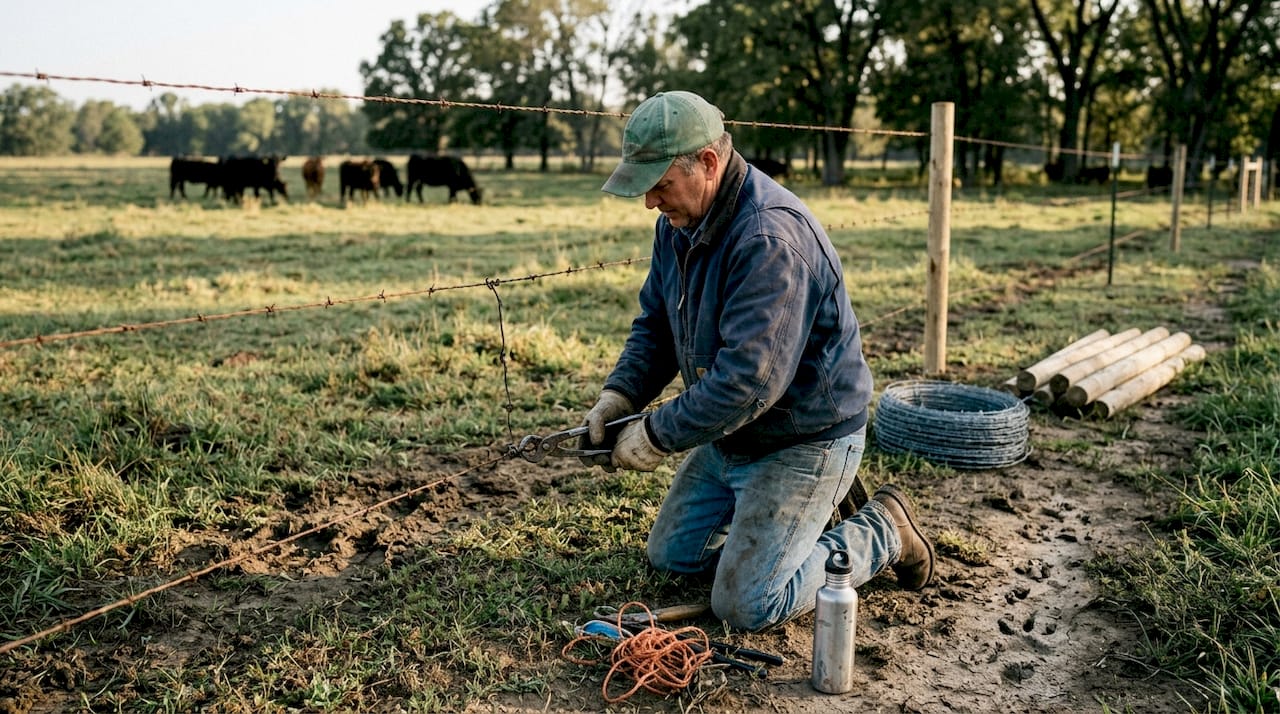
Check local regulations before you build. Many provinces have setback requirements from water bodies, roads, and property lines. Some areas restrict fencing near wildlife corridors or wetlands. Contact your local agricultural extension office or municipality to confirm what’s allowed. Wildlife-friendly fence design guidelines from provincial agencies can also help you stay compliant while protecting your operation.
Alberta’s agricultural guidelines note that securing stack yards with fencing prevents ungulate depredation on hay and silage, and that permanent 7-foot game-proof fencing is recommended for chronic problem areas. That’s a useful benchmark when sizing your investment.
Pro Tip: Map your fence line using a free GPS app before purchasing materials. Walking the actual route often reveals terrain challenges, like rocky outcrops or seasonal wet areas, that change your post spacing and material needs significantly.
Here’s a quick comparison of common exclusion fence types:
| Fence type | Best for | Approx. cost per meter | Maintenance level |
|---|---|---|---|
| Woven wire (game fence) | Elk, deer, ungulates | $8 to $15 | Low to medium |
| High-tensile electric | Bears, predators, elk | $4 to $9 | Medium |
| Polyrope electric | Temporary or rotational use | $2 to $5 | Medium to high |
| Barbed wire | Cattle containment | $2 to $4 | Low |
| Predator netting | Coyotes, foxes, poultry | $6 to $12 | Medium |
Step-by-step: Building effective exclusion fences
With your plan confirmed and materials sourced, installation comes down to doing each step right the first time. Shortcuts in fence building almost always show up as failures during the first hard winter or the first determined elk.
For woven-wire game fencing (elk and deer exclusion):
- Clear the fence line of brush, rocks, and debris for at least one meter on each side
- Set corner and brace posts first using concrete or compacted gravel for stability
- Space line posts at 3 to 4 meters apart on flat ground, closer on slopes
- Unroll woven wire and attach to corner posts before tensioning along the line
- Staple wire to wooden posts or use wire clips on steel posts, starting at the top
- Install gates with heavy-duty hinges and wildlife-proof latches on all access points
- Check for ground gaps greater than 15 centimeters and pin wire down with ground staples
For elk exclusion specifically, 2.4-meter-tall woven-wire fences or high-tensile and polyrope electric fences are the proven standard.
For electric and polyrope predator fencing:
- Set posts at 2 to 3 meter intervals with fiberglass or steel posts
- Run a ground wire at the base and alternate hot and ground wires up the fence
- Connect to a quality energizer sized for your total fence length
- Test voltage at multiple points along the line with a fence tester
- Add an outrigger wire angled outward at 45 degrees for coyote deterrence
Electric fences are key for protecting livestock from predators like coyotes, wolves, and bears, and work best when integrated with guardian animals and good husbandry practices. For more detail on energizer selection and wire configuration, see our guide on using electric fences for livestock. Pairing your fence with a livestock guardian dog or llama adds another layer of deterrence that electronics alone can’t replicate. Learn more about combining fencing with guard animals for a complete predator management system.
Pro Tip: Always test your electric fence voltage after the first hard frost. Frozen ground reduces conductivity and can drop your fence from an effective deterrent to a mild annoyance overnight.
| Fence type | Wildlife resistance | Upfront cost | Annual maintenance |
|---|---|---|---|
| Woven wire (2.4m) | High (elk, deer) | High | Low |
| High-tensile electric | High (bears, predators) | Medium | Medium |
| Polyrope electric | Medium (predators) | Low | High |
Optimizing fence maintenance and wildlife coexistence
A fence that isn’t maintained is just a suggestion. Wildlife, weather, and time work against every fence you build, so a regular inspection routine is non-negotiable.
Here’s a practical maintenance checklist to run at least twice a year, and after any major weather event:
- Walk the full fence line and look for downed posts, broken wires, or ground gaps
- Check all gate hinges, latches, and closures for wear or misalignment
- Test electric fence voltage at the energizer and at multiple points along the line
- Clear vegetation touching the wire, which drains voltage and creates ground faults
- Inspect corner braces and anchor posts for heaving caused by freeze-thaw cycles
- Look for wildlife crossing signs (tracks, hair, disturbed soil) near the fence base
Seasonal adjustments matter too. In spring, snowmelt can undermine posts and push wire out of alignment. In fall, migrating elk and deer are more aggressive in their movement and will test fence lines harder than usual. Adjust your inspection frequency during these windows.
One issue that most guides overlook: fencing shifts depredation to neighbors and can impact non-target species like snakes, which require mitigations such as refugia. A refugia is a small area or structure that gives non-target animals a safe passage or shelter near the fence. Adding a few small gaps at ground level in low-risk areas, or leaving brush piles near the fence line, can reduce the impact on beneficial species like ground-nesting birds and small reptiles.
Talk to your neighbors before and after you build. If your fence redirects elk pressure onto their land, that’s a relationship problem as much as an agricultural one. Shared maintenance agreements and coordinated fencing plans across multiple properties are far more effective than isolated solutions. For more on responsible fence management, see our resource on managing fence impacts.
“The most durable exclusion fencing programs we’ve seen involve neighbors working together, not just individual operators building higher walls.”
Pro Tip: Keep a simple fence log with photos and dates. When something fails, you’ll know exactly when the problem started and where it’s getting worse, which saves hours of troubleshooting.
A nuanced perspective on wildlife exclusion fencing
The conventional advice in most fencing guides is straightforward: build it taller, build it stronger, and your problems are solved. After working with farmers and ranchers across Canada, we’d push back on that framing.
A fence is a tool, not a strategy. The operations that see the best long-term results treat fencing as one layer of a broader approach that includes animal husbandry, local wildlife knowledge, and honest communication with neighbors and wildlife agencies. The hidden costs of exclusion fencing, including habitat disruption, ongoing time investment, and community friction, rarely show up in the upfront cost estimate.
Adaptive management beats “set and forget” every time. That means revisiting your fence design as wildlife populations shift, as your operation changes, and as you learn what’s actually working. Wildlife-friendly design principles aren’t just about being kind to animals. They’re about building systems that hold up over years, not just seasons. The farms that get this right are the ones that stay profitable and keep good relationships with their neighbors and their land.
Your next steps: Find the right fencing solutions
Now that you understand the full process from site assessment to seasonal maintenance, the next step is sourcing materials that are actually built for Canadian conditions. Not all fencing products are equal, and the wrong wire gauge or energizer size can undermine an otherwise solid plan.
At FenceFast, we carry woven-wire game fencing, high-tensile electric systems, and everything in between, all selected for the demands of real farm and ranch operations. Whether you need a complete setup for elk exclusion or a targeted solution like predator-proof electric fence netting for your poultry or sheep, our team can help you match the right product to your specific threat and budget. We also offer design consulting and ship nationwide across Canada.
Frequently asked questions
What is the best type of fence for keeping elk out?
A 2.4-meter woven-wire fence or a high-tensile and polyrope electric fence is the proven standard for elk exclusion on Canadian farms.
How do I stop predators like coyotes or bears from attacking my livestock?
Use electric fencing for predators designed with alternating hot and ground wires, and integrate it with livestock guardian animals and strong nighttime husbandry practices for best results.
Can exclusion fences harm wildlife or the ecosystem?
Yes, fencing can shift depredation to neighboring properties and affect non-target species, so adding refugia and coordinating with neighbors helps reduce those broader impacts.
How often do wildlife exclusion fences need maintenance?
Inspect your fence at least twice a year and after any major storm or heavy snowfall, since freeze-thaw cycles, vegetation growth, and wildlife pressure can compromise integrity faster than most farmers expect.

