

TL;DR:
- Fencing laws in Canada vary by province, with differences in responsibilities, costs, and standards. Livestock owners are liable for escape and damages caused by inadequate fences. Funding programs are available in some provinces to support modern, predator-resistant fencing solutions.
Many livestock owners assume fencing rules are roughly the same from coast to coast in Canada. They’re not. Each province sets its own standards for fence height, materials, cost-sharing, and liability, and what’s perfectly legal in Alberta may not meet the requirements in Ontario or British Columbia. Getting this wrong can mean costly disputes with neighbors, fines, or serious liability if your animals stray onto a highway or damage a neighboring crop. This guide covers the key provincial frameworks, who pays for what, what adequate containment actually means in law, and how to choose fencing solutions that keep you compliant without breaking the bank.
Table of Contents
- How fencing laws are structured across Canada
- Provincial highlights: Ontario, Alberta, BC, and beyond
- Livestock containment: responsibilities and liability
- Modern solutions: fence types, costs, and funding support
- Why practical knowledge matters more than reading the law
- Expert solutions for Canadian agricultural fencing
- Frequently asked questions
Key Takeaways
| Point | Details |
|---|---|
| Provincial rules differ | Each Canadian province has its own fencing laws, so there is no single national standard to follow. |
| Cost-sharing depends on benefit | Fence maintenance and building costs are usually split by benefit, not always 50/50 between neighbors. |
| Livestock owners are liable | If animals escape due to poor fencing, owners can be liable for damages—even if on the neighbor’s side. |
| Practical solutions save money | Electric and predator-resistant fencing, plus available government grants, can boost compliance and cut long-term costs. |
How fencing laws are structured across Canada
The first thing to understand is that fencing laws in Canada for agricultural properties are regulated at the provincial level, with no overarching federal legislation covering the whole country. That means your obligations depend entirely on where your land sits. Provincial acts govern boundary fences between neighbors, while municipal bylaws can add stricter rules on top of those.
There’s also an important distinction that trips up a lot of producers: a line fence (a boundary fence between two properties) is treated differently from a livestock containment fence. Line fences are typically a shared responsibility. Containment fences are your problem alone, because they exist to keep your animals in. This matters enormously when a dispute arises.
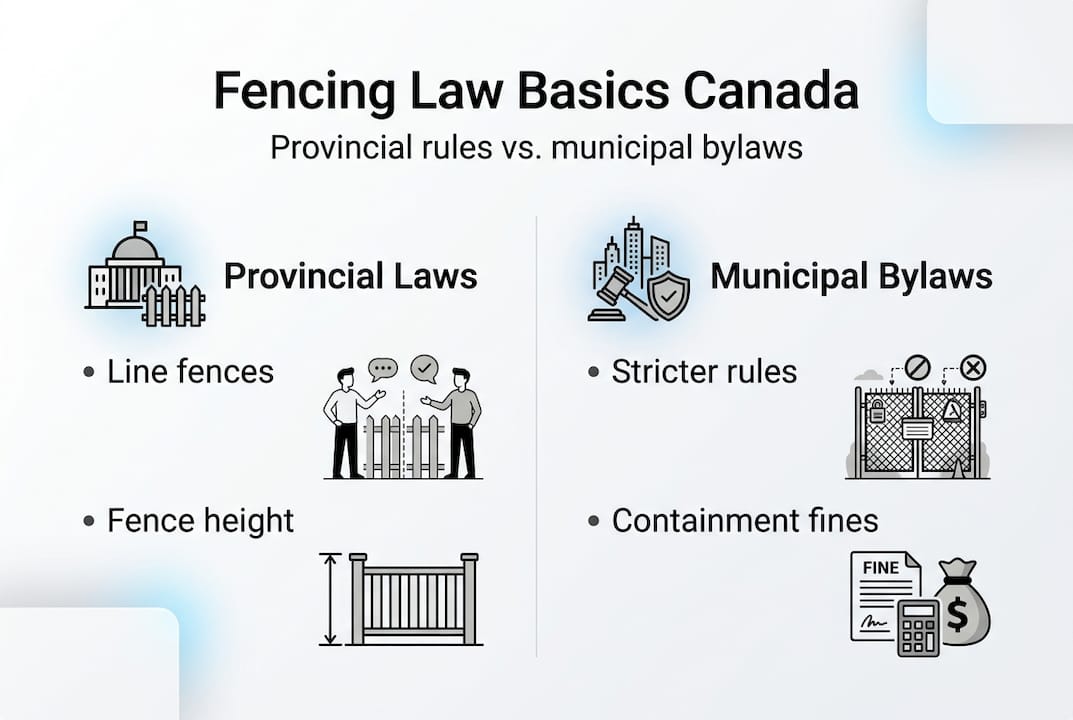
Here’s a quick comparison of how the basic framework differs across major provinces:
| Province | Governing legislation | Cost-sharing model | Min. height (general) |
|---|---|---|---|
| Ontario | Line Fences Act | Equal or benefit-based | 4 ft |
| Alberta | Line Fence Act | Proportional to benefit | 4 ft |
| British Columbia | Trespass Regulation | Negotiated or benefit | 4.5 ft |
| Manitoba | Agroforestry and Grazing Act | Benefit-based, with funding | 4 ft |
Key things to keep in mind about this framework:
- Equal cost-sharing (50/50) is common but not universal. Provinces like Alberta tie the split to who benefits most from the fence.
- Highways, railways, and federal Crown lands follow separate rules entirely. If your property borders a highway, contact your provincial transport authority before building.
- Municipal bylaws can impose stricter height or material requirements than provincial minimums.
- Unorganized territories (remote areas without municipal government) often fall under provincial defaults with less local oversight.
“The assumption that a 50/50 split is automatic is one of the most common mistakes we see. In provinces where cost is tied to benefit, a neighbor with no livestock might owe far less than half.”
For a deeper look at how agricultural fencing in Canada is designed and built to meet these varied standards, it helps to understand both the legal minimums and the practical performance of different fence types.
Provincial highlights: Ontario, Alberta, BC, and beyond
Let’s get specific, because the details matter when you’re planning a build or dealing with a neighbor dispute.
Ontario operates under the Ontario Line Fences Act, which governs boundary fences between properties. In Ontario, costs are shared based on mutual benefit, often 50/50, but a fence-viewer (an appointed arbitrator) can adjust that split if one party benefits more. If your livestock stray and damage a neighbor’s crops, you carry the liability. Ontario also allows either party to trigger a formal fence-viewing process if a dispute can’t be resolved informally.
Alberta takes a similar approach but is more explicit about benefit-based cost allocation. The Alberta Line Fence Act requires adjoining owners to share costs proportional to benefit, which means a rancher with a full herd typically pays more than a neighbor who just wants to mark a boundary. Alberta also distinguishes between fences built to keep livestock in versus those built to keep them out, which affects who initiates and funds the build.
British Columbia prescribes specific fence heights and materials through its Trespass Regulation. Lawful fences in BC must meet defined construction standards, and there are special provisions for properties near hay fields and crops where livestock trespass risk is higher. The minimum height is generally 4.5 feet, slightly higher than other provinces.
Manitoba stands out for its funding support. The province offers financial assistance for predator-resistant fencing through its fencing program, which is particularly valuable for producers dealing with wolf or bear pressure. Manitoba’s framework emphasizes both containment and predator exclusion as equally important goals.
Here’s a practical numbered checklist before you start any fence project:
- Identify whether the fence is a line fence, containment fence, or both.
- Check your provincial legislation and your municipal bylaw for minimum height and material specs.
- Notify your neighbor in writing before starting any shared boundary fence.
- Document the land boundary with a survey if there’s any doubt.
- Research available funding programs before purchasing materials.
Pro Tip: If you’re building near poultry operations, specific containment requirements apply. Check out poultry fencing solutions for species-specific guidance that also aligns with provincial rules.
For step-by-step guidance on how to actually execute a build that meets these requirements, the fence installation steps resource is worth reviewing before you break ground.
Livestock containment: responsibilities and liability
This is where the stakes get real. Livestock owners are responsible for preventing animals from straying, and if your fence is inadequate and animals escape, you can be held liable for any damages they cause. That includes vehicle collisions, crop destruction, and injury to people or other animals.
What does “adequate” actually mean in practice? Most provinces use these benchmarks:
- Minimum height of 4 to 4.5 feet depending on species and province.
- Posts set no more than 16 feet apart for standard wire fencing.
- Wire gauge and strand count appropriate for the species being contained (cattle vs. horses vs. pigs require different specs).
- No gaps larger than the smallest animal being contained can fit through.
- Regular inspection and maintenance, because a fence that was adequate three years ago may not be today.
Municipal bylaws and animal welfare legislation can impose stricter rules than provincial minimums. Some municipalities require double fencing near roads or additional signage warning of livestock crossings. Ignoring these local additions is just as risky legally as ignoring the provincial act.
The financial consequences of a containment failure can be severe. A single incident where cattle get onto a highway can result in tens of thousands of dollars in vehicle damage claims, not counting legal fees or increased insurance premiums. In some cases, producers have faced negligence suits that threatened the entire operation.
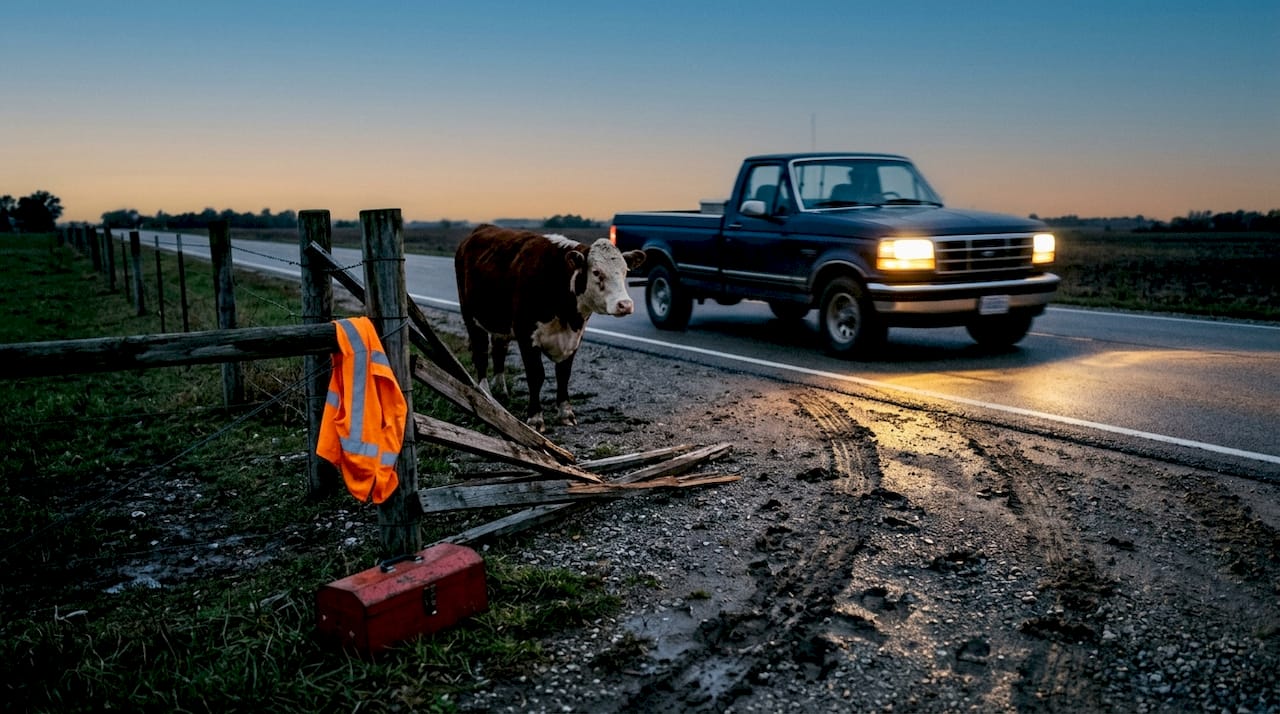
Electric fencing changes this picture significantly. Electric fencing reduces livestock escapes by 85 to 90% compared to passive wire alone, making it one of the most effective compliance tools available. It also works as a strong deterrent for predators.
Pro Tip: For operations near wildlife corridors, combining electric fencing with anti-predator fence options gives you double protection: containment compliance and predator exclusion in one system. A wildlife friendly fence design can also help you avoid conflicts with wildlife regulations.
Modern solutions: fence types, costs, and funding support
Knowing your legal duty is only half the battle. Choosing the right fence type and tapping into available funding can make compliance both practical and affordable.
Here are the most common options for Canadian livestock operations and what to expect:
- High-tensile wire: Lifespan of 20 to 30 years, cost roughly $75 to $120 per 100 feet. Excellent for cattle and horses. Meets provincial minimums in most cases when properly installed.
- Electric netting: Highly flexible, ideal for rotational grazing and poultry. Lower upfront cost but requires a reliable power source or solar charger.
- Predator-resistant woven wire: Higher cost but essential for sheep, goats, and poultry in areas with wolf, coyote, or bear activity.
- Portable electric systems: Great for temporary paddocks and seasonal moves. Check out portable fence systems for options suited to Canadian conditions.
On the funding side, the picture is better than most producers realize. Manitoba offers up to 75% of costs, to a maximum of $40,000, for qualifying predator-resistant fencing projects. Federal agricultural programs also support fencing upgrades tied to environmental stewardship and water management goals.
Pro Tip: Before purchasing materials, check the farm fencing grants available in your province. Some programs require pre-approval before construction begins, so timing matters.
For producers dealing with wolf or coyote pressure, predator control fencing designed to meet both containment and exclusion standards is worth the investment. It often qualifies for the highest funding tiers.
Why practical knowledge matters more than reading the law
Here’s something most legal guides won’t tell you: the producers who end up in formal arbitration or court are rarely there because they didn’t know the law. They’re there because they didn’t act early, didn’t document anything, and let a small disagreement fester into a formal dispute.
The legal texts themselves are often dense and hard to interpret without context. Reading the Line Fences Act won’t tell you how a fence-viewer in your county typically rules, or what your neighbor’s actual expectations are. That knowledge comes from conversations, not statutes.
In our experience, most fence disputes between neighbors are resolved before they reach formal channels if both parties communicate early and keep written records of every conversation, agreement, and inspection. A simple email confirming a verbal agreement is worth more in practice than a thorough reading of the provincial act.
The most common and costly errors we see are unclear property boundaries (get a survey done before you build), neglected maintenance (inspect twice a year minimum), and failing to check for local bylaw updates (municipalities revise these more often than you’d think). Choosing durable fencing solutions from the start reduces maintenance headaches and keeps you on the right side of evolving standards.
Build good fences. Build better relationships with your neighbors. Document everything. That combination solves 90% of compliance problems before they start.
Expert solutions for Canadian agricultural fencing
If you’re ready to build or upgrade and want products that meet provincial standards without the guesswork, FenceFast has the tools and expertise to help. We supply agricultural operations across Canada with everything from high-tensile wire and posts to complete electric fencing systems designed for cattle, horses, poultry, and predator exclusion.
For electric containment, our electric fencing kits are a reliable starting point that works with both permanent and portable setups. If predator pressure is your primary concern, predator-resistant netting delivers proven performance for sheep, goats, and poultry operations. Our team also offers design consulting to help you plan a system that meets your provincial requirements and qualifies for available funding programs.
Frequently asked questions
Who is responsible for fence maintenance between properties in Canada?
Fence maintenance is typically shared between neighboring property owners, with costs split equally or based on benefit according to provincial law. The party that benefits more from the fence often pays a larger share.
What is the minimum legal fence height for livestock in most Canadian provinces?
Most provinces set minimum heights between 4 and 4.5 feet for lawful livestock fences, but always check your local bylaws for species-specific or location-specific requirements.
Are livestock owners liable if animals escape due to inadequate fencing?
Yes. Owners may be held liable for property damage, vehicle collisions, or injuries caused by straying livestock if the fencing was found to be insufficient or poorly maintained.
Does the federal government set fencing laws for Canadian farms?
No. Fencing laws are set by provinces and local municipalities, not the federal government. Federal rules only apply to specific situations like fencing near federal Crown land or railways.
Can I get government funding for building or upgrading livestock fences in Canada?
In many provinces, yes. Manitoba offers up to 75% of costs, to a maximum of $40,000, for qualifying predator-resistant fencing projects, and other provinces have similar programs tied to environmental and livestock management goals.
Recommended
- Fence installation steps for Canadian farms: A practical guide – FenceFast Ltd.
- Agricultural fencing in Canada: choosing durable solutions – FenceFast Ltd.
- Best poultry fencing solutions for safe Canadian flocks – FenceFast Ltd.
- Horse Safe Fencing Materials Guide for Canadian Owners 2026 – FenceFast Ltd.

