

TL;DR:
- Fence insulators keep electric fence wires away from posts to prevent shorts and contain livestock. Different types suit various post materials, wire types, and environmental conditions, with UV-resistant and durable options essential for long-term reliability. Proper matching, regular inspection, and selecting the right design prevent costly failures and ensure effective livestock fencing.
Fence insulators are specialized devices that hold electric fence wires away from posts, preventing electrical shorts and keeping livestock contained. Without them, any contact between a live wire and a grounded post kills the charge instantly. Choosing the right insulator types for fencing depends on your post material, wire type, livestock species, and climate. Agricultural fencing standards in 2026 require insulators that resist UV degradation, handle mechanical stress from animals, and perform reliably through freeze-thaw cycles. Fencefast carries a full range of options built to meet those demands across Canadian farm conditions.
What are the main insulator types for fencing?
Fence insulators fall into three primary categories based on material: plastic, porcelain, and composite. Each serves a different set of conditions, and picking the wrong one costs you time and money within a single season.
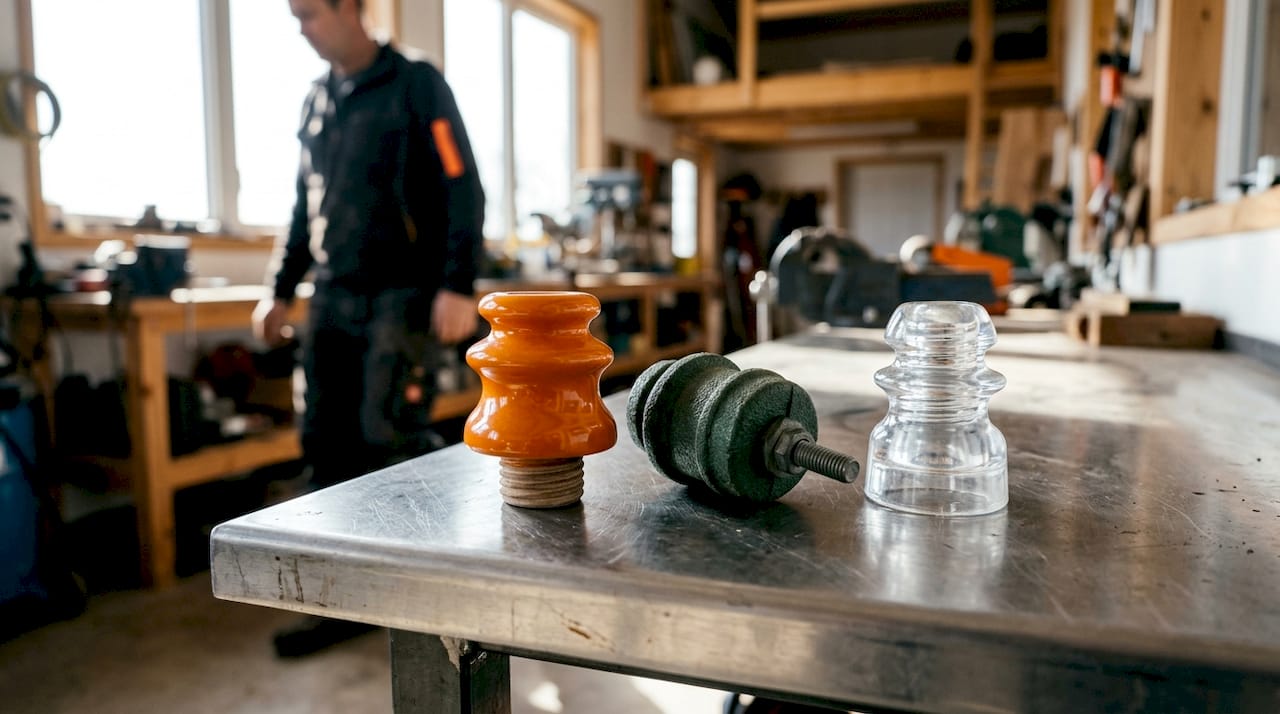
Plastic insulators, made from polyethylene, nylon, or polycarbonate, are the most common choice on working farms. They are lightweight, inexpensive, and easy to install without tools. The trade-off is longevity. Plastic degrades faster than porcelain under prolonged sun exposure, especially when the material lacks a certified UV rating.
Porcelain insulators are manufactured from clay, quartz, and feldspar. That composition makes them exceptionally resistant to cold weather and long-term outdoor exposure. Farmers running permanent perimeter fences in northern climates favor porcelain because it does not crack under freeze-thaw stress the way lower-grade plastics do.
Composite and rubber insulators occupy the middle ground. They absorb shock, flex with fence movement, and resist both UV radiation and chemical pollution. These are the right call near gates, corners, or any section of fence that experiences regular mechanical stress.
Design styles and what they do
Beyond material, insulators differ by mounting design. Each style fits a specific post type or wire format:
- Screw-in insulators: Thread directly into wood posts. They hold wire at a fixed distance from the post face and require no additional hardware.
- Nail-on insulators: Hammered into wood posts. Faster to install than screw-in types but slightly less secure under heavy lateral load.
- Snap-on insulators: Clip onto metal T-posts without tools. They are the fastest option for large-scale temporary or semi-permanent fencing.
- Wrap-around insulators: Loop around T-post flanges for a more secure grip than snap-on types. Better for permanent runs where wire tension is high.
- Pin-type insulators: Used on fiberglass or round steel posts. They slide over the post and lock in place.
- Offset insulators: Mount on existing posts and extend the wire outward by several inches. Standard for adding electric wire to an existing non-electric fence.
Pro Tip: Buy a small quantity of each style before committing to a full fence run. Test fit and pull strength on your actual posts before ordering in bulk.
How do you match insulators to your post and wire type?
Post material is the single biggest factor in insulator selection. Getting this wrong means loose wire, poor electrical isolation, or insulators that fail under the first hard frost.
Wood posts
Screw-in and nail-on insulators are built for wood posts. Screw-in types provide the strongest hold and are the right choice for permanent cattle or horse fences where wire tension stays high year-round. Nail-on types work well for temporary paddocks or sheep fencing where you may need to reposition wires seasonally. Both styles keep the wire clear of the post surface, which prevents grounding and energy loss.
Metal T-posts
Snap-on and wrap-around insulators are designed specifically for T-posts. Snap-on types clip onto the post tabs in seconds, making them the fastest option for long fence runs. Wrap-around types grip the post more firmly and handle higher wire tension without slipping. For T-post electric fence setups with cattle or bison, wrap-around is the safer choice.
Steel pipe and chain link posts
Steel pipe posts need offset insulators or specialty clamp-style brackets that bolt onto the pipe. These hold the wire away from the grounded metal surface. Chain link fences require a different approach entirely. Insulators for chain link attach to the top rail or posts and create electrical isolation between the live wire and the grounded mesh. Fencefast covers this application in detail for producers who need to electrify chain link enclosures.
Wire and tape compatibility
| Wire or tape type | Best insulator style | Key consideration |
|---|---|---|
| High-tensile wire | Screw-in or wrap-around | Needs firm grip under high tension |
| Polywire | Snap-on or pin-type | Lighter tension, easy clip-on works |
| Polytape (wide) | Wide-channel snap-on | Channel must match tape width |
| Polyrope | Ring or loop insulators | Rope needs a smooth, rounded channel |
| Braid wire | Standard screw-in | Treat like high-tensile for tension |
The 5-inch wire offset is the accepted standard for cattle and horse fencing. That distance keeps the wire far enough from the post to prevent shorts while positioning it correctly for animal contact. Smaller livestock like sheep or pigs need less offset, but never less than 2 inches on any post type.
Pro Tip: On mixed-post fences where you use both wood and T-posts, buy insulators for each post type separately. Universal insulators rarely grip either post type as well as purpose-built options.
What performance features matter most in fencing insulators?
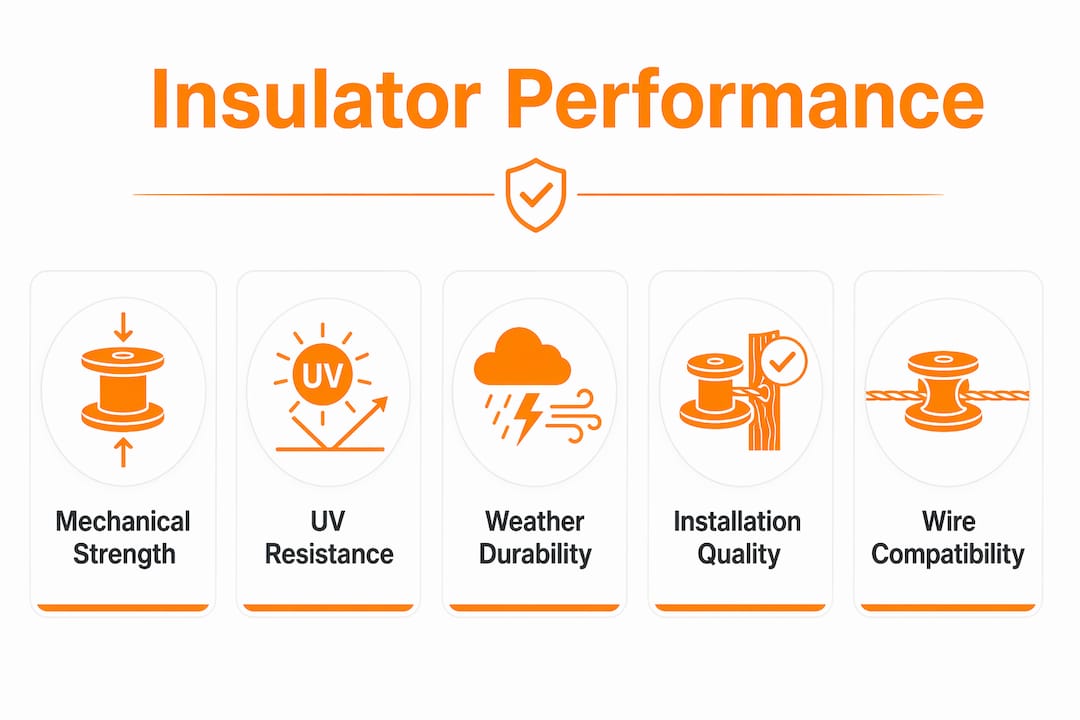
Mechanical strength is the first filter. High-strength insulators for permanent agricultural fencing must withstand at least 100 pounds of lateral pull force. That threshold matters because a 1,200-pound bull leaning into a fence wire generates exactly that kind of load. An insulator that fails at 60 pounds is a liability, not a component.
UV resistance is the second filter, and it is where most farmers make costly mistakes. Non-UV-rated plastic insulators can crack and become brittle within a single season of sun exposure. The fix is simple: look for insulators explicitly labeled as UV-stabilized or UV-certified for outdoor agricultural use. The price difference between standard and UV-rated plastic is small. The cost of replacing an entire fence run of failed insulators is not.
Seasonal and chemical threats
- Frost and ice accumulation: Ice on insulators creates a conductive path between the wire and the post, causing shorts and draining your fence charger. Inspect every insulator after a hard freeze and clear any ice bridging the gap between wire and post.
- Freeze-thaw cycling: Repeated expansion and contraction loosens screw-in and nail-on insulators in wood posts. Re-tighten or replace any that show movement after winter.
- Chemical exposure: Fertilizers, manure, and pesticides accelerate plastic degradation. In high-exposure areas, composite or porcelain insulators outlast standard plastic by several seasons.
- Salt air: Coastal or saline environments corrode metal components in standard insulators. Use non-metallic or stainless-steel-hardware insulators in these conditions.
Installation method and long-term reliability
How you mount an insulator affects how long it holds. Screwed insulators outlast nailed ones on wood posts because screws resist pull-out under repeated wire tension cycles. On steel pipe posts, bolted clamps outperform friction-fit options in every climate. Welded mounts are permanent and the strongest option for fixed infrastructure, but they eliminate any future flexibility.
Pro Tip: Carry a handful of replacement insulators during every fence inspection. Replacing a cracked insulator on the spot takes 30 seconds. Tracking down a short across a quarter-mile fence run takes an hour.
What specialty insulators work for gates, corners, and harsh environments?
Standard insulators handle straight fence runs well. Gates, corners, and extreme environments need purpose-built designs.
Specialty insulators like double-U clips, harp clips, and corner strain types are built for locations where wire changes direction or carries extra tension. Corner and end strain insulators distribute tension across the insulator body rather than concentrating it at a single point. That design prevents the cracking and pull-out failures common at fence corners.
- Double-U insulators: Hold two wires at fixed spacing on a single post. Useful on multi-wire cattle fences where wire spacing must stay consistent.
- Harp clips: Designed for quick attachment and removal. The right choice for temporary paddocks or rotational grazing setups where fence lines change frequently.
- Corner strain insulators: Built to handle the full tension load at fence ends and corners. These use reinforced plastic or metal-banded construction.
- Metal-banded or fiberglass-reinforced insulators: Rated for extreme environments including high wind, heavy snow load, and saltwater exposure.
- Chain link offset brackets: Attach to chain link posts and rails, holding the live wire at a safe distance from the grounded mesh.
For temporary fencing, prioritize insulators with tool-free installation and removal. Harp clips and snap-on types let you reconfigure a paddock in minutes. For permanent fences in harsh climates, invest in porcelain or metal-banded composite types that will outlast the posts themselves.
Key Takeaways
Matching insulator material, design style, and post type is the foundation of a reliable electric fence system.
| Point | Details |
|---|---|
| Material determines lifespan | Porcelain outlasts plastic in cold climates; UV-rated plastic is the minimum for any outdoor application. |
| Post type drives insulator choice | Screw-in for wood, snap-on or wrap-around for T-posts, bolted clamps for steel pipe. |
| 100 lbs pull force is the benchmark | Permanent livestock fences need insulators rated to withstand at least 100 pounds of lateral force. |
| UV certification prevents early failure | Non-UV-rated insulators can crack within one season, causing shorts and power loss. |
| Inspect after every winter | Frost and ice create shorts; re-tighten or replace insulators that show movement or cracking after freeze-thaw cycles. |
What I’ve learned after years of watching fence systems fail
The most common insulator failure I see has nothing to do with the insulator itself. It comes from a mismatch: a snap-on insulator on a post with the wrong flange size, or a screw-in type installed in punky wood that can’t hold a thread. The insulator looks fine. The fence fails anyway.
My honest recommendation is to treat insulator selection the same way you treat post selection. Match the spec to the job. A UV-rated, 100-pound-rated screw-in insulator costs a few cents more than a generic version. Over a 10-year fence lifespan, that difference is irrelevant. The cost of one livestock escape or one fence charger burned out by a persistent short is not.
The 5-inch offset standard for cattle and horse fencing is not a suggestion. It is the number that keeps your wire in the right position relative to the animal’s body. Shorter offsets on large livestock fences are a false economy.
One more thing: do a full insulator inspection every spring, not just when you notice a problem. Winter weather loosens, cracks, and degrades insulators in ways that are not visible until the fence goes dead. Catching a cracked insulator in april costs you nothing. Catching it in july after three weeks of cattle in the wrong pasture costs you considerably more.
— Juiced
Fencefast has the insulators your fence actually needs
Fencefast stocks a full selection of electric fence insulators built for Canadian agricultural conditions, covering wood posts, T-posts, steel pipe, and chain link applications. Every product in the lineup is selected for UV stability, mechanical durability, and compatibility with the wire and tape types farmers actually use.
Whether you are building a permanent perimeter fence for cattle or setting up rotational paddocks for sheep, Fencefast carries the right insulator for the job. The Fencefast catalog includes screw-in, snap-on, wrap-around, offset, and specialty corner types, with nationwide shipping across Canada. Browse the full selection and get your fence built right the first time.
FAQ
What is the difference between plastic and porcelain fence insulators?
Plastic insulators are lightweight and cost-effective but degrade faster under UV exposure and cold. Porcelain insulators last longer in harsh climates and resist freeze-thaw damage, making them the better choice for permanent fences.
How do I choose the right insulator for a T-post?
Snap-on insulators clip onto T-post tabs without tools and work well for most applications. Wrap-around types provide a stronger grip for high-tension wire on permanent cattle or horse fences.
Why does wire offset matter for livestock fencing?
A 5-inch wire offset keeps the live wire positioned correctly for animal contact and prevents shorts caused by wire touching the post. Insufficient offset is one of the most common causes of fence failure on cattle and horse operations.
How often should I inspect and replace fence insulators?
Inspect insulators every spring after the freeze-thaw season and after any major storm. Replace any insulator that shows cracking, brittleness, or movement, since frost and ice can cause shorts that drain your fence charger or damage it entirely.
Do I need special insulators for chain link fences?
Yes. Standard insulators do not provide adequate isolation on chain link. Purpose-built chain link offset brackets attach to the post or rail and hold the live wire away from the grounded mesh, maintaining full electrical isolation.

