

TL;DR:
- Effective livestock containment combines layered physical barriers, behavior-aware design, and electronic detection systems. Regular inspection and maintenance are essential to prevent escapes and ensure system reliability. Virtual fencing and AI technologies offer new management options but should complement solid physical fencing as part of a layered approach.
Livestock containment solutions are systems that use physical fencing, electronic detection, and behavior-based design to securely enclose farm animals and protect pasture productivity. The most effective setups combine multiple containment layers — perimeter fencing, internal divisions, and electronic monitoring — rather than relying on a single fence line. Fencefast supplies Canadian farmers with everything from traditional woven wire and electric fencing to Gallagher eShepherd virtual fencing technology, covering cattle, horses, pigs, and poultry. Getting containment right reduces escapes, lowers labor costs, and directly improves animal welfare.
What are the best livestock containment solutions for your farm?
The industry term for this category is “livestock containment,” and it covers every barrier, gate, sensor, and management protocol that keeps animals where you want them. The right system depends on your species, terrain, and budget. Woven wire, electric fencing, portable electric netting, and heavy-duty metal panels each serve a different purpose. No single product works for every farm, which is why understanding the options matters before you spend a dollar.
| Fence type | Best for | Typical height | Maintenance level |
|---|---|---|---|
| Woven wire | Sheep, goats, pigs | 4–5 ft | Medium |
| Electric wire | Cattle, horses | 3–5 ft | Low to medium |
| Portable electric netting | Poultry, sheep, rotational grazing | 2–4 ft | Low |
| Heavy-duty metal panels | Cattle, hogs | 4–6 ft | Low |
Woven wire is the workhorse of farm animal enclosures. It handles pressure from sheep and goats that push and rub constantly. Electric wire works well for cattle and horses because those animals learn quickly to respect the shock. Hot-dip galvanized panels made from low-carbon steel add durability and protective top caps that reduce animal injury at high-traffic areas. Metal panels cost more upfront but require almost no maintenance over a decade of use.
Pro Tip: Match fence material to the animal’s primary escape behavior. Diggers like pigs need a buried apron or a low electric strand at ground level. Jumpers like horses need height and a top rail they can see clearly.
Portable electric netting is the most underrated tool in rotational grazing. Rolls weigh as little as 13 lbs and new users can set up a paddock in under 10 minutes. That speed makes daily or weekly paddock moves practical, which improves pasture recovery and reduces overgrazing. For a deeper look at how electric netting fits into a grazing system, Fencefast’s guide on electric netting for farmers covers setup and species-specific tips.
How do smart detection technologies enhance livestock containment?
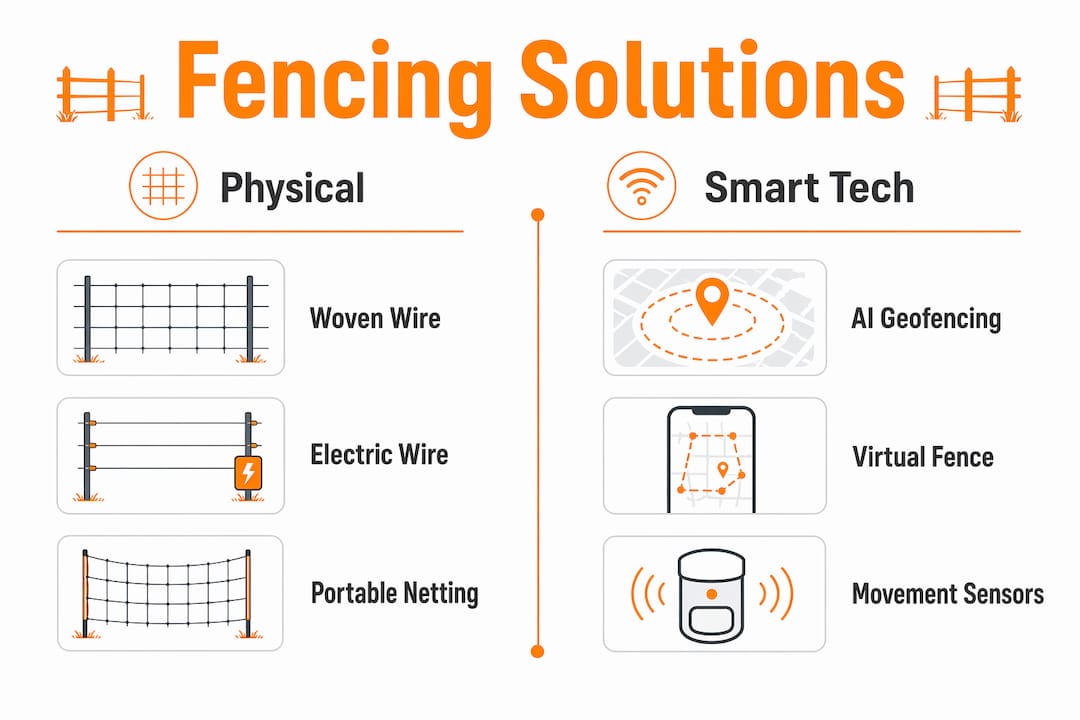
Traditional fencing is reactive. You find the breach after the animal is already out. Smart detection technologies shift that dynamic by alerting you the moment a problem starts.
The most practical electronic tools for livestock safety solutions include:
- GPS collars and geofencing: Collars track animal location in real time. When an animal crosses a virtual boundary, the system sends an alert to your phone. This works well across large pastures where daily visual checks are impractical.
- Vibration-sensing cables: Mounted along fence lines, these cables detect physical contact or cutting attempts. Pairing vibration cables with physical barriers creates a system that catches breaches immediately rather than hours later.
- Camera systems with motion alerts: Cameras positioned at gates and high-traffic sections send notifications when animals gather or push. This is especially useful at night when escapes are hardest to catch.
- IoT sensors on electric fence energizers: These sensors monitor voltage continuously. A drop in voltage signals vegetation contact, a broken wire, or a failing energizer before the fence goes completely dead.
AI-based geofencing systems improve real-time monitoring and reduce labor costs compared to manual perimeter checks. The tradeoff is cost and connectivity. GPS collars require cellular or satellite coverage, and sensors need power. In remote areas, solar-powered units solve the power problem, but dead zones in cellular coverage remain a real limitation. The practical answer is to treat electronics as a detection layer on top of solid physical fencing, not as a replacement for it.
How should containment systems be designed around animal behavior and terrain?
A fence that works on flat ground can fail completely on a slope. Design has to account for the specific animals you run and the land they live on.
- Account for jumping and digging. Horses clear fences that cattle never touch. Pigs root under barriers that stop sheep cold. Know your animal’s primary escape method before you set a single post.
- Adjust for slopes. Slopes steeper than 15 degrees require higher fences and closer post spacing. Animals moving downhill build momentum that puts far more force on the fence than flat-ground animals do.
- Reinforce corners and end posts. Corners are the highest-stress points in any fence line. Concrete footings and diagonal braces at corners prevent the structural failures that cause most escape incidents. This step gets skipped more often than any other, and it shows up in escape statistics.
- Install the right gates. Self-closing gravity-latched gates and double-gate systems prevent escapes at high-traffic entry points better than conventional swing gates. Human error at gates causes a disproportionate share of livestock escapes.
- Plan for water crossings. Fences that cross streams need flood gates or drop-down panels that release during high water. A fence that washes out in a storm creates a gap that animals find within hours.
- Design with animal welfare in mind. Tight corners with no escape route cause stress and injury when animals bunch. Round corners in holding areas and wide lanes to handling facilities reduce bruising and calm animals faster.
Pro Tip: Walk your fence line from the animal’s perspective, not yours. Get low, look for gaps at ground level, and check sight lines. Animals find weaknesses you miss when you’re standing upright.
Understanding how animals interact with barriers is the foundation of good design. Fencefast’s resource on animal behavior and fencing breaks down species-specific tendencies that directly affect fence height, spacing, and material choice.
What maintenance habits keep containment systems reliable?
Equipment quality matters less than consistency of upkeep. A premium fence that goes uninspected for months will fail before a basic fence that gets checked weekly.
Build these habits into your regular farm workflow:
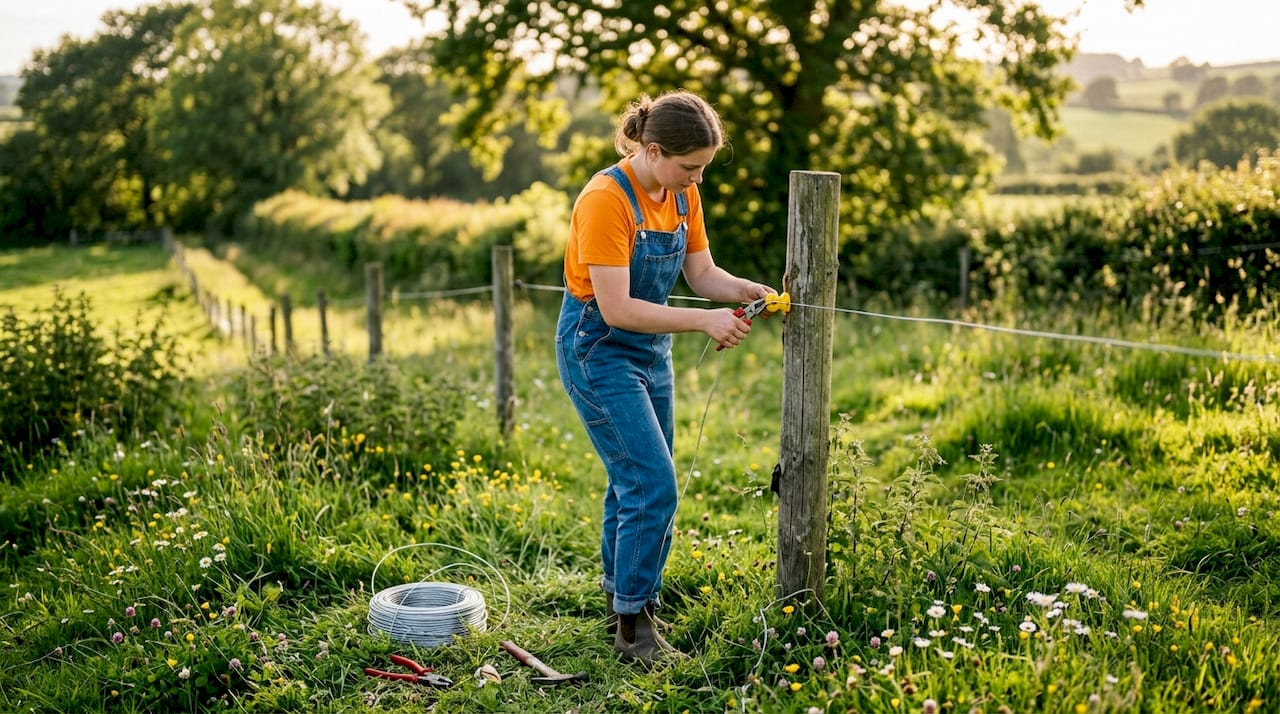
- Weekly perimeter walks: Check for sagging wires, leaning posts, and vegetation growing into the fence line. Vegetation drains electric fence voltage faster than almost any other factor.
- Daily gate latch checks: Gates are the weakest link in any containment system. A latch that sticks or a hinge that sags creates an opportunity every time an animal pushes against it.
- Electric fence voltage monitoring: Check voltage at the far end of the line, not just at the energizer. A reading below the manufacturer’s minimum means something is wrong somewhere on the line.
- Post-storm inspections: Wind, ice, and flooding damage fences in ways that are not always visible from a distance. Walk the full perimeter after any significant weather event and repair before animals test the weak spots.
- Vegetation management: Mow or spray a clear strip under electric fences at least twice per season. Grass contact is the single most common cause of voltage loss on farm electric fences.
Maintenance also means keeping spare parts on hand. A broken insulator or a snapped wire at 6:00 PM on a Friday is not the time to place an online order. Stock the consumables your specific system needs and replace worn components before they fail completely.
What are the emerging trends in livestock containment solutions?
Virtual fencing is the most significant shift in livestock management systems in a generation. Instead of physical wire, GPS-enabled collars deliver an audio cue followed by a mild pulse when an animal approaches a software-defined boundary. Farmers move paddock boundaries from a phone app without touching a post or wire. Fencefast carries the Gallagher eShepherd system, which uses solar-powered neckbands and a base station to manage cattle across large acreages.
Virtual fencing works best as a complement to physical perimeter fencing, not a full replacement. The physical fence handles predator exclusion and provides a hard boundary during system outages. The virtual layer handles internal divisions and rotational grazing management. That combination cuts the labor of moving temporary fences while keeping animals safe when technology fails.
AI-integrated fencing systems go further by analyzing movement patterns to predict where animals are likely to push boundaries before a breach happens. Machine learning models trained on herd behavior data can flag stress events, identify animals that repeatedly test fences, and alert farmers to health changes based on movement anomalies. The technology is still maturing, but the direction is clear. Containment is moving from a physical problem to a data management problem, and farms that adopt these tools early will have a measurable labor and productivity advantage.
Government funding programs in Canada, including OFCAF and BMP grants, currently support virtual fencing adoption. Fencefast provides guidance on accessing those programs alongside product sales.
Key Takeaways
Effective livestock containment requires layered physical barriers, behavior-aware design, electronic detection, and consistent maintenance working together as a single system.
| Point | Details |
|---|---|
| Layer your containment | Combine perimeter fencing, internal divisions, and electronic monitoring for reliable results. |
| Match fence to animal | Choose materials and heights based on whether your animals jump, dig, push, or rub. |
| Reinforce corners first | Concrete footings and diagonal braces at corners prevent the most common structural failures. |
| Inspect on a schedule | Weekly perimeter walks and daily gate checks catch problems before animals find them. |
| Add technology incrementally | Start with voltage monitors and GPS alerts before investing in full AI-based systems. |
Why I think most farms get containment backwards
Most farmers I talk to treat fencing as a one-time capital expense. They build it, they move on, and they only think about it again when something gets out. That mindset is the root cause of most escape incidents I’ve seen, and it’s expensive to fix after the fact.
The farms that have the fewest escapes are not the ones with the most expensive fences. They’re the ones where someone walks the perimeter every week without exception. A $3 insulator replaced in march prevents a $300 vet bill and a half-day of chasing cattle in july. The math is obvious, but the habit is hard to build.
The other thing I’d push back on is the idea that technology replaces judgment. GPS collars and AI monitoring are genuinely useful tools. But they work because a farmer who understands their animals set them up correctly. A virtual fence boundary drawn in the wrong place, or a sensor threshold set too high, creates false confidence. The technology amplifies good management. It doesn’t substitute for it.
My honest recommendation: start with solid physical fencing built around your specific animals and terrain, add a voltage monitor and a gate latch you trust, and then layer in GPS or virtual fencing once the foundation is right. Trying to skip the foundation with technology is the most expensive mistake you can make in livestock management.
— Juiced
Fencefast has the tools to keep your animals where they belong
Fencefast carries the full range of livestock fencing products Canadian farmers need, from woven wire and electric fence energizers to Gallagher eShepherd virtual fencing systems. Whether you’re setting up permanent fencing for a new pasture or adding a rotational grazing system to an existing operation, Fencefast’s team provides product selection support and virtual fencing setup guidance.
As an authorized Gallagher dealer with a 26-year partnership, Fencefast also helps farmers access OFCAF and BMP government funding programs that offset the cost of virtual fencing adoption. Nationwide shipping across Canada means you get the right components without waiting on local supply. If you’re ready to build a containment system that actually holds, Fencefast is the place to start.
FAQ
What is the most effective containment method for cattle?
Electric wire fencing combined with a virtual fencing layer for internal paddock management gives cattle operations the best balance of security and flexibility. Physical perimeter fencing handles hard boundaries while virtual fencing manages rotational grazing without manual labor.
How often should I inspect my livestock fencing?
Walk the full perimeter weekly and check gate latches daily. Post-storm inspections are also necessary after any significant weather event, since wind and flooding damage fences in ways that are not visible from a distance.
Can virtual fencing replace physical fences entirely?
Virtual fencing works best as a complement to physical perimeter fencing, not a full replacement. Physical barriers handle predator exclusion and provide a hard boundary during system outages or connectivity failures.
What are the most common causes of livestock escapes?
Gate failures from human error, sagging wires from vegetation contact, and unbraced corners are the three most common causes. Reinforcing corners with concrete footings and installing self-closing gate latches address two of the three directly.
How do I choose between temporary and permanent fencing?
Permanent fencing suits fixed pasture boundaries and high-pressure containment areas like holding pens. Portable electric fencing suits rotational grazing systems where paddock boundaries change weekly or seasonally.

