

TL;DR:
- Standard livestock fencing fails to contain bison due to their size and strength. Effective containment requires at least 5.5 to 6-foot-high high-tensile woven wire fences with reinforced corners and no ground gaps. Regular inspections and behavioral management, especially during rut, are vital to prevent escapes and ensure herd safety.
Bison containment is defined by one hard fact: standard livestock fencing fails. Bison fencing challenges arise from the species’ raw size, explosive strength, and complex social behavior, all of which push standard cattle fencing well past its limits. A mature bull can weigh over 2,000 pounds and will test a fence line with the same force it uses against rival bulls. Expert guidelines recommend a minimum fence height of 5 to 5.5 feet, with 3 to 5 strands of high-tensile barbed wire for effective containment. Getting the design right from the start protects your herd, your neighbors, and your operation.
What fence designs effectively contain bison?
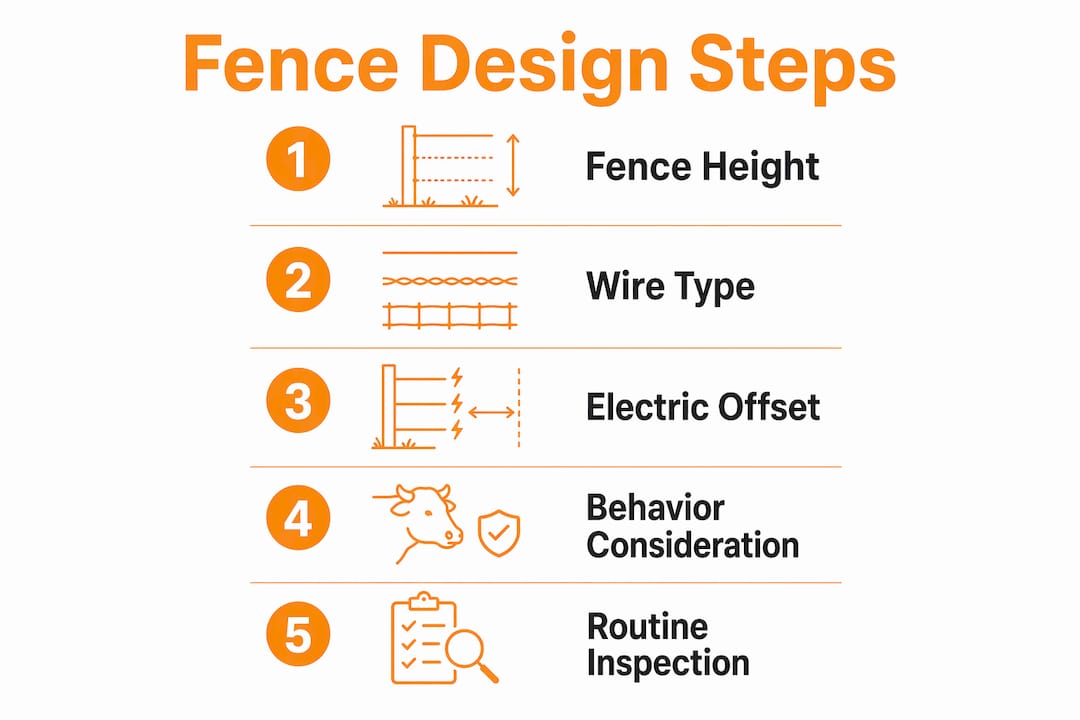
Fence height and wire configuration are the two variables that determine whether your perimeter holds. The eye-level rule is the starting point: bison fences should reach 5 to 5.5 feet, which aligns with the eye level of an adult animal. A bison that cannot see over a fence is far less likely to attempt a crossing.
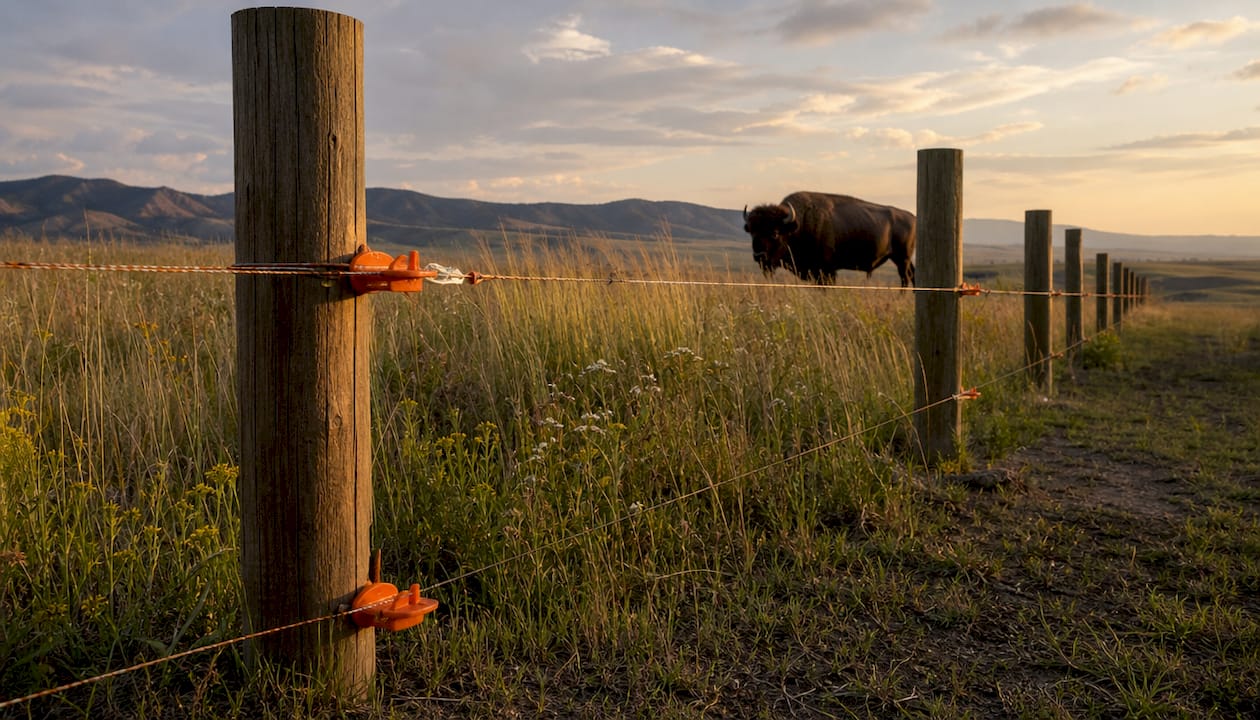
Standard cattle fencing is inadequate for bison. Experienced ranchers recommend heavy-duty woven wire at least 6 feet tall with solid corner bracing and no ground gaps. That last detail matters more than most ranchers expect. A gap at the ground level invites calves to slip under and adults to push through weakened sections.
Wildlife-friendly fence designs go a step further by balancing containment with permeability for other species. One validated configuration uses a specific wire arrangement: a smooth bottom wire at 18 inches, barbed wire at 24 inches, an electrified wire at 30 inches, and a top barbed wire at 42 inches. This layout keeps bison in while allowing deer and pronghorn to pass underneath or jump over without injury.
The table below compares standard cattle fencing against heavy-duty bison fencing across the key design variables:
| Feature | Standard cattle fencing | Heavy-duty bison fencing |
|---|---|---|
| Fence height | 4–5 feet | 5.5–6 feet minimum |
| Wire type | Barbed wire, light gauge | High-tensile woven wire or heavy barbed |
| Electrification | Optional | Recommended, especially at mid-height |
| Corner bracing | Basic H-brace | Reinforced, solid bracing required |
| Ground gap | Acceptable | Zero tolerance |
| Wildlife permeability | Not considered | Smooth bottom wire at 18 inches |
Key design elements for a bison-grade perimeter include:
- Height: 5.5 to 6 feet minimum, measured at the post top
- Wire count: 3 to 5 strands, with at least one electrified strand at mid-height
- Corner posts: Set deep, braced solidly, and checked after every hard freeze
- Ground clearance: No gap larger than 6 inches at the base
- Electric fencing: Positioned at 30 inches to deter pushing and leaning
Pro Tip: Add an electrified offset wire on the inside of your perimeter at chest height on a bull. That single wire does more to stop fence-testing behavior than adding two extra strands of barbed wire.
For more detail on electrification options, Fencefast covers electric fencing for bison with product-specific guidance for Canadian ranchers.
How does bison behavior drive escape risk?
Bison behavior is the most underestimated variable in containment planning. A study tracking a wildlife-friendly fencing program recorded 31 escape events over 822 days, with adult males showing a significantly higher escape probability than females or juveniles. That pattern is not random. It reflects the social dynamics of the species.
Adult bulls push each other aggressively during rut. The result is that escapes often happen not because a bull charges the fence directly, but because one bull shoves another into it. Wires may stay intact while posts crack, corners shift, and the fence loses its tension. You find the damage days later, not at the moment of breach.
Seasonal pressure peaks during the rut, typically in late july through september. During this window, bulls are agitated, territorial, and far more likely to crowd fence lines. Ranchers who do not adjust management during rut face a measurably higher risk of escape incidents.
The behavioral drivers of fence failure include:
- Bull-on-bull aggression: Dominant bulls push rivals into fence lines, causing structural damage without a direct charge
- Fence testing: Bison methodically walk fence lines and probe weak points, especially at corners and gate posts
- Crowding near water or feed: High animal density at a single point concentrates pressure on a short fence section
- Calves following adults: A calf that slips under a fence will draw cows to the perimeter, increasing pressure
Pro Tip: Separate bulls from the main herd during peak rut if your operation allows it. Segregating by sex and age is the single most effective behavioral management tool for reducing fence damage.
Common mistakes in bison fencing and how to avoid them
The most costly mistake ranchers make is treating bison like heavy cattle. Bison are not domesticated animals with predictable behavior patterns. They retain wild instincts, and those instincts express themselves at the fence line.
-
Using standard cattle fencing. Light-gauge barbed wire at 4 feet will not hold a determined bull. The minimum standard for bison is high-tensile woven wire at 6 feet with reinforced corners. Every dollar saved on materials at installation will cost multiples in repairs and liability later.
-
Skipping interior handling facilities. Building solid handling facilities and interior cross-fencing before you introduce animals is not optional. Ranchers who skip this step face catastrophic escape risks the first time they need to move or separate animals under pressure.
-
Ignoring corner bracing. Corners take the most stress in any fence system. A bison that leans into a corner post transfers enormous lateral force. Undersized bracing fails quietly, often over weeks, until the whole section loses tension.
-
Leaving ground gaps. Calves can slip under a fence at 8 inches. Adults will widen any gap they find. Zero ground clearance is the standard, not a preference.
-
Deferring inspections. A fence that looked solid last month may have shifted posts, lost tension, or taken hidden damage from a bull fight. Deferred inspections turn small problems into full breaches.
Pro Tip: Walk your perimeter before and after every rut season. Those two inspections catch the majority of damage before it becomes an escape event.
For a broader look at fencing errors that apply across species, Fencefast’s guide on cattle fencing best practices covers overlapping principles worth reviewing.
Best practices for ongoing bison containment management
Containment does not end at installation. Successful bison enclosure solutions depend on active, ongoing management of both the fence and the herd. The fence is infrastructure. Management is what keeps it working.
Routine perimeter inspections every 10 days are the baseline standard for bison operations. That frequency catches damage from bull fights, freeze-thaw cycles, and wildlife pressure before a breach develops. Pair each inspection with immediate repairs. A loose wire left for two weeks becomes a gap that costs you an animal.
Legal exposure is a real and underappreciated risk. In jurisdictions like Wyoming, strict liability under “fence out” laws places responsibility on the bison owner when an escaped animal causes damage. That legal reality makes robust fencing and proactive neighbor communication a risk management requirement, not a courtesy.
Best management practices for ongoing containment include:
- Perimeter inspections every 10 days, with written logs of damage found and repairs made
- Rapid response protocols for any confirmed escape, including a neighbor contact list and a plan for safe recapture
- Seasonal herd separation, pulling bulls from the main herd during rut to reduce fence pressure
- Neighbor coordination, sharing your inspection schedule and emergency contact with adjacent landowners
- Monitoring technology, using trail cameras at high-pressure points like corners, gates, and water sources to catch fence testing before it causes damage
Fencing also carries ecological weight. Fenced bison home ranges are less than 25% the size of free-ranging herds, which forces intensive management like supplemental feeding and trespass animal removal. That constraint is worth factoring into your long-term land and herd planning.
For ranchers thinking through the full picture of containment, Fencefast’s wildlife-friendly fence design guide covers how to balance bison security with ecological permeability.
Key Takeaways
Effective bison containment requires heavy-duty fence design, behavioral management, and routine inspection working together, because no single element holds without the others.
| Point | Details |
|---|---|
| Fence height and wire type | Use a minimum of 5.5 to 6 feet of high-tensile woven wire with reinforced corner bracing. |
| Electrification matters | An electrified wire at 30 inches deters fence-testing behavior more effectively than extra barbed strands. |
| Bull behavior drives escapes | Adult males cause most breach events through fighting, not direct charges; separate bulls during rut. |
| Inspect every 10 days | Regular perimeter checks and fast repairs prevent small damage from becoming full escapes. |
| Legal risk is real | Strict liability laws in some jurisdictions make robust fencing a legal requirement, not just a best practice. |
The fence is only half the job
After years of working with ranchers on bison containment, the pattern I see most often is this: the fence gets built right, and then the management stops. The assumption is that a well-built perimeter runs itself. It does not.
Bison are not passive animals. They interact with their boundaries constantly, especially dominant bulls. The fence you build on day one will face pressure you did not fully anticipate by month six. That is not a design failure. It is the nature of the species. The ranchers who succeed long-term are the ones who treat fence monitoring as a core part of their operation, not an afterthought.
The ecological dimension also deserves honest attention. Fenced bison herds require more intensive management precisely because the fence limits natural behavior. That is a trade-off worth making for commercial operations, but it means your management workload scales with your perimeter. Smaller, well-managed pastures with strong cross-fencing often outperform large, loosely monitored ones.
My honest recommendation: design your fence for the worst-case bull fight you can imagine, then add one more strand of electric wire. Build your handling facilities before the animals arrive. Walk the perimeter every 10 days without exception. Those three habits will prevent the majority of containment failures I have seen.
— Juiced
Fencefast solutions for bison containment
Bison fencing demands materials and expertise that go well beyond standard agricultural supply.
Fencefast carries heavy-duty fencing components built to handle the pressure bison put on a perimeter, including high-tensile wire, electric fencing systems, and the hardware needed for solid corner bracing. The team also offers design consulting for ranchers who want a perimeter spec matched to their property layout and herd size. Whether you are setting up a new bison operation or reinforcing an existing one, Fencefast’s full product range gives you the materials and guidance to build a perimeter that holds. Explore the catalog and reach out to the team for property-specific recommendations.
FAQ
What height should a bison fence be?
Bison fences should be at least 5.5 to 6 feet tall. Expert guidelines recommend aligning fence height with the eye level of an adult bison to reduce the likelihood of attempted crossings.
Why do adult bulls cause more escapes than cows?
Adult bulls have a higher escape probability because their fighting behavior during rut pushes rivals into fence lines. The breach is often a structural failure from lateral pressure, not a direct charge.
How often should I inspect a bison fence?
Perimeter inspections every 10 days are the standard for bison operations. Rapid repairs after each inspection prevent minor damage from developing into a full escape event.
Is standard cattle fencing adequate for bison?
Standard cattle fencing is not adequate. Bison require high-tensile woven wire at a minimum of 6 feet with reinforced corner bracing, solid ground contact, and at least one electrified strand.
What legal risks come with bison escapes?
In jurisdictions like Wyoming, “fence out” laws place strict liability on the bison owner for damage caused by escaped animals. Robust fencing and proactive communication with neighbors are the primary tools for managing that risk.

