

TL;DR:
- Mobile pig fencing combines physical barriers, electric deterrence, and behavior training for effective control. Proper setup, including materials, grounding, and pig training, is vital for preventing escapes and maintaining system integrity. Regular maintenance and voltage checks ensure long-term fence reliability and pig containment success.
Mobile fencing for pigs is a portable containment system that combines physical barriers, electric deterrence, and behavioral training to control pig movement across a farm. The industry term for this approach is rotational pig fencing, though farmers widely call it portable or temporary pig fencing. Pigs are powerful, intelligent animals that root, push, and probe fences constantly. A system that works treats fencing as an integrated whole, not just a line of wire. Getting that system right means choosing the correct materials, setting up proper grounding, and training your pigs before they ever touch a mobile fence.
What materials work best for mobile pig fencing?
The three main options for portable pig fencing are woven wire panels, electric netting, and hybrid systems that combine both. Each has a clear role depending on your farm setup and the size of your pigs.
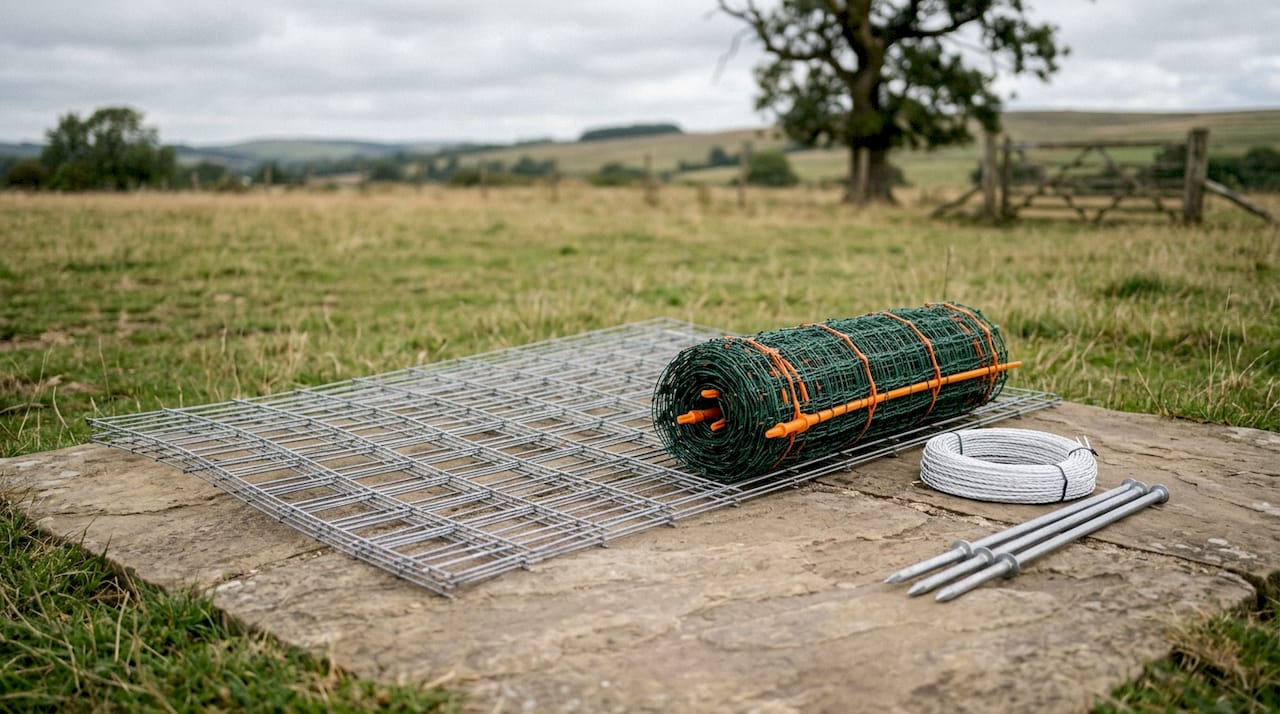
Woven wire panels provide a physical barrier that pigs cannot push through. They work well for permanent or semi-permanent paddocks but are heavier to move. Electric netting, by contrast, is lightweight and fast to set up. It acts as a psychological barrier. Pigs learn to avoid it after one or two shocks, which makes it effective for rotational grazing where you move fences frequently. A hybrid system pairs a woven wire base with an electric offset wire above it, giving you both physical and psychological deterrence. Professional-grade hybrid fencing costs about $4 to $6 per linear foot excluding labor. That cost reflects the durability and reduced escape risk you get from combining both barrier types.
Fence height and mesh spacing matter as much as material choice. Pigs escape under fences more often than over them, so a bottom wire or mesh that sits close to the ground is non-negotiable. For electric netting, look for a bottom strand no higher than 6 inches off the ground.
Post selection determines how well your fence holds tension when pigs push against it. Double-spiked or fiberglass posts spaced 12–15 feet apart maintain tension and stability across different soil types. Fiberglass posts are lighter and easier to drive into hard ground, making them the better choice for frequent moves.
Pro Tip: In sandy or loose soil, use double-spiked posts at every corner and gate point. They resist lateral pressure far better than single-spike posts when pigs lean against the fence.
How to set up and power electric pig fencing
Electric fencing for pigs requires more power than most farmers expect. Pigs have thick skin and a layer of fat that reduces the shock they feel. Your energizer needs to deliver enough joules to get through that insulation reliably.
A minimum 2-strand setup is the standard starting point. Position the first strand at 6 inches and the second at 14 inches from the ground. For boars or larger breeds, add an optional third strand at 22 inches. These heights target the snout and shoulder, the two contact points most likely to trigger a deterrent response.
Grounding is where most electric fence failures start. A weak ground means a weak shock, and pigs quickly learn that a fence with a weak shock can be pushed through. Effective grounding requires at least three 6-foot galvanized ground rods spaced 10 feet apart. In dry soil, add more rods. Dry ground conducts electricity poorly, so the circuit back through the soil to the energizer loses strength without extra rods.
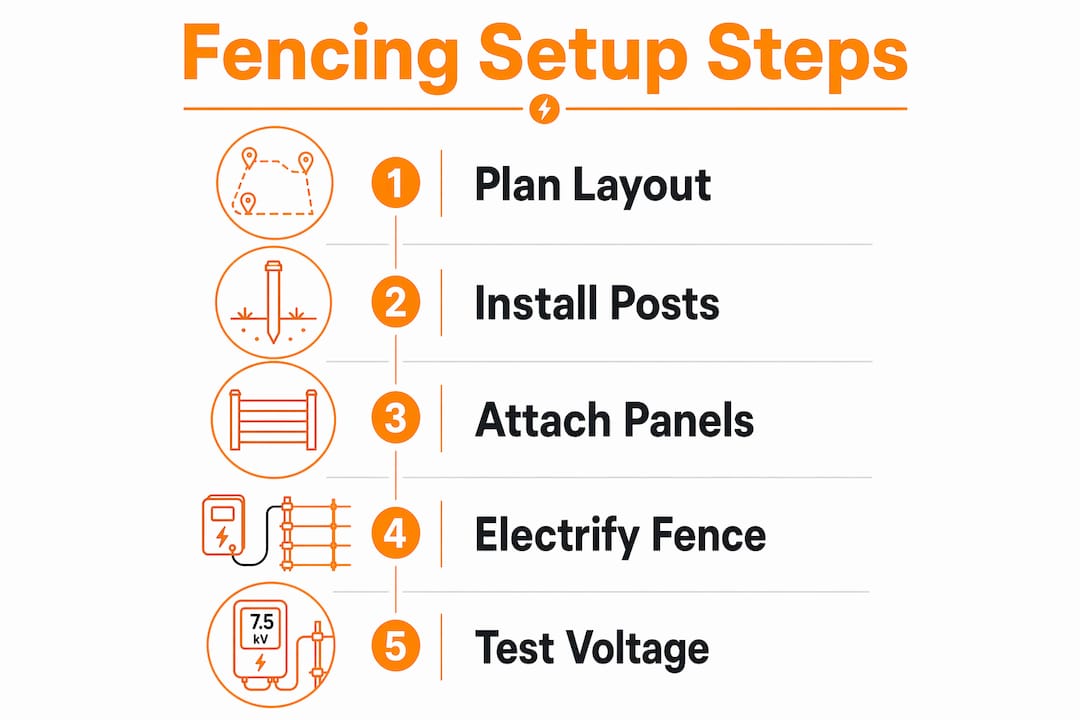
Key steps for a reliable electric fence setup:
- Drive ground rods at least 6 feet deep and connect them with insulated lead-out wire
- Use a high-joule energizer rated for the total wire length plus a safety margin
- Keep all wires clear of vegetation, which shorts the fence and drops voltage
- Test voltage at the far end of the fence, not just at the energizer
- Check that gate handles and connections are fully insulated
Pro Tip: Check voltage at the farthest point from the energizer every week. A reading below 3,000 volts at that point means your system has a fault. Find it before your pigs do.
You can find a detailed walkthrough of electric fence setup basics that covers energizer sizing and grounding in more depth.
What role does pig training play in mobile fencing success?
Training pigs to respect an electric fence is the single most overlooked step in mobile pig fencing. Farmers who skip training treat fencing as equipment alone. That approach leads to repeated escapes, fence damage, and frustrated pigs that become harder to contain over time.
The training process works in a controlled, secure pen before pigs ever encounter a mobile fence in open pasture. Here is the sequence that works:
- Set up a temporary electric wire inside a secure permanent pen, about 6 inches from the ground.
- Allow pigs to contact the wire naturally. Do not force them toward it.
- Let them experience the shock, back away, and settle. This teaches avoidance without panic.
- Repeat the exposure over 3–5 days until pigs consistently avoid the wire.
- Move pigs to the mobile fenced paddock only after they show consistent respect for the training wire.
Training pigs in a controlled pen before pasture introduction produces better fence respect and fewer escapes. The reason is simple: pigs are highly intelligent and learn from experience. A pig that has never touched an electric fence treats it as just another obstacle to push through. A pig that has learned the fence delivers a consistent consequence will avoid it.
Pigs quickly identify weak points in a fence and exploit them repeatedly. Voltage consistency matters more than any other single factor. A fence that delivers a reliable shock every time is far more effective than a higher-powered fence with intermittent faults.
How to maintain and troubleshoot mobile pig fencing
A mobile pig fence that worked perfectly on day one will fail without regular maintenance. The most common failure points are vegetation shorting the fence, broken wires, and grounding degradation over time.
Weekly inspections that check voltage and physical fence integrity are the minimum standard. Walk the full fence line and look for grass or weeds touching the wire. A single plant grounding a strand can drop voltage enough for pigs to push through. Cut or pull vegetation away from wires every time you inspect.
Practical maintenance steps to keep your fence operational:
- Test voltage at multiple points along the fence, not just at the energizer output
- Inspect all wire connections and splice points for corrosion or looseness
- Check ground rods after heavy rain or extended dry periods, as soil conductivity changes
- Replace any cracked or broken insulators immediately
- When relocating the fence, roll wire carefully to avoid kinks that weaken conductivity
Weather affects fence performance in ways that catch farmers off guard. Dry summer conditions reduce soil conductivity and weaken the ground circuit. Wet conditions can cause vegetation to grow faster and short the fence more frequently. Adjust your inspection schedule to match seasonal conditions.
When you relocate a mobile fence, move posts and wire in sections rather than all at once. This keeps part of the fence active while you move the rest, reducing the window when pigs have no barrier. You can find more guidance on avoiding common fencing mistakes that apply directly to mobile pig setups.
What are the best practices for rotational grazing with mobile pig fencing?
Rotational grazing with pigs is the primary reason most farmers invest in portable pig fencing. Moving pigs to fresh pasture regularly improves soil health, reduces parasite loads, and keeps pigs growing well on forage.
Moving fences every 3–7 days improves pasture health and pig welfare while limiting parasite burdens. Shorter intervals work better in lush conditions where pigs can overgraze a paddock quickly. Longer intervals suit drier or slower-growing pastures.
Paddock sizing depends on pig numbers and the quality of your pasture. A rough guide for planning paddock layout:
| Paddock factor | Practical guidance |
|---|---|
| Pigs per paddock | 4–6 pigs per quarter-acre paddock as a starting point |
| Rest period per paddock | Minimum 21 days before regrazing to allow pasture recovery |
| Fence move frequency | Every 3–7 days depending on pasture condition |
| Parasite management | Longer rest periods reduce larval contamination on pasture |
Pigs disturb soil more than cattle or sheep, which is both a benefit and a risk. Controlled rooting breaks up compacted soil and incorporates organic matter. Uncontrolled rooting destroys pasture. Mobile fencing gives you the control to direct that rooting to areas that benefit from it, then move pigs before damage becomes permanent.
Successful rotational grazing depends on training pigs on electric fences within a permanent pen first. Pigs that respect the fence in a paddock setting move calmly when you relocate the fence. Pigs that do not respect it will test every new boundary you set.
Key Takeaways
Mobile pig fencing works only when you treat it as a complete system: the right materials, correct electrification, solid grounding, trained pigs, and consistent maintenance.
| Point | Details |
|---|---|
| Strand positioning is critical | Place the first strand at 6 inches and the second at 14 inches to target the snout and shoulder. |
| Grounding determines shock strength | Use at least three 6-foot galvanized rods spaced 10 feet apart; add more in dry soil. |
| Train before you move | Expose pigs to electric wire in a secure pen for 3–5 days before introducing mobile fencing. |
| Inspect weekly without fail | Check voltage at the far end of the fence and clear all vegetation touching the wire. |
| Move fences every 3–7 days | Regular paddock rotation improves pasture health and reduces parasite pressure on your herd. |
What I’ve learned from watching farmers get this wrong
The pattern I see most often is farmers who buy good equipment and then wonder why their pigs keep escaping. The fence is not the problem. The system is. A high-quality energizer connected to two poorly driven ground rods in dry clay soil will deliver a fraction of the shock it should. Pigs figure that out in about 10 minutes.
The other consistent mistake is skipping the training pen. Farmers assume pigs will learn from the mobile fence itself. Some do, eventually. But the learning process involves breaking through the fence first, which means escaped pigs, damaged equipment, and a herd that now knows the fence can be beaten. That lesson is very hard to undo.
Pig intelligence is genuinely impressive and genuinely inconvenient. These animals remember fence locations, test boundaries systematically, and communicate what they learn to other pigs in the group. A fence that fails once will be tested again and again at that same spot. Voltage consistency is not a nice-to-have. It is the entire game.
The farmers I have seen get mobile fencing right share one habit: they check their fence voltage every single week, at the far end of the line. Not at the energizer. At the far end. That one habit catches 90% of problems before pigs do.
Treat your mobile pig fencing setup as a living system that needs attention. The equipment is just the starting point.
— Juiced
Fencefast’s portable fencing solutions for pig farmers
Fencefast carries a full range of electric fencing for pigs and portable containment systems built for Canadian farm conditions. Whether you are setting up a rotational grazing system for a small herd or managing a larger pork operation, Fencefast has the energizers, ground rods, electric netting, and post systems to get the job done right.

The Fencefast team brings over 26 years of agricultural fencing experience and can help you size an energizer, plan a paddock layout, or troubleshoot a system that is not performing. Browse the Fencefast product catalog for pig fencing components, or reach out directly for setup guidance and quotes. Nationwide shipping is available across Canada.
FAQ
What is the minimum fence height for containing pigs?
A 2-strand electric fence with strands at 6 and 14 inches from the ground is the minimum standard for adult pigs. Add a third strand at 22 inches for boars or large breeds.
How many ground rods does an electric pig fence need?
At least three 6-foot galvanized ground rods spaced 10 feet apart are required. Dry soil conditions demand additional rods to maintain adequate shock delivery.
How often should I move a mobile pig fence for rotational grazing?
Move the fence every 3–7 days depending on pasture condition. Shorter intervals prevent overgrazing in lush paddocks; longer intervals suit slower-growing pasture.
Why do pigs keep escaping through an electric fence?
The most common cause is a weak ground circuit that reduces shock strength. Pigs quickly learn when a fence delivers an inconsistent shock and will push through it repeatedly.
Do pigs need training before using a mobile electric fence?
Yes. Expose pigs to an electric wire inside a secure permanent pen for 3–5 days before moving them to a mobile fenced paddock. Trained pigs respect the fence; untrained pigs test it until they break through.

