

TL;DR:
- Virtual fencing offers a flexible, scalable alternative to traditional fencing for rotational grazing.
- Proper training and reliable connectivity are essential for high containment rates and animal welfare.
- Cost-effective options include government grants, but initial investment and ongoing maintenance should be carefully planned.
Rotational grazing has always made sense on paper. Move cattle through smaller paddocks, let the grass recover, repeat. The hard part has never been the concept. It’s been the wire, the posts, the labor, and the sheer cost of subdividing hundreds of acres into workable paddocks. That friction stops a lot of Canadian ranchers from ever getting started. Virtual fencing changes that equation. GPS-enabled collars deliver auditory cues and mild electrical pulses when animals cross digital boundaries, replacing physical wire with software. The result is a rotational system that’s faster to set up, easier to move, and backed by hard field data.
Table of Contents
- What is virtual fencing and how does it work?
- Step-by-step: Implementing rotational grazing with virtual fencing
- Cost breakdown and funding for Canadian operations
- Benefits, challenges, and top tips for success
- A practical perspective: What most guides miss about virtual fencing in Canada
- Get started with advanced rotational grazing solutions
- Frequently asked questions
Key Takeaways
| Point | Details |
|---|---|
| Streamline grazing control | Virtual fencing lets you manage livestock movement flexibly without physical fence relocation. |
| Fast adoption and training | Most cattle learn digital boundaries in under a week with 99% containment success. |
| Eligible for grants | Up to 70% of system costs can be covered for eligible Canadian producers through government funding. |
| Not a full fence replacement | Virtual fencing works best alongside traditional fences to improve pasture rotation but does not replace external perimeters. |
| Focus on monitoring | Ongoing monitoring and adaptive management are essential for maximizing benefits and animal welfare. |
What is virtual fencing and how does it work?
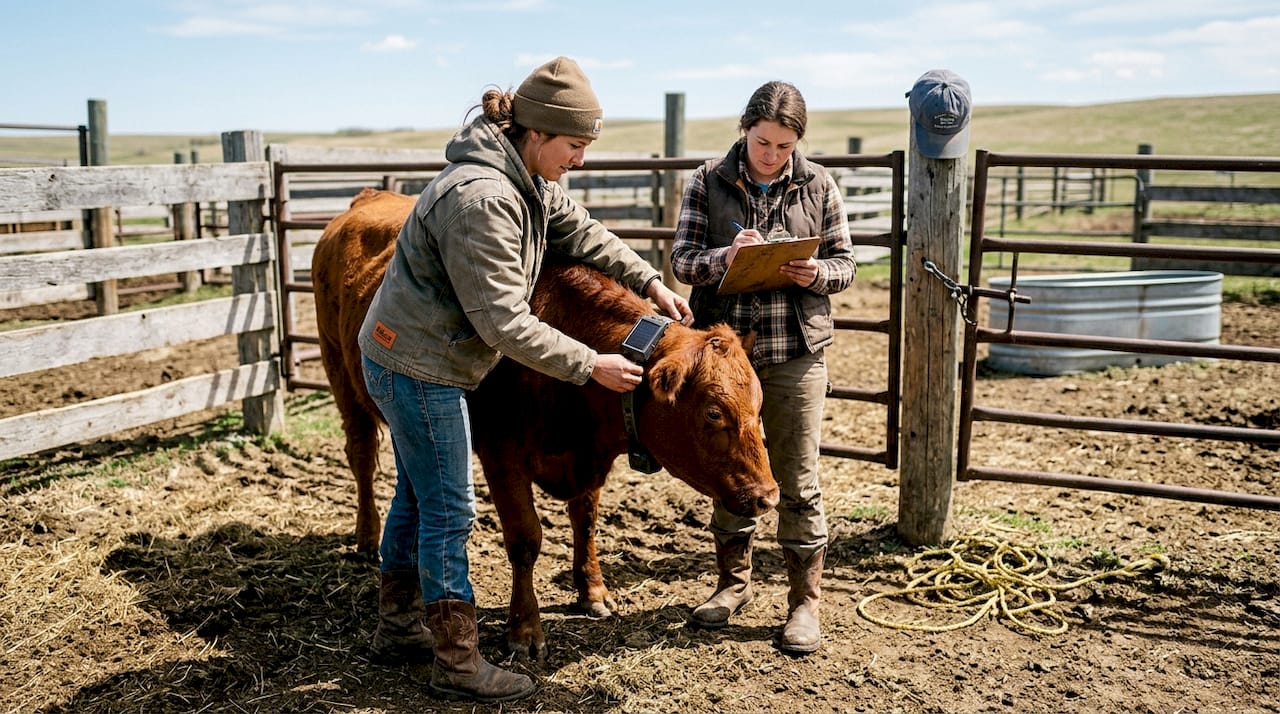
Virtual fencing sounds like science fiction, but the hardware is straightforward. Each animal wears a GPS-enabled collar that communicates with a base station or cellular network. A rancher draws paddock boundaries inside a mobile app or web dashboard. The collar tracks the animal’s position in real time. When an animal approaches the digital boundary, it first hears an auditory warning tone. If it continues moving forward, a brief mild electrical pulse discourages further movement. This trains animals to respect invisible lines they can’t see.
Understanding cattle herd control basics helps you see why this approach works at scale. The collars are solar powered, reducing battery dependency in the field. Base stations extend range in areas with weak cellular coverage, which matters enormously across remote Canadian terrain. The entire paddock layout can be redrawn in minutes from a phone, meaning you can shift a herd to fresh grass without driving out to move a single post.
Here’s a quick look at typical system components and their costs:
| Component | Estimated cost (CAD) |
|---|---|
| GPS collar (per head) | $350 to $415 |
| Monthly subscription (per collar) | $2.25 to $2.50 |
| Base station (remote areas) | ~$5,000 |
| App/software setup | Included in subscription |
Training best practices from research institutions confirm that livestock learn boundaries reliably when training protocols are followed correctly. The key components of any virtual fencing system are the collar hardware, a GPS and communication network, the boundary management software, and a solid understanding of livestock learning behavior.
“GPS-enabled collars use auditory cues and mild electric pulses as animals approach digital boundaries, offering ranchers a flexible, scalable alternative to physical subdivision fencing.”
For Canadian ranchers exploring rotational grazing solutions, the practical upside is immediate. You stop waiting for fencing contractors. You stop re-stretching wire after winter. You start moving cattle based on grass growth, not infrastructure.
Step-by-step: Implementing rotational grazing with virtual fencing
The most common mistake ranchers make is treating virtual fencing like a switch you flip. It requires a structured rollout, especially for cattle that have never worn a collar. Here’s a field-tested sequence that works:
- Start with a physical perimeter. Your outer boundary still needs physical fence. Virtual fencing handles internal paddock divisions, not predator or road containment.
- Fit and activate collars. Introduce collars in a low-stress environment. Check fit and confirm GPS signal before moving animals to the field.
- Overlap virtual and physical boundaries during training. Set your digital boundary directly over or just inside an existing physical fence line for the first 5 to 7 days. Cattle learn boundaries in 5 to 7 days this way, with animals that have prior experience relearning faster.
- Expand to rotational paddocks. Once animals respect the digital line, begin drawing rotational paddocks in the app. Start with larger paddocks before tightening them down.
- Set your move schedule. Use forage growth data, stocking rates, and pasture condition to determine move frequency. The app makes rescheduling simple.
- Add exclusion zones. For flexible paddock management including riparian buffers, sensitive vegetation, or wetland areas, draw exclusion zones directly in the software. No additional wire needed.
Pro Tip: When moving animals to a new paddock digitally, activate the new boundary before removing the old one. This gives cattle a moment to orient before the old boundary disappears, reducing confusion and stress.
Research and Canadian and Norwegian experience both confirm that containment rates exceed 99% once cattle are properly trained. That’s a number most physical fence systems can’t guarantee after a hard winter or a fence-line encounter with elk.
For more detailed rotational grazing setup tips tailored to Canadian conditions, or to clear up common misconceptions before you invest, check out the training and myth-busting resource that addresses the questions ranchers ask most.
Cost breakdown and funding for Canadian operations
Virtual fencing carries a real upfront cost. Let’s be direct about that. A herd of 100 cows means roughly $35,000 to $41,500 CAD in collars alone, plus subscriptions running $225 to $250 per month. A remote base station adds another $5,000. That’s a significant capital investment before you ever move a single animal.
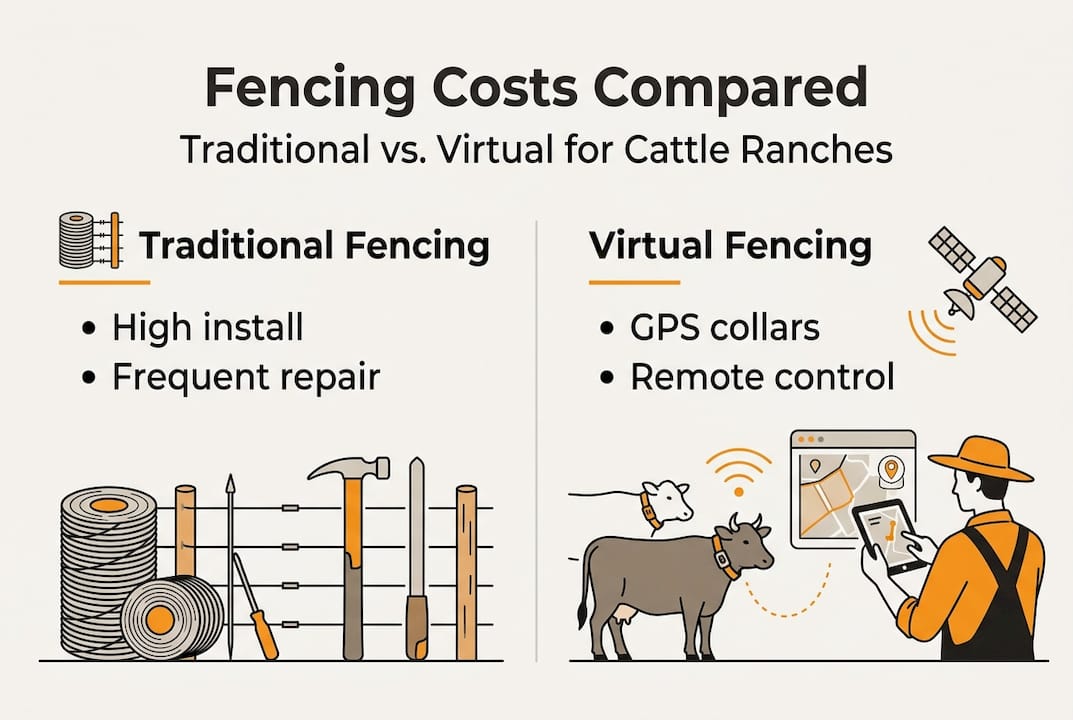
But the comparison that actually matters is against traditional fencing. Canadian cost and performance data shows that physical fence installation in remote or rugged terrain can run $15,000 to $30,000 per kilometer once you factor in posts, wire, labor, and equipment. A single rotational fencing project across several hundred acres adds up fast.
| Cost factor | Traditional fencing | Virtual fencing |
|---|---|---|
| Upfront installation | High (per km) | High (per collar) |
| Annual maintenance | Ongoing (wire, posts) | Low (collar upkeep) |
| Labor to move paddocks | High | Near zero |
| Flexibility | Fixed | Fully adjustable |
| Remote terrain cost | Very high | Base station (~$5K) |
Here’s where the math changes for Canadian producers: funding up to 70% of costs is available through Canada’s On-Farm Climate Action Fund. That dramatically reduces your net outlay. The OFCAF and BMP grant programs specifically list virtual fencing as an eligible technology for rotational grazing adoption.
Pro Tip: Apply for funding before purchasing equipment. Some programs require pre-approval, and documentation requirements are easier to meet when you plan ahead rather than retroactively.
Key cost considerations to keep on your radar:
- Collar loss or damage from rough terrain, trees, or predator encounters is a real risk. Budget a small replacement reserve.
- Subscription fees compound over years. Run a 5-year total cost analysis, not just Year 1.
- Technology upgrades may be required as systems evolve. Check manufacturer update policies.
For a deeper breakdown, the cost guide for producers walks through real numbers for different herd sizes. Also worth reviewing is the comparison between portable and virtual fencing solutions if you’re weighing interim options.
Benefits, challenges, and top tips for success
The benefits of virtual fencing for rotational grazing are well documented. Studies confirm labor savings, pasture resilience, and flexibility as the top advantages, alongside minimal long-term stress in properly managed herds. Here’s what that looks like in practice:
Real benefits you’ll notice quickly:
- Far less time driving fence lines or moving temporary polywire
- Ability to react to drought, heavy rain, or overgrazing by redrawing paddocks the same day
- Better pasture recovery because you can tighten rest periods without installing new wire
- Simplified exclusion of sensitive areas like creek banks and wetlands
But there are real challenges too, and a nuanced technology analysis is more honest about this than most promotional materials:
- Animal welfare concerns are legitimate if training is rushed or if animals receive excessive corrections. Follow proper protocols and monitor collar fit.
- Tech failures happen. GPS signal drops, software bugs, and collar battery issues are part of the reality. Always maintain a physical perimeter to contain animals when systems go down.
- The learning curve for operators is steeper than vendors often admit. Managing the software, interpreting location data, and troubleshooting connections takes time.
Pro Tip: Dedicate time each week to reviewing your app data. Early warning signs of a collar issue or animal escaping a paddock show up in the data before they show up in the field.
“Virtual fencing is a powerful tool for rotational grazing, but the technology works for you only when you work with it consistently.”
For examples of how ranchers in different regions have made it work, see how virtual fencing performs on BC ranches and explore the documented grazing fence benefits that show up across multiple Canadian operations.
A practical perspective: What most guides miss about virtual fencing in Canada
Most articles stop at the checklist. Here’s what actually trips up ranchers after they’ve bought the system.
First, everyone underestimates how much physical fencing still matters. Virtual fencing doesn’t eliminate your perimeter. It replaces internal paddock wire. Ranchers who treat it as a complete fencing replacement end up with containment failures that hurt both livestock and their confidence in the technology.
Second, connectivity is not a solved problem in rural Canada. Before you invest, map your cellular dead zones. In areas without reliable signal, base stations are mandatory, not optional. A system that works half the time is not a fencing system.
Third, stockmanship still drives outcomes. No app replaces the knowledge of reading cattle behavior, forage condition, and seasonal patterns. Technology gives you faster tools. The judgment about how to use them still lives in your boots. That’s a point worth repeating because the virtual fencing myths around full automation set unrealistic expectations.
Finally, ranchers who get the most out of virtual fencing are the ones who stay engaged with the data daily, not just when something goes wrong. The technology rewards attention.
Get started with advanced rotational grazing solutions
Virtual fencing is one of the most significant shifts in livestock management Canada has seen in decades. Getting the right equipment and guidance from the start makes a real difference in how quickly and effectively your operation adopts it.
At FenceFast, we’ve spent over 26 years helping Canadian ranchers source, set up, and optimize fencing solutions. As an authorized Gallagher dealer, we carry the eShepherd virtual fencing system and can connect you with funding program guidance for OFCAF and BMP grants. Whether you’re starting from scratch or expanding an existing rotational setup, FenceFast rotational grazing solutions can support your next step. For a detailed walkthrough of how virtual fencing works for cattle specifically, the detailed cattle fencing guide is a strong place to continue learning.
Frequently asked questions
How do cattle learn virtual fencing boundaries?
Cattle are typically trained with overlapping physical and virtual fences for 5 to 7 days, after which they recognize and respect the new digital boundaries. Animals with prior experience tend to relearn faster in subsequent rotations.
Can virtual fencing work in remote or rugged Canadian terrain?
Yes. Systems function well on Crown land, prairies, and through Canadian winters using LoRa base stations where cellular coverage is weak. Collar loss in rugged terrain is rare but worth accounting for in your budget.
What are the main costs for installing virtual fencing?
Plan for $350 to $415 CAD per collar, a monthly subscription of $2.25 to $2.50 per collar, and roughly $5,000 for a base station if cellular coverage is limited on your land.
Does virtual fencing replace all physical fences?
No. Virtual fencing handles internal paddock divisions effectively but requires physical perimeters for containment against predators, roads, and system outages. Use both together for best results.
Are there welfare concerns with virtual fencing systems?
Welfare concerns exist but research shows minimal long-term stress when training is done properly and animals are monitored consistently. Rushing the training phase is the most common cause of stress-related issues.
Recommended
- Rotational Grazing Fence: Boosting Pasture Health and Herd Control – FenceFast Ltd.
- Rotational Grazing Fencing: Maximizing Pasture Health – FenceFast Ltd.
- Build a Temporary Cow Fence for Rotational Grazing Success – FenceFast Ltd.
- Temporary Livestock Fencing Guide for Effective Grazing – FenceFast Ltd.

