

TL;DR:
- Proper fencing design is crucial to prevent injuries, escapes, and stress in livestock management. Regular maintenance and species-specific choices enhance animal safety, health, and long-term welfare. Virtual fencing offers health monitoring benefits but requires correct training and consistent oversight.
Animal health and fencing are directly linked. The fence you choose, how you install it, and how well you maintain it determines whether your livestock stay safe, calm, and productive. Poorly designed or neglected fencing causes injuries, escapes, and chronic stress that degrades animal condition over time. Livestock health management starts at the fence line, not the feed trough. This guide covers the fencing types, design principles, and maintenance practices that protect your animals and keep your operation running efficiently.
How does fencing design affect animal health and safety?
Fencing design is the single biggest factor in preventing livestock injuries. A fence that is too low, too flexible, or made from the wrong material creates entanglement risks, escape pressure, and daily stress that compounds into poor body condition and reduced productivity.
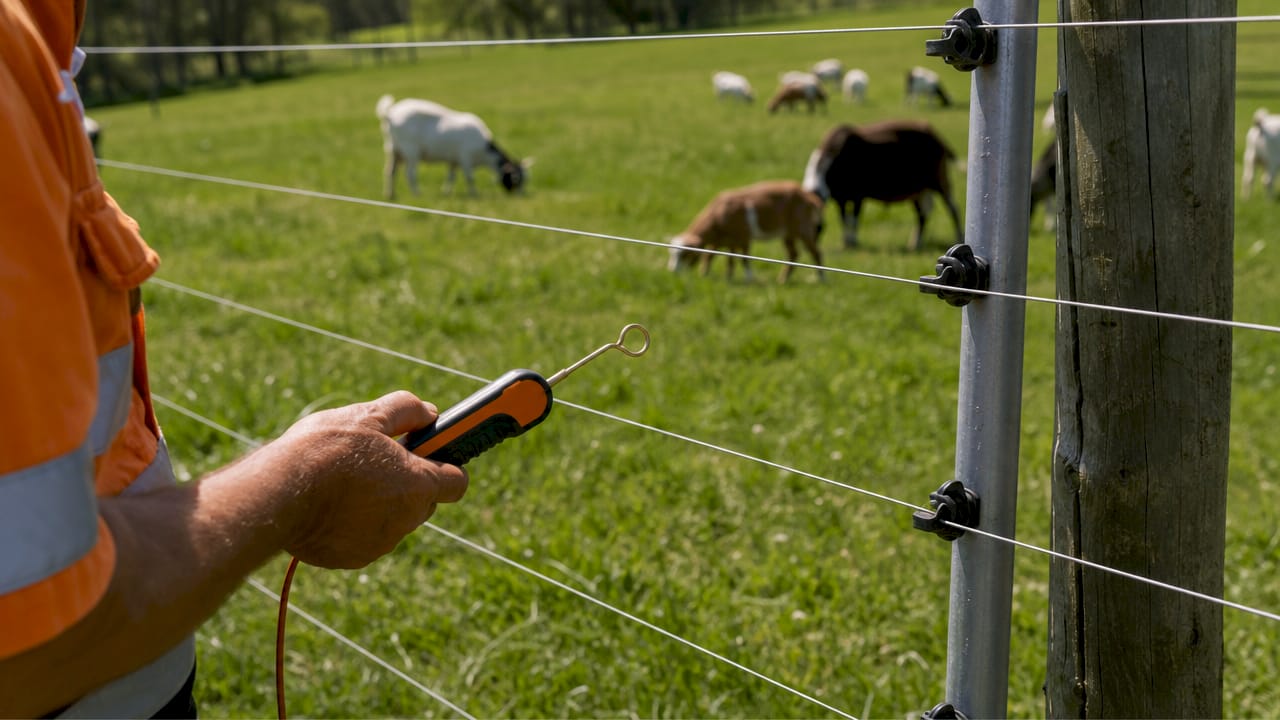
Effective animal fencing works on two levels: physical containment and psychological deterrence. Physical fencing stops animals from crossing a boundary through a solid barrier. Psychological fencing, like electric wire, trains animals to respect a boundary through learned aversion. Physical fences require proper design for low maintenance, longevity, and animal protection, including appropriate materials that prevent injury and improve visibility. That means a poorly visible fence is not just a containment problem. It is a collision hazard.
Barbed wire is the clearest example of a design choice that harms animals. It works for cattle in open range settings but causes serious lacerations in horses, sheep, and young stock. Species-specific fencing is not optional. It is a welfare requirement.
Key design principles that protect animal health:
- Visibility: High-visibility fencing materials reduce collision injuries, especially for horses and fast-moving cattle.
- Height: Match fence height to species. Horses need at least 54 inches. Cattle need 48–54 inches depending on breed.
- Tension and rigidity: Loose or sagging wire creates entanglement risk. Properly tensioned wire stays taut under pressure.
- Smooth materials: Smooth wire, coated wire, and wood rails reduce laceration risk compared to barbed alternatives.
- Corner and gate reinforcement: Weak corners are where most fence failures start. Brace posts and quality connectors prevent collapse under animal pressure.
Pro Tip: Walk your fence line from the animal’s perspective. Look for protruding wire ends, loose staples, and low-visibility sections. Most injuries happen at spots you stopped noticing because you pass them every day.
What are the primary types of fencing for livestock health?
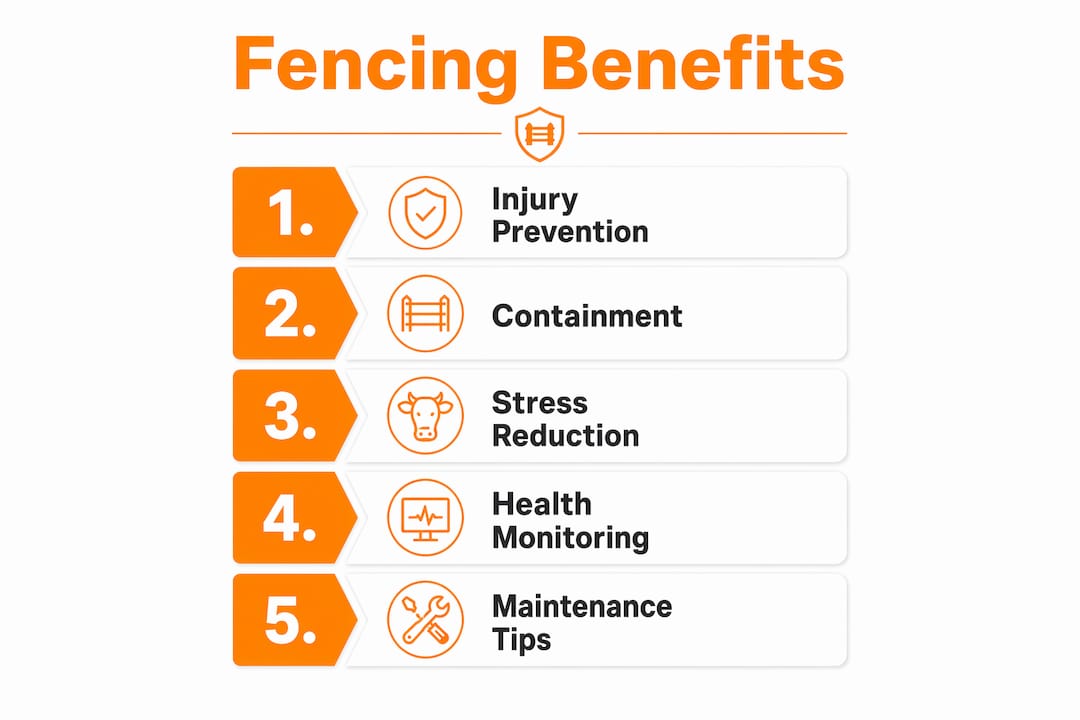
Three main fencing categories serve livestock operations: physical fencing, electric fencing, and virtual fencing. Each has a distinct role in animal health and fence safety, and the best operations typically combine two or more.
Physical fencing
Physical fencing includes woven wire, high-tensile smooth wire, wood rail, and pipe. It provides a hard barrier that requires no animal training. The tradeoff is cost and labor. Physical fences are expensive to install and require regular inspection to catch corrosion, post rot, and wire fatigue. The benefit is reliability. A well-built physical fence works without electricity, connectivity, or batteries.
Electric fencing
Electric fencing delivers a short, sharp shock that conditions animals to avoid the fence line. Electric fencing provides psychological boundaries with fewer materials than physical fencing, but it requires animal training to be effective. Voltage requirements vary by species. Cattle require around 2,000–4,000 V, while sheep and goats need 4,000–7,000 V because their wool and hair insulate them from lower voltages. Getting voltage wrong means the fence does not deter, and animals learn to push through it. Fencefast carries a full range of electric fencing systems including energizers, solar panels, and grounding components suited to Canadian conditions.
Virtual fencing
Virtual fencing uses GPS-enabled collars to create digital boundaries without physical wire. Virtual fencing uses GPS collars that deliver auditory and electrical cues, training animals to respect boundaries with minimal stress. Animals typically adapt within days. Regulations in most jurisdictions require cattle to be at least 6 months old before collar use. This technology is not a replacement for physical fencing in all situations, but it excels at rotational grazing, remote paddock management, and habitat protection.
| Fencing type | Best for | Animal health benefit | Key limitation |
|---|---|---|---|
| Physical (woven wire) | All species, permanent boundaries | Reliable containment, no training needed | High installation cost, labor-intensive maintenance |
| Electric (energized wire) | Cattle, horses, temporary divisions | Psychological deterrence, low material use | Requires animal training, voltage management |
| Virtual (GPS collar) | Cattle, rotational grazing | Health monitoring, low-stress boundary control | Connectivity dependent, regulatory restrictions |
How does virtual fencing technology support animal health?
Virtual fencing has moved well beyond simple containment. Virtual fencing technology doubles as a health monitoring tool, alerting livestock owners to behavioral signs of illness without requiring physical presence. GPS collar data tracks movement patterns continuously. Deviations from normal behavior, such as reduced movement or isolation from the herd, flag potential problems like fever or calving difficulties before they become emergencies.
Managed grazing using virtual fencing also reduces wildfire fuel loads, protects sensitive habitats, and supports soil and water quality by controlling livestock location precisely. That is a direct animal health benefit. Overgrazed pastures produce lower-quality forage, which degrades body condition and immune function over time. Precise grazing rotation keeps pasture quality high and reduces parasite pressure in soil.
The welfare considerations around virtual fencing are real and worth understanding:
- Connectivity drop-outs: If a collar loses signal, the boundary cue disappears. Animals can breach the virtual boundary without consequence, which erodes training.
- Social behavior: Collars must be fitted correctly to avoid discomfort. Poorly fitted collars cause neck sores and alter natural grazing behavior.
- Training requirements: Virtual fencing collars must be used as part of a training program by certified or competent trainers. Users must comply with manufacturer instructions and conduct regular animal welfare checks.
- Industry oversight: A formal industry-wide code of conduct for virtual fencing is advocated by welfare organizations to address risks like connectivity failures and unpredictable cues. Current research finds no long-term welfare harm when systems are used correctly.
Pro Tip: When introducing virtual fencing to a new group of cattle, run the system alongside a temporary physical fence for the first week. Animals learn the auditory cue before they ever receive a correction, which speeds adaptation and reduces stress.
Fencefast is an authorized Gallagher dealer and carries the eShepherd virtual fencing system, which includes GPS-enabled solar-powered neckbands, base stations, and app-based herd management tools designed for Canadian ranching conditions.
Best practices for maintaining fencing to protect animal health
A fence that fails is worse than no fence at all. Animals that breach a boundary under pressure often injure themselves in the process. Consistent maintenance is the difference between a fence that protects and one that creates risk.
- Check grounding first. Poor grounding is the primary cause of electric fence malfunction, not equipment failure. Install three or more galvanized rods spaced 10 feet apart. Never mix copper and galvanized metal in the same grounding system. Mixed metals corrode rapidly and kill fence output.
- Inspect wire tension monthly. Sagging wire invites animals to lean into the fence. Retension high-tensile wire after freeze-thaw cycles, which are common across Canadian winters.
- Clear vegetation from the fence line. Grass and brush contact drains voltage from electric fences. A fence reading 2,000 V at the energizer may deliver less than 500 V at the far end if vegetation contact is heavy.
- Check posts and staples after storms. Wind and ice loading shift posts and pull staples. A post that leans 10 degrees reduces effective fence height and changes wire tension across the whole run.
- Test fence voltage weekly during grazing season. Use a digital voltmeter, not a visual check. A fence that looks intact can be dead. Animals learn this faster than you do.
Pro Tip: Walk the fence after the first hard frost every fall. Frost heave moves posts, and a fence that was tight in September may be slack and sagging by November. Catching it early costs minutes. Missing it can cost an animal.
Remote fence monitoring technology now lets livestock owners track fence voltage and breach events from a phone. For large operations with miles of fence line, this is not a luxury. It is a practical tool that catches failures before animals do.
Key Takeaways
Effective fencing is the foundation of livestock health management. The right fence design, material, and maintenance routine directly determines animal safety, stress levels, and long-term welfare outcomes.
| Point | Details |
|---|---|
| Design drives safety | Match fence type and material to species to prevent injury and reduce daily stress. |
| Voltage must match species | Cattle need 2,000–4,000 V; sheep and goats need 4,000–7,000 V to respect electric fences. |
| Virtual fencing monitors health | GPS collar data flags illness and calving problems before they become emergencies. |
| Grounding prevents failure | Three or more galvanized rods spaced 10 feet apart prevent the most common electric fence failure. |
| Maintenance protects animals | Monthly tension checks, vegetation control, and post-storm inspections keep fences functional year-round. |
What I’ve learned after years of watching fences fail animals
The most common mistake I see livestock owners make is treating fencing as a one-time capital expense rather than an ongoing management system. They spend money on installation and then walk away. Six months later, a sagging wire or a dead energizer creates a gap, an animal pushes through, and the injury or loss that follows costs far more than the maintenance would have.
Virtual fencing has genuinely changed what is possible for rotational grazing and health monitoring. The ability to move a boundary from a phone, without driving out to install temporary wire, is a real operational shift. But I have also seen operations adopt it without proper training protocols, and the results are predictably poor. Animals that never learned the auditory cue receive corrections without context, which causes stress rather than reducing it. The technology works exactly as well as the training behind it.
The welfare standards conversation around virtual fencing is one I think the industry needs to take seriously. The push for a formal code of conduct is not anti-technology. It is pro-animal. Uniform standards protect both the animals and the credibility of the technology itself.
My practical advice: start with your physical fence infrastructure. Get that right. Then layer in electric or virtual systems where they add specific value. A GPS collar on a cow contained by a failing physical fence is not a solution. It is a distraction.
— Juiced
Fencefast has the fencing solutions your livestock need
Livestock owners across Canada trust Fencefast for fencing products that protect animal health and hold up through Canadian seasons.
Fencefast carries physical fencing components, electric fencing systems, and Gallagher eShepherd virtual fencing technology, all from a single source with 26 years of agricultural fencing expertise. Whether you are building a new perimeter, upgrading to electric, or exploring virtual fencing for your herd, the team at Fencefast provides product selection support, setup guidance, and access to government funding programs including OFCAF and BMP grants. Visit Fencefast to browse the full product catalog and get the right fencing solution for your operation.
FAQ
How does fencing directly affect livestock health?
Fencing design controls animal movement, reduces injury risk, and lowers chronic stress. Poor fencing causes escapes, lacerations, and behavioral problems that degrade body condition and immune function over time.
What fencing type is safest for horses?
High-visibility, smooth-wire or rail fencing is the safest option for horses. Barbed wire causes serious lacerations and should never be used in horse pastures. Fencefast covers horse-specific electric fencing options in detail.
Can virtual fencing harm cattle welfare?
Current research finds no long-term welfare harm when virtual fencing is used correctly with proper training. Welfare risks arise from connectivity failures and inadequate training protocols, which is why certified trainer use and regular welfare checks are required.
What voltage does an electric fence need for cattle?
Cattle require 2,000–4,000 V to reliably respect an electric fence. Sheep and goats need 4,000–7,000 V because their wool and hair insulate them from lower voltages.
How often should I inspect my livestock fence?
Inspect electric fence voltage weekly during grazing season and walk the full fence line monthly. After storms or hard frosts, check immediately for post movement, wire slack, and staple pull-out that could create gaps.
Recommended
- Livestock Fencing Regulations: What Owners Must Know – FenceFast Ltd.
- Animal fencing basics: Essential solutions for Canadian farms – FenceFast Ltd.
- Animal Behavior and Fencing: What Every Farmer Should Know – FenceFast Ltd.
- Livestock Fence Height Guide: Species-by-Species Standards – FenceFast Ltd.

