

TL;DR:
- Electric fencing provides a psychological barrier that deters animals through brief, safe electric pulses. It costs less, installs faster, and is more adaptable than traditional fencing methods, making it highly effective for livestock management. Proper training, routine voltage monitoring, and maintenance are essential to ensure its long-term reliability.
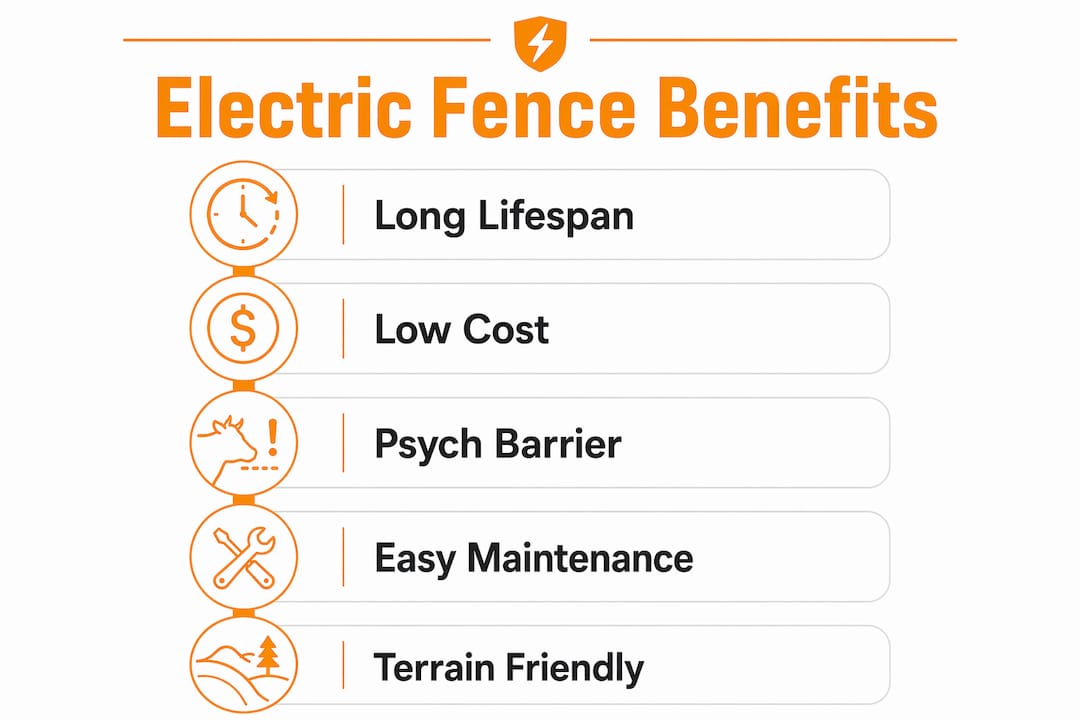
Electric fencing is defined as a system that delivers brief, safe electric pulses through a wire to create a psychological barrier that deters animals from crossing a boundary. Unlike barbed wire or woven wire, the fence works on the animal’s mind, not its body. Research shows that temporary electric fencing reduces wild boar intrusion by 74%, which signals just how effective the psychological deterrent is across species. For livestock owners and rural property managers, understanding why use electric fencing comes down to three core advantages: lower cost, greater flexibility, and proven effectiveness. Fencefast supplies electric fencing systems across Canada, from basic electric fencing components to advanced Gallagher eShepherd virtual fencing technology.
What are the main advantages of electric fencing over traditional methods?
Electric fencing costs less to install and maintain than barbed wire or woven wire fencing, especially across large acreages. Traditional fencing requires heavy posts, significant labor, and expensive materials that are difficult to move once set. Electric systems use lightweight posts and a single or multi-strand wire that you can install in a fraction of the time.
The electric fencing advantages over conventional fences include:
- Lower material cost. Fewer posts and lighter wire reduce upfront spending significantly.
- Faster installation. A single operator can set up temporary electric fencing in hours rather than days.
- Terrain flexibility. Flexible posts and wire follow uneven ground and rocky slopes where rigid fencing fails.
- Reduced animal injury. Animals receive a brief shock and pull back. They do not get caught in barbs or wire, which eliminates lacerations and entanglement injuries.
- Portability. You can move the fence to a new paddock in the same afternoon, which is impossible with permanent structures.
Movable electric fences can last up to 33 years with proper care. That lifespan, combined with low material costs, makes the long-term cost-benefit ratio hard to match with any traditional alternative.
Pro Tip: When setting up a new electric fence line across a slope, run the wire parallel to the contour of the land rather than straight up the grade. This keeps wire tension even and reduces post stress during freeze-thaw cycles.
How does electric fencing create a psychological barrier for livestock?
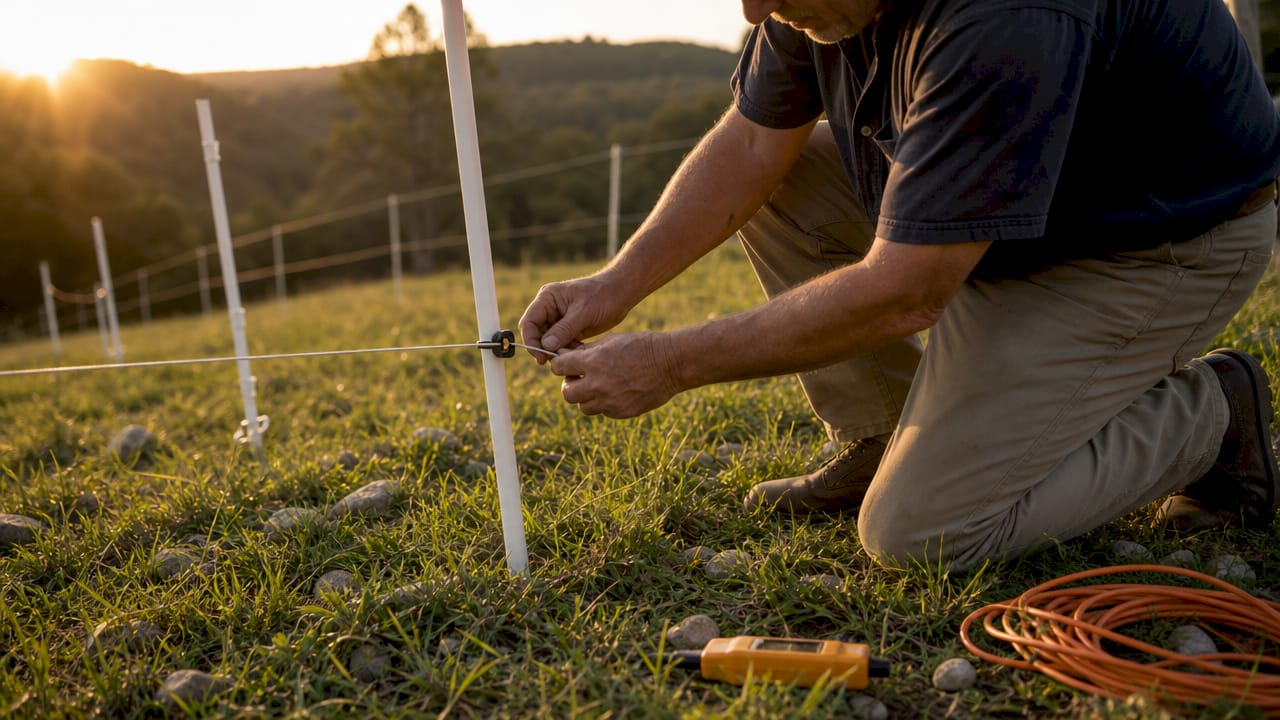
Electric fencing works on conditioning, not containment. A physical fence stops an animal by blocking it. An electric fence stops an animal by teaching it that the wire is unpleasant to touch. That distinction matters because a conditioned animal will respect a single strand of wire the same way it respects a six-rail wooden fence.
The mechanism relies on consistent voltage. Maintaining fence voltage between 3,000 and 5,000 volts is the standard requirement for most livestock species. Drop below that threshold and the psychological effect weakens. Animals test the wire, feel little consequence, and begin to push through.
Training livestock to respect the fence is the most critical step most producers skip. The process works like this:
- Place new animals in a small “training paddock” where the wire is clearly visible and the energizer is running at full power.
- Allow the animals to approach and contact the wire under supervision.
- The first contact delivers a strong, memorable shock that conditions the animal to avoid the wire long term.
- Move animals to their regular pasture only after they have demonstrated consistent avoidance behavior.
The first electric shock experience determines fence respect for life. Skipping the training paddock step is the single most common reason livestock push through electric fences that are otherwise functioning correctly.
“Effective electric fencing depends as much on discipline and training of livestock as on hardware quality.” — University of Massachusetts Extension, Basics for Livestock Fencing
Predator deterrence follows the same conditioning principle. Wildlife departments widely recommend electric fencing for poultry protection because predators such as foxes, raccoons, and coyotes learn quickly to avoid the wire after one or two contacts.
What maintenance practices keep electric fencing reliable?
Electric fencing requires a different maintenance mindset than traditional fencing. A broken wooden rail is visible. A voltage short from a weed touching the wire is invisible. Visual inspection alone cannot detect voltage shorts caused by vegetation contact, which makes a fault finder tool a non-negotiable part of your fencing kit.
The most common causes of electric fence failure are:
- Vegetation contact. Grass, weeds, and brush touching the wire drain voltage continuously. A heavily overgrown fence line can drop voltage below the effective threshold within days.
- Poor grounding. An undersized or corroded ground rod system is the second most frequent cause of low voltage readings. Most systems need at least three ground rods spaced 10 feet apart.
- Broken insulators. Cracked or missing insulators allow the wire to contact the post, creating a direct short to ground.
- Loose connections. Wire joins and gate handles corrode over time, increasing resistance and reducing voltage at the far end of the fence.
Constant voltage monitoring is the defining maintenance difference between electric and traditional fencing. Walk the fence line with a fault finder monthly during the growing season and after any major storm. Check voltage at the energizer, at the midpoint of the fence, and at the far end. A significant voltage drop between two points tells you exactly where to look for the problem.
Pro Tip: Set a recurring calendar reminder to check fence voltage every two weeks from may through september. Vegetation grows fastest during this window and can short a fence line in under a week during a wet summer.
For a detailed walkthrough of electric fence safety tips and maintenance schedules, Fencefast has published guidance specifically for Canadian farming conditions.
In what scenarios is electric fencing most beneficial for livestock managers?
Electric fencing for livestock delivers its greatest value in three specific situations: rotational grazing, predator exclusion, and difficult terrain management.
Rotational grazing and pasture health
Temporary electric fencing improves pasture health by enabling rotational grazing and scheduled rest periods. Subdividing a large pasture into smaller paddocks with portable electric wire lets you move cattle, sheep, or goats every few days. The rested paddocks recover faster, produce more forage per acre, and reduce soil compaction. This is the single most cost-effective pasture management tool available to livestock producers.
Predator exclusion
Electric fencing is cost-efficient for protecting beehives, chicken coops, and livestock enclosures from predators. A low-cost portable energizer and a two-strand electric fence around a chicken coop stops most ground predators reliably. The same principle scales up to protect sheep and goat herds from coyotes and wolves. The key is fence geometry: a properly angled outrigger wire at ground level prevents predators from digging under the fence.
Terrain adaptability
| Application | Electric fencing advantage | Outcome |
|---|---|---|
| Rotational grazing | Portable subdivision of pastures | Faster forage recovery, higher yield |
| Predator exclusion | Low-cost perimeter around coops and pens | Reduced livestock losses |
| Rugged terrain | Flexible posts follow land contours | Lower labor and material costs |
| Temporary holding | Quick setup for sorting or weaning | No permanent infrastructure needed |
| Garden and crop protection | Single-strand deterrent wire | Stops deer, rabbits, and livestock |
Rugged terrain adaptability is where electric fencing separates itself most clearly from traditional alternatives. Rocky hillsides, creek crossings, and wooded fence lines that would require expensive custom work with wooden or steel posts become straightforward jobs with fiberglass step-in posts and polywire.
For producers managing multiple species or complex rotational systems, Fencefast offers a full range of electric fence setup resources and product options tailored to Canadian conditions.
Key takeaways
Electric fencing is the most cost-effective and flexible livestock containment method available, but its effectiveness depends entirely on consistent voltage, proper animal training, and regular maintenance.
| Point | Details |
|---|---|
| Psychological barrier | Animals learn to avoid the wire after first contact, making training paddocks a critical first step. |
| Voltage requirement | Keep fence voltage between 3,000 and 5,000 volts to maintain the psychological deterrent effect. |
| Predator deterrence | Research shows a 74% reduction in wildlife intrusion with temporary electric fencing. |
| Maintenance priority | Use a fault finder monthly to detect vegetation shorts that visual inspection cannot reveal. |
| Rotational grazing | Portable electric fencing subdivides pastures, improves forage recovery, and reduces soil compaction. |
What I’ve learned from watching producers get electric fencing wrong
Most electric fence failures I’ve seen come down to one of two things: skipping the training step or ignoring voltage monitoring until an animal escapes. Both are avoidable, and both cost far more to fix than they would have cost to prevent.
The training paddock step feels slow when you’re busy. Producers skip it, put animals directly into a large pasture with a new electric fence, and then wonder why cattle are pushing through a fence that reads 4,500 volts at the energizer. The animals were never conditioned. The fence is working perfectly. The training failed.
Maintenance complacency is the second pattern. A fence that worked all winter starts failing in june because nobody walked the line after the spring grass came up. One overgrown section drops voltage below 2,000 volts, a calf pushes through, and suddenly there’s a fence repair job plus a livestock recovery operation.
My honest recommendation for producers new to electric fencing: combine it with a physical barrier for your most valuable or most escape-prone animals. A single strand of electric wire inside a woven wire perimeter fence gives you the best of both systems. The physical fence stops a panicked animal. The electric wire stops a curious one before it ever reaches the physical fence. That combination is more reliable than either system alone.
The cost-benefit case for electric fencing is strong. The long-term value is real. But neither matters if the training and maintenance fundamentals are not in place from day one.
— Juiced
Fencefast electric fencing solutions for livestock owners
Fencefast carries a full range of electric fencing products for livestock owners and rural property managers across Canada, from portable energizers and solar power supplies to polywire, step-in posts, and gate handles.

Whether you’re setting up a rotational grazing system for cattle, protecting a poultry flock from predators, or managing a mixed-species operation across challenging terrain, Fencefast has the components and the expertise to help you build a system that works. As an authorized Gallagher dealer with a 26-year partnership, Fencefast also offers access to advanced virtual fencing technology for producers ready to take herd management further. Browse the full catalog and get expert guidance at fencefast.ca.
FAQ
Why use electric fencing instead of barbed wire?
Electric fencing costs less to install, causes no animal injuries from barbs, and can be moved or reconfigured quickly. Barbed wire is permanent, expensive to remove, and causes lacerations when animals contact it under pressure.
Is electric fencing effective for predator control?
Research shows temporary electric fencing reduces wildlife intrusion by 74%. Wildlife departments widely recommend it for protecting poultry, beehives, and small livestock enclosures from ground predators.
What voltage does an electric fence need for livestock?
Most livestock species require a fence voltage between 3,000 and 5,000 volts to maintain the psychological deterrent effect. Voltage below that threshold allows animals to test and push through the wire.
How often should I check my electric fence voltage?
Check voltage monthly at minimum, and every two weeks during the growing season from may through september. Use a fault finder tool rather than relying on visual inspection, since vegetation shorts are invisible to the eye.
Can electric fencing work on uneven or rocky terrain?
Electric fencing is specifically suited to rugged terrain. Flexible fiberglass step-in posts and lightweight wire follow land contours where rigid wooden or steel post fencing would require expensive custom work.

