

Many Canadian farmers believe higher voltage electric fences always deliver better livestock control, but excessive voltage risks animal injury and wastes energy. A 12 volt fence charger balances safety, efficiency, and reliability for cattle, sheep, horses, and other livestock. This guide explains how to select, power, maintain, and optimize 12 volt systems across Canadian farms, ensuring effective predator deterrence and year-round operation.
Table of Contents
- Understanding 12 Volt Fence Charger Basics
- Power Source Compatibility And Efficiency
- Safety Considerations For Livestock And Humans
- Comparison With Other Voltage Chargers
- Maintenance And Longevity In Canadian Conditions
- Common Misconceptions About 12 Volt Fence Chargers
- Explore FenceFast’s 12 Volt Electric Fencing Solutions
- Frequently Asked Questions About 12 Volt Fence Chargers
Key takeaways
| Point | Details |
|---|---|
| Optimal voltage output | 12 volt fence chargers deliver 7,000 to 10,000 volts, providing safe and effective livestock control for Canadian farms. |
| Flexible power options | Compatible with battery, solar, and mains power sources to suit off-grid and remote farm locations. |
| Safety and compliance | CSA standards and proper grounding protocols ensure animal welfare and human safety during operation. |
| Predator deterrence | Correct installation and voltage settings effectively deter predators while minimizing animal stress. |
| Winter reliability | Regular maintenance and battery care maintain consistent performance through harsh Canadian winters. |
Understanding 12 volt fence charger basics
A 12 volt fence charger transforms low battery voltage into high-voltage pulses, typically delivering 7,000 to 10,000 volts along fence wires. These brief shocks create psychological deterrence rather than physical harm, training livestock to respect boundaries without injury. The pulse duration lasts milliseconds, providing enough discomfort to discourage animals from testing the fence while maintaining their welfare.
This voltage range strikes an ideal balance for common Canadian livestock species. Cattle respond reliably to pulses around 8,000 volts, while sheep, horses, and goats require similar levels for consistent containment. The shock intensity remains sufficient to capture attention without causing burns, panic, or long-term behavioral issues.
Unlike continuous current systems, pulse-based chargers deliver energy in controlled intervals, typically one pulse per second. This approach conserves battery power, extends equipment lifespan, and reduces risk to animals or humans who accidentally contact the fence. For farmers managing mixed herds or rotating pastures, 12 volt systems offer versatile containment across diverse terrain and livestock types.
Key operational features include:
- Pulse output cycles once per second to maintain deterrent effect
- Low current draw preserves battery charge over extended periods
- Compatibility with various wire gauges and fence configurations
- Adjustable voltage settings for different livestock species
Pro Tip: Test fence voltage weekly using a voltmeter at the farthest point from the charger to ensure consistent output across the entire perimeter.
Power source compatibility and efficiency
12 volt fence chargers consume remarkably low current, often less than 0.1 amps during operation, which extends battery life significantly compared to higher-voltage alternatives. A quality deep-cycle marine battery can power a small to medium fence for several weeks between charges, making these systems practical for remote pastures without electrical infrastructure.
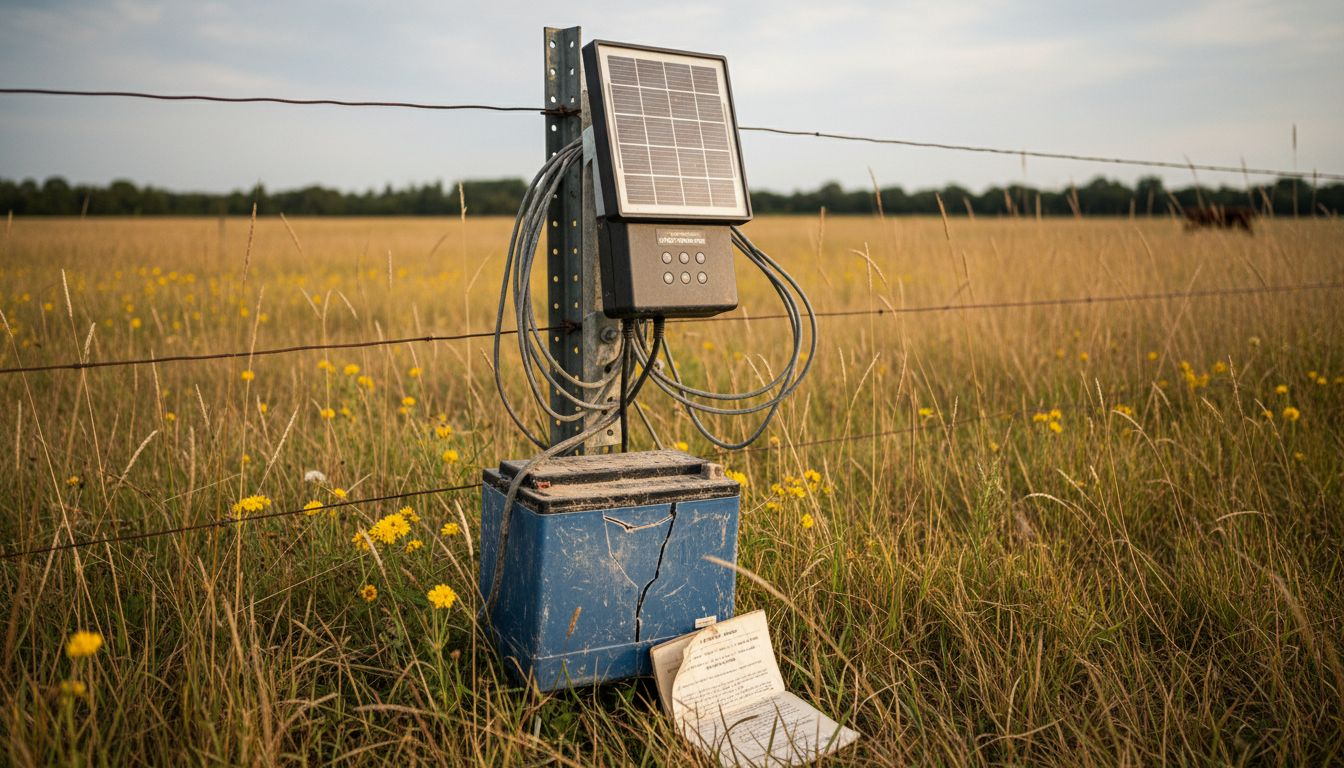
Solar-powered 12 volt fence chargers are practical and reliable in Canada when equipped with adequate solar panels (≥10 watts) and deep-cycle batteries to maintain consistent voltage during shorter daylight hours and winter months. For Canadian conditions, pair your charger with a 20 to 40 watt solar panel to compensate for reduced winter sunlight and ensure continuous battery replenishment. Position panels south-facing at a 45 to 60 degree angle to maximize winter sun exposure.
Battery and solar sizing must account for regional climate challenges. Alberta and Saskatchewan winters reduce daylight to eight hours or less, requiring larger solar arrays and battery reserves. Choose AGM or gel deep-cycle batteries rated for cold weather operation, as standard lead-acid batteries lose 50% capacity below minus 20 degrees Celsius.
Power source options include:
- Deep-cycle batteries provide 12 to 21 days of operation per charge
- Solar panels eliminate ongoing energy costs and maintenance trips
- Mains-powered AC adapters suit permanent installations near buildings
- Combination solar-battery systems deliver optimal reliability
Mains power remains an option for fences near farm structures, but 12 volt systems excel in flexibility and safety. Off-grid applications benefit most from solar configurations, which can reduce annual energy costs by $150 to $300 compared to running extension cords or generators. Farmers using Gallagher S40 or S100 models report consistent performance across diverse Canadian climates.
Pro Tip: Install a battery voltage indicator to monitor charge levels remotely and prevent unexpected power loss during critical grazing periods.
Compare solar fence energizer performance across brands to match your specific fence length and livestock needs.
Safety considerations for livestock and humans
CSA standards govern electric fence safety in Canada, requiring output voltage around 8,000 volts to balance effectiveness with animal welfare. Exceeding this threshold increases injury risk, particularly for smaller livestock like sheep or young calves. Burns, behavioral changes, or cardiac stress can result from improperly configured high-voltage systems.
Proper grounding prevents voltage irregularities and reduces shock intensity to safe levels. Install at least three grounding rods, each 1.8 meters long, spaced 3 meters apart in moist soil. Poor grounding forces excess voltage through animals, creating dangerous conditions and reducing fence effectiveness. Test ground resistance annually using a digital fence tester.
Human safety requires clear warning signage every 100 meters along fence lines, especially near public trails or property boundaries. While 12 volt charger shocks rarely cause serious injury to healthy adults, they can startle workers into falls or trigger cardiac issues in individuals with pacemakers. Disconnect power before performing maintenance or repairs.
Safety protocols include:
- Install clearly visible warning signs at all fence access points
- Train farm workers on safe fence handling and emergency procedures
- Keep vegetation trimmed to prevent voltage drain and fire hazards
- Use insulated tools when adjusting live fence components
Animal welfare benefits from pulse-based systems that provide brief, memorable shocks without causing pain or injury. Cattle learn fence boundaries within days, reducing stress compared to physical restraints. Monitor livestock behavior after installation to ensure animals respect the fence without displaying fear or agitation.
Pro Tip: Keep a fence tester in your truck to quickly diagnose voltage drops and grounding issues during daily farm rounds.
Comparison with other voltage chargers
12 volt fence chargers excel in specific applications but have limitations compared to higher-powered alternatives. Understanding these trade-offs helps you select the right system for your operation size, livestock type, and power availability.
| Feature | 12 Volt Charger | 110/220 Volt Mains | Solar Only Unit |
|---|---|---|---|
| Effective fence length | Up to 10 km | Over 25 km | Up to 15 km |
| Power source | Battery, solar, mains | AC mains required | Solar panel only |
| Operating cost | Low to moderate | Moderate to high | Very low |
| Installation complexity | Simple | Requires electrical | Moderate |
| Cold weather reliability | Good with maintenance | Excellent | Variable |
Mains-powered 110 or 220 volt chargers deliver superior performance for large perimeters exceeding 10 kilometers. They maintain consistent voltage regardless of weather but require permanent electrical infrastructure, limiting placement flexibility. Monthly operating costs range from $10 to $25 depending on fence size and regional electricity rates.
12 volt systems offer better adaptability for remote, off-grid locations where running power lines proves impractical or expensive. Their lower power consumption and enhanced safety features reduce risks around children, pets, and inexperienced workers. However, fence length limitations require multiple chargers or alternative solutions for extensive operations.
Key advantages and limitations:
- 12 volt portability enables seasonal pasture rotation and temporary fencing
- Solar-powered 12 volt options eliminate ongoing energy costs entirely
- Limited output restricts effective coverage to smaller farm sections
- Battery maintenance adds labor compared to plug-and-forget mains units
For comprehensive guidance on matching charger specifications to your farm requirements, review fence charger selection criteria before purchasing.
Maintenance and longevity in Canadian conditions
Canadian winters demand proactive maintenance to prevent voltage loss and equipment failure. Frozen soil increases ground resistance, potentially reducing fence effectiveness by 30% or more if grounding systems degrade. Inspect grounding rods each fall, replacing any showing corrosion or looseness.
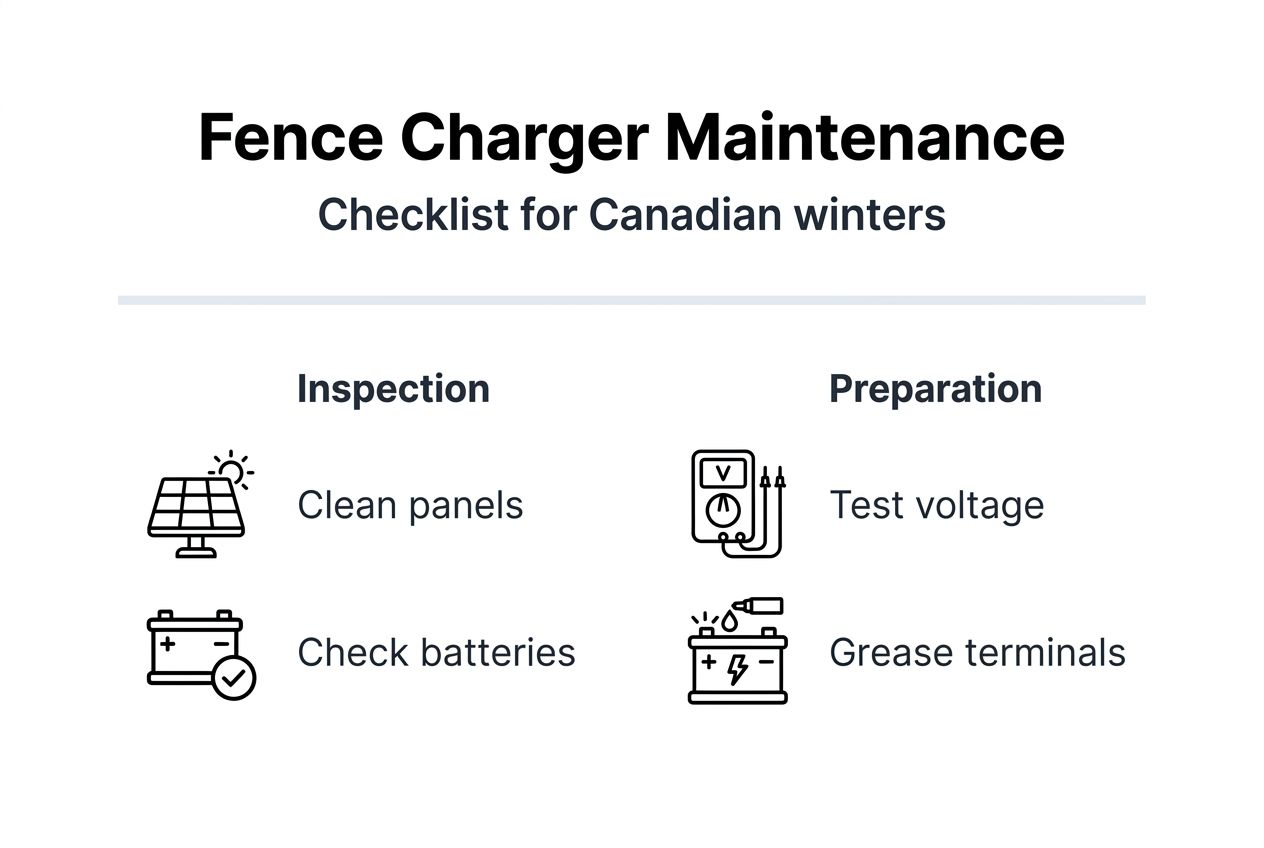
Battery health directly affects system reliability during cold months. Deep-cycle batteries lose capacity below freezing, requiring larger reserves or heated enclosures in northern regions. Check electrolyte levels monthly on flooded batteries, maintaining proper fluid levels to prevent sulfation and premature failure. AGM batteries require less maintenance but cost 40% to 60% more initially.
Solar panel efficiency drops when covered by snow, ice, or dirt. Clean panels monthly during winter using a soft brush or warm water to restore optimal charging. Position panels at steep angles (60 degrees or more) to encourage snow shedding and maximize low-angle winter sunlight capture.
Seasonal maintenance tasks:
- Test fence voltage at multiple points to identify weak sections or shorts
- Inspect all wire connections for corrosion, tightening or replacing as needed
- Trim vegetation within 30 cm of fence lines to prevent voltage drain
- Verify grounding system conductivity using a digital resistance meter
- Replace worn insulators that allow current leakage to posts
- Store batteries indoors during extreme cold if not actively used
Corrosion prevention on terminals and connectors ensures consistent voltage delivery across all seasons. Apply dielectric grease to battery terminals and wire connections, protecting against moisture infiltration. Stainless steel or galvanized hardware resists rust better than standard fasteners in humid coastal regions.
Pro Tip: Mark your calendar for pre-winter and post-thaw inspections to catch issues before they compromise fence performance during critical periods.
Proper maintenance extends charger lifespan to 10 or 15 years, justifying initial investment costs. For specific wet climate challenges, consult electric fence rainy climate maintenance strategies to protect equipment year-round.
Common misconceptions about 12 volt fence chargers
Many farmers assume higher voltage automatically improves livestock control, but excessive shock intensity stresses animals and increases injury risk without enhancing containment. Research shows cattle respond equally well to 7,000 volt and 12,000 volt systems when properly installed, making voltage escalation counterproductive.
Another widespread myth suggests solar-powered 12 volt chargers fail during Canadian winters. While reduced daylight presents challenges, properly sized solar arrays with adequate battery reserves maintain reliable operation throughout the year. Successful installations across Alberta and Saskatchewan prove solar viability when components match regional conditions.
Some operators believe 12 volt chargers only suit small hobby farms or temporary pens. In reality, these systems effectively manage fences up to 10 kilometers when properly grounded and maintained, covering substantial pasture acreage for mid-sized operations. Multiple strategically placed chargers can protect even larger properties.
Common false beliefs include:
- Solar systems cannot function reliably below minus 20 degrees Celsius
- 12 volt chargers lack sufficient power for cattle or horses
- Battery-powered fences require weekly recharging regardless of setup
- Higher voltage always translates to better predator deterrence
Clarifying these misconceptions prevents poor purchasing decisions and improper fence sizing. Understanding actual performance parameters helps farmers optimize their electric fencing investments, balancing cost, safety, and effectiveness across diverse applications.
Explore FenceFast’s 12 volt electric fencing solutions
Ready to implement reliable electric fencing on your Canadian farm? FenceFast offers a complete range of 12 volt fence chargers, solar panels, batteries, and installation accessories designed for agricultural applications. Their product selection includes models suited for small paddocks to expansive pastures, with expert guidance to match equipment to your specific livestock and terrain.

Explore the Patriot pet and garden accessory kit for compact installations, or protect larger areas with proven bear and nuisance animal netting solutions. FenceFast’s Canada-wide shipping and technical support ensure you receive the right components and installation knowledge for successful, long-term fence performance.
Frequently asked questions about 12 volt fence chargers
Can 12 volt chargers handle large farm perimeters?
12 volt fence chargers effectively manage fences up to 10 kilometers when properly grounded and maintained. For larger perimeters, install multiple chargers in strategic locations or consider higher-powered mains units that deliver consistent voltage across 25 kilometers or more.
How do I winterize my electric fence system?
Clean solar panels to remove snow and ice buildup, inspect grounding rods for frost heave damage, and verify battery charge levels before temperatures drop. Store batteries indoors if the fence won’t be active during winter, or use insulated battery boxes to maintain performance in extreme cold.
What are signs that my fence charger needs maintenance?
Voltage readings below 6,000 volts at fence endpoints indicate problems requiring attention. Other warning signs include livestock escaping previously effective barriers, visible corrosion on terminals, clicking sounds from the charger unit, or batteries draining faster than normal.
Is solar power truly reliable in northern Canada?
Properly configured solar systems with panels rated at 20 watts or higher and quality deep-cycle batteries operate reliably across northern Canadian winters. Key success factors include steep panel angles for snow shedding, oversized battery reserves, and regular maintenance to optimize charging efficiency.
Are 12 volt chargers safe for all livestock species?
12 volt chargers safely control cattle, horses, sheep, goats, pigs, and poultry when output voltage stays between 7,000 and 10,000 volts. Adjust pulse intensity for smaller or younger animals, and always ensure proper grounding to prevent excessive shock that could cause injury or behavioral issues.
Recommended
- Fence Charger Selection – Powering Secure Livestock Fences – FenceFast Ltd.
- Solar Panel Electric Fence Charger: Reliable Livestock Control – FenceFast Ltd.
- Gallagher Solar Fence Charger: Reliable Livestock Control – FenceFast Ltd.
- Gallagher S400 Solar Fence Charger: Reliable Livestock Control – FenceFast Ltd.

