

Many Canadian farmers believe that any metal rod driven into the ground will work for electric fence grounding, but this common misconception leads to shocking failures. Poor grounding can reduce shock strength by up to 80%, transforming a reliable barrier into an open invitation for livestock to wander. Without proper grounding rods, your electric fence cannot complete the circuit needed to deliver effective shocks, jeopardizing animal safety and property security.
Table of Contents
- Why Grounding Rods Matter For Electric Fences
- Understanding Ground Rod Materials And Dimensions
- Impact Of Soil And Weather Conditions On Grounding Effectiveness
- Best Practices For Grounding Rod Installation And Testing
- Common Misconceptions And Mistakes In Electric Fence Grounding
- Practical Recommendations And Cost Considerations
- Enhance Your Electric Fence Setup With FenceFast Solutions
- Frequently Asked Questions
Key takeaways
| Point | Details |
|---|---|
| Proper grounding rods drastically improve shock strength | Effective grounding completes the circuit, delivering consistent shocks that keep livestock safely contained. |
| Copper-clad steel rods 6 to 8 feet long are ideal | These dimensions and materials provide optimal conductivity and corrosion resistance for Canadian soils. |
| Install at least three rods spaced 10 feet apart | Multiple properly spaced rods enhance grounding capacity, especially in challenging soil conditions. |
| Soil moisture and type affect grounding needs | Drought and sandy or rocky soils require additional rods to maintain fence effectiveness. |
| Regular testing and maintenance prevent failures | Routine inspections catch corrosion and connection issues before they compromise fence performance. |
Why grounding rods matter for electric fences
Grounding rods complete the electric circuit that makes your fence effective. When an animal touches the fence wire, the shock travels through its body to the ground, then back through the grounding system to the energizer. This closed loop is what creates the deterrent shock. Without proper electric fence ground rod basics in place, the circuit remains incomplete and shock strength plummets.
Ineffective grounding greatly reduces shock strength, undermining fence reliability. Research shows that poor grounding can reduce shock strength by up to 80%, making grounding the most critical factor in electric fence effectiveness. When your grounding system fails, livestock quickly learn the fence poses no real threat.
Common grounding failures stem from three main issues:
- Using rods shorter than 6 feet that fail to reach moist soil layers
- Installing too few rods for the fence length and soil conditions
- Driving rods at incorrect depths or in dry, rocky locations
“A properly grounded electric fence is the difference between a reliable livestock barrier and an expensive decoration. Investing in correct grounding infrastructure protects both animals and property.”
Poor grounding risks livestock escapes, property damage, and costly maintenance. Animals that breach your fence can damage crops, wander onto roads, or enter neighboring properties. The financial and safety consequences far exceed the cost of proper grounding materials. Understanding grounding fundamentals helps you avoid these expensive pitfalls and build a fence system that performs reliably year-round.
Understanding ground rod materials and dimensions
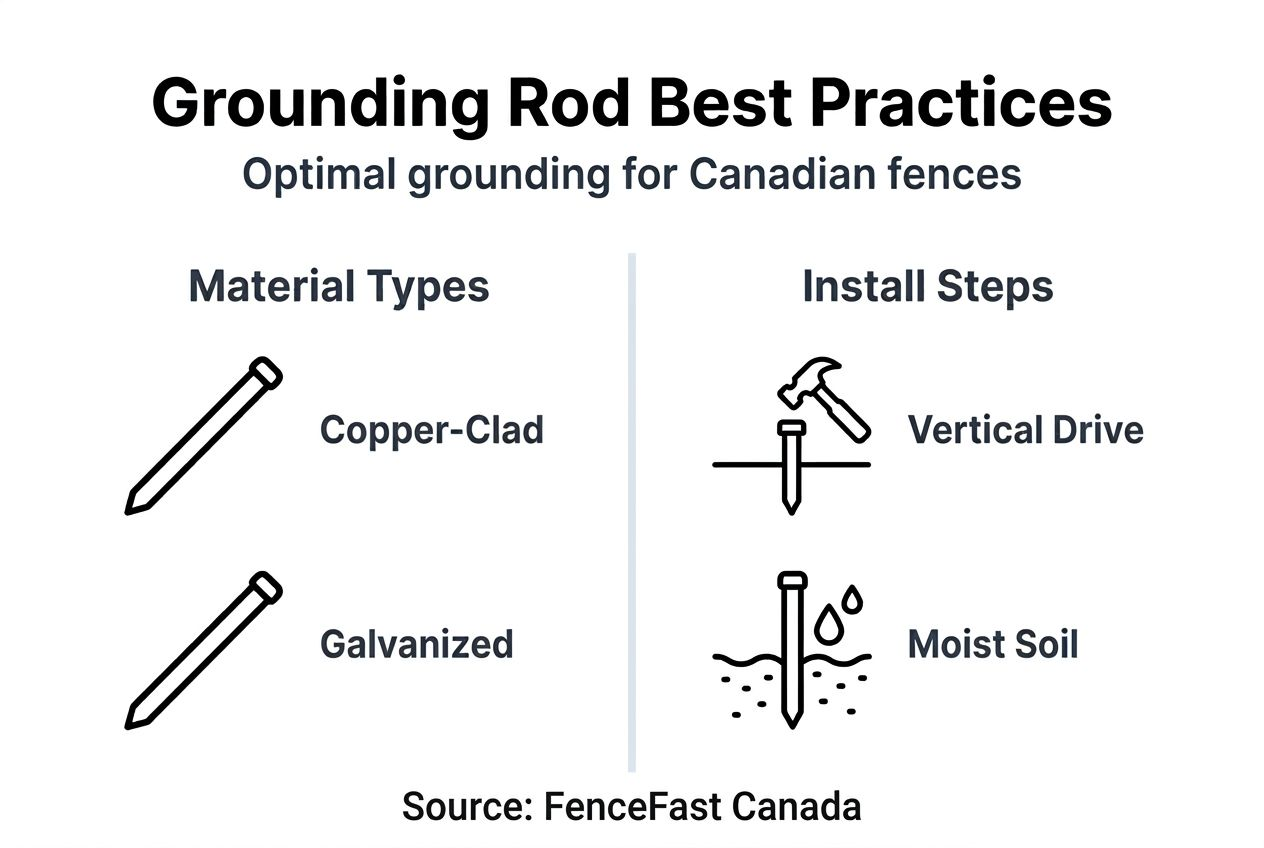
Common grounding rod materials include copper-clad steel, solid copper, and galvanized steel. Each material offers different conductivity levels, corrosion resistance, and cost profiles. Copper-clad steel combines a steel core for strength with a copper coating for excellent electrical conductivity. Solid copper provides superior conductivity but costs significantly more. Galvanized steel offers budget-friendly options but corrodes faster in moist soils.
Copper-clad steel offers the best balance of conductivity, corrosion resistance, and cost for Canadian farms. The copper coating conducts electricity efficiently while the steel core provides structural strength for driving into hard or rocky ground. This combination delivers long-term performance without the premium price of solid copper. For most agricultural applications, copper-clad steel represents the optimal investment.
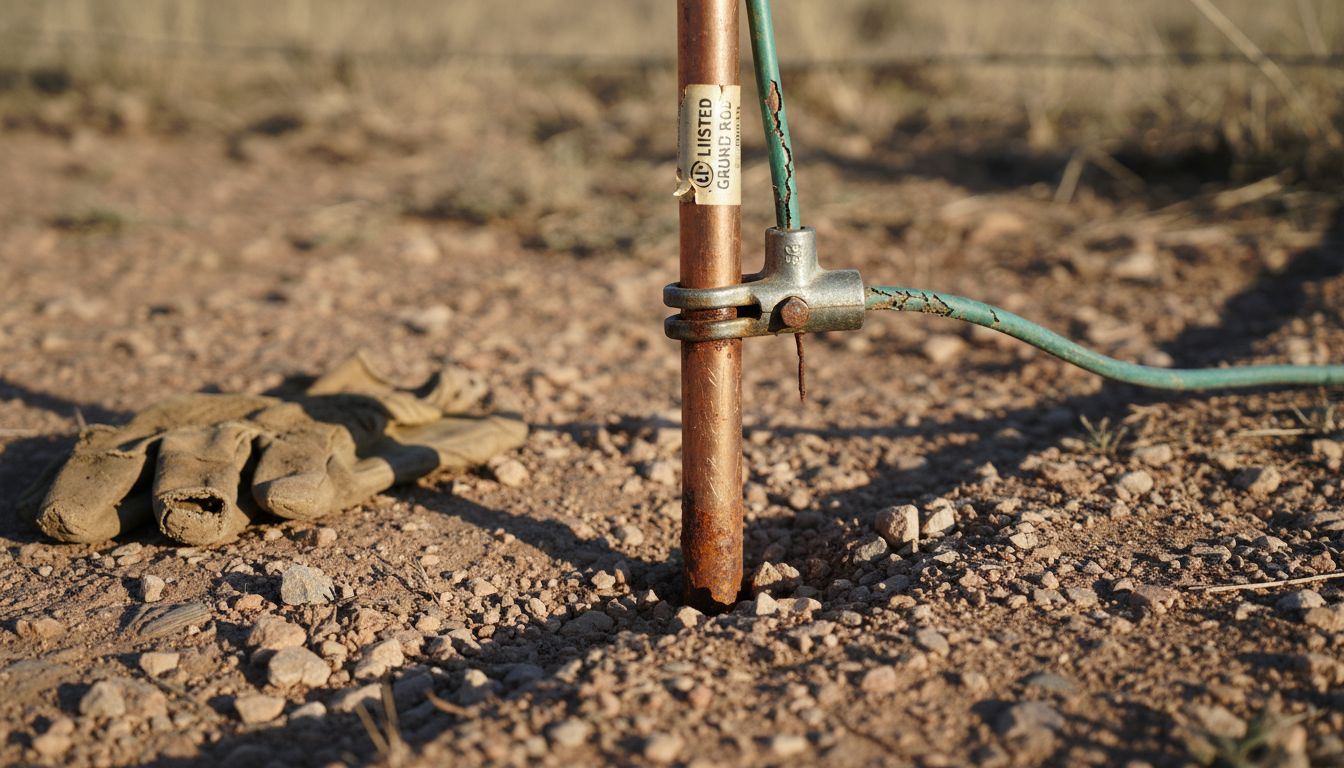
Recommended rod lengths are 6 to 8 feet with a diameter between 1/2 and 3/4 inch for optimal grounding. These dimensions ensure rods reach moisture-rich soil layers where conductivity is highest. Shorter rods often terminate in dry surface soil, drastically reducing grounding effectiveness. The diameter affects both conductivity and durability, with thicker rods offering greater surface area for electron transfer.
| Material | Conductivity | Corrosion Resistance | Cost | Best Use Case |
|---|---|---|---|---|
| Copper-clad Steel | Excellent | Very Good | Moderate | Most Canadian farms, all soil types |
| Solid Copper | Superior | Excellent | High | Critical installations, high-moisture areas |
| Galvanized Steel | Good | Fair | Low | Temporary fences, budget installations |
| Stainless Steel | Very Good | Excellent | Very High | Coastal or highly corrosive environments |
Material conductivity directly influences shock strength and rod lifespan. Better conductors transfer electrons more efficiently, maintaining stronger shocks over longer distances. Corrosion resistance is critical in moist Canadian soils to maintain effectiveness through wet springs, humid summers, and freeze-thaw cycles.
Pro Tip: Opt for copper-clad steel rods in drought-prone or rocky areas for durable, high-performing grounding. The steel core withstands the impact of driving through rocks, while the copper coating maintains conductivity even when surface moisture is scarce. Check best ground rod options for detailed product comparisons.
Impact of soil and weather conditions on grounding effectiveness
Soil conductivity varies by moisture level and soil composition. Clay and loam soils conduct electricity well because they retain moisture and contain minerals that facilitate electron flow. Sandy and rocky soils conduct poorly due to large air gaps between particles and low moisture retention. Understanding your soil type helps you plan the appropriate grounding system.
Canadian dry summers reduce soil moisture, greatly impairing grounding efficiency. As soil dries, its electrical resistance increases exponentially. What worked perfectly in spring may fail completely by August. This seasonal variation is why static installations often underperform during drought periods.
Farmers may need up to three times more grounding capacity during drought to maintain shock strength. Adding temporary rods during dry spells provides the extra grounding surface area needed when soil conductivity drops. Remove or leave these supplemental rods based on your long-term weather patterns.
Rocky or sandy soils require closer rod spacing or additional rods to compensate. Consider these adjustments:
- Sandy soil: Increase rod count by 50% and space rods 8 feet apart instead of 10
- Rocky soil: Use shorter spacing (6 to 8 feet) and consider angled installation if vertical driving is difficult
- Clay soil: Standard spacing works well, but ensure rods penetrate below the surface crust
- Mixed soil: Assess the dominant type in your grounding area and adjust accordingly
Regular soil moisture monitoring helps adjust grounding for consistent fence performance. Simple moisture meters cost under $30 and provide valuable data about when to activate supplemental grounding. Understanding ground wire basics also helps you connect additional rods efficiently when conditions demand it.
Best practices for grounding rod installation and testing
Install a minimum of three grounding rods spaced about 10 feet apart. This configuration provides adequate grounding for most standard fence installations. The number and spacing should be planned based on fence length and soil conditions, with longer fences and poor soils requiring additional rods. Each additional joule of energizer output typically requires one extra rod.
Follow these installation steps:
- Select a location within 20 feet of your energizer, away from other grounding systems
- Drive rods vertically 6 to 8 feet deep using a post driver or sledgehammer
- Space multiple rods exactly 10 feet apart in a straight line
- Leave 2 to 4 inches of rod exposed above ground for connections
- Connect rods to each other using insulated ground wire rated for outdoor use
Drive rods vertically 6 to 8 feet deep to reach moist soil layers, enhancing conductivity. Vertical installation maximizes contact with moisture-rich zones and ensures rods remain stable through freeze-thaw cycles. If you encounter bedrock before reaching target depth, angle the rod slightly or relocate rather than accepting a shallow installation.
Use corrosion-resistant clamps for secure connections to the energizer ground terminal. Acorn clamps or specialized grounding clamps provide weatherproof connections that maintain conductivity for years. Avoid wrapping bare wire around rods, which creates high-resistance connections prone to corrosion.
| Fence Length | Good Soil | Average Soil | Poor Soil |
|---|---|---|---|
| Under 1/4 mile | 3 rods | 4 rods | 5-6 rods |
| 1/4 to 1/2 mile | 4 rods | 5-6 rods | 7-8 rods |
| 1/2 to 1 mile | 5-6 rods | 7-8 rods | 10-12 rods |
| Over 1 mile | 8+ rods | 10-12 rods | 15+ rods |
Test grounding resistance regularly with a voltmeter or fence tester to detect failures early. A properly functioning grounding system should show less than 500 ohms of resistance, with readings below 100 ohms considered excellent. Test by placing one probe on the ground rod and another in undisturbed soil 30 feet away.
Pro Tip: Perform testing especially after dry spells and inspect connections seasonally. Spring and fall inspections catch corrosion before it compromises performance. Consult our detailed ground rod installation guide for additional troubleshooting steps, and reference our electric fence troubleshooting guide if tests reveal problems.
Common misconceptions and mistakes in electric fence grounding
Short rods under 6 feet significantly reduce shock strength and fence effectiveness. These abbreviated rods often terminate in dry topsoil where electrical resistance is high. Even a 4-foot rod in good soil performs far worse than a 6-foot rod in similar conditions. The depth difference means reaching moisture-rich zones that dramatically improve conductivity.
Grounding the fence wire to itself rather than dedicated rods breaks the circuit and weakens the shock. This “self-grounding” approach fundamentally misunderstands how electric fences work. The energizer needs a separate path back through the earth, not through the fence wire itself. Without dedicated grounding rods, the circuit remains open.
Using too few rods disregards area size and soil condition requirements, making grounding unreliable. Many farmers install a single rod, assuming it will suffice. Common misconceptions include the belief that shorter rods or grounding fence wire to itself are sufficient, which can lead to ineffective fencing and livestock escape risks.
Ignoring maintenance and not testing leads to undetected corrosion and poor contacts. Even quality materials degrade over time. Consider these common mistakes:
- Assuming grounding works indefinitely without verification
- Using dissimilar metals in connections, which accelerates corrosion
- Placing grounding rods near building foundations or utility grounds
- Failing to bury ground wire connections below the frost line
- Skipping seasonal inspections of clamps and wire integrity
“Proper grounding requires multiple rods installed at correct depths with weather-resistant connections. Shortcuts in any of these areas compromise the entire fence system, no matter how expensive your energizer.”
Common mistakes increase risk of livestock escapes and property damage. Animals quickly test fence boundaries, and once they learn a fence is weak, retraining them becomes difficult. Prevention through proper initial installation and ongoing maintenance costs far less than dealing with escaped livestock. Learning how to properly ground electric fence systems prevents these expensive lessons.
Practical recommendations and cost considerations
Copper-clad steel rods offer the best value with long lifespan and reliable conductivity. A quality 6-foot copper-clad rod typically costs $15 to $30, delivering decades of service with minimal maintenance. This modest investment per rod pays dividends through consistent fence performance and reduced livestock management headaches.
Plan for extra grounding rods in drought-prone or challenging soil regions to maintain fence function. Budget an additional 25% to 50% more rods for installations in sandy soil, rocky terrain, or areas with extended dry seasons. This upfront investment prevents mid-season fence failures when livestock pressure is highest.
Regular maintenance and testing avoid frequent rod replacements and fence failures. Annual inspections cost nothing but your time, while catching small problems early prevents expensive emergency repairs. Clean corrosion from connections, tighten loose clamps, and verify ground wire integrity each spring and fall.
Consult professionals for customized grounding solutions tailored to your farm’s environment. Agricultural electricians and experienced fence contractors can assess your specific soil conditions, livestock pressure, and fence layout to recommend optimal grounding configurations. Their expertise often saves money by avoiding trial-and-error approaches.
Investing in quality grounding materials reduces long-term costs and livestock risks. Consider these practical steps:
- Purchase copper-clad steel rods in bulk for volume discounts
- Install extra rods during initial setup rather than retrofitting later
- Use marine-grade clamps in high-moisture areas for extended lifespan
- Keep spare rods and clamps on hand for quick repairs
- Document your grounding system layout for future reference and expansion
- Schedule annual testing on your farm calendar to ensure consistency
Understanding ground wire cost and durability helps you budget appropriately while selecting materials that deliver long-term value. Quality components cost slightly more upfront but eliminate frequent replacements and fence downtime.
Enhance your electric fence setup with FenceFast solutions
Applying the grounding techniques covered in this guide becomes easier with the right materials. FenceFast offers a comprehensive range of reliable grounding rods and electric fence accessories designed specifically for Canadian soil and weather conditions. Our products withstand prairie winters, coastal moisture, and everything in between.
Our Patriot electric fence accessory kit includes quality grounding components that integrate seamlessly with your existing system. For complete livestock protection, explore our Patriot positive negative netting 50ft, which pairs perfectly with properly grounded systems to create barriers that keep animals safely contained. Our team understands Canadian farming challenges and can help you select materials that match your specific conditions.
Frequently asked questions
What is the ideal length for grounding rods on Canadian farms?
Grounding rods should be 6 to 8 feet long to ensure contact with moist soil layers for optimal fence shock strength. Shorter rods reduce grounding efficiency significantly because they terminate in drier surface soil. For detailed depth requirements, consult our ground rod depth guide.
How many grounding rods should I install for a large electric fence?
Generally, install at least three rods spaced 10 feet apart for standard fences. Increase rod count for longer fence lines or poor soil to maintain shock strength, with some installations requiring 10 or more rods. Reference our ground rod installation guide for specific recommendations based on your fence length and soil type.
What maintenance is required to keep grounding rods effective?
Regularly test grounding resistance especially after dry periods using a voltmeter or dedicated fence tester. Inspect and clean rods and connections to prevent corrosion, checking clamps and ground wire integrity each season. Replace damaged or corroded rods promptly to sustain fence reliability, and consult our electric fence troubleshooting guide if performance issues arise.
Can I use rebar or other metal rods instead of specialized grounding rods?
While rebar can conduct electricity, it corrodes rapidly in soil and lacks the conductivity of copper-clad steel. Specialized grounding rods are engineered for underground use with coatings that resist corrosion while maintaining excellent conductivity. The modest cost difference between rebar and proper grounding rods is insignificant compared to the performance and longevity benefits.
How do I know if my current grounding system is adequate?
Test your system using the short circuit method: create a temporary short by laying a metal object across several fence wires. If the fence voltage at the energizer drops below 2,000 volts, your grounding needs improvement. Properly grounded systems maintain higher voltage even under load, indicating sufficient grounding capacity to handle real-world livestock contact.
Recommended
- Electric Fence Ground Rod Installation for Reliable Fencing – FenceFast Ltd.
- Best Ground Rod for Electric Fence: Reliable Containment – FenceFast Ltd.
- Grounding a Electric Fence for Maximum Safety and Performance – FenceFast Ltd.
- How deep ground rod for electric fence: 6-8 feet boosts reliability by – FenceFast Ltd.

