

TL;DR:
- Proper pig fencing requires sufficient height, a tight ground-level base, and adherence to legal standards. Training pigs to respect electric fences is essential for long-term containment and farm safety. Investing in durable materials and maintenance saves costs and promotes pig welfare.
Pig fencing requirements define the minimum physical and legal standards for building enclosures that keep pigs contained, safe, and off neighboring property. The core standards cover fence height, material strength, ground-level containment, and compliance with local stock laws. Get any one of these wrong and you face escaped animals, property damage claims, and potential legal liability. This guide covers the specific measurements, materials, legal obligations, and training methods that make pig fencing work in practice.
What are the core pig fencing requirements by pig type?
Fence height is the first number every farmer needs. Industry guidelines specify 32–36 inches for sows and growers, and 42 inches for boars and athletic breeds. That extra height for boars is not optional. A determined boar will push, lift, and charge a fence that would hold a sow without effort.
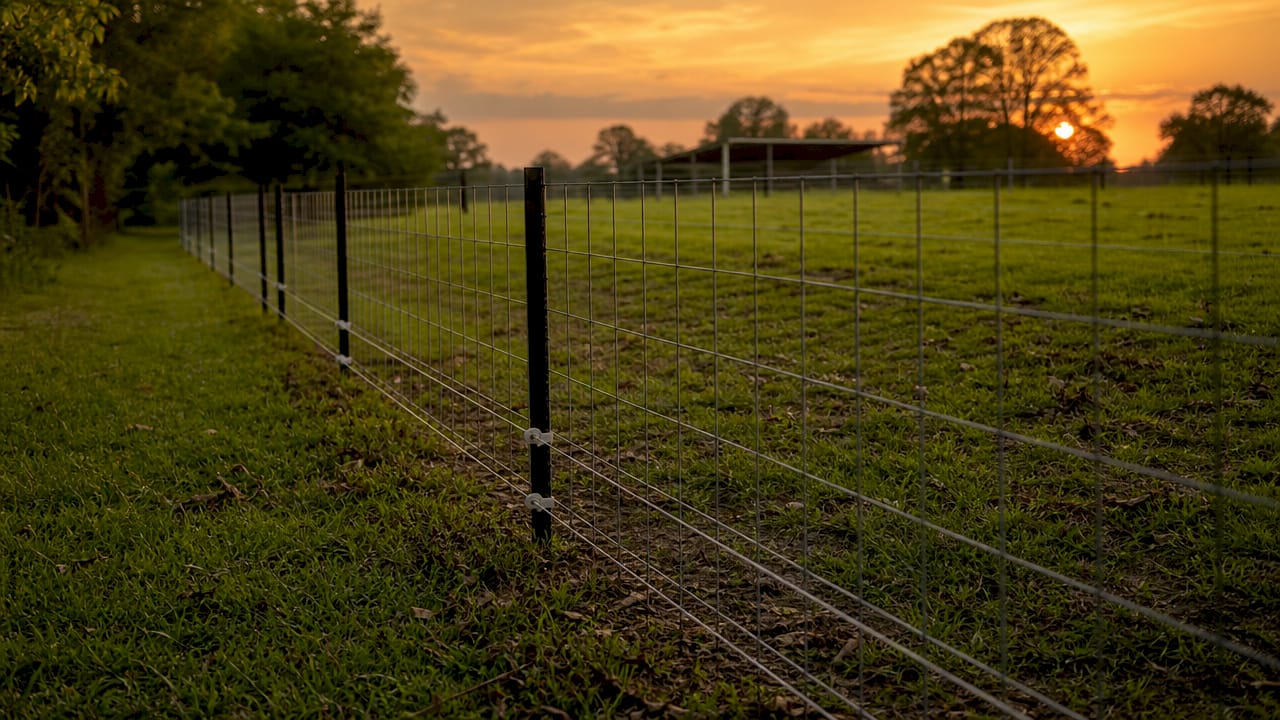
Height alone does not contain pigs. Ground-level containment is the more critical factor because pigs root under fences rather than climb over them. A tight base with no gap between the fence and the soil stops more escapes than adding six inches of height ever will.
The best pig fencing materials combine woven wire with electric offset strands. Woven wire provides the physical barrier. Electric strands at 6 inches and 12 inches off the ground create a psychological deterrent that discourages rooting and pushing before the pig ever contacts the wire. For paddock fencing for pigs, welded hog panels offer a rigid alternative that resists pushing and lasts for years without sagging.
Key material and structural specs for durable pig fencing options:
- Woven wire mesh: Use 12.5-gauge minimum with 6-inch spacing at the base
- Electric offset strands: Set at 6 inches and 12 inches from the ground on the inside of the physical fence
- Post spacing: Set posts 8–10 feet apart in soft soil to maintain wire tension; wider spacing allows sag that pigs exploit
- Energizer output: A minimum 1-joule low-impedance energizer is required because pigs’ thick, dry skin reduces shock effectiveness compared to cattle
- Hog panels: 16-foot welded panels work well for permanent paddocks and require fewer posts
Pro Tip: Install a single electric strand 6 inches off the ground along the inside of any woven wire fence. This one addition stops rooting behavior before it starts and extends the life of your physical fence significantly.
How do legal regulations affect pig fence design?
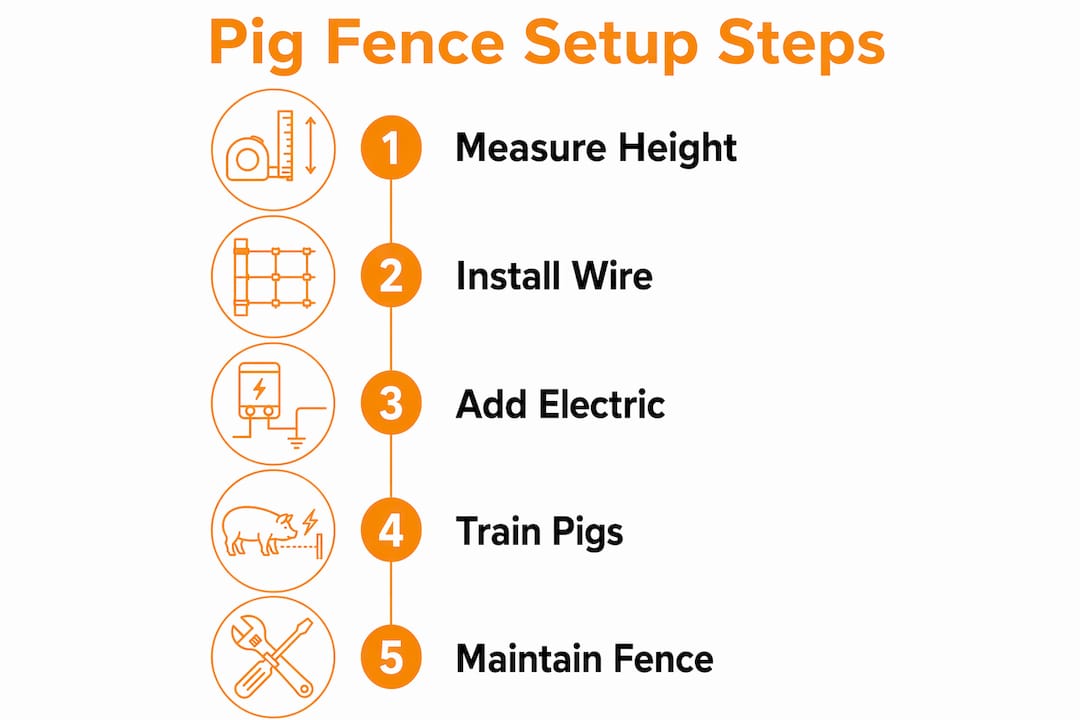
Livestock fencing regulations create real financial exposure for farmers who ignore them. Stock-law areas require lawful fences that meet defined construction standards, including minimum heights and approved materials such as barbed wire, picket, board, or rail fences. Falling short of these standards means your fence is not legally recognized, even if it physically holds your animals most of the time.
The liability picture is straightforward. Owners face legal liability for damages caused by escaped pigs when fence maintenance is negligent or gaps exist. A single escape that causes a vehicle accident or crop damage can cost far more than the entire fencing system. Reviewing your region’s livestock fencing regulations before you build is not optional.
“Liability for escaped livestock depends on whether the owner maintained a lawful fence as defined by local stock laws. A fence that looks adequate is not the same as a fence that meets the legal standard. Farmers who skip the legal review often discover this distinction at the worst possible moment.”
Legal obligations that directly affect fence design and upkeep:
- Know your range statute. Open-range and closed-range laws differ by region. Under open-range rules, neighbors may share responsibility for boundary fences. Under closed-range rules, the livestock owner bears full responsibility.
- Document prior escape incidents. A history of escapes raises your liability exposure significantly. Courts treat repeated escapes as evidence of negligent maintenance.
- Secure every gate. Pigs can manipulate latches, lift gates, and push through loose fittings. Gates must match the strength and security of the fence itself.
- Understand boundary fence rules. Neighbors do not automatically share fence costs unless local law or a written agreement requires it. Assuming cost-sharing without checking is a common and expensive mistake.
- Check municipal bylaws. Urban and peri-urban properties face additional restrictions on pig keeping that override provincial or state livestock laws.
For a full breakdown of how rural property fencing laws apply to your operation, review your local statutes before breaking ground.
What are the best techniques for keeping pigs inside the fence?
Training pigs to respect electric fencing is the single most effective technique for long-term containment. Pigs trained in a smaller, secure area for 3–7 days learn to associate the fence with a shock before they have the space to build momentum for a charge. Without this training, pigs panic, charge blindly, and break through fences that would otherwise hold them.
The training setup matters as much as the duration. Use a small pen with solid physical walls on the outside and the electric fence on the inside. The pig contacts the wire, retreats, and learns the boundary. After 3–7 days, transfer the pig to the main paddock. The learned behavior transfers with it.
Daily fence management keeps the system working after training:
- Check energizer output daily. A fence that reads low voltage is not a deterrent. Pigs test fences constantly and will find a weak spot.
- Clear vegetation weekly. Grass and weeds grounding the wire drain voltage fast. A well-maintained fence line is as important as the energizer itself.
- Inspect the base after rain. Wet soil shifts, and fence bases can lift or gap overnight. Check ground contact points after every significant rain event.
- Use self-locking gate latches. Standard spring latches are not enough. Pigs learn to nose them open within days.
- Walk the perimeter after any escape attempt. One escape means the pig found a weakness. Find it before the next attempt.
Pro Tip: Run two electric strands at different heights rather than one. A single strand at 12 inches stops a standing pig but misses a rooting pig. Two strands at 6 inches and 18 inches cover both behaviors simultaneously.
For a deeper look at preventing fence escapes on your farm, the techniques above apply across species but are especially critical for pigs.
What does pig fencing actually cost?
Pig fence installation tips always include a budget reality check. Electric fencing for a quarter-acre runs $150–$300. Welded hog panels for the same area cost $300–$600. The price difference reflects durability and permanence. Electric fencing is faster to install and easier to move. Hog panels last longer and require less daily management.
| Fencing type | Cost per 1/4 acre | Best use case |
|---|---|---|
| Electric fencing | $150–$300 | Rotational grazing, temporary paddocks |
| Welded hog panels | $300–$600 | Permanent paddocks, boar pens |
| Combined system | $400–$700 | High-security permanent enclosures |
Total startup costs for small pig operations including fencing and animals range from $600 to $2,200. Fencing is the largest variable in that range. Farmers who cut costs on fencing early typically spend more on repairs, recapture, and liability within the first two years. The math favors doing it right the first time.
Ongoing maintenance costs are modest when the initial installation is solid. An annual budget for wire, insulators, and energizer maintenance runs well below the cost of a single escape incident that damages a neighbor’s property or causes a road accident.
How does fencing connect to pig welfare?
Insecure fencing causes stress that directly harms pig immune function and raises disease risk. This is not a secondary concern. A pig that escapes repeatedly, or that lives in a pen it can push against, is a pig under chronic stress. Chronic stress suppresses immunity and increases susceptibility to respiratory illness and heat stroke.
Welfare-focused pig enclosure requirements go beyond the fence itself:
- Shade: Pigs cannot sweat. A paddock without shade in summer creates heat stress that drives escape attempts motivated by discomfort rather than curiosity.
- Wallows: Mud wallows regulate body temperature and reduce stress. A pig with access to a wallow is a calmer pig that tests fences less.
- Fresh water: Water access inside the fence removes a primary motivation for escape. Pigs that are comfortable and hydrated stay put.
- No sharp edges at the base: Fence wire that curls inward at ground level injures piglets and rooting sows. Clip and secure all wire ends during installation.
- Piglet protection: Piglets can slip through standard woven wire gaps. Use smaller-gauge mesh or a solid board at the base for farrowing paddocks.
Fencing is as critical to animal health as it is to containment. A well-designed enclosure that meets welfare needs reduces escape motivation at the source. For more on integrating welfare with containment, the Fencefast guide on fencing solutions for pigs covers the full picture.
Key Takeaways
Effective pig fencing requires the right height, a tight base, legal compliance, and trained animals working together as a system.
| Point | Details |
|---|---|
| Height by pig type | Use 32–36 inches for sows and growers; 42 inches for boars and athletic breeds. |
| Base containment first | A tight ground-level base stops more escapes than extra height with gaps below. |
| Legal compliance matters | Stock-law areas define lawful fences; non-compliant fences create direct liability for escaped animal damages. |
| Train before you trust | Introduce pigs to electric fencing in a small secure pen for 3–7 days before moving them to the main paddock. |
| Budget realistically | Expect $150–$600 per quarter-acre for materials; combined systems cost more upfront but reduce long-term repair costs. |
What I’ve learned from years of pig fencing mistakes
The most common mistake I see is farmers who build the fence to the right height and then leave a two-inch gap at the bottom. Pigs do not climb. They root. That gap is all they need, and they will find it within 48 hours.
The second mistake is skipping electric fence training. Farmers assume the shock will teach the pig on its own. What actually happens is the pig panics, charges, and goes straight through the fence before the lesson registers. Three to seven days in a small training pen is not a luxury. It is the difference between a fence that works and one that fails on day one.
The legal side catches people off guard more than anything else. Most farmers assume their fence is “good enough” without ever checking what their local stock laws actually require. A fence that holds your pigs 99% of the time is still a negligent fence if it does not meet the legal standard. One escape, one damaged vehicle, and that distinction becomes very expensive very fast.
Breed matters more than most guides admit. A heritage Tamworth or a Berkshire cross will test a fence that would hold a commercial breed indefinitely. Know what you are raising and build accordingly.
— Juiced
Fencefast tools that make pig fencing installation easier
Building a fence that meets pig fencing requirements starts with the right installation tools. A fence installed with proper crimping and tensioning holds its shape under pressure. One that is not installed correctly sags, gaps, and fails.

Fencefast carries the Hayes Fencing and Crimping Tool for secure wire joining and tensioning, and the Gallagher Live Lite energizer for reliable electric fence power sized for pig operations. Both are built for the demands of livestock fencing on working farms. Fencefast ships across Canada and offers product guidance for farmers building new pig enclosures or upgrading existing systems. Browse the full electric fencing for pigs guide to match the right products to your setup.
FAQ
How tall should a pig fence be?
Fence height should be 32–36 inches for sows and growers, and 42 inches for boars or athletic breeds. Height alone is not enough; a tight base that prevents rooting is equally critical.
What type of fence works best for pigs?
Woven wire combined with electric offset strands at 6 and 12 inches off the ground is the most effective system. Welded hog panels work well for permanent paddocks where rigidity and durability are the priority.
Can I be held liable if my pig escapes?
Owners are legally liable for damages caused by escaped pigs when the fence does not meet local stock-law standards or when maintenance is negligent. Check your regional livestock fencing regulations before building.
How long does electric fence training take for pigs?
Training takes 3–7 days in a small, secure pen where the pig can contact the wire and learn to respect it. Skipping this step leads to panic-driven fence breaches.
What does pig fencing cost per quarter-acre?
Electric systems run $150–$300 and welded hog panels cost $300–$600 per quarter-acre. Total startup costs for a small operation, including animals and infrastructure, typically fall between $600 and $2,200.

