

TL;DR:
- Virtual fencing allows rapid, flexible herd management after wildfires, reducing rebuild time.
- Properly trained cattle adapt quickly to GPS collars, enabling effective rotational grazing.
- Combining physical perimeter fences with virtual zones creates a resilient, cost-effective recovery strategy.
Most ranchers assume wildfire recovery means one thing: rebuilding every mile of physical fence that burned. But cattle adapt to virtual fencing in just 5-7 days, which changes what recovery can look like. Instead of spending months stringing wire through scorched terrain, you can have livestock contained, rotated, and managed within a week using GPS-enabled collars and app-based boundary control. This article walks you through the real impact wildfires have on livestock fencing, how virtual fencing technology works in Canadian conditions, and how to build a smarter, more resilient operation from the ground up.
Table of Contents
- Understanding wildfire impact on fencing and livestock management
- What is virtual fencing and how does it work?
- Comparing traditional and virtual fencing: Pros, cons, and cost factors
- Practical steps for integrating virtual fencing after wildfire
- Why wildfire recovery is the best time to rethink fencing
- Explore smart fencing solutions with FenceFast
- Frequently asked questions
Key Takeaways
| Point | Details |
|---|---|
| Quick cattle adaptation | Livestock typically learn virtual fences in under a week, minimizing disruption after wildfires. |
| Technology suits Canadian climate | Modern virtual fencing systems perform reliably in cold and variable conditions, as proven in Alberta. |
| Smart fencing saves effort | Virtual systems cut labor and materials, enabling rapid recovery and flexible grazing management. |
| Hybrid approach recommended | Combining physical and virtual fencing maximizes safety, efficiency, and pasture health after disaster. |
| Funding eases adoption | Grants and cost-sharing help ranchers overcome the upfront cost hurdle for virtual fencing technology. |
Understanding wildfire impact on fencing and livestock management
Wildfire moves fast. It does not care how many posts you sank or how tight your wire was strung. A single fire season can wipe out decades of fencing investment across thousands of acres, leaving you scrambling to contain livestock while managing pasture recovery at the same time.
The destruction goes beyond just wire and posts. Burned pastures need careful management before cattle ever set foot on them again. Post-wildfire grazing guidelines recommend delaying grazing by 1-2 months, reducing stocking rates by 20-40%, and monitoring spring rainfall in May and June to assess recovery progress. Rush the process, and you risk damaging root systems that have not yet had time to regenerate.
Here is what most ranchers deal with immediately after a wildfire:
- Destroyed perimeter and cross fencing that requires full replacement
- Displaced or stressed livestock that need temporary containment solutions
- Burned forage that cannot support normal stocking rates
- Damaged water infrastructure that complicates rotational grazing plans
- Ash-covered soil that can affect regrowth timing and plant diversity
Traditional fence rebuilding is expensive. Labor, materials, and equipment costs add up quickly, and crews are often stretched thin across multiple properties in a fire-affected region. Even if you start the day after the fire is out, getting perimeter fencing back in place across a large ranch can take months.
The good news: Rangelands are naturally resilient. With proper management, burned pastures can return to near-normal productivity within one growing season. The key is controlling where and when cattle graze during that recovery window.
That is exactly where smarter fencing choices make a real difference. When you are thinking about choosing durable fencing for the rebuild, it pays to look beyond what you had before and consider what tools will protect your pastures through the next fire season too.
Pro Tip: Before rebuilding any fence, map out your grazing plan first. Where you need to keep cattle out during recovery should drive your fencing priorities, not just where fences used to stand.
What is virtual fencing and how does it work?
Virtual fencing replaces physical barriers with GPS-enabled collars worn by individual animals. You draw boundaries on a smartphone app or computer software, and those boundaries are enforced through audio cues and mild electrical pulses delivered by the collar if an animal approaches the edge of the zone.
There are no posts, no wire, and no tools required to move a fence line. You simply redraw the boundary on your screen.
Here is how the setup process typically works:
- Fit collars on each animal in your herd (typically one per head)
- Install a base station on the property to maintain GPS connectivity
- Map your virtual zones using the app, defining where cattle can and cannot graze
- Run a short training period of 5-7 days where cattle learn the audio and pulse cues
- Monitor in real time through the app dashboard, tracking herd location and boundary interactions
Canadian conditions were a concern early on, but field results have been strong. A Nofence trial in Alberta showed optimal GPS connectivity, collar battery retention above 96% even through winter, and very low collar failure rates. That matters when you are managing livestock in a Canadian climate where cold snaps and remote terrain are part of the deal.
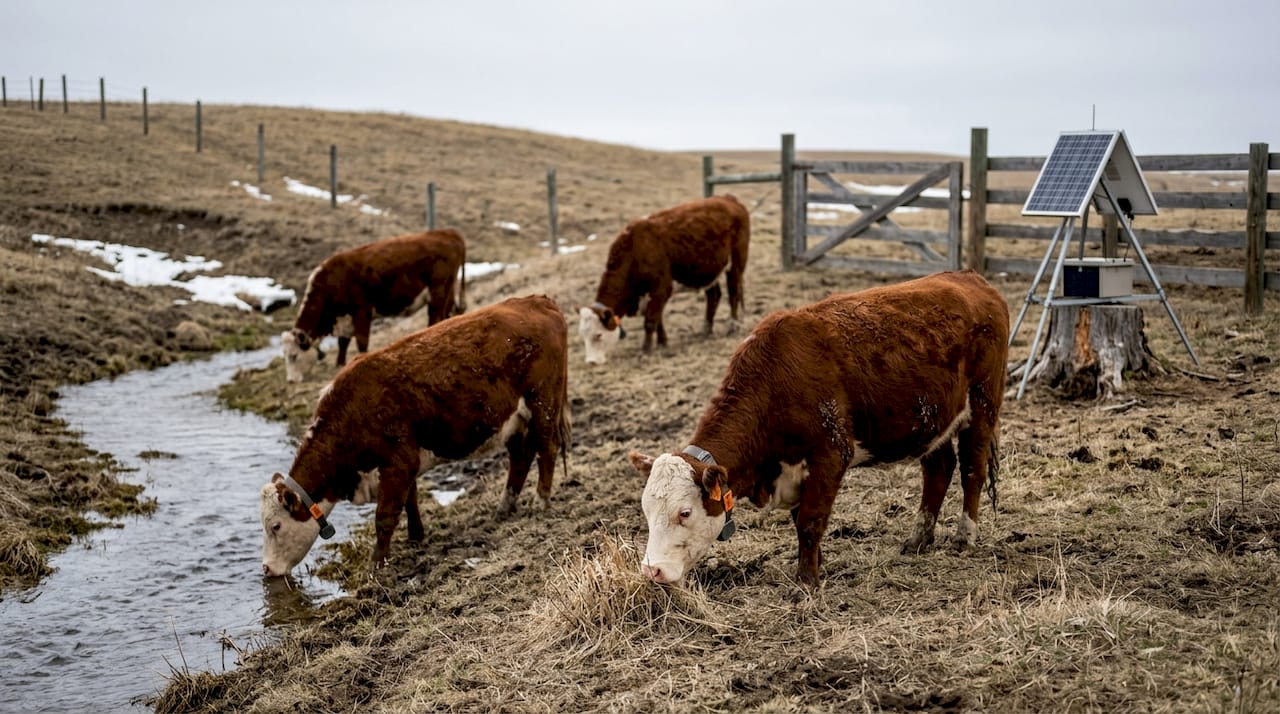
Collar costs typically run between $350 and $400 per unit, with monthly data fees on top of that. Here is a quick breakdown of typical virtual fencing costs:
| Component | Estimated cost |
|---|---|
| GPS collar (per head) | $350-$400 |
| Base station | $1,500-$3,000 |
| Monthly data fees | $5-$15 per collar |
| App/software access | Often included |
For producers managing large herds across big country, the math starts to shift in favor of virtual fencing when you factor in the labor savings from not moving physical fence every time you rotate pastures. Herd control with virtual fencing is also more flexible, letting you open or restrict zones remotely without ever leaving the house.
There are a few virtual fencing myths worth clearing up. Cattle do not suffer under virtual fencing. Cattle adapt quickly, with pulse rates dropping significantly after the initial training period as animals learn the audio warning and stop before any pulse is needed.
Comparing traditional and virtual fencing: Pros, cons, and cost factors
Neither fencing type is perfect for every situation. The right answer after a wildfire usually involves both, deployed strategically across your property.
| Factor | Traditional fencing | Virtual fencing |
|---|---|---|
| Setup time | Weeks to months | Days |
| Flexibility | Fixed once installed | Adjust instantly via app |
| Upfront cost | High (labor + materials) | High (collars + base station) |
| Ongoing cost | Maintenance and repairs | Monthly data fees |
| Containment reliability | High if maintained | >99.5% containment in trials |
| Best use case | Perimeters, roads, settlements | Rotational grazing, recovery zones |
Physical fencing wins on permanence and predictability near roads and densely populated areas. You cannot rely on a collar battery or GPS signal to keep cattle off a highway.
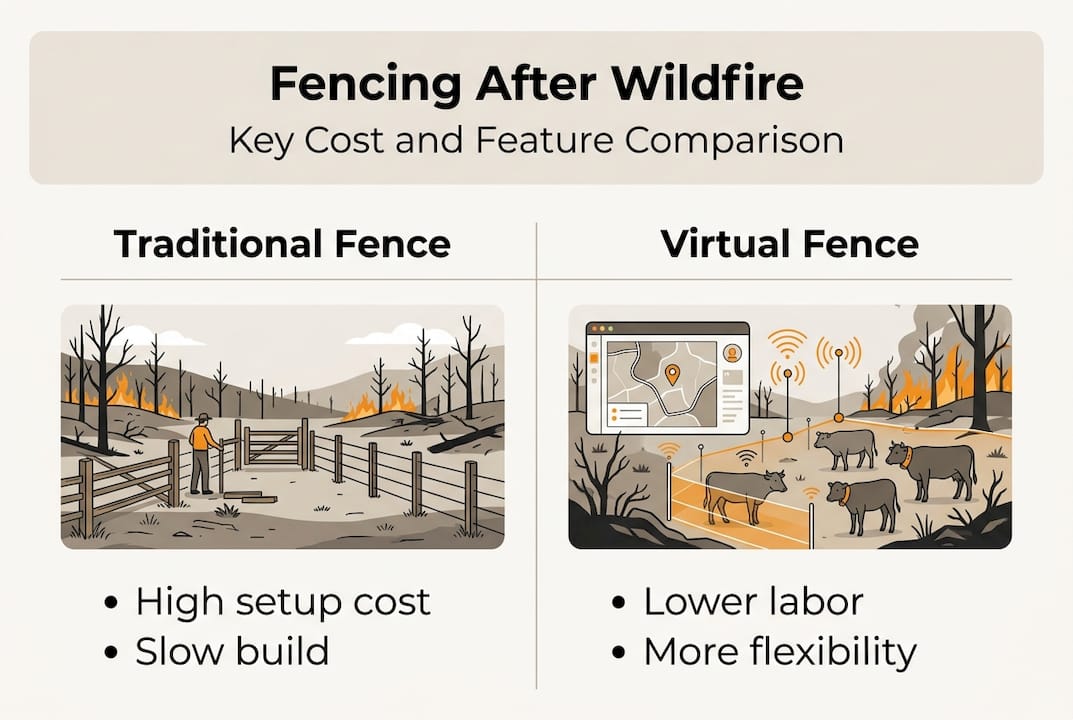
Virtual fencing wins on speed and flexibility, which is exactly what wildfire recovery demands. You can contain and rotate cattle while physical perimeter work is still underway.
Key advantages of virtual fencing in recovery scenarios:
- Rapid deployment gets cattle under control within days, not months
- Flexible zone mapping lets you protect recovering pasture areas without driving posts
- Labor savings are significant when crews are already stretched across the recovery effort
- No impact on weight gain, a finding confirmed across Canadian virtual fencing trials
Upfront cost is the biggest barrier. But funding programs and grants can meaningfully reduce the entry cost for producers willing to apply. FenceFast can walk you through options like OFCAF and BMP cost-sharing programs.
Pro Tip: Use virtual fencing to manage grazing rotation during recovery, and focus your rebuild budget on permanent perimeter fences near roads, waterways, and your property boundary first.
For a closer look at what you will actually spend, the virtual fencing cost breakdown and rotational grazing fence setup guides are worth reading before you commit to a plan.
Practical steps for integrating virtual fencing after wildfire
Recovery is chaotic. Having a clear process helps you move from reaction mode to a real plan.
- Assess your fencing needs by zone. Walk the property and categorize each area: perimeter near roads, riparian areas, recovering pastures, and active grazing land. Each zone may need a different solution.
- Choose technology suited to Canadian terrain. Not all virtual fencing systems perform equally in cold or remote conditions. Look for systems with proven winter battery performance and strong GPS reliability in your region.
- Run the collar training process properly. Do not skip the 5-7 day training period. Animals that are not properly trained will have more negative collar interactions, which is stressful for both cattle and producers.
- Apply for available funding before purchasing. Grants and cost-sharing programs exist specifically for this. Applying early means less out-of-pocket cost on collars and infrastructure.
- Coordinate virtual zones with your conservation goals. Virtual fencing is particularly effective at keeping cattle away from riparian and wildlife areas during sensitive recovery periods, without any physical barrier required.
- Build a hybrid setup. Physical perimeter fencing on the boundary, virtual fencing for all internal grazing management. This is the combination that Alberta trials confirmed as the most practical and effective approach.
Cattle welfare is not a concern when the system is used correctly. Research confirms no negative impacts on cattle health or production from virtual fencing, and the ability to control where animals graze actually supports better forage recovery after fire.
Producers across British Columbia using virtual fencing on ranches have found they can boost grazing efficiency and cut costs compared to traditional cross-fencing methods. The rotational grazing solutions available through virtual technology are especially valuable when forage is limited and you need precise control over where pressure lands each week.
“Virtual fencing enables farmers to implement rotational grazing, winter corn grazing, and targeted conservation management without negative impacts on cattle welfare.” — Buffalo Bulletin
Why wildfire recovery is the best time to rethink fencing
Here is something most people do not want to hear after a fire: rebuilding exactly what you lost is often the wrong move.
We have seen it happen. Ranchers pour money back into the same layout, the same wire runs, the same fixed cross-fencing patterns, and five years later they are managing the same limitations they had before. Wildfire is brutal, but it does reset the board. That is actually an opportunity.
The ranchers who come out stronger are the ones who pause long enough to ask what their fencing was actually doing, and whether there is a better way to do it. Virtual fencing was not viable ten years ago. It is viable now, it works in Canadian winters, and the pasture health benefits of flexible rotational control are real and documented.
A hybrid approach, physical fences where permanence matters and virtual fencing everywhere else, gives you resilience against the next fire. You lose less infrastructure when the physical footprint is smaller. You recover faster when your grazing management does not depend on wire that can burn.
Do not just rebuild. Rebuild smarter.
Explore smart fencing solutions with FenceFast
If you are working through wildfire recovery right now, you do not have to figure this out alone. FenceFast has been supporting Canadian ranchers for over 26 years, and we carry both traditional fencing supplies and Gallagher eShepherd virtual fencing technology designed specifically for cattle operations in this country.

Whether you need posts and wire to get perimeters back up fast, or you are ready to explore GPS collars and app-based grazing management, FenceFast fencing solutions has the products, the knowledge, and the connections to funding programs that make recovery less overwhelming. Reach out to our team for guidance on building a hybrid fencing strategy that fits your property, your herd, and your recovery timeline.
Frequently asked questions
How quickly can cattle adapt to virtual fencing after a wildfire?
Cattle typically adapt within 5-7 days, with pulse rates dropping significantly after initial training as animals learn to respond to the audio cue alone.
Does virtual fencing work in Canadian winters?
Yes. Field trials in Alberta showed collars retain over 96% battery charge through winter conditions, with strong GPS connectivity and low failure rates.
Can virtual fencing fully replace physical perimeter fencing?
Not entirely. Virtual fencing complements physical fences rather than replacing them, especially near roads, settlements, and property boundaries where physical barriers remain essential.
Are there funding options to help recover fencing after wildfires?
Grants can significantly lower the entry cost for virtual fencing adoption, and programs like OFCAF and BMP cost-sharing are available to eligible Canadian producers.
Does virtual fencing affect cattle health or weight gain?
No. Canadian trials confirmed no welfare or production impacts from virtual fencing when the system is properly implemented and the training period is followed.

